Converting 100,000 USD to Pesos: A Comprehensive 2026 Guide for Large Transfers
Converting 100,000 USD to pesos involves more than a simple currency calculation; it requires navigating exchange rate spreads, international transfer regulations, and bank fees. Depending on whether you are converting to Mexican Pesos...
Converting 100,000 USD to pesos involves more than a simple currency calculation; it requires navigating exchange rate spreads, international transfer regulations, and bank fees. Depending on whether you are converting to Mexican Pesos (MXN) or Philippine Pesos (PHP), the total value will differ significantly, often ranging from 1.7 million to 5.8 million pesos respectively in the 2026 market.
Contents
Defining the "Peso": Regional Value Disparities
The term "peso" is used by eight different nations, each with its own central bank, inflation rate, and valuation against the United States Dollar (USD). When converting a significant sum like $100,000, the destination country drastically alters the financial outcome. As of 2026, the two most common targets for this conversion are the Mexican Peso and the Philippine Peso.
The Mexican Peso (MXN)
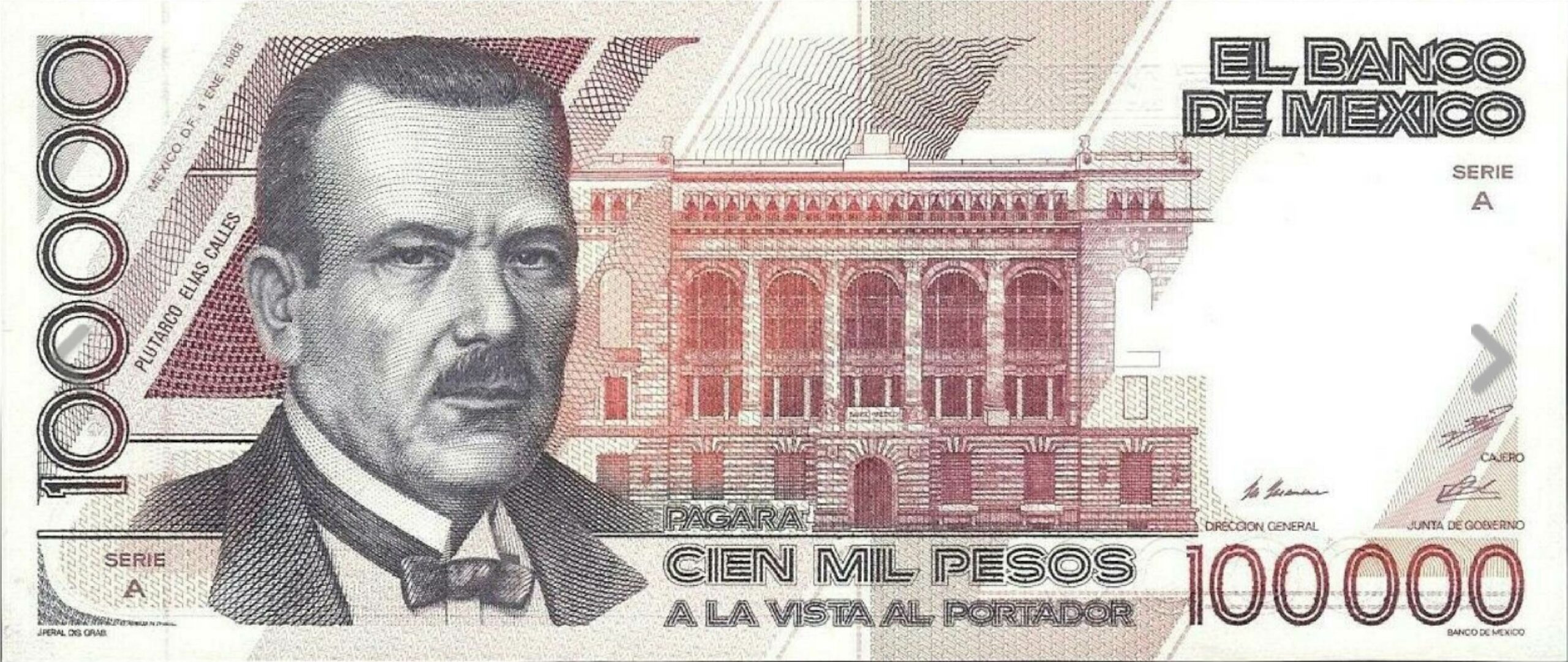
The Mexican Peso remains one of the most liquid emerging market currencies. For an individual or business converting $100,000 USD to MXN, the focus is often on real estate investment or manufacturing operations. In 2026, the exchange rate typically fluctuates based on trade relations within North America and the interest rate differentials set by the Banco de México (Banxico) compared to the Federal Reserve. A $100,000 conversion here usually yields a figure in the high seven-digit range (e.g., 1,700,000 to 2,000,000 MXN).
The Philippine Peso (PHP)
Converting $100,000 USD to Philippine Pesos is common for retirees, expatriates, and BPO (Business Process Outsourcing) companies. The PHP is influenced heavily by overseas remittances and foreign direct investment. Because the unit value of the PHP is lower than the MXN, $100,000 USD results in a much higher nominal figure, typically exceeding 5,500,000 PHP.
Other Peso Variants
While less common for high-volume liquid transfers, $100,000 USD can be converted into Colombian Pesos (COP), Argentine Pesos (ARS), or Chilean Pesos (CLP). Due to extreme volatility in markets like Argentina, converting such a large sum requires specialized financial instruments to hedge against rapid devaluation.
Understanding Exchange Rate Mechanics for Six-Figure Sums
When dealing with $100,000, the "mid-market rate"—the one you see on Google or Reuters—is rarely the rate you will receive. Financial institutions apply a "spread" or margin to the exchange rate to generate profit.
The Impact of the Spread
On a small $100 transaction, a 3% spread is only $3. However, on $100,000, that same 3% spread costs you $3,000. This is why using a standard retail bank for a conversion of this size is often the least cost-effective method. Technical SEO and financial analysts point out that "wholesale" rates are typically reserved for transfers exceeding $50,000, yet many consumers still default to high-street banks that offer "commission-free" transfers while hiding the costs in a poor exchange rate.
Mid-Market vs. Buy/Sell Rates
The mid-market rate is the midpoint between the buy and sell prices of two currencies. To maximize the 100,000 USD conversion, you must look for providers that offer rates as close to the mid-market as possible. Specialized foreign exchange (FX) brokers usually offer spreads between 0.5% and 1%, which could save you thousands of dollars compared to a traditional bank.
Best Methods for Transferring $100,000 USD
Selecting the right vehicle for a $100,000 transfer depends on your priority: speed, cost, or security. In 2026, the landscape of international finance offers three primary pathways.
1. Specialized FX Brokers (OFX, Currencies Direct)
For sums of $100,000 or more, specialized brokers are often the superior choice. Unlike automated apps, these brokers provide "forward contracts," allowing you to lock in a favorable exchange rate for a future transfer. This protects your $100,000 against sudden market dips. They also provide dedicated account managers who can assist with the significant documentation required for such a large move.
2. International Money Transfer Operators (Wise, Revolut)
Fintech platforms have revolutionized smaller transfers, but they remain highly competitive for $100,000 conversions. Their primary advantage is transparency; they typically show the exact mid-market rate and charge a flat, upfront fee. However, some platforms have daily or monthly limits that might require you to split a $100,000 transfer into two parts, which can complicate tax reporting.
3. Traditional Bank Wire Transfers (SWIFT)
While banks are generally the most expensive due to high spreads and outgoing/incoming wire fees, they offer a sense of security and familiarity. If you already have a "Private Banking" or "Premier" relationship with an institution like HSBC, J.P. Morgan, or BBVA, you may be able to negotiate a significantly reduced spread for a six-figure conversion.
Regulatory Compliance and Tax Reporting
Moving $100,000 USD across international borders triggers significant regulatory scrutiny. In 2026, Anti-Money Laundering (AML) and Know Your Customer (KYC) protocols are stricter than ever.
Documentation Requirements
To convert and transfer $100,000, you must be prepared to provide:
- Proof of Identity: Valid passport or government ID.
- Source of Funds: Bank statements, inheritance paperwork, property sale contracts, or investment liquidation receipts.
- Purpose of Transfer: A written statement explaining why the money is being moved (e.g., "Real estate purchase in Tulum" or "Living expenses for retirement in Cebu").
US Reporting Obligations (FinCEN and IRS)
If you are a US person, moving $100,000 does not inherently trigger a tax, but it does trigger reporting.
- FBAR (FinCEN Form 114): If the $100,000 sits in a foreign peso account and your total foreign holdings exceed $10,000 at any point in the year, you must file an FBAR.
- Form 8938 (FATCA): Depending on your residency and filing status, you may need to report these foreign assets to the IRS.
- Form 8300: While primarily for cash, any "suspicious" or large-scale movement of funds is reported by the financial institution to the government under the Bank Secrecy Act.
Destination Country Regulations
Mexico and the Philippines have their own reporting systems. In Mexico, the SAT (Servicio de Administración Tributaria) monitors large incoming wires to prevent money laundering. In the Philippines, the Anti-Money Laundering Council (AMLC) flags transactions over 500,000 PHP (roughly $9,000 USD) for review. Ensure your local bank in the destination country is aware of the incoming $100,000 to prevent the funds from being frozen.
Comparison of Transfer Providers for $100,000 USD
The following table compares the estimated costs and features of different provider types when converting $100,000 USD to Pesos in 2026.
| Provider Type | Typical Spread | Fixed Fees | Transfer Speed | Best For |
|---|---|---|---|---|
| Traditional Bank | 2.5% – 4.0% | $25 – $50 | 3–5 Days | Existing high-balance clients |
| Specialized FX Broker | 0.4% – 0.8% | $0 (usually) | 1–3 Days | Real estate and business |
| Online Transfer App | 0.3% – 0.7% | $50 – $200 | Instant – 2 Days | Transparency and speed |
| Crypto/Stablecoin | 0.1% – 1.0% | Network Fees | Minutes | Tech-savvy users / High risk |
Strategy: Timing the Market for a $100,000 Conversion
With $100,000 on the line, a 1% shift in the exchange rate equals $1,000. Timing your conversion is critical.
- Watch Central Bank Meetings: In 2026, pay close attention to the Federal Reserve (USA), Banxico (Mexico), and the Bangko Sentral ng Pilipinas (Philippines). If the Fed raises rates, the USD typically strengthens, giving you more pesos for your $100,000.
- Use Limit Orders: Many FX brokers allow you to set a "Limit Order." You specify the rate you want (e.g., 18.50 MXN per 1 USD). If the market hits that rate, your $100,000 is converted automatically.
- Batching Transfers: If you do not need the full amount immediately, consider converting $25,000 every quarter. This strategy, known as dollar-cost averaging, protects you from converting the entire $100,000 at a temporary market low.
Common Mistakes to Avoid
- Accepting the "Dynamic Currency Conversion" (DCC): If you are using a US debit card in Mexico or the Philippines to withdraw large sums, always decline the machine's offer to do the conversion for you. The machine's rate is almost always 5–10% worse than your bank's rate.
- Neglecting the Intermediary Bank Fee: SWIFT transfers often pass through "correspondent banks." These banks may shave $25–$75 off your $100,000 transfer. When sending the money, check if you can select the "OUR" instruction (you pay all fees) rather than "SHA" (shared fees).
- Incomplete Compliance Paperwork: A missing signature or an unverified source of funds can cause a $100,000 transfer to be held in "financial limbo" for weeks. Verify all KYC requirements with your provider 48 hours before initiating the transfer.
FAQ
How many Mexican Pesos can I get for $100,000 USD? In 2026, $100,000 USD typically converts to between 1,750,000 and 1,950,000 MXN, depending on current market volatility and the spread charged by your provider. Always check the live mid-market rate before confirming the transaction.
Is it legal to send $100,000 USD to the Philippines? Yes, it is entirely legal, provided you report the transfer correctly. Both the US and Philippine governments require documentation for sums of this size to ensure the funds are not related to illegal activities. You will likely need to provide your Philippine bank with a "Source of Wealth" declaration.
What is the cheapest way to convert $100,000 USD to Pesos? The cheapest way is generally through a specialized FX broker or a high-volume currency platform like Wise. These providers offer spreads significantly lower than traditional banks, often saving the sender between $2,000 and $3,500 on a $100,000 conversion.
Will I be taxed on the conversion itself? No, the act of converting currency is not a taxable event in the US. However, if you are converting USD that was earned as income, you owe income tax on those earnings. Additionally, if you hold the pesos and they appreciate in value against the dollar before you spend or reconvert them, you may owe capital gains tax.
How long does a $100,000 wire transfer take to arrive? A standard SWIFT wire transfer usually takes 3 to 5 business days. Specialized brokers and modern fintech platforms can often complete the conversion and local delivery in 1 to 2 business days, provided all compliance checks are cleared in advance.
Practical Recommendation
For a $100,000 USD conversion to pesos, do not use a standard bank account transfer without first negotiating the rate. Instead, open an account with a reputable FX broker at least one week before you need the funds. This allows time for identity verification. Request a "live quote" and compare it to the mid-market rate. If the margin is higher than 0.75%, look for an alternative provider. Finally, ensure your receiving bank in Mexico or the Philippines is notified of the incoming large-value wire to prevent unnecessary administrative delays.
Disclaimer: This information is for educational purposes and does not constitute financial, legal, or tax advice. Jurisdictional rules regarding foreign exchange and reporting can change; consult with a certified financial planner or tax professional for your specific situation.
Image Gallery