Laser Hair Removal on Tattooed Skin: Risks, Safety, and Effective Alternatives
Laser hair removal cannot be performed directly over a tattoo because the laser targets pigment, potentially causing severe burns, permanent scarring, and irreversible ink distortion. However, technicians can safely treat the surroundi...
Laser hair removal cannot be performed directly over a tattoo because the laser targets pigment, potentially causing severe burns, permanent scarring, and irreversible ink distortion. However, technicians can safely treat the surrounding skin by carefully shielding the tattooed area, or patients may opt for electrolysis as a tattoo-safe alternative for permanent hair removal.
Contents
The intersection of body art and aesthetic technology often creates a dilemma for individuals seeking smooth, hair-free skin. As of 2026, while laser technology has advanced significantly in its precision and cooling mechanisms, the fundamental physics of how lasers interact with pigment remains a critical barrier for tattooed areas. Understanding why this limitation exists, the clinical risks involved, and the professional protocols used to navigate around tattoos is essential for anyone considering this procedure.
The Science of Laser Interaction with Pigment
To understand why laser hair removal and tattoos are incompatible, one must understand the principle of selective photothermolysis. This is the process by which a specific wavelength of light is used to target a "chromophore"—a light-absorbing molecule—without damaging the surrounding tissue.
In standard laser hair removal, the target chromophore is the melanin located in the hair follicle. The laser emits a concentrated beam of light that is absorbed by the melanin, converted into heat, and used to destroy the follicle's ability to regrow hair.
The Conflict with Tattoo Ink
Tattoo ink consists of concentrated pigments deposited into the dermis. These pigments act as highly efficient chromophores. When a hair removal laser passes over a tattoo, it cannot distinguish between the melanin in a hair follicle and the pigment in the tattoo ink.
Because tattoo ink is much more concentrated and darker than the melanin in most hair, it absorbs a massive, instantaneous amount of energy. Instead of the heat being confined to a tiny hair follicle, the energy is absorbed by the entire tattooed area of the skin. This leads to a rapid "thermal spike" that can exceed the skin’s thermal relaxation time—the time it takes for a tissue to dissipate 50% of its peak heat—resulting in significant tissue damage.
Clinical Risks of Lasering Over a Tattoo
Attempting to perform laser hair removal directly on a tattoo is widely considered a contraindication by the American Academy of Dermatology (AAD) and the American Society for Laser Medicine & Surgery (ASLMS). The consequences are both aesthetic and medical.
1. Second and Third-Degree Burns
The most immediate risk is a severe thermal burn. Because the ink absorbs the laser energy so efficiently, the temperature of the skin can rise to levels that cause blistering and skin sloughing. These burns are often deep and painful, requiring medical intervention and specialized wound care to prevent infection.
2. Ink Distortion and Fading
Even if a severe burn does not occur, the laser will likely "shatter" or alter the ink particles. This is, essentially, how tattoo removal lasers work—but hair removal lasers use different pulse durations and wavelengths that are not optimized for clean removal. The result is often a blurred, faded, or patchy tattoo. In some cases, the heat can cause the ink to change color entirely, turning vibrant hues into muddy browns or blacks.
3. Permanent Scarring and Keloids
Deep burns from laser interaction with ink often lead to scarring. In individuals prone to hypertrophic scarring or keloids, this can result in raised, permanent textures that ruin the appearance of the tattoo and the surrounding skin.
4. Skin Depigmentation
The trauma caused by the heat can damage the melanocytes in the skin, leading to hypopigmentation (white spots) or hyperpigmentation (darkened spots) that may take years to fade or may be permanent.
Professional Protocols for Treating Around Tattoos
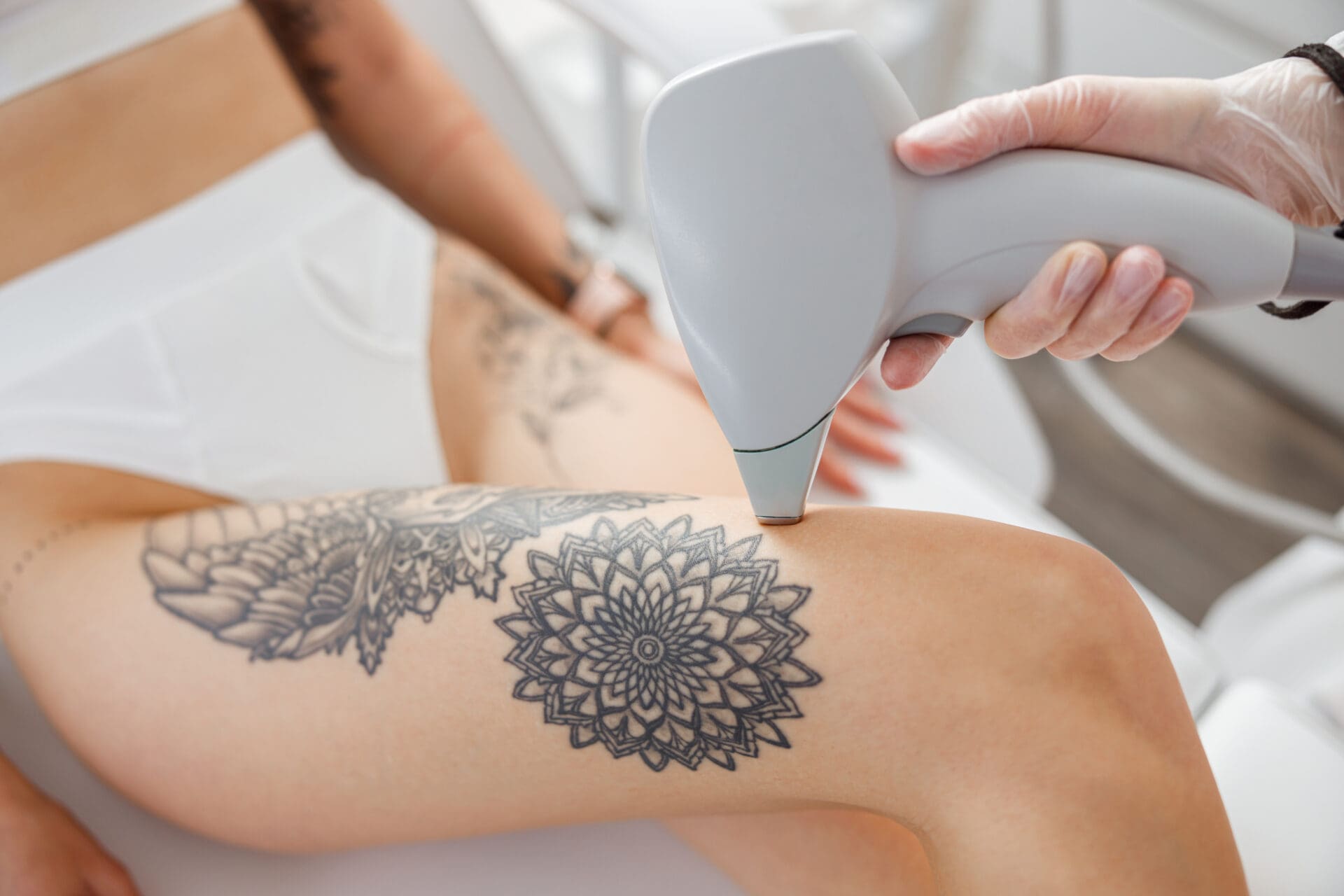
While the tattoo itself cannot be treated, you can still receive laser hair removal on the "clear" skin surrounding the art. Professional clinics follow strict safety protocols to ensure the laser never touches the ink.
The "Border Zone" Strategy
Most experienced technicians will maintain a safety margin of 2 to 3 centimeters around the edge of the tattoo. This prevents "lateral heat spread," where the heat from the laser on clear skin might conduct through the tissue into the tattooed area.
Masking and Shielding
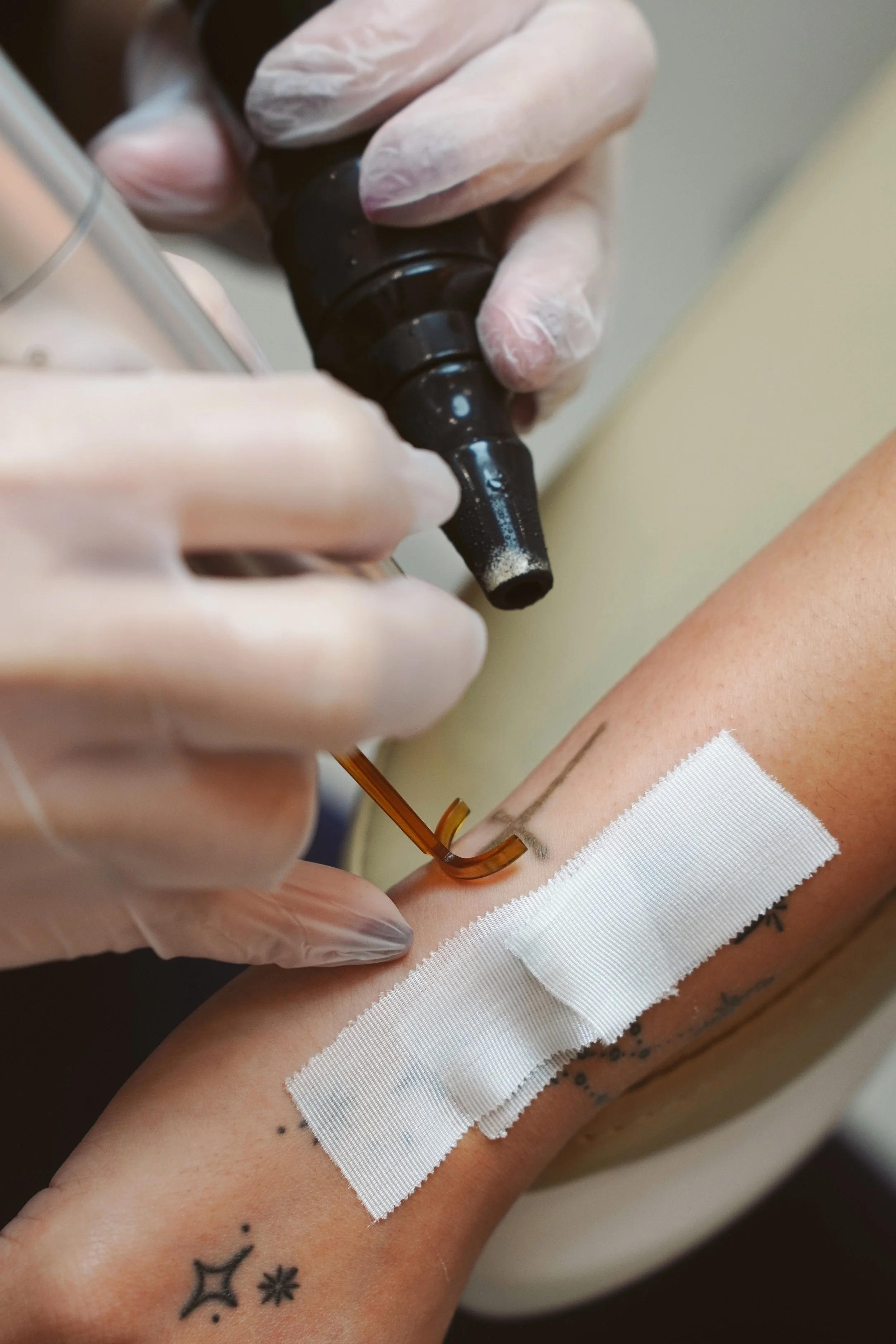
To ensure safety, technicians use physical barriers to cover the tattoo. Common methods include:
- Medical Grade Tape: White medical tape is often used to cover the edges of the tattoo. The color white reflects the laser light, providing an extra layer of protection.
- Wooden Depressors: A simple wooden tongue depressor can be held over the tattoo to act as a physical block as the technician works the laser near the perimeter.
- Custom Templates: For intricate tattoos, some clinics use thick cardstock or plastic templates cut to the shape of the tattoo.
Note: Technicians should never use dark-colored materials or certain plastics to cover a tattoo, as these can absorb heat or melt under the laser’s intensity.
Comparison of Hair Removal Methods on Tattooed Skin
The following table compares the efficacy and safety of various hair removal methods when used specifically on areas with tattoos.
| Method | Safe Directly Over Tattoo? | Permanent Results? | Risk of Ink Damage | Best Use Case |
|---|---|---|---|---|
| Laser Hair Removal | No | Yes (on clear skin) | Extremely High | Large areas surrounding a tattoo. |
| Electrolysis | Yes | Yes | Zero | Removing hair directly inside a tattoo. |
| Shaving | Yes | No | Low (nicks only) | Daily maintenance. |
| Waxing/Sugaring | Yes (on healed tattoos) | No | Low | Temporary removal for large areas. |
| IPL (Intense Pulsed Light) | No | No (Semi) | High | Should be avoided near tattoos. |
Electrolysis: The Gold Standard for Tattooed Skin
If you have hair growing directly through your tattoo that you want permanently removed, electrolysis is the only safe and effective option.
Unlike laser hair removal, which uses light, electrolysis uses a tiny, sterilized probe inserted into the individual hair follicle. An electrical current is then applied to destroy the follicle's growth center. Because this method targets the follicle mechanically and electrically rather than through light absorption, it does not interact with the tattoo pigment in the surrounding dermis.
Benefits of Electrolysis for Tattoos:
- Precision: It treats one hair at a time, making it perfect for cleaning up "stray" hairs that obscure tattoo detail.
- Safety: There is no risk of burning the ink or causing the tattoo to fade.
- Universal: It works on all skin tones and hair colors, including blonde or grey hairs that lasers cannot detect.
Timelines and Prerequisites
If you are planning to get both a tattoo and laser hair removal in the same area, the order of operations is critical.
Laser First, Tattoo Second
The ideal sequence is to complete your laser hair removal sessions before getting your tattoo. Once the hair follicles are destroyed and the skin has fully healed (typically 4–6 weeks after the final session), you can safely get a tattoo over the treated area. This results in a "cleaner" canvas for the artist and eliminates the need for future hair removal.
Waiting Periods for New Tattoos
If you have just received a new tattoo, you must wait until the skin is completely healed—typically 6 to 12 months—before seeking laser hair removal on the adjacent clear skin. A new tattoo is essentially an open wound in the early stages; the skin is compromised and more susceptible to heat-related trauma and infection.
Frequently Asked Questions
Can I get laser hair removal if I have a "white ink" tattoo?
No. Even though white ink is less likely to absorb certain wavelengths of light, it often contains metallic components (like titanium dioxide) that can react to the laser. White ink is notorious for turning black or dark grey when hit by a laser, a process known as "paradoxical darkening."
What should I do if a technician accidentally hits my tattoo with a laser?
Immediately cool the area with a cold compress (not ice directly on the skin). Seek medical advice from a dermatologist. Do not pick at any blisters that form, as this significantly increases the risk of scarring and permanent ink loss.
Is IPL safer for tattoos than professional-grade lasers?
No. IPL (Intense Pulsed Light) is actually more dangerous in some respects because the light is "polychromatic" (it contains many wavelengths) and spreads more broadly than a focused laser beam. This makes it even harder to control around the borders of a tattoo.
Does laser hair removal cause tattoos to "pop" or look better?
Only if the laser is used on the clear skin around the tattoo. By removing the hair in the surrounding area, the contrast can make the tattooed area stand out more, but the laser should never touch the ink itself.
Can I just use a lower setting on the laser to treat a tattoo?
No. Even at "low" settings, the concentration of pigment in tattoo ink is so high that it will absorb enough energy to cause a burn. There is no "safe" setting for hair removal lasers on tattooed skin.
Practical Recommendations
If you are a tattooed individual looking for permanent hair removal, follow these steps to ensure the best results and protect your body art:
- Disclose All Tattoos: During your consultation, point out every tattoo in the treatment area, including small ones or those that have faded.
- Request a Test Spot: If you are treating skin near a tattoo, ask the technician to perform a test spot on clear skin at least 2cm away from the ink to see how the tissue reacts.
- Use a Specialist: Seek out a clinic that uses medical-grade lasers (such as Alexandrite or Nd:YAG) rather than "beauty grade" IPL machines, as the precision is much higher.
- Combine Methods: Use laser hair removal for the large, clear areas of your body, and schedule electrolysis sessions to handle the hair growing directly through your tattoos.
- Verify Experience: Ask your technician specifically about their experience working around tattoos. A knowledgeable professional will immediately explain their shielding and border-zone protocols without being prompted.
Medical Disclaimer: The information provided in this article is for educational purposes and does not constitute medical advice. Always consult with a licensed dermatologist or certified laser technician before undergoing cosmetic procedures.
Image Gallery