Understanding the Mormon Dress Code: Guidelines for Worship, Daily Life, and Temples
The dress code for members of The Church of Jesus Christ of Latter-day Saints (often referred to as Mormons) is rooted in the principles of modesty, respect for the body as a divine gift, and reverence for sacred covenants. While daily...
The dress code for members of The Church of Jesus Christ of Latter-day Saints (often referred to as Mormons) is rooted in the principles of modesty, respect for the body as a divine gift, and reverence for sacred covenants. While daily attire varies by culture, formal worship and temple service require specific standards of grooming and "Sunday best" clothing.
Contents
In 2026, the standards for dress and appearance within The Church of Jesus Christ of Latter-day Saints continue to emphasize the internal spiritual state over outward display. However, there are distinct expectations depending on the setting—whether it is a Sunday worship service, a visit to a sacred temple, or daily life as a representative of the faith. Understanding these guidelines requires a look at the theology of the body, the specific requirements for different church callings, and the sacred nature of the temple garment.
The Theological Foundation of Modesty
For members of the Church, the body is considered a "temple" of God. This belief, derived from New Testament teachings, forms the basis of the Mormon dress code. Modesty is not seen as a means of hiding the body, but rather as a way to show respect for its sacred nature and to avoid drawing undue attention to oneself.
The Church’s approach to modesty has evolved from a list of specific "dos and don'ts" to a more principle-based framework. The 2022 update to the For the Strength of Youth guide, which remains the standard in 2026, encourages members to seek the guidance of the Holy Spirit in making choices about their appearance. The core principle is that clothing should reflect a commitment to Jesus Christ. This typically translates to avoiding clothing that is revealing, overly tight, or extreme in style. In practice, this generally means covering the shoulders, chest, and midriff, and choosing skirts or shorts that reach the knee.
Sunday Worship: The Concept of "Sabbath Best"
When attending weekly Sunday services (Sacrament Meeting), members are encouraged to wear their "Sabbath best." This practice is intended to show respect for God and to set the Sabbath day apart from the rest of the week.
Standards for Men
For men and young men, the traditional standard for Sunday worship is a suit or slacks with a white shirt and a tie. The white shirt is particularly symbolic for those who hold the priesthood and participate in the administration of the Sacrament (communion), representing purity and the uniformity of the service. While colored shirts are not forbidden, the white shirt remains the strong cultural and ecclesiastical preference for those officiating in ordinances. Facial hair was historically discouraged for certain leadership positions, but in recent years, well-groomed beards have become widely accepted in most local congregations, provided they are neat and professional.
Standards for Women
For women and young women, Sunday attire typically consists of a dress or a skirt and blouse. The emphasis is on modesty; dresses usually have sleeves and hemlines that reach the knee. In some global regions, cultural attire that is considered formal and respectful is also encouraged. While there has been a gradual shift toward accepting professional slacks for women in some congregational settings, dresses and skirts remain the most common choice for Sunday worship.
The Temple Garment: An "Internal" Dress Code
Perhaps the most misunderstood aspect of Mormon dress is the temple garment. Adult members who have participated in a sacred ceremony known as the "endowment" in an LDS temple wear these garments under their daily clothing.
The garment is a symbolic representation of the covenants (promises) made with God. It serves as a personal reminder of these commitments and is considered sacred. Because the garment is designed to cover the torso and extend to the knee, it naturally influences the outward dress code of the wearer.
- Coverage: The garment covers the shoulders and the area from the neck to the knee. Consequently, endowed members typically do not wear sleeveless tops, short shorts, or mini-skirts.
- Sacredness: Members are taught to treat the garment with respect. It is not displayed publicly and is considered a private matter between the individual and God.
- Consistency: The garment is intended to be worn throughout the wearer's life, both day and night, providing a continuous reminder of their spiritual journey.
Sacred Temple Ceremonial Clothing
While the temple garment is worn daily, there is a separate category of clothing used exclusively inside the temple for ceremonial purposes. This clothing is not part of the daily "Mormon dress code" that the public sees, but it is central to the faith’s practice.
When entering the temple, members change from their Sunday best into pure white clothing. This white attire symbolizes purity, equality, and a withdrawal from the world. In the temple, there is no distinction of rank or wealth; everyone wears white. For men, this includes white trousers, a white shirt, a white tie, and white socks and shoes. For women, this includes a floor-length white dress or a white skirt and top, along with white hosiery and shoes. During specific ordinances, additional ceremonial items are worn, which carry deep symbolic meaning related to the ancient priesthood.
Missionary Dress and Grooming Standards
Missionaries for The Church of Jesus Christ of Latter-day Saints are the most visible representatives of the faith. Because they are "on the Lord’s errand," their dress code is the most stringent and specific.
Elders (Young Men)
The standard for Elders includes suits or slacks with white shirts and ties. In some tropical climates or during specific types of service, the Church has authorized more casual options, such as short-sleeved white shirts without ties. However, the goal remains a professional, "business-ready" appearance. Hair should be neatly groomed and styled traditionally.
Sisters (Young Women)
The dress code for Sister missionaries has seen significant updates in recent years. While skirts and dresses remain the standard for temple attendance and Sunday worship, Sisters are now authorized to wear professional slacks during their daily proselyting activities in many missions. This change was implemented primarily for safety, mobility, and protection against local climates or insect-borne illnesses. Regardless of whether they wear skirts or slacks, the clothing must be professional and modest.
Dress Standards at Church-Owned Universities
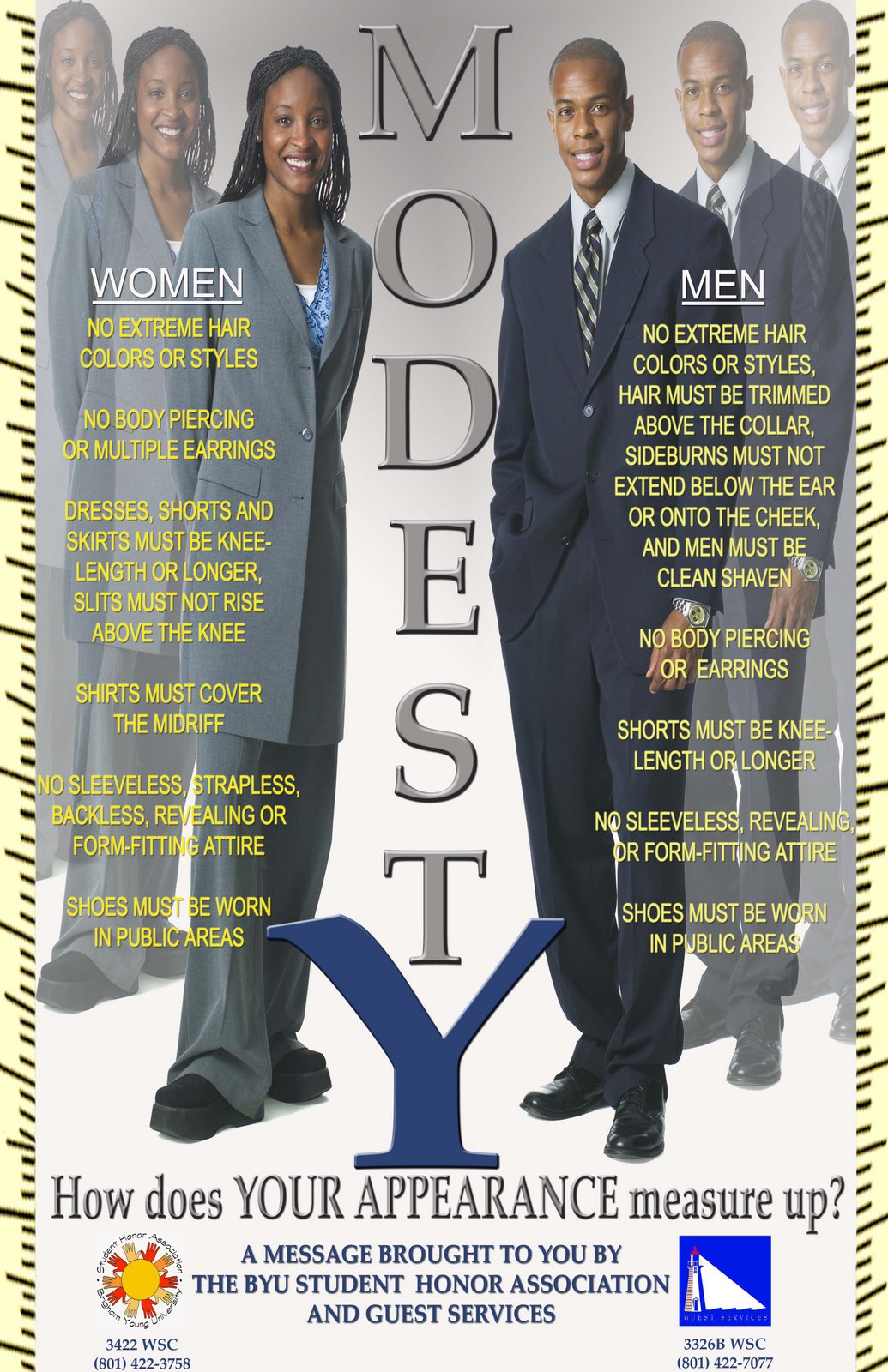
Institutions like Brigham Young University (BYU) have a specific "Honor Code" that includes dress and grooming standards. Students and faculty agree to these standards as a condition of enrollment or employment.
| Category | Standard for Men | Standard for Women |
|---|---|---|
| Daily Attire | Clean, neat, and modest. No sleeveless shirts. | Modest in fit and length. No sleeveless tops. |
| Grooming | Clean-shaven or well-groomed beards (per 2024 updates). | Modest hairstyles; avoid "extreme" colors. |
| Piercings | Generally discouraged for men. | One pair of earrings is traditional. |
| Formal Events | Suit or dress slacks and tie. | Modest formal dresses or skirts. |
These standards are often stricter than what is required for general church membership. For example, while a member in a local congregation might have several piercings or unique hair colors without ecclesiastical issue, a student at a BYU campus is expected to adhere to the more conservative institutional guidelines.
Practical Considerations for Visitors
Visitors are always welcome at LDS worship services and are not required to adhere to a strict dress code. However, most visitors feel most comfortable in "business casual" or "Sunday best" attire. For men, this might be a polo shirt or button-down with khakis; for women, a modest dress or slacks. The goal of the community is to create an environment of reverence, and visitors who dress respectfully will find themselves fitting in easily.
It is important to note that visitors may not enter the temple for ceremonies, as these require specific "temple recommends" issued to members who meet certain spiritual criteria. However, visitors are welcome at temple grounds and in the public visitor centers, where the general modesty guidelines (no sleeveless tops or short-shorts) are appreciated.
Frequently Asked Questions
Can Mormon women wear pants to church?
Yes, women can wear pants to church. While skirts and dresses are the cultural tradition and the most common choice, there is no official policy forbidding women from wearing professional slacks to Sunday worship services. In many parts of the world, women wear various forms of modest trousers or traditional cultural clothing.
Why do some Mormons wear a "white shirt" specifically?
The white shirt has become a symbol of the priesthood in the LDS Church. It represents purity and helps create a sense of uniformity and order when men are performing sacred duties, such as passing the Sacrament. While it is not a requirement for salvation, it is a strongly encouraged standard for those serving in priesthood capacities.
What are the rules regarding tattoos and piercings?
The Church discourages tattoos and multiple piercings, citing the principle that the body is a temple. However, having a tattoo does not prevent someone from becoming a member, attending the temple, or holding callings. Many members who joined the Church later in life have tattoos. The current guidance focuses on the principle of treating the body with respect rather than a strict prohibitory law.
Is the Mormon dress code the same all over the world?
The core principles of modesty and "Sabbath best" are universal, but the application varies by culture. In the Pacific Islands, men may wear a tupenu (a formal skirt) for church. In parts of Africa, colorful traditional fabrics are common. The Church emphasizes that modesty and reverence are about the heart and the local definition of "respectful," rather than American cultural standards.
Are there exceptions to the temple garment rule?
Yes. Members are taught to use common sense. The garment is typically not worn during activities that are not compatible with it, such as swimming, heavy exercise (where it would be impractical), or medical procedures. Members are encouraged to return to the garment as soon as the activity is completed.
Summary and Next Steps
The Mormon dress code is a blend of cultural tradition and deeply held religious conviction. While it may seem restrictive from the outside, for members of The Church of Jesus Christ of Latter-day Saints, it is a daily practice of faith. By choosing clothing that aligns with their covenants, they seek to maintain a constant connection to their spiritual goals.
If you are planning to attend an LDS service for the first time, the best approach is to aim for "Sunday best" while prioritizing comfort and modesty. You do not need a suit or a specific style of dress to be welcomed. For those seeking more specific information on local standards, visiting the official Church website or speaking with local members can provide clarity tailored to your specific region or event.
Image Gallery