FHA One-Time Close Construction to Permanent Loans: Eligibility, Process, and Costs
An FHA One-Time Close construction to permanent loan is a government-backed mortgage that combines the financing for land acquisition, home construction, and the permanent mortgage into a single transaction with one closing. This finan...
An FHA One-Time Close construction to permanent loan is a government-backed mortgage that combines the financing for land acquisition, home construction, and the permanent mortgage into a single transaction with one closing. This financing structure allows eligible borrowers to secure a home construction loan with a down payment as low as 3.5%, locking in their permanent interest rate before construction begins and eliminating the need to pay double closing costs.
Contents
For buyers looking to build a custom primary residence without paying two separate sets of closing fees or risking interest rate increases during construction, the Federal Housing Administration (FHA) Single-Close program offers a streamlined financing pathway. This guide details how the FHA OTC loan functions, mandatory qualification guidelines, construction draw schedules, total costs, and key considerations for prospective homeowners.
Core Eligibility Requirements
To qualify for an FHA Single-Close construction loan, both the borrower and the prospective builder must meet specific guidelines established by the U.S. Department of Housing and Urban Development (HUD) alongside individual lender underwriting overlays.
- Borrower Qualification: Minimum 580 Credit Score / 3.5% Down
- Builder Approval: Licensed, Insured, FHA-Registered
- Single Closing: Land purchase + Construction + Permanent Note
- Construction Phase: Disbursed via Milestone Inspections & Draws
- Permanent Conversion: Automatic Rollover (No Second Closing)
Borrower Financial Standards
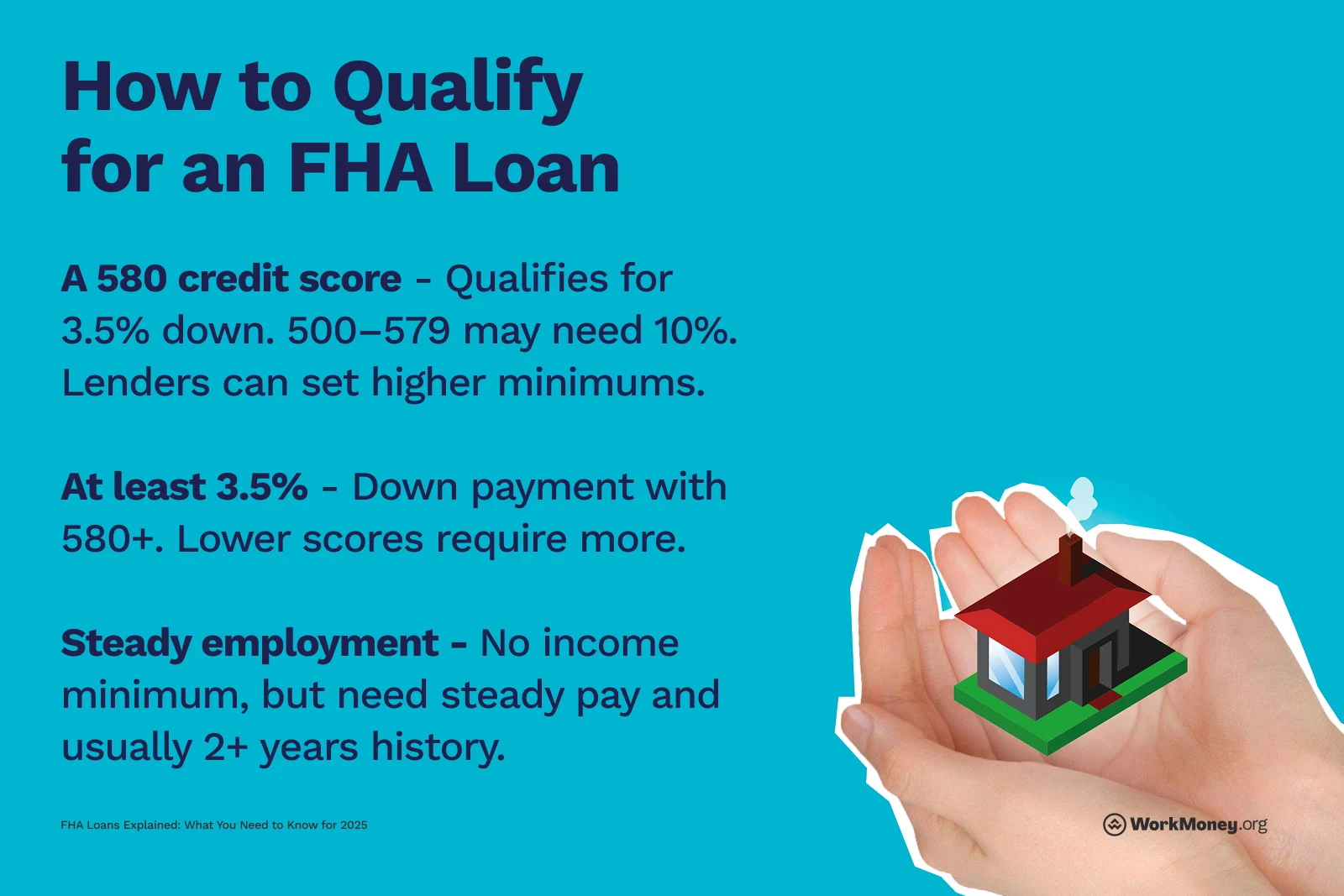
- Credit Score: The statutory minimum FHA credit score requirement for 3.5% down payment is 580. However, because construction loans carry higher risk, most FHA-approved lenders enforce a lender overlay requiring a minimum FICO score between 620 and 640.
- Down Payment: A minimum down payment of 3.5% of the total acquisition cost (combined land purchase price and construction contract value) is required. Existing equity in the land can be applied directly toward the down payment requirement.
- Debt-to-Income (DTI) Ratio: Standard guidelines cap DTI ratios around 43%, though automated underwriting systems (AUS) may approve DTI ratios up to 46% to 50% with strong compensating factors, such as higher cash reserves.
- Occupancy: The property must be constructed as the borrower's primary residence. Second homes, investment properties, and speculative builds are strictly ineligible.
- Employment and Income: Borrowers must provide standard verification of two years of stable employment history, along with recent tax returns, W-2s, and pay stubs.
Builder and Property Rules
- Approved Builder Requirement: Borrowers cannot act as their own general contractor (self-builds are prohibited). Construction must be performed by a licensed, insured, and bonded general contractor who registers with the lender and meets FHA builder guidelines.
- Property Types: Eligible structures include single-family detached homes, modular homes, manufactured housing, and select multi-unit properties (up to four units, provided the owner occupies one unit).
- Location & Warranties: The home must be built on a permanent foundation meeting FHA structural specifications. Builders must typically provide a one-year builder warranty (or a 10-year structural warranty depending on state standards).
The FHA OTC Loan Process: Step-by-Step
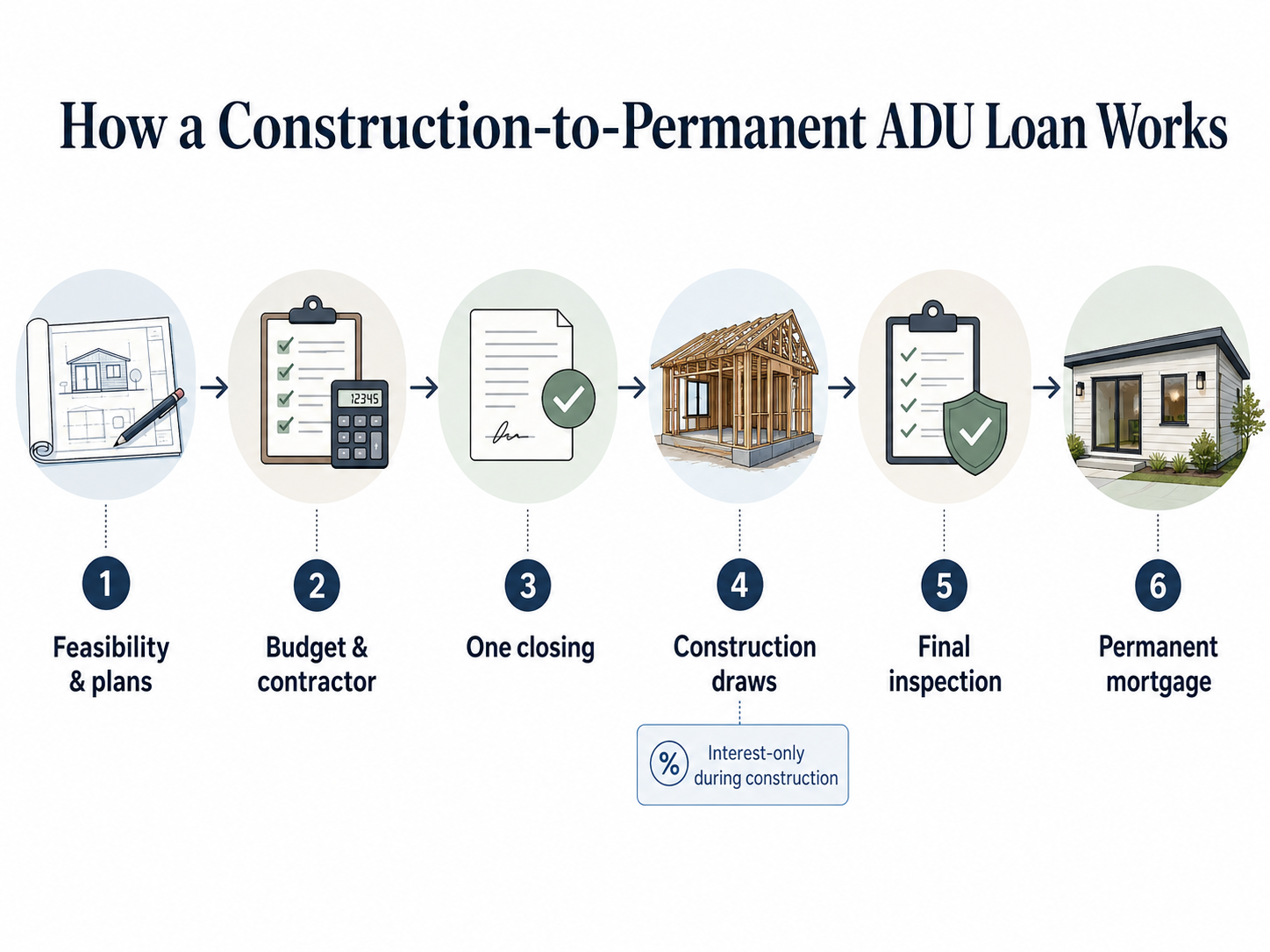
Navigating an FHA Single-Close transaction requires precise coordination between the homebuyer, the general contractor, the lender, and an FHA roster appraiser.
FHA OTC Construction Pipeline:
- Pre-Approval: Verify Credit, DTI, & Maximum Borrowing Capacity
- Builder Selection: Hire General Contractor & Finalize Plans/Specs
- Appraisal: FHA Appraiser Reviews Plans & Land (Subject To)
- Final Underwrite: Single Loan Closing & Escrow Funding
- Construction: Building Commences; Monitored Draw Disbursements
- Final Inspection: Certificate of Occupancy & Automatic Conversion
Step 1: Prequalification and Pre-Approval
Before signing contracts or creating architectural blueprints, the borrower completes a formal loan application with an FHA-approved lender offering the OTC program. The lender evaluates creditworthiness, verifies income, and determines the maximum total loan amount.
Step 2: Site Selection and Builder Contracting
The borrower selects a build site (or incorporates land they already own) and contracts with an approved general contractor. The builder prepares detailed architectural blueprints, a line-item budget (spec sheet), and a construction schedule detailing project milestones.
Step 3: FHA Appraisal and Document Review
An FHA-certified appraiser reviews the construction plans, spec sheet, and land valuation to perform a "subject-to-completion" appraisal. This establishes the projected market value of the finished home. Concurrently, the lender’s risk department verifies the builder's licenses, liability insurance, and financial background.
Step 4: Loan Closing (Single Closing)
Once full underwriting approval is granted, the single loan closing takes place. The loan proceeds pay off any existing land balance, fund the initial land transfer (if applicable), and establish an escrow account for construction draws. The interest rate for the permanent 15-year or 30-year term is locked prior to this closing.
Step 5: Construction and Draw Phase
Construction begins. The lender releases funds to the builder in scheduled stages (draws) as work is completed. An independent FHA inspector or qualified third-party inspector inspects the property at each milestone (e.g., foundation pouring, framing, rough plumbing/electrical, dry-in) to verify completion before funds are released. During this period, interest-only payments on the drawn funds may be required, or the lender may structure interest payments directly into the total loan balance.
Step 6: Completion and Permanent Conversion
When construction finishes, the local municipality issues a Certificate of Occupancy, and the FHA appraiser performs a final inspection. The remaining retainage fees are paid to the contractor, and the loan automatically converts into fully amortizing monthly payments of principal, interest, taxes, and insurance (PITI) without a second settlement process.
Financing Breakdown and Comparison
Understanding how an FHA OTC loan compares to alternative financing methods helps buyers evaluate total transaction costs, risk exposure, and down payment structures.
| Feature | FHA One-Time Close (Single-Close) | Two-Close Construction Loan | Conventional One-Time Close |
|---|---|---|---|
| Number of Closings | 1 | 2 | 1 |
| Minimum Down Payment | 3.5% | 5%–20% (varies by lender) | 3%–5% |
| Minimum Credit Score | 580 (Lender overlays often 620+) | 680 to 720 typical | 660 to 700 typical |
| Rate Lock Timing | Before construction starts | Locked upon 2nd closing | Before construction starts |
| Closing Costs | Single set of fees | Double closing fees | Single set of fees |
| Mortgage Insurance | Upfront MIP (1.75%) + Annual MIP | Depends on loan type | PMIP if down payment < 20% |
| Self-Build Allowed? | No | Seldom | No |
Upfront and Ongoing Costs
Like standard FHA purchase loans, FHA Single-Close financing includes specific mortgage insurance requirements:
- Upfront Mortgage Insurance Premium (UFMIP): Equal to 1.75% of the total base loan amount, which is typically financed directly into the loan balance at closing.
- Annual Mortgage Insurance Premium (MIP): Paid monthly, ranging from 0.45% to 0.55% for most 30-year terms, depending on the loan-to-value (LTV) ratio and base loan amount.
- Closing Costs and Contingency Escrow: Closing fees cover title work, underwriting, escrow services, recording fees, and initial hazard insurance. Lenders also require a contingency reserve (often 5% to 10% of construction costs) to handle unforeseen expenses during building.
Benefits and Operational Limitations
Evaluating the advantages and drawbacks of the FHA OTC mortgage ensures realistic expectations for prospective homeowners.
Advantages
- Rate Protection: Securing an interest rate lock before ground is broken protects the homebuyer from rising interest rates during the 6 to 12 months of construction.
- Lower Initial Cash Outlay: Requiring only 3.5% down lowers the barrier to entry compared to conventional construction programs that demand 10% to 20% equity.
- Savings on Settlement Fees: Eliminating the second closing saves thousands of dollars in settlement agent fees, title insurance premiums, underwriting fees, and appraisal charges.
- Simpler Qualification: FHA credit and DTI guidelines remain more flexible than conventional construction lending programs.
Limitations
- Lender Overlays: While HUD allows a 580 minimum credit score, finding an FHA construction lender willing to approve scores below 620 can be difficult due to strict internal underwriting rules.
- No Owner-Builders: FHA guidelines strictly require a qualified, independent general contractor. Sweat equity cannot be substituted for the monetary down payment.
- Strict Construction Timelines: Projects must generally be completed within a specific period (typically 6 to 12 months from closing). Extensions require formal lender approval.
- FHA Mortgage Insurance: Unlike conventional loans where Private Mortgage Insurance (PMI) drops off once equity reaches 20%, FHA MIP typically remains for the life of the loan when closing with less than 10% down.
Practical Recommendations for Applicants
Executing a successful FHA OTC loan requires systematic preparation:
- Get Pre-Approved First: Do not sign land acquisition contracts or pay architectural deposits before securing written pre-approval from a mortgage lender that actively processes FHA Single-Close products.
- Vet Builders Early: Ensure your preferred builder carries general liability insurance, worker’s compensation coverage, and is willing to complete the lender's registration and draw compliance process.
- Account for Maximum FHA Loan Limits: Verify that the combined land cost, soft costs (permits, utility hookups), and hard construction costs remain within the local county FHA loan limits set annually by HUD.
- Maintain Cash Reserves: Beyond the down payment, maintain a cash reserve for non-financeable items such as utility connection fees, unexpected change orders, and temporary housing costs during construction delays.
Frequently Asked Questions
Can I use land I already own toward the down payment?
Yes. If you already own the land, the equity in your property can count directly toward the mandatory 3.5% down payment requirement. If the appraised value of the land exceeds your initial purchase price, many lenders allow the appraised value to count as your equity contribution.
What happens if construction costs exceed the budget during the build?
FHA OTC loans are closed for a fixed amount prior to construction. Any cost overruns resulting from builder change orders or decorative upgrades chosen during construction must be paid out of pocket by the borrower or covered by an established contingency reserve fund built into the initial construction contract.
Are manufactured and modular homes eligible for FHA OTC loans?
Yes. Off-site constructed homes, including modular and manufactured housing, qualify for FHA Single-Close financing provided they are installed on an approved permanent foundation, meet local building codes, and comply with HUD Structural Engineering guidelines.
Can interest payments during construction be rolled into the loan?
Yes. Depending on how the lender structures the loan agreement, interest accrued on construction draw disbursements during the build period can be financed into the total loan amount, preventing the borrower from making double housing payments while waiting for their new home to be built.
What is the maximum construction period allowed under FHA OTC guidelines?
Most lenders mandate that home construction must be completed within 6 to 12 months from the initial closing date. If weather delays or supply chain issues extend the build timeline, the contractor and borrower must submit a formal extension request to the lender.
Next Steps
To begin an FHA One-Time Close construction project, request a formal consultation with an FHA-approved mortgage lender specializing in single-close construction financing. Prepare your recent financial documentation (W-2s, tax returns, bank statements), identify potential land parcels, and select licensed general contractors who meet FHA participation requirements.
Image Gallery