The Definitive Guide to the Best Star Spangled Banner Performances in History
Evaluating the best Star-Spangled Banner performance requires looking at a complex blend of vocal precision, emotional resonance, historical context, and cultural impact. While hundreds of artists have tackled Francis Scott Key’s notor...
Evaluating the best Star-Spangled Banner performance requires looking at a complex blend of vocal precision, emotional resonance, historical context, and cultural impact. While hundreds of artists have tackled Francis Scott Key’s notoriously difficult composition, a select few renditions have transcended mere musical interpretation to become defining cultural milestones.
Contents
When millions of viewers tune into major national events like the Super Bowl, the World Series, or presidential inaugurations, the National Anthem serves as a rare moment of collective cultural pause. The composition itself—spanning an octave and a half—is notoriously treacherous for vocalists, making flawless execution rare and truly transcendent performances unforgettable.
Understanding the Vocal Challenge of The Star-Spangled Banner
To appreciate why certain renditions stand out above the rest, one must first understand the severe technical demands of the song. Written by Francis Scott Key in 1814 and officially adopted as the United States national anthem in 1931, the composition is set to the tune of a British social club song called "To Anacreon in Heaven."
The primary challenge lies in its expansive vocal range. The melody spans an octave and a half (specifically, a compound interval of a major tenth), demanding both rich low chest notes and soaring head tones. Vocalists who rely heavily on studio production or auto-tune are immediately exposed in a live stadium setting, where acoustics are notoriously poor and wind interference can distort pitch.
Furthermore, the emotional weight of the performance adds psychological pressure. Performers must balance technical precision with patriotic reverence, avoiding the temptation to over-sing while still delivering enough dynamic power to captivate a stadium of tens of thousands and a television audience of millions.
Historic Milestones in National Anthem Performances
Over the decades, televised sports and national broadcasts have created a distinct subgenre of vocal performance. Certain eras and artists have redefined how the anthem is approached, shifting from traditional orchestral accompaniments to soaring acapella arrangements and soulful R&B interpretations.
Whitney Houston at Super Bowl XXV (1991)
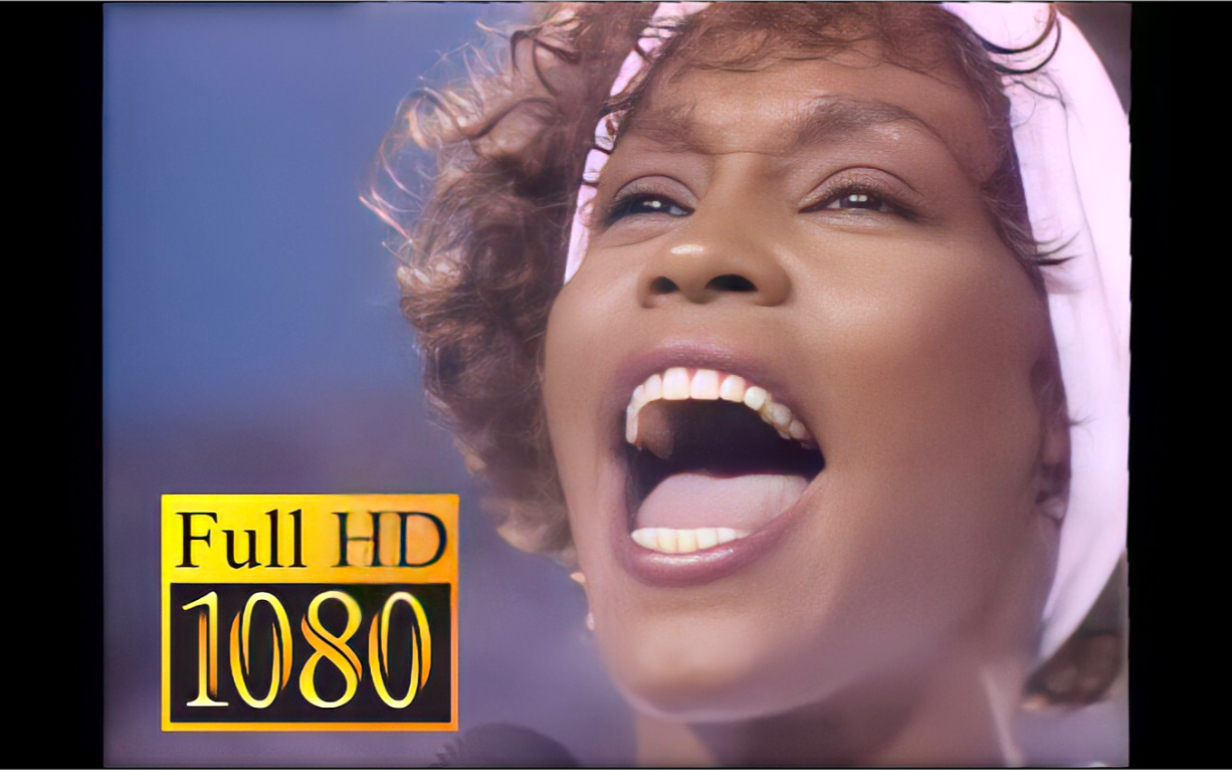
Widely regarded by music critics and the public alike as the gold standard of modern anthem performances, Whitney Houston’s delivery at Super Bowl XXV in Tampa, Florida, remains unmatched. Set against the backdrop of the Gulf War, Houston’s performance captured the collective anxiety and patriotism of the nation in real-time.
Accompanied by the Florida Orchestra, Houston performed a soaring, rhythmically nuanced version that utilized a 6/8 time signature modification, giving the song a marching cadence that drove its emotional peak. Her flawless pitch control, dynamic phrasing, and breathtaking vocal run on the final lines ("And the home of the brave") set a new benchmark for every subsequent artist.
Marvin Gaye at the 1983 NBA All-Star Game
In stark contrast to Whitney Houston’s grand orchestral delivery, soul icon Marvin Gaye transformed the Star-Spangled Banner into an intimate, groove-infused masterpiece at the 1983 NBA All-Star Game in Los Angeles.
Using a synthesized drum machine track to lay down a slow, soulful rhythm, Gaye injected jazz and blues phrasing into the traditional melody. Initially met with skepticism by sports executives, Gaye’s deeply personal and rhythmic interpretation proved that the anthem could be modernized without losing its core dignity. It remains one of the most influential live vocal performances of the 20th century.
Jimi Hendrix at Woodstock (1969)
While not a vocal performance, Jimi Hendrix’s instrumental electric guitar rendition of the Star-Spangled Banner at the Woodstock Music and Art Fair is etched into history as one of the most powerful artistic statements of the 20th century.
Playing on a white Fender Stratocaster, Hendrix used heavy distortion, feedback, and deliberate sonic manipulation to mimic the sounds of war—screaming sirens, falling bombs, and gunfire—symbolizing the turbulent cultural climate of the Vietnam War era. It transcended music to become a profound anti-war political protest, proving that the anthem's meaning could be recontextualized through instrumentation alone.
Comparing Legendary National Anthem Interpretations
To better understand the stylistic differences among top-tier performances, the following table compares key aspects of the most celebrated renditions in modern history.
| Artist | Event & Year | Musical Style | Defining Characteristic |
|---|---|---|---|
| Whitney Houston | Super Bowl XXV (1991) | Pop / Orchestral | Unrivaled vocal power and emotional resonance during wartime. |
| Marvin Gaye | NBA All-Star Game (1983) | Soul / R&B | Smooth rhythmic groove and innovative synthesized accompaniment. |
| Jimi Hendrix | Woodstock (1969) | Rock / Instrumental | Raw political statement utilizing electric guitar feedback and distortion. |
| Lady Gaga | Super Bowl 50 (2016) | Pop / Theatrical | Brilliant theatrical delivery combining operatic drama and vocal clarity. |
| Chris Stapleton | Super Bowl LVII (2023) | Country / Soul | Stripped-down acoustic delivery highlighting raw, gravelly vocal authenticity. |
Modern Era Standouts and Contemporary Interpretations
In recent years, artists have continued to push the boundaries of how the anthem is presented, moving away from hyper-embellished vocal gymnastics toward raw, acoustic authenticity.
Chris Stapleton at Super Bowl LVII (2023)
Country artist Chris Stapleton delivered a masterclass in minimalism at Super Bowl LVII. Accompanied only by his electric guitar, Stapleton stripped away all backing tracks, orchestral arrangements, and unnecessary vocal runs. His gritty, soulful delivery relied entirely on dynamic control and emotional honesty. The performance was widely praised for bringing a sense of calm and unity to the massive sporting event, demonstrating that less is often more when tackling such a complex composition.
Lady Gaga at Super Bowl 50 (2016)
Pop superstar Lady Gaga brought a blend of theatrical drama and classical vocal training to her 2016 Super Bowl performance. Wearing a glittering red Gucci suit, Gaga hit every note with surgical precision, utilizing a traditional piano arrangement that built steadily in intensity. Her performance proved her versatility as a vocalist capable of holding a massive stadium audience in rapt attention through sheer technical competence.
Common Pitfalls in National Anthem Performances
Even seasoned professional vocalists occasionally stumble when performing the Star-Spangled Banner. Analyzing past missteps highlights the extreme difficulty of the piece:
- Over-Embellishment: Adding excessive vocal runs (melisma) can obscure the core melody, making it difficult for the audience to sing along or connect with the lyrics.
- Tempo Distortion: Dragging out the tempo too slowly drains the song of its patriotic momentum, while rushing through it strips away its solemnity.
- Key Selection: Choosing a key that is either too high or too low for the artist's natural vocal range often results in strained high notes or inaudible low notes during the opening phrases.
- Acoustic Mismanagement: Failing to account for stadium echo and audio latency can throw off even the most experienced performers, leading to pitch drift.
Frequently Asked Questions
What makes the Star-Spangled Banner so difficult to sing?
The primary difficulty stems from its wide vocal range, spanning an octave and a half. Vocalists must effortlessly transition from low chest resonance on lines like "Oh, say can you see" to soaring head tones on "O'er the ramparts we watched," all while managing live stadium acoustics and high-pressure broadcasting environments.
Is Whitney Houston's 1991 performance live?
Yes, Whitney Houston’s performance at Super Bowl XXV was sung live. While there was a pre-recorded instrumental track by the Florida Orchestra to ensure broadcast stability across stadium speakers, Houston's legendary vocal delivery was entirely live and unedited.
Why do some artists use instrumental versions instead of vocals?
Instrumental versions—whether played on an electric guitar like Jimi Hendrix's Woodstock performance or performed by a military brass band—allow artists and institutions to honor the composition without the risk of vocal strain or lyrical missteps, while also offering unique artistic interpretations.
How has the style of anthem performances changed over time?
Historically, performances leaned heavily on traditional military brass or classical orchestral arrangements. Over the past four decades, artists from pop, soul, R&B, and country genres have personalized the song, introducing syncopated rhythms, stripped-down acoustic accompaniments, and diverse vocal stylings.
What is the proper etiquette when listening to the National Anthem?
According to the United States Flag Code, civilians should face the flag with their right hand placed over their heart. Those in uniform should render a military salute. Men should remove any non-religious headwear.
Conclusion and Next Actions
Evaluating the best Star-Spangled Banner performance ultimately depends on whether one values vocal perfection, emotional cultural timing, or daring artistic reinvention. While Whitney Houston's 1991 soaring orchestral delivery remains the technical gold standard, performances by Marvin Gaye, Chris Stapleton, and Jimi Hendrix prove that emotional honesty and stylistic courage are equally vital. For music enthusiasts and historians alike, revisiting these legendary broadcasts offers a fascinating look at how a single song can repeatedly unite, challenge, and inspire a nation.
Image Gallery