Understanding Paid-Up Life Insurance and Its Relationship to the Death Benefit
When you hold a permanent life insurance policy, the question of whether you receive the "paid-up" portion in addition to the base face amount is a common point of confusion. In most standard permanent life insurance contracts, the ans...
When you hold a permanent life insurance policy, the question of whether you receive the "paid-up" portion in addition to the base face amount is a common point of confusion. In most standard permanent life insurance contracts, the answer is no; they are not additive in the way many policyholders assume. Instead, paid-up additions typically represent an increase in the total death benefit, meaning the "paid-up" amount is already integrated into the total payout your beneficiaries receive upon your passing.
Contents
Defining the Anatomy of a Permanent Life Insurance Policy
To understand how death benefits are calculated, one must first distinguish between the base policy and the various components that contribute to its total value. A permanent life insurance policy—such as Whole Life or Universal Life—typically includes a face amount, which is the guaranteed death benefit set at the time of purchase.
The "face amount" acts as the bedrock of your coverage. However, many of these policies are "participating," meaning they are eligible to receive dividends if the insurance company performs well financially. When you choose to use these dividends to purchase "Paid-Up Additions" (PUAs), you are essentially using your share of company profits to buy small, extra chunks of fully paid-up insurance.
Because these additions are "paid-up," you do not owe further premiums on them. Crucially, each PUA adds to the total death benefit of the policy. Therefore, when your beneficiaries file a claim, they receive the original face amount plus the cumulative value of all the paid-up additions you have purchased over the years. They are not receiving two separate payouts; they are receiving a single, larger death benefit that incorporates both components.
How Paid-Up Additions Function in Practice
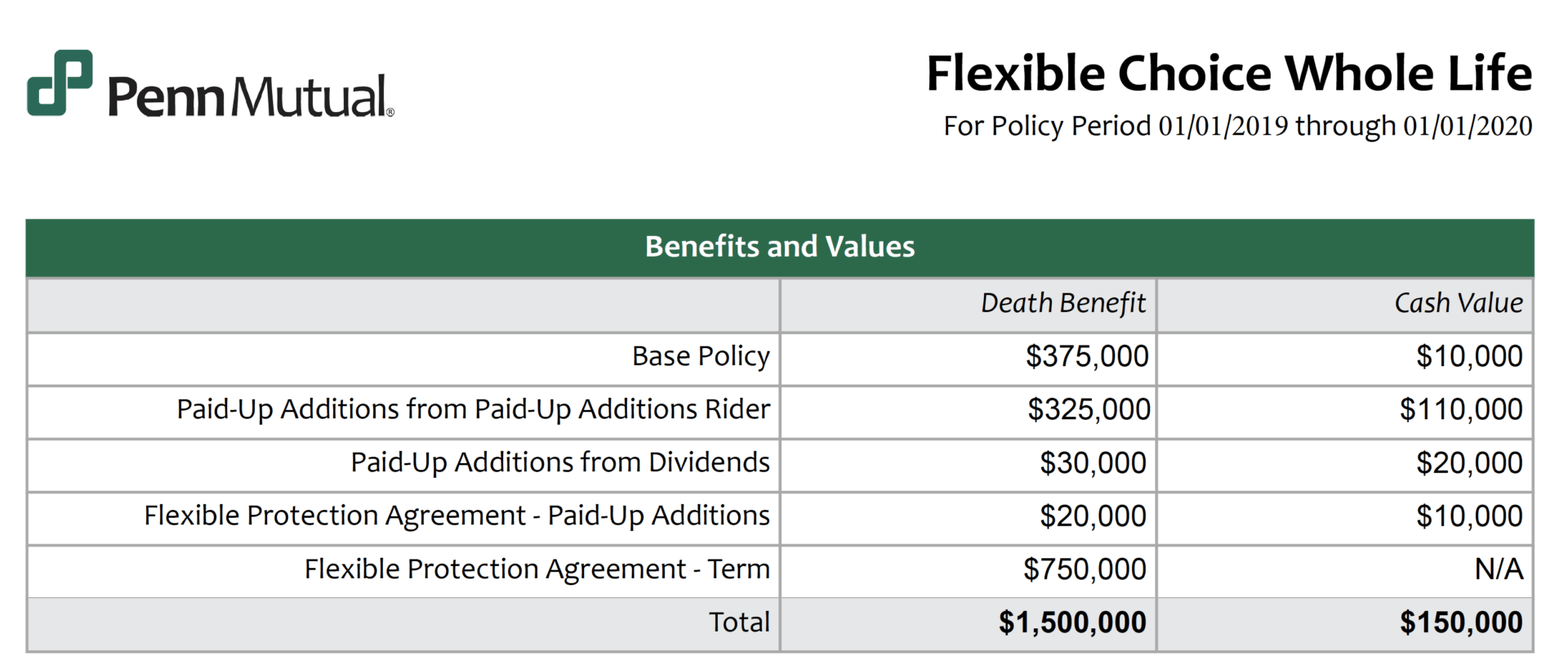
Paid-Up Additions are a unique feature because they carry their own cash value and their own death benefit. When you look at your annual policy statement, you will often see two distinct figures: the "Base Policy Death Benefit" and the "Paid-Up Additions Death Benefit."
This separation is necessary for actuarial tracking, as the company needs to know exactly how much coverage is guaranteed by the base contract versus how much is guaranteed by the supplementary additions. However, for the beneficiary, the distinction is largely administrative. The total payout is the sum of these two figures.
The Mechanism of Addition
- Dividend Generation: The insurance company declares a dividend based on its surplus, investment returns, and operational efficiency.
- Reinvestment: You elect the "Paid-Up Additions" dividend option.
- Purchase: The company uses the dividend amount to purchase a small, permanent amount of insurance at your attained age.
- Integration: This new coverage is added to your existing policy, increasing both your total death benefit and your policy’s cash surrender value.
Why the "In Addition To" Confusion Occurs
The confusion regarding whether these are "in addition to" the face amount usually stems from how policy illustrations are presented. Sales agents often emphasize that PUAs increase the death benefit "on top" of the base policy. A client might interpret this to mean that the base policy remains a stagnant, isolated payout while the PUAs form a secondary, separate fund.
In reality, the total death benefit is a fluid, growing number. It is mathematically impossible for the face amount to remain static if you are constantly adding to it via PUAs. If you were to pass away today, the insurance company would take the base face amount, add the cash-value-backed PUA component, and issue a single check to your beneficiaries.
Comparing Benefit Components
The table below outlines how various components of a permanent policy interact with the total death benefit at the time of a claim.
| Policy Component | Effect on Death Benefit | Premium Requirement |
|---|---|---|
| Base Face Amount | Primary death benefit amount | Required until death/maturity |
| Paid-Up Additions (PUA) | Increases total death benefit | Fully paid at purchase |
| Term Riders | Temporary increase in benefit | Required for the term duration |
| Policy Loans | Decreases net death benefit | N/A (Borrowed from cash value) |
| Dividends (Cash) | No effect on death benefit | N/A (Paid to owner) |
The Impact of Policy Loans on the Death Benefit
While paid-up additions increase your death benefit, it is equally important to understand what can decrease it. If you take a loan against the cash value of your policy, the insurance company will charge interest. If that loan remains unpaid at the time of your death, the insurance company will deduct the outstanding loan balance plus any accrued interest from the total death benefit.
This is why it is vital to track your net death benefit. Even if you have thousands of dollars in paid-up additions, a large, outstanding loan can erode the total amount paid to your beneficiaries. This interaction reinforces the need to view your policy as a holistic financial instrument rather than a collection of independent parts.
Tax Considerations and Regulatory Status
In most jurisdictions, the death benefit—including the portion derived from paid-up additions—is generally received by the beneficiary income-tax-free under current tax codes. This is a significant advantage of permanent life insurance. Because the PUAs are treated as part of the policy’s total death benefit, they inherit the tax-favored status of the base contract.
However, if you choose to surrender your paid-up additions for their cash value while you are still alive, you may face tax consequences if the cash value withdrawn exceeds your "cost basis" (the total premiums you have paid into the policy). This is often referred to as a "taxable gain." Consult with a qualified tax professional or financial advisor to understand how your specific policy’s growth affects your personal tax liability.
Essential Questions for Policyholders
To ensure you fully understand your own coverage, consider these common inquiries:
Does the death benefit of my PUAs grow over time?
No, the death benefit of a specific PUA remains constant once purchased. However, because you likely purchase new PUAs each year with subsequent dividends, your total death benefit continues to climb as you accumulate more additions.
Can I stop purchasing paid-up additions?
Yes. Most policies allow you to change your dividend option at any time. If you decide you would rather receive dividends as cash or use them to reduce your premium payments, you can instruct the insurance carrier to stop the PUA purchase process.
Is the PUA death benefit guaranteed?
Yes, once a PUA is purchased, the death benefit associated with it is guaranteed by the insurance company, just like the base policy, provided the policy itself remains in force.
What happens to my PUAs if the policy lapses?
If the policy lapses due to non-payment of premiums, the PUA portion effectively disappears as the entire contract terminates. This is why maintaining the base policy is critical; the additions cannot exist without the foundation of the base policy.
Can I withdraw the PUA death benefit?
You cannot withdraw the "death benefit" component of a PUA. You can, however, surrender the "cash value" of the PUA. If you surrender the cash value, the death benefit associated with that specific PUA will be permanently removed from your total coverage.
Strategic Next Steps for Policyholders
If you are unsure how your policy handles paid-up additions, your first step should be to request an in-force illustration from your insurance carrier. This document is a custom report generated for 2026 that shows exactly how your policy is performing based on its current status, including the current total death benefit, the amount of base insurance, and the accumulated value of your paid-up additions.
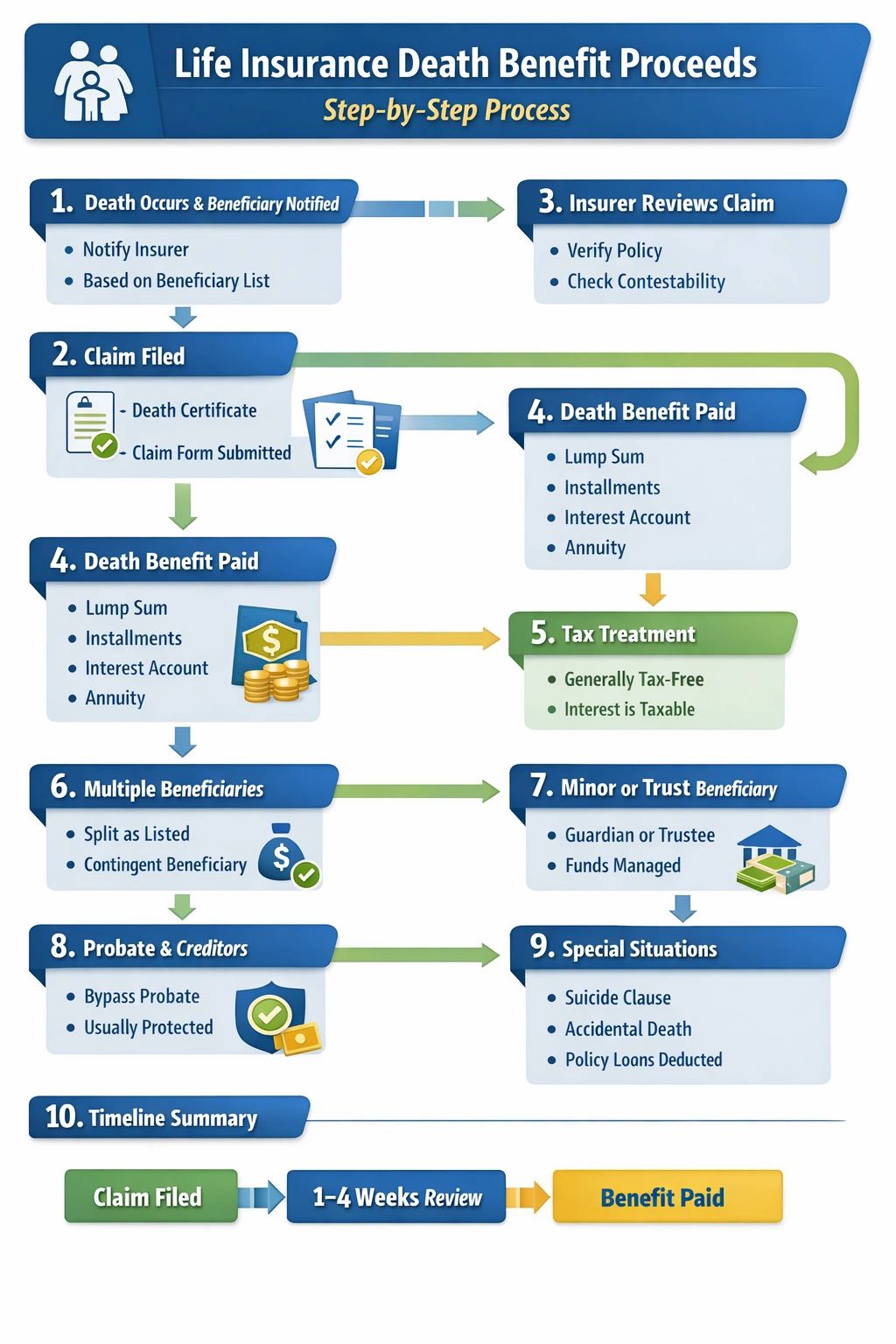
Reviewing this document allows you to see the exact relationship between your premiums, your dividends, and your total death benefit. If you are unsatisfied with the current growth, speak with your agent about reallocating your dividend options. Remember, the goal of these additions is to ensure your coverage keeps pace with inflation and your evolving financial needs. By understanding that these benefits are integrated into a single, cohesive payout, you can better plan your estate and ensure your beneficiaries are adequately protected.
Image Gallery