Comprehensive Guide to Ray Bradbury's "All Summer in a Day": Text Access, Summary, and Literary Analysis
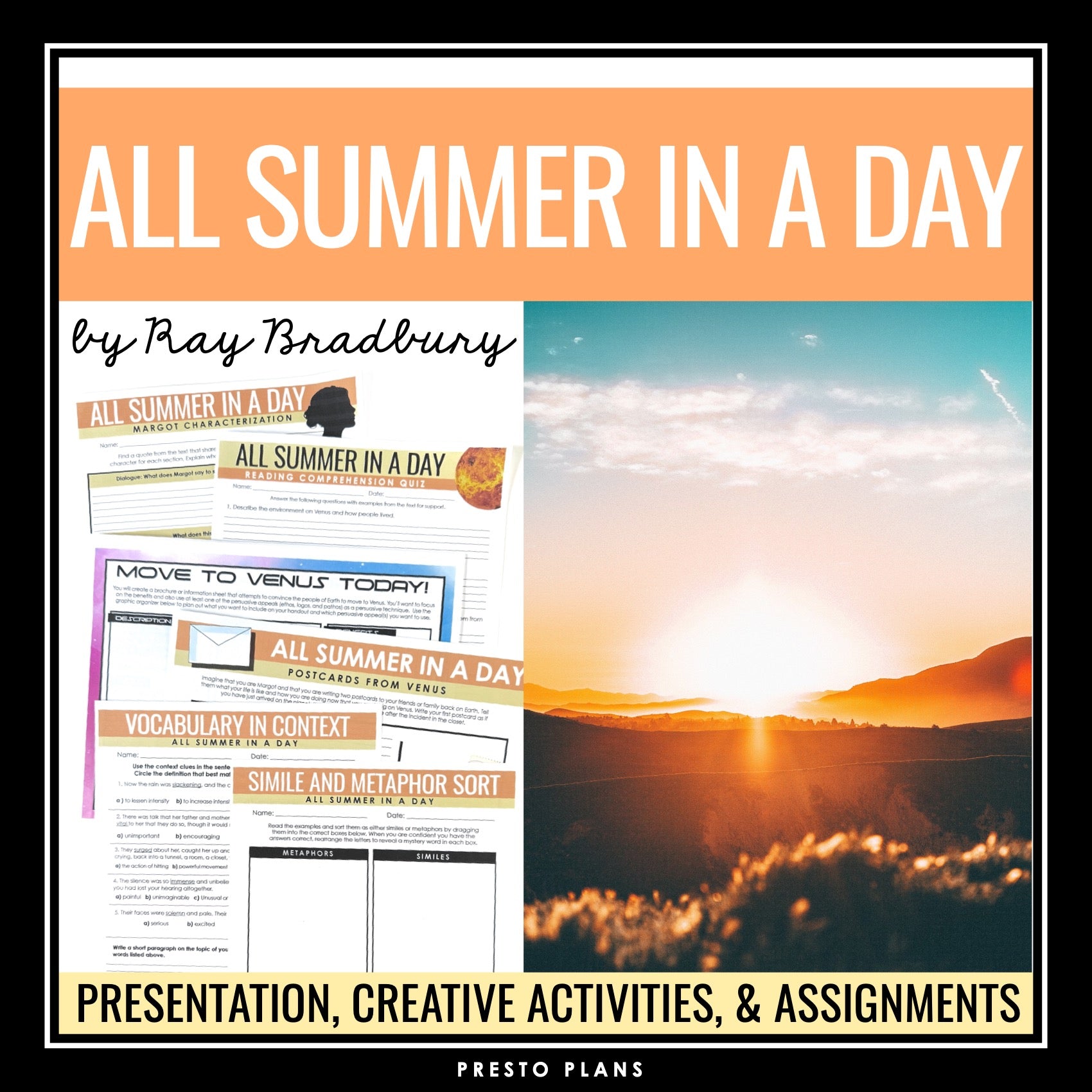
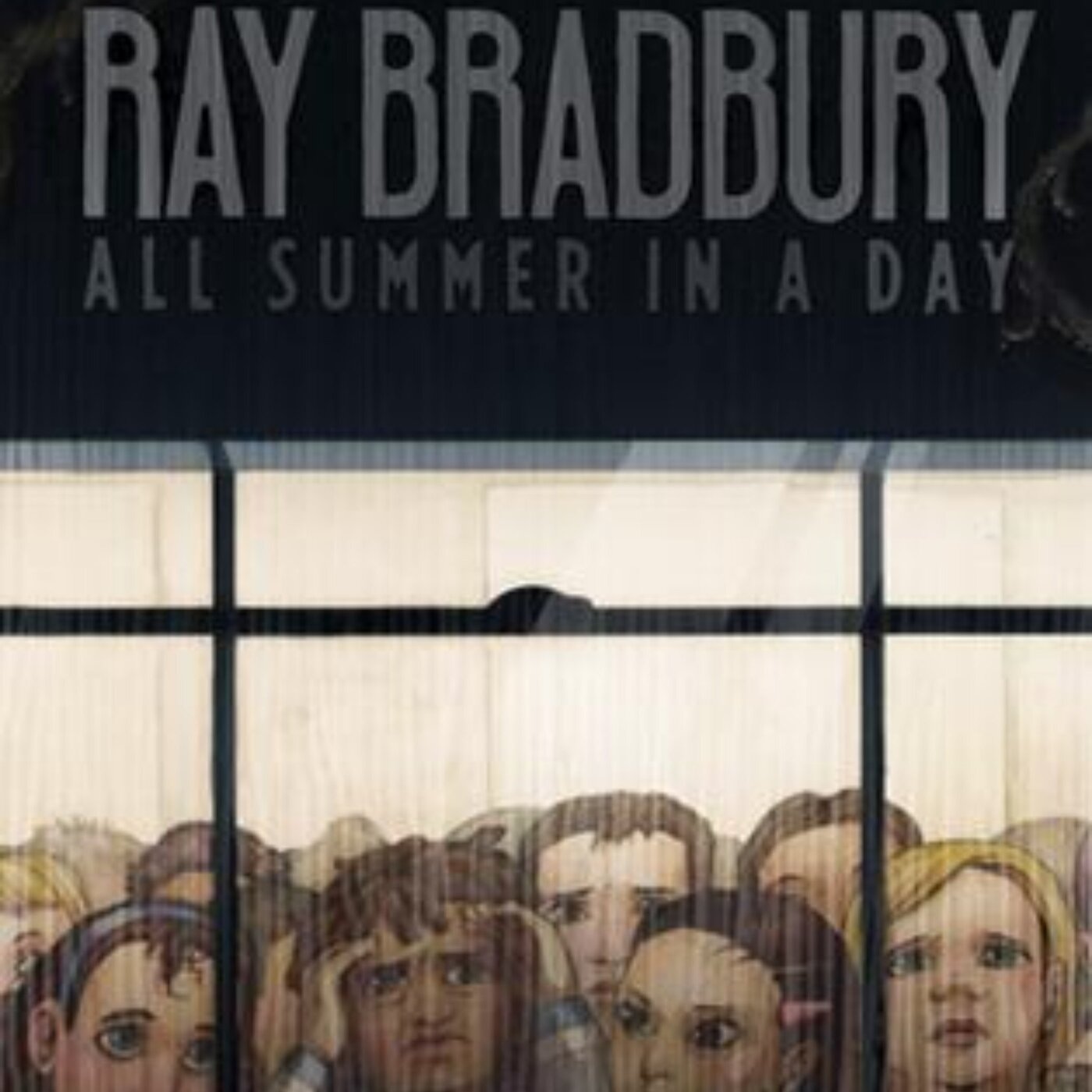
Ray Bradbury's classic 1954 short story "All Summer in a Day" explores themes of jealousy, isolation, and peer pressure set against a speculative Venusian landscape. Readers seeking a PDF edition or study guide can legally access the t...
Ray Bradbury's classic 1954 short story "All Summer in a Day" explores themes of jealousy, isolation, and peer pressure set against a speculative Venusian landscape. Readers seeking a PDF edition or study guide can legally access the text through educational library databases, public domain digital archives like the Internet Archive Open Library, licensed publisher anthologies, and school district portals.
Contents
Overview and Plot Summary
Originally published in the March 1954 issue of The Magazine of Fantasy & Science Fiction, "All Summer in a Day" remains one of the most widely taught science fiction short stories in English language arts (ELA) curricula worldwide. Set on the planet Venus, the narrative presents a world dominated by relentless rain, dense jungle foliage, and an perpetual grey sky. In Bradbury's reimagined solar system, the sun emerges for a brief period of two hours only once every seven years.
- Venusian Environment (7 Years of Continuous Rain)
- Native Children (Born on Venus; no memory of sunlight)
- Margot (Arrived from Earth at age 4; remembers the Sun)
- Conflict: Jealousy & Disbelief by Classmates
- Climax: Margot locked in closet before sunrise
- Resolution: Children enjoy 2 hours of sun, rain returns, guilt strikes as they release Margot
The protagonist, nine-year-old Margot, moved to Venus from Ohio five years prior. Because she lived on Earth until age four, she retains vivid, sensory memories of the sun—describing it as "a flower that blooms for just one hour" or "like a lemon." Her native-born Venusian classmates, who were only two years old during the sun's last appearance, have no conscious recollection of sunlight and warmth.
As the predicted two-hour window of sunlight approaches, the tension between Margot and her peers reaches a breaking point:
- The Anticipation: The children gather at the classroom windows, anxious for the rain to slacken. Margot stands apart, weakened by the dreary environment and burdened by homesickness.
- The Escalation: Driven by jealousy over Margot's vivid memories and rumors that her family may return to Earth, a boy named William incites the group. They accuse her of making up stories about the sun.
- The Cruelty: While their teacher is briefly absent, the children seize Margot, drag her down a hallway, and lock her inside a dark closet.
- The Sun Emergence: The rain abruptly stops, replaced by brilliant, golden light and intense heat. The children rush outdoors into the lush, strange Venusian jungle, shedding their coats and reveling in two hours of unrestricted freedom.
- The Aftermath: A cold raindrop lands on a girl's open palm, signaling the return of the seven-year storm. As the children retreat inside, cold and subdued, they suddenly remember Margot locked in the closet. The story ends in silence as they slowly unlock the door to face the classmate they deprived of her only desire.
Legal Access and Digital PDF Availability
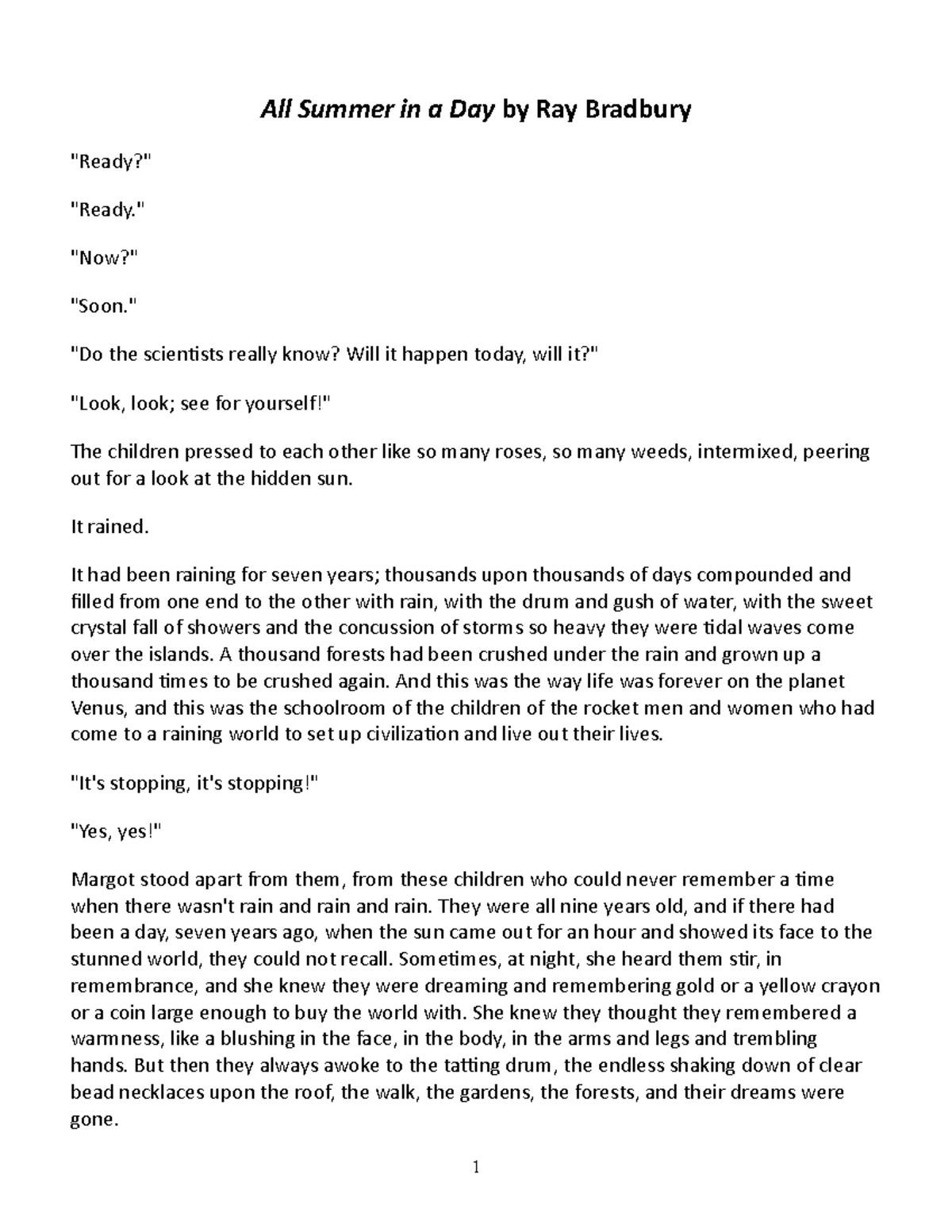
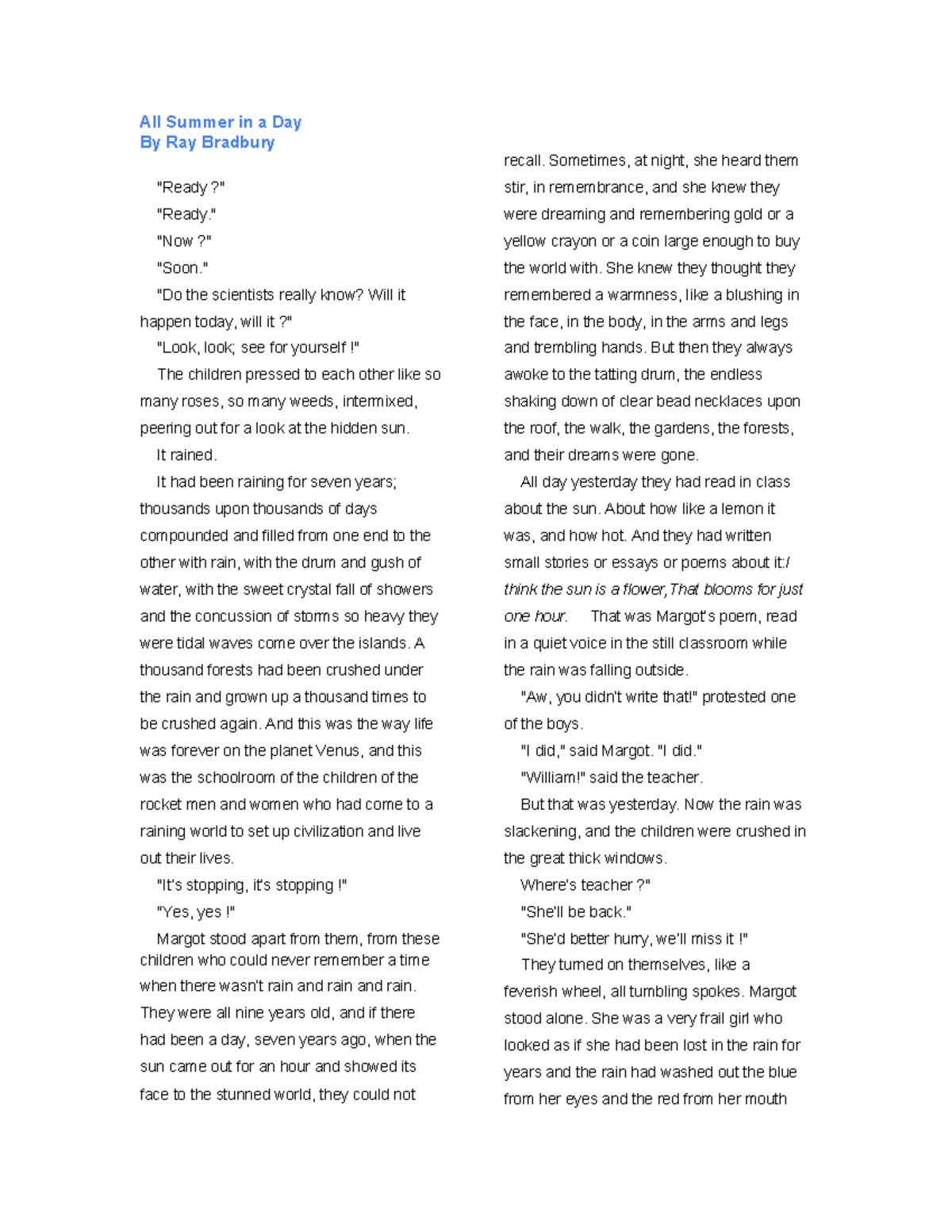
Students, educators, and literary researchers frequently search for digital PDF copies of "All Summer in a Day" for classroom assignments and close-reading exercises. Because the work remains protected under international copyright laws, accessing the full text legally requires using authorized digital distribution channels.
Authorized Digital Portals and Educational Resources
- School District Repositories: Many public school districts and state departments of education maintain licensed educational databases containing downloadable text files for standard middle school and high school reading units.
- The Internet Archive & Open Library: Authorized digital borrowing through controlled digital lending (CDL) allows library cardholders to borrow digitized print anthologies containing the story, such as Bradbury's collection A Medicine for Melancholy (1959) or The Stories of Ray Bradbury (1980).
- Academic Library Databases: Platforms such as JSTOR, EBSCOhost, and ProQuest provide licensed text access and peer-reviewed critical commentary through university and public library credentials.
- Commercial E-Book Retailers: Authorized e-book editions of Bradbury’s short story collections are accessible via platforms such as Kindle, Apple Books, and Google Play Books.
Copyright and Fair Use Guidance
When using "All Summer in a Day" in educational settings:
- Fair Use Excerpts: Short passages may be reproduced for non-commercial commentary, critical analysis, or classroom instruction under Section 107 of the U.S. Copyright Act.
- Full Text Distribution: Uploading complete, unedited PDFs to public, non-authenticated websites violates standard publisher copyrights held by the Ray Bradbury estate and his authorized publishers (such as Simon & Schuster). Educators should direct students through password-protected Learning Management Systems (LMS) like Google Classroom, Canvas, or Schoology utilizing institutionally licensed materials.
Character Breakdown and Dynamics
Bradbury uses a small cast to contrast individual trauma against collective mob mentality.
- MARGOT (Outsider)
- Retains Earth Memory
- Physically Fragile
- Emotionally Isolated
- Jealousy & Resentment
- WILLIAM & CLASSMATES
- Collective Conformity
- Environmental Denial
- Impulsive Cruelty
Margot
Margot represents emotional isolation, acute longing, and artistic sensitivity. Unlike the other children, her identity is anchored in her past life on Earth. She refuses to participate in rain-themed games, avoids the shower rooms because the sound of running water mimics the relentless weather outside, and is physically frail—described as looking like an old, faded photograph washed out by excessive rain. Her refusal to adapt to the grim Venusian reality makes her the target of hostility.
William and the Classmates
William acts as the catalyst for the group's aggression, but the surrounding children quickly participate in the collective cruelty. Bradbury illustrates how peer pressure and shared envy eliminate individual conscience. The children do not act out of outright malice initially, but out of denial and bitter jealousy. They cannot accept that Margot possesses something valuable—direct knowledge of the sun—that they lack.
The Teacher
Although a minor figure, the teacher represents absent authority. Her brief departure from the classroom creates a power vacuum, demonstrating how quickly social norms deteriorate among youth when structured adult supervision is removed.
Major Themes and Literary Devices
Envy and Peer Aggression
The primary driver of the story's tragedy is envy. The children do not hate Margot for her character, but for her background and opportunities. Her memories of Earth render her "different," and her family's financial capability to potentially move back to Earth creates deep resentment among families stuck permanently on Venus.
The Psychological Impact of Environment
Bradbury explores how continuous, oppressive environmental conditions shape human psychology. The relentless rain suppresses joy, fosters depression, and alters childhood development. The sudden appearance of the sun acts as a psychological release valve, causing an explosion of uninhibited energy.
Core Literary Devices
| Literary Device | Example from Text | Narrative Function |
|---|---|---|
| Metaphor | "I think the sun is a flower, that blooms for just one hour." | Captures Margot's delicate, poetic memory of warmth versus the dreary reality. |
| Simile | "The children pressed to each other like so many roses, so many weeds, intermixed..." | Illustrates both beauty and the suffocating, chaotic nature of the group dynamic. |
| Imagery | "The sun came out... it was the color of flaming bronze and it was very large." | Establishes a sharp sensory contrast between darkness and blinding warmth. |
| Personification | "The jungle burned with sunlight..." / "The rain falling in continuous sheets..." | Animates the alien ecosystem, giving nature an active role in shaping events. |
| Irony | The children lock Margot away to prove the sun will not appear, only for it to immediately arrive. | Highlights the tragic consequence of denial and unprovoked spite. |
Educational Applications and Discussion Questions
"All Summer in a Day" serves as an effective teaching tool for middle and high school students working on close reading, theme analysis, and creative writing.
Classroom Discussion Questions
- Character Motivation: Why do the children refuse to believe Margot's description of the sun? Is their disbelief genuine, or is it a defense mechanism against their own envy?
- Symbolism: What does the sun symbolize to Margot compared to what it symbolizes to the native Venusian children?
- Moral Responsibility: Why do the children react with quiet shame at the end of the story? How does their perspective shift once they experience the sun themselves?
- Setting as Character: How does Bradbury use sensory details about rain and weather to set the mood and drive character behavior?
Essay Prompts for Students
- Analytical: Write a literary analysis examining how Ray Bradbury uses environmental imagery to reflect the emotional state of his characters.
- Comparative: Compare Margot's isolation in "All Summer in a Day" with another classic science fiction protagonist facing social exclusion.
- Creative/Persuasive: Write a continuation of the story from Margot's point of view immediately following her release from the closet.
Frequently Asked Questions
Where was "All Summer in a Day" first published?
The story was first published in the March 1954 edition of The Magazine of Fantasy & Science Fiction. It was later reprinted in Bradbury's short story collections, including A Medicine for Melancholy (1959).
Why do the children lock Margot in the closet?
The children lock Margot in the closet due to a combination of jealousy, disbelief, and peer pressure. They resent her memories of Earth and her family's ability to return there, leading them to deny her claims about the sun's arrival.
How long does the sun stay out on Venus in the story?
In Bradbury's speculative portrayal of Venus, the rain stops and the sun emerges for exactly two hours once every seven years.
Is "All Summer in a Day" in the public domain?
No. The story remains under copyright protection in the United States and internationally. Digital access should be obtained through authorized educational repositories, digital libraries, or licensed anthologies.
Practical Recommendations for Readers and Educators
For teachers planning a unit on Ray Bradbury or science fiction literature, utilize official library channels such as the Internet Archive Open Library or institutional database access (such as JSTOR or EBSCO) to distribute reading materials legally. Combining text analysis with the 1982 short film adaptation of "All Summer in a Day" offers students a valuable opportunity to evaluate medium adaptation, character portrayal, and thematic presentation.
Image Gallery