China Bond Rate Understanding Market Dynamics
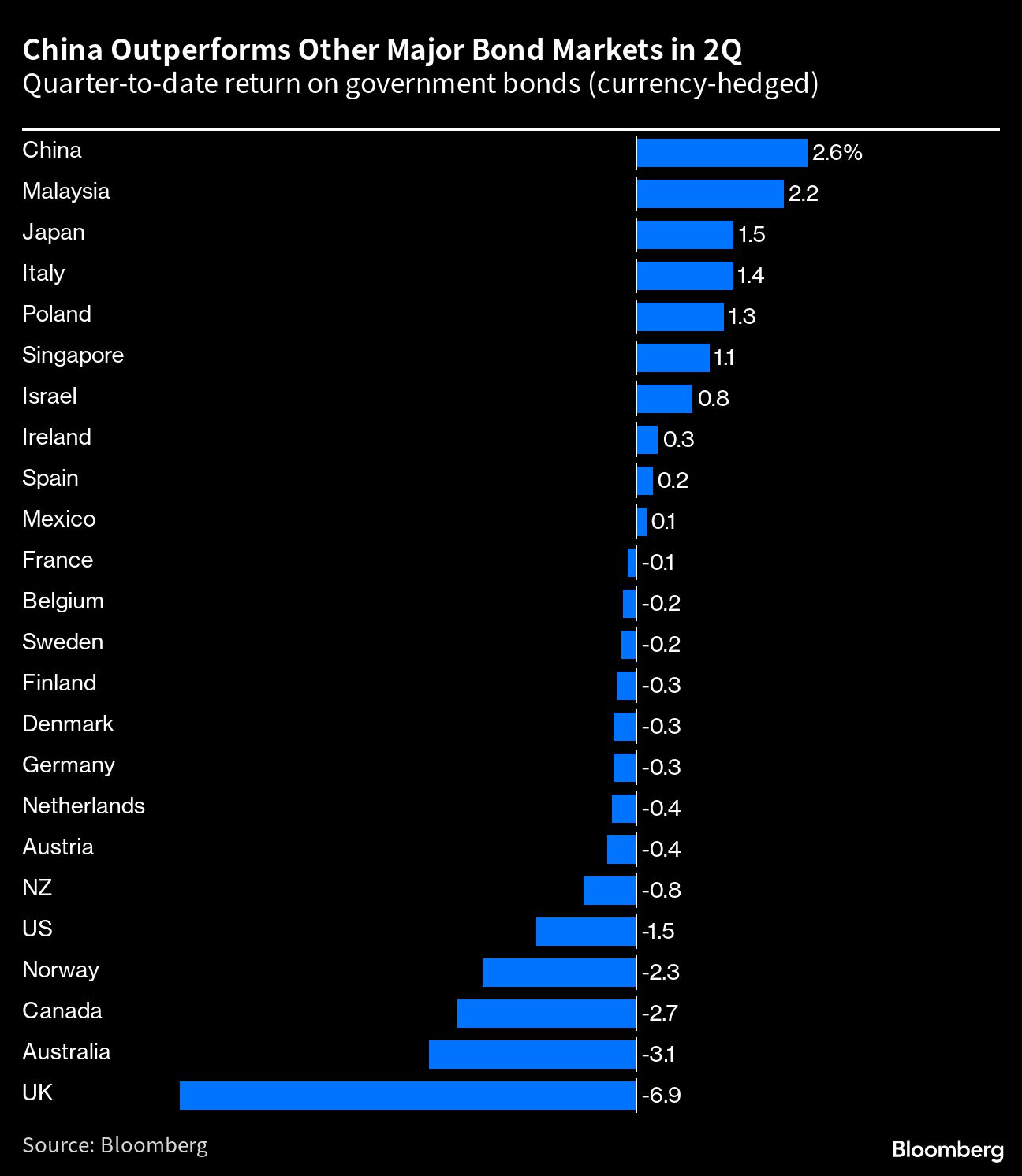
Understanding China’s bond rates requires analyzing the interplay between People’s Bank of China (PBoC) monetary policy, domestic fiscal stimulus, and global yield differentials. As of 2026, these rates serve as the primary benchmark f...
Understanding China’s bond rates requires analyzing the interplay between People’s Bank of China (PBoC) monetary policy, domestic fiscal stimulus, and global yield differentials. As of 2026, these rates serve as the primary benchmark for the world’s second-largest fixed-income market, reflecting China's transition toward a more mature, credit-sensitive financial ecosystem.
Contents
The Foundation of China’s Bond Market Structure
To master China bond rate understanding market dynamics, one must first recognize that the market is not a monolith. It is primarily divided into the interbank bond market—where the vast majority of trading occurs among institutional players—and the exchange-based market. The rates derived from these markets are anchored by China Government Bonds (CGBs), which represent the risk-free rate for the yuan-denominated (CNY) economy.
In 2026, the market is characterized by three distinct tiers of debt instruments:
- China Government Bonds (CGBs): Issued by the Ministry of Finance, these are the most liquid and serve as the sovereign benchmark.
- Policy Bank Bonds: Issued by institutions like the China Development Bank (CDB). These often trade at a slight spread above CGBs but carry implicit sovereign support.
- Credit Bonds: This includes corporate bonds, local government financing vehicle (LGFV) debt, and enterprise bonds. The rates here are highly sensitive to credit spreads and the perceived health of the underlying sectors, particularly property and technology.
The dynamics of these rates are dictated by the PBoC’s shift from quantitative targets (money supply) to price-based targets (interest rates). This evolution makes understanding the "Interest Rate Corridor" essential for any investor or analyst looking at Chinese fixed income.
The Role of the People’s Bank of China (PBoC) in Setting Rates
The PBoC influences bond rates through a sophisticated suite of policy tools. Unlike the US Federal Reserve, which focuses primarily on the Federal Funds Rate, the PBoC utilizes a multi-layered approach to manage liquidity and signal its policy stance.
The Medium-Term Lending Facility (MLF) and LPR
The MLF rate is arguably the most critical signal for the 10-year CGB and other long-dated bonds. It serves as the guidepost for the Loan Prime Rate (LPR), which is the benchmark for commercial lending. When the PBoC adjusts the MLF, it directly impacts the funding costs for banks, which in turn adjust their demand for government bonds. In the 2026 landscape, the sensitivity of CGB yields to MLF adjustments remains the primary driver of short-to-medium term volatility.
Open Market Operations (OMO) and RRR
Daily liquidity is managed through seven-day reverse repos. A "tighter" OMO stance pushes up short-term repo rates (like the DR007), which eventually filters through to the longer end of the yield curve. Furthermore, adjustments to the Reserve Requirement Ratio (RRR) release or trap long-term liquidity. A cut in the RRR is typically viewed as a bullish signal for bonds, as it increases the capital banks have available to purchase CGBs and policy bank debt.
Macroeconomic Drivers and the Yield Curve
The shape of the Chinese yield curve is a reflection of the market’s expectations for growth, inflation, and fiscal health. In 2026, several structural factors continue to weigh on these dynamics.
Economic Growth and Inflationary Pressures
Bond rates are inherently tied to the nominal GDP growth path. If the market perceives a slowdown in industrial production or retail sales, yields tend to compress as investors flee to the safety of CGBs. Conversely, if the Consumer Price Index (CPI) or Producer Price Index (PPI) signals rising costs, the market prices in a potential tightening of monetary policy, driving rates higher.
Fiscal Policy and Bond Supply
A unique aspect of China's market is the massive issuance of Local Government Special Bonds (LGSBs). These bonds are used to fund infrastructure projects. When the Ministry of Finance authorizes a surge in LGSB issuance, it creates a "crowding out" effect. The sudden increase in bond supply can lead to a temporary spike in rates unless the PBoC offsets the supply with liquidity injections. Understanding the seasonal issuance cycle of local debt is paramount for timing entries into the market.
The China-US Yield Spread and Global Dynamics
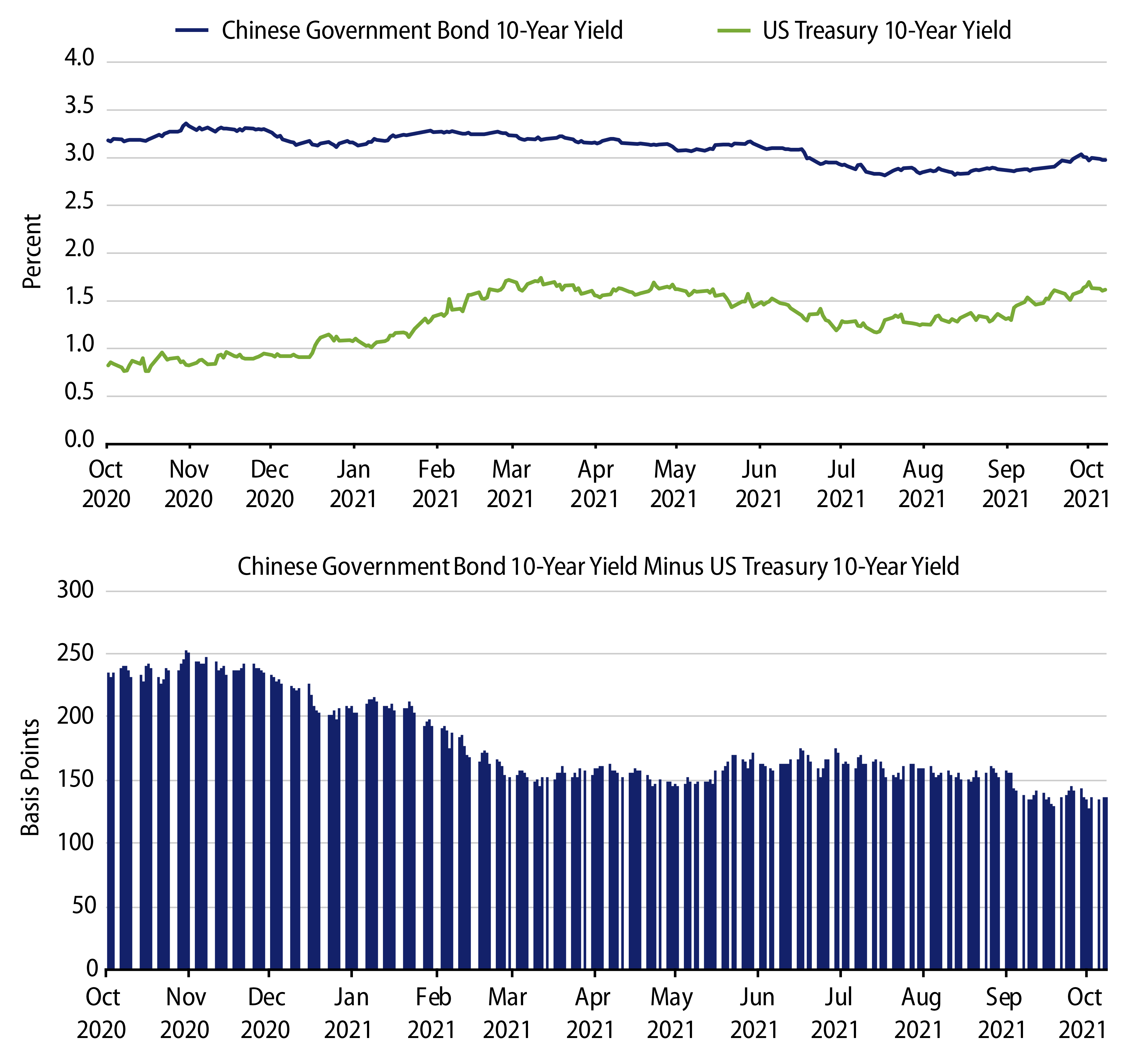
One cannot achieve a full China bond rate understanding without looking across the Pacific. The spread between the 10-year CGB and the 10-year US Treasury is a vital metric for capital flows and the valuation of the Renminbi.
| Feature | China Government Bonds (CGB) | US Treasuries (UST) |
|---|---|---|
| Primary Driver | PBoC Policy & Domestic Liquidity | Fed Policy & Global Inflation |
| Typical 10Y Yield (2026) | 2.2% - 2.8% (Target Range) | 3.5% - 4.5% (Target Range) |
| Currency Risk | CNY Volatility | USD Dominance |
| Market Access | Bond Connect, CIBM Direct | Open Global Access |
| Inflation Link | Moderate Sensitivity | High Sensitivity |
| Correlation | Low to Moderate with Global Markets | High Global Correlation |
When US Treasury yields are significantly higher than CGB yields, China faces "carry trade" outflows, where investors move capital to the US for higher returns. To prevent excessive currency depreciation, the PBoC may keep Chinese bond rates higher than domestic fundamentals might otherwise dictate. By 2026, the internationalization of the Yuan and its inclusion in global bond indices (like the Bloomberg Global Aggregate) have made CGBs more sensitive to global macro trends than they were a decade ago.
Risk Factors Influencing Market Volatility in 2026
While sovereign CGBs are considered safe, the broader bond market dynamics are influenced by specific risk vectors that can cause sudden shifts in rates.
The Property Sector and Credit Contagion
The restructuring of the Chinese property market, which began in the early 2020s, continues to cast a long shadow in 2026. While systemic collapse has been avoided through state intervention, the "risk-off" sentiment generated by property developer defaults often leads to a "flight to quality." This demand for safety consistently puts downward pressure on CGB yields while widening the spreads on lower-rated corporate debt.
Demographic Shifts and Long-term Yields
China’s demographic profile—specifically an aging population—suggests a long-term structural decline in the "natural" interest rate. Similar to the Japanese experience, a shrinking workforce and high savings rate create a persistent demand for fixed-income assets, which acts as a ceiling on how high bond rates can realistically rise in the long run.
Geopolitical Premium
Geopolitical tensions can introduce a "risk premium" into Chinese bond rates. Sanctions, trade restrictions, or changes in the status of foreign investment portals (like Bond Connect) can lead to sudden exits by foreign institutional investors. Monitoring the percentage of foreign holdings in the CGB market is a key indicator for assessing potential volatility.
Technical Analysis of the Yield Curve
In 2026, technical analysts focus on the "steepness" of the curve. A steepening curve (long-term rates rising faster than short-term rates) usually signals an expected economic recovery or rising inflation. A flattening or inverted curve signals expectations of a slowdown.
In the Chinese context, the 1-year vs. 10-year CGB spread is the most watched. Because the short end is heavily anchored by the PBoC’s OMO, any movement in the 10-year yield that isn't mirrored in the 1-year yield reveals the market's independent assessment of long-term economic health, often independent of official rhetoric.
Frequently Asked Questions
What is the primary benchmark for China's bond market?
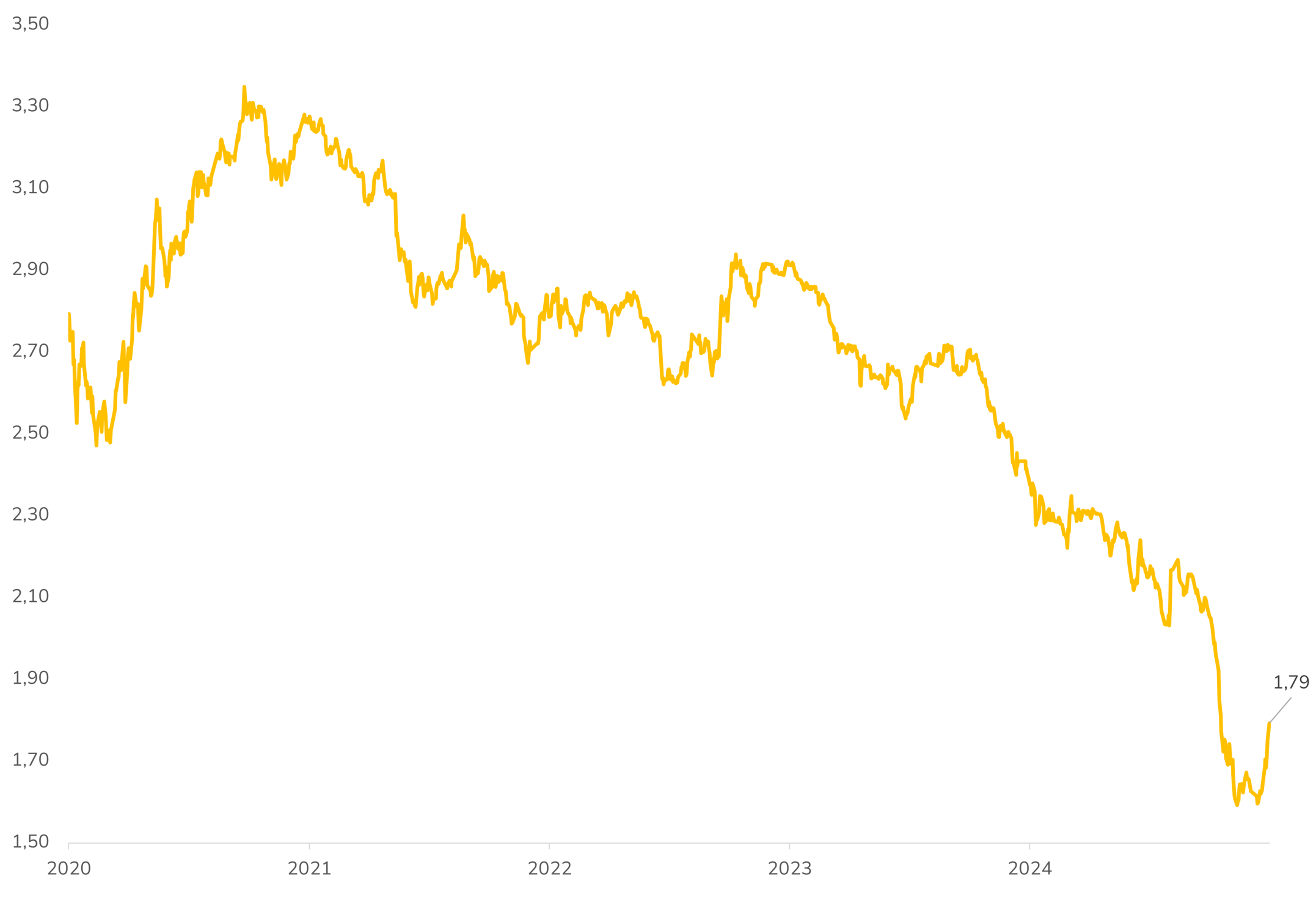
The 10-year China Government Bond (CGB) yield is the most widely recognized benchmark. It serves as the "risk-free" rate that influences the pricing of corporate bonds, mortgage rates, and other financial instruments across the Chinese economy.
How does the Bond Connect program affect bond rates?
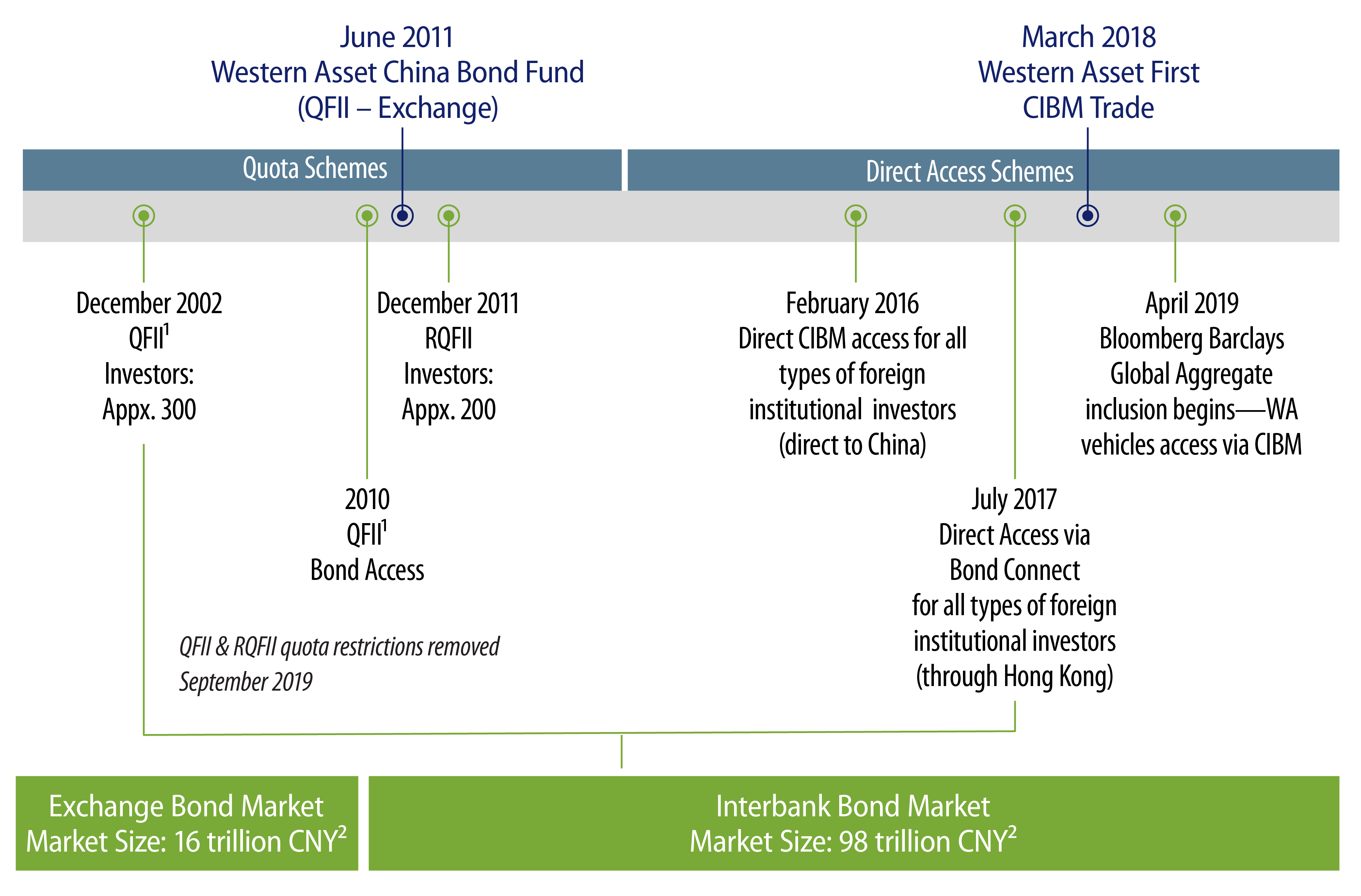
Bond Connect allows foreign investors to trade in the China Interbank Bond Market via Hong Kong. By increasing the pool of available capital, Bond Connect generally improves liquidity and can help lower yields during periods of global stability. However, it also makes Chinese rates more susceptible to shifts in global sentiment.
Why do Chinese bond rates often move differently than US rates?
Chinese rates are primarily driven by the domestic economic cycle and PBoC policy, which often diverges from the US Federal Reserve. China may be easing (lowering rates) to stimulate growth while the US is tightening (raising rates) to fight inflation, leading to a decoupling of the two markets.
What is the "LPR" and how does it relate to bonds?
The Loan Prime Rate (LPR) is the benchmark rate for commercial loans in China. It is calculated based on the MLF rate plus a spread. While it is a lending rate, it is highly correlated with bond yields because both are influenced by the same PBoC liquidity signals.
Are Chinese corporate bonds safe for international investors in 2026?
While the market has matured, credit risk remains higher in the corporate sector compared to CGBs. Investors must distinguish between State-Owned Enterprises (SOEs), which often have implicit government backing, and private developers or tech firms that are subject to full market volatility and default risk.
Strategic Recommendations for 2026
For those seeking to navigate China’s bond dynamics, the most effective approach is to monitor the PBoC’s liquidity injections through the daily OMO and monthly MLF operations. These provide the clearest signal of the government's tolerance for current rate levels.
Additionally, investors should pay close attention to the fiscal issuance calendar. Heavy supply months for local government bonds often provide higher-yield entry points for those looking to build long-term positions in CGBs. Finally, always hedge for currency volatility, as the yield advantage of Chinese bonds can be quickly erased by fluctuations in the CNY/USD exchange rate.
Image Gallery