Why the Right Auburn Mold Testing and Remediation Matters
Selecting the right mold testing and remediation professional in Auburn is essential to protecting human health, preserving structural building integrity, and safeguarding real estate value. Qualified specialists utilize scientific sam...
Selecting the right mold testing and remediation professional in Auburn is essential to protecting human health, preserving structural building integrity, and safeguarding real estate value. Qualified specialists utilize scientific sampling, physical containment, HEPA air filtration, and root-cause moisture management to eliminate fungal contamination safely without spreading viable spores throughout the property.
Contents
- Unqualified / DIY Remediation
- Surface wiping (bleach myth)
- Spores spread to HVAC/ducts
- Hidden moisture unaddressed
- High risk of rapid recurrence
- The Professional Advantage
- Diagnostic Testing
- Air & surface samples
- Moisture mapping
- Critical Containment
- Polyethylene barriers
- Negative air pressure
- Physical Removal & PRV
- Demolition of Condition 3 materials
- HEPA scrubbing & clearance test
- Diagnostic Testing
- Certified Professional Result
- Root-cause moisture resolution
- Preserved property valuation
- Indoor environmental safety
The Hidden Environmental Drivers of Mold in Auburn Properties
Properties located in Auburn face distinct environmental conditions that facilitate fungal growth. Fluctuating regional temperatures, intense seasonal rainfall, and high ambient relative humidity create ideal breeding grounds for mold. Fungal spores require three primary elements to establish active colonies: viable spores, organic nutrient sources (such as paper-faced drywall, wood framing, or carpet backing), and moisture. Because mold spores are naturally present in outdoor air, moisture control is the primary variable within a building owner's control.
When indoor relative humidity consistently exceeds 60%, or when structural building materials absorb water from plumbing leaks, roof failures, or subfloor dampness, mold spores can germinate within 24 to 48 hours. Crawl spaces, attics, and unventilated basements are especially vulnerable. In unconditioned crawl spaces, warm, humid ambient air enters through perimeter foundation vents and contacts cooler subfloor joists. This temperature differential lowers the air temperature to its dew point, leading to condensation on structural timbers.
Without targeted environmental management, localized dampness quickly escalates into structural timber rot and widespread airborne contamination. Addressing mold issues in Auburn requires an approach tailored to local building practices and climate dynamics, rather than superficial, short-term cosmetic fixes.
Mold Testing vs. Mold Remediation: Understanding the Two-Step Process
A common mistake property owners make when confronting indoor environmental issues is confusing diagnostic mold testing with physical remediation. While both steps are critical to restoring indoor air quality, they serve fundamentally different purposes and rely on distinct technical protocols.
The Two-Step Restoration Cycle
- Step 1: Diagnostic Testing & Assessment
- Baseline spore density sampling (Air cassettes @ 15 L/min)
- Genus identification (e.g., Stachybotrys, Aspergillus, Penicillium)
- Moisture mapping (Infrared thermography & pin/pinless meters)
- Written Scope of Work generation
- Step 2: Physical Remediation & Clearance
- Isolation via 6-mil poly containment & negative pressure
- Controlled removal of Condition 3 porous substrates
- Structural abrasive cleaning & HEPA vacuuming
- Post-Remediation Verification (PRV) independent air sampling
Diagnostic Mold Testing and Assessment
Professional mold testing establishes the baseline environmental conditions within a building. It answers three vital questions: What fungal genera are present? How concentrated are the airborne spores compared to outdoor control samples? Where is the hidden moisture originating?
Certified environmental assessors employ several specialized testing techniques:
- Air Spore Trap Sampling: Calibrated air pumps draw a measured volume of air (typically 15 liters per minute) across a sticky glass slide housed inside a cassette. This process captures airborne spores, hyphal fragments, and background debris for microscopic laboratory evaluation.
- Surface Sampling: Swab, tape lift, or direct bulk samples collect physical material from visible growth to verify fungal species and assess colony maturity.
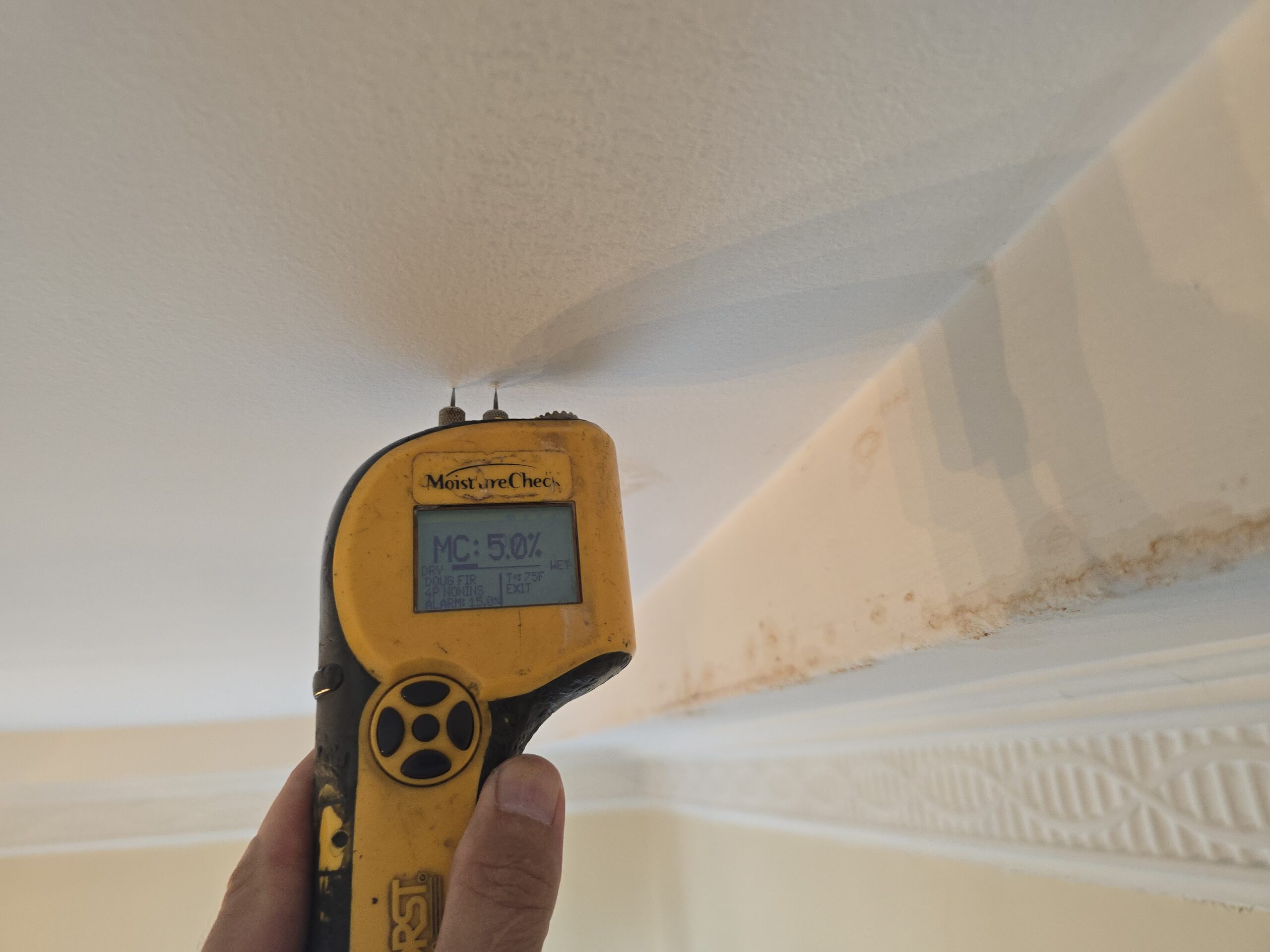
- Thermal Imaging and Moisture Mapping: Infrared cameras locate temperature anomalies behind walls, while invasive pin-type and non-invasive pinless moisture meters quantify the moisture content percentage (%MC) of framing lumber and drywall.
Testing provides an objective data set. According to guidelines established by the U.S. Environmental Protection Agency, testing is especially valuable when occupants exhibit unexplained health symptoms, when water damage occurred behind finished surfaces, or when real estate transactions demand verified air quality documentation.
Physical Mold Remediation
Remediation is the actual work of isolating, removing, and cleaning contaminated building materials while repairing the underlying water source. Remediation should follow a formal, written scope of work derived from the diagnostic assessment phase.
Distinguishing these two functions prevents conflicts of interest. An ideal protocol involves independent assessment and post-remediation verification testing, ensuring that the company performing the cleanup does not issue its own final clearance certification without objective verification.
Why "Do-It-Yourself" and Low-Quality Remediation Fail
Attempting to treat mold growth with over-the-counter chemicals or uncertified handymen frequently amplifies the damage rather than resolving it.
The Household Bleach Fallacy
A widespread myth in home maintenance is that household bleach (sodium hypochlorite) permanently kills mold on all surfaces. In reality, standard liquid bleach is composed primarily of water. When applied to porous substrates—such as drywall, unpainted framing lumber, or concrete block—the chlorine ion remains on the exterior surface due to its chemical structure, while the water component absorbs deep into the material. This provides moisture to the fungal hyphae (root system) embedded within the substrate, often resulting in rapid mold regrowth once the surface chlorine dissipates.
Cross-Contamination of Unaffected Zones
Active mold growth consists of microscopic structures filled with dry, buoyant spores. Aggressively scrubbing, dry-sanding, or tearing out moldy drywall without establishing negative pressure containment liberates millions of spores into the air. Building HVAC systems then distribute these airborne contaminants to unaffected rooms, turning a localized problem in a single closet or crawl space into a building-wide environmental hazard.
Neglecting the Underlying Moisture Source
Applying antimicrobial coatings or cosmetic paint over damp substrates fails to address the root cause of mold growth. If structural wood moisture remains above 19%, or relative humidity stays elevated, fungal organisms will break through topical coatings. Comprehensive remediation requires fixing plumbing leaks, grading foundations correctly, installing continuous subfloor vapor barriers, and maintaining proper indoor relative humidity levels.
Essential Standards for Professional Mold Remediation
Reputable environmental restoration professionals adhere to established industry standards, primarily the IICRC S520: Standard for Professional Mold Remediation published by the Institute of Inspection, Cleaning and Restoration Certification.
IICRC S520 Workshop Decontamination Flow
- Uncontaminated Zone
- Decontamination Airlock (Decompression / Polyethylene Barrier System)
- Contained Work Area (Negative Air Pressure & HEPA Scrubbers Operating)
- Structural Demolition (Cut back 12-24" past visible growth)
- Abrasive Cleaning (Dry-ice blasting / HEPA sanding)
- Antimicrobial Application & Encapsulation
- Post-Remediation Clearance (Independent Air Sampling & Inspection)
The IICRC S520 defines three levels of fungal presence:
- Condition 1 (Normal Fungal Ecology): An indoor environment that may contain settled spores or normal background levels of fungi, but no active growth or abnormal spore accumulation.
- Condition 2 (Settled Spores): An indoor surface or environment contaminated with settled spores or fungal fragments that arose from nearby growth, but without active growth on the immediate surface.
- Condition 3 (Actual Fungal Growth): An area with active fungal growth, hyphal structures, and high spore concentrations present on building materials.
Professional remediation teams follow a systematic protocol to return a Condition 3 environment back to Condition 1:
1. Critical Containment and Environmental Controls
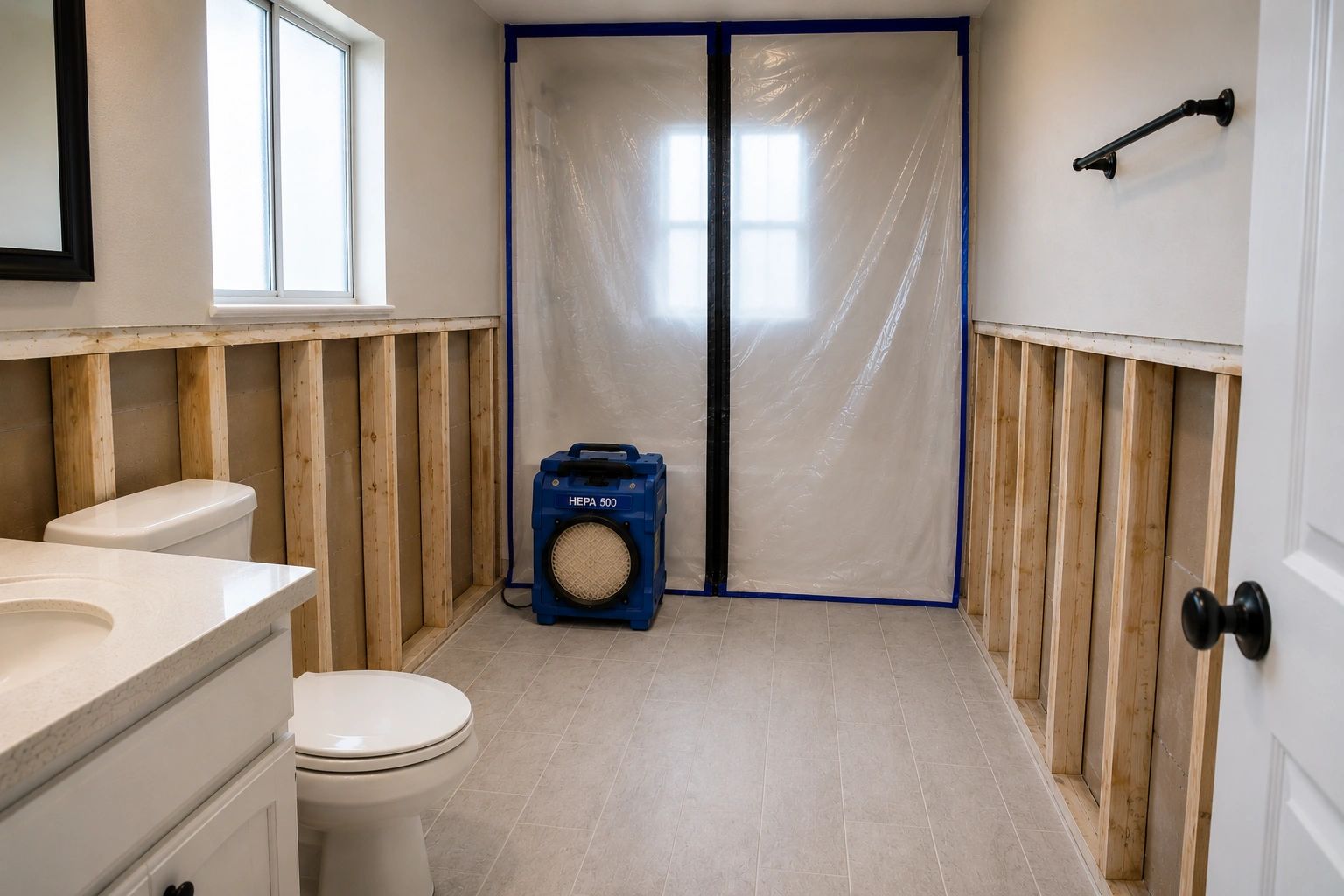
Before disturbing any contaminated material, technicians build physical isolation barriers using flame-retardant 6-mil polyethylene sheeting. Flap-door airlocks separate the work zone from clean areas. HEPA-filtered negative air machines (air scrubbers) are vented outside the structure to create a continuous pressure differential. This negative pressure ensures that air flows into the containment area, preventing spores from escaping into living quarters.
2. HEPA Filtration and Air Changes per Hour (ACH)
Air scrubbers running continuously within the containment zone exchange the room's air volume 4 to 8 times per hour. These units utilize True HEPA filtration media rated to capture at least 99.97% of airborne particles down to 0.3 microns in size—a filtration threshold sufficient to capture mold spores, which typically range from 2 to 100 microns.
3. Structural Demolition and Controlled Removal
Non-salvageable porous items exhibiting Condition 3 growth—such as carpet padding, ceiling tiles, acoustic panels, and paper-faced drywall—must be carefully removed. Drywall is cut back 12 to 24 inches past the furthest visible perimeter of growth. Material is placed directly into 6-mil poly bags, sealed within the containment zone, and wiped down before transfer to prevent cross-contamination during disposal.
4. Abrasive Cleaning of Structural Substrates
Semi-porous structural members, such as spruce-pine-fir wall framing or floor joists, cannot be easily removed without compromising building structural integrity. Technicians clean these substrates using detailed hand-sanding, wire-brushing, or dry-ice blasting. Following mechanical cleaning, surfaces undergo HEPA vacuuming, detailed damp-wiping with EPA-registered disinfectant fungicides, and optional application of clear, breathable antimicrobial sealants.
5. Post-Remediation Verification (PRV)
Clearance testing serves as the objective final exam for the remediation project. An independent inspector assesses the work area under negative pressure, examining framing for dust, debris, or residual staining. Air samples are collected inside the containment zone and compared against concurrent outdoor air control samples. To achieve clearance, indoor spore counts must show lower overall concentration than outdoor air, with non-existent or minimal presence of target indicator species like Stachybotrys chartarum or Aspergillus/Penicillium.
DIY Cleanups vs. Certified Remediation Services
Evaluating the differences between self-performed remediation and certified professional intervention highlights why professional service matters for severe or hidden contamination.
| Assessment Factor | Uncertified Handyman / DIY Cleanups | Certified Professional Remediation |
|---|---|---|
| Diagnostic Capability | Visual inspection only; ignores sub-surface or structural moisture levels. | Calibrated air sampling, infrared thermal imaging, pin/pinless moisture metering. |
| Air Management & Containment | None; opens windows or uses household fans, spreading spores through ducts. | 6-mil poly containment barriers, negative pressure air scrubbers, HEPA filtration. |
| Chemical Protocols | Standard household bleach or unverified off-the-shelf retail spray cleansers. | EPA-registered botanical or synthetic disinfectant fungicides and surfactants. |
| Porous Material Disposal | Surface-wiped and left in place, or torn down without containment or bagging. | Systematic cut-back, double-bagging in poly sacks, controlled disposal. |
| Personal Protective Equipment (PPE) | Basic dust masks or no eye/respiratory protection. | NIOSH-approved full/half-face respirators with P100/organic vapor cartridges, Tyvek suits. |
| Verification & Documentation | Self-certified visual glance; no lab records or chain-of-custody documentation. | Independent lab post-remediation verification (PRV) with detailed analytical reporting. |
| Property Risk & Recurrence | High probability of rapid mold recurrence and expanded cross-contamination. | Root-cause correction, backed by structural guarantees and transferable clearance certificates. |
Financial, Health, and Real Estate Implications
Failing to properly test and remediate mold can lead to secondary costs that far outweigh the investment in professional restoration.
The Triple Risk of Improper Remediation
- Health Risks
- Mycotoxin exposure (Stachybotrys, Aspergillus)
- Sensitization & chronic upper-respiratory distress
- Elevated risk for asthmatic and immunocompromised individuals
- Financial & Insurance Risks
- Denial of claims due to "neglect" vs "sudden & accidental" clauses
- Escalating structural rot (subfloors, joists, wall framing)
- Expensive secondary tear-outs after failed initial attempts
- Real Estate & Legal Risks
- Disclosure liabilities under property condition disclosure laws
- Canceled purchase contracts following failed buyer home inspections
- Substantial line-item deductions to property appraisal value
Human Health Protection
Mold colonies emit Volatile Organic Compounds (MVOCs), which cause the characteristic earthy, musty odor associated with damp structures. More critically, species such as Stachybotrys chartarum, Aspergillus flavus, and Penicillium chrysogenum produce secondary metabolites known as mycotoxins. According to health guidance from the Centers for Disease Control and Prevention, indoor exposure to elevated fungal loads causes upper respiratory symptoms, chronic sinus congestion, eye irritation, skin rashes, and heightened reactions in asthmatic or immunocompromised individuals.
Real Estate Values and Seller Disclosures
In modern real estate transactions, property condition disclosures require sellers to report known water intrusion events, active leaks, or past mold contamination. A failure to remediate mold using certified protocols leaves sellers open to post-closing litigation if buyers discover hidden growth or structural rot after closing.
When home inspectors flag mold in crawl spaces or HVAC systems, real estate transactions often stall. Having a comprehensive documentation package—including initial lab reports, an IICRC-compliant scope of work, and third-party clearance certification—proves to buyers, lenders, and appraisers that the problem was fully resolved.
Insurance Coverage Dynamics
Property insurance policies treat mold differently depending on the cause of origin. Most standard policies restrict coverage for mold resulting from long-term deferred maintenance or continuous high humidity. However, mold arising from a "sudden and accidental" water discharge—such as a burst supply line, water heater rupture, or washing machine hose failure—is frequently covered under standard property policies, provided the insured acts promptly to mitigate damage. Hiring a certified testing and remediation firm ensures correct documentation of water migration pathways, which is essential when submitting loss claims to insurance adjusters.
Selecting the Right Mold Specialist in Auburn
Not all restoration services provide the same standard of technical expertise. Property managers and homeowners should evaluate prospective mold remediation providers against clear professional criteria:
- Verified Professional Credentials: Look for technicians holding active certifications from recognized industry bodies, such as the IICRC (e.g., Applied Microbial Remediation Technician - AMRT) or the American Council for Accredited Certification (ACAC).
- Dedicated Pollution Liability Insurance: Standard general liability insurance frequently excludes coverage for losses arising from biological contaminants and fungi. A qualified remediation company must maintain specialized Environmental Impairment / Contractors Pollution Liability insurance covering mold risks.
- Clear Separation of Testing and Remediation: Be cautious of contractors who offer "free inspections" and perform their own internal clearance testing without providing accredited third-party laboratory analysis. Clear separation between the diagnostic party and the physical remediation crew guarantees unbiased results.
- Detailed Written Estimates and Scope of Work: Reject vague estimates that propose simple "fogging" or "spraying." A legitimate quote details the containment setup, equipment counts, square footage of demolition, surface cleaning methodologies, waste handling procedures, and post-remediation verification protocols.
Frequently Asked Questions
How do I know if I need mold testing or if visible growth is enough?
If mold is clearly visible across a large, contained area (such as a water-damaged section of drywall), physical remediation is necessary regardless of the specific mold species. However, testing is essential if you suspect mold hidden behind walls, need baseline metrics following unexplained health symptoms, require documentation for an insurance claim, or need certified clearance for a real estate transaction.
What is the standard cost range for professional mold remediation in Auburn?
Costs vary widely depending on the extent of contamination, access limitations, and affected materials. Minor surface remediation in a small bathroom might cost between $500 and $1,500, whereas extensive crawl space remediation or whole-home HVAC decontamination can range from $3,000 to over $10,000. Comprehensive diagnostic testing and moisture mapping provide an accurate cost basis before work begins.
Can occupants remain in the home during the remediation process?
For localized remediation projects inside isolated areas (such as an enclosed laundry room or isolated crawl space), occupants can usually stay home if negative air pressure containment is properly maintained. However, if mold affects the central HVAC system, involves major demolition in main living zones, or poses health risks to sensitive individuals (such as infants, the elderly, or asthmatics), temporary relocation is recommended.
How long does professional mold remediation typically take?
Most residential mold remediation projects take between 2 and 5 days to complete. Day one focuses on containment setup, negative air machine installation, and initial demolition. Days two and three involve deep structural cleaning, abrasive treatment, HEPA vacuuming, and chemical disinfectant application. Days four and five allow time for drying, air scrubbing, and post-remediation clearance testing.
What is the difference between mold removal and mold remediation?
Total "mold removal" is technically impossible because microscopic mold spores exist naturally in all ambient outdoor and indoor air. "Mold remediation" is the scientifically accurate term. It refers to removing visible fungal colonies (Condition 3 growth), cleaning settled spores, restoring indoor spore concentrations back to normal baseline levels (Condition 1), and resolving the moisture conditions that allowed the mold to grow.
Practical Recommendation and Next Actions
If you suspect mold growth or have experienced recent water intrusion in an Auburn property, take the following steps to protect your building:
- Stop the Water Source Immediately: Shut off active plumbing leaks, divert exterior surface runoff away from foundation walls, and temporarily seal damaged roof areas.
- Avoid Disturbing the Area: Do not scrape, dry-sand, or spray household bleach on suspected fungal growth, as this releases airborne spores into adjacent living areas.
- Schedule an Initial Inspection: Hire a certified environmental specialist to perform moisture mapping, relative humidity assessments, and diagnostic air/surface sampling.
- Execute an IICRC S520 Scope of Work: Ensure your chosen remediation team uses negative pressure containment, HEPA filtration, proper waste bagging, and structural abrasive cleaning.
- Require Independent Clearance Testing: Obtain written post-remediation verification from an accredited laboratory before dismantling containment barriers or starting structural repairs.
Image Gallery