Blue Origin's All-Female Flight: Mission Overview, Crew Selection, and Suborbital Technology
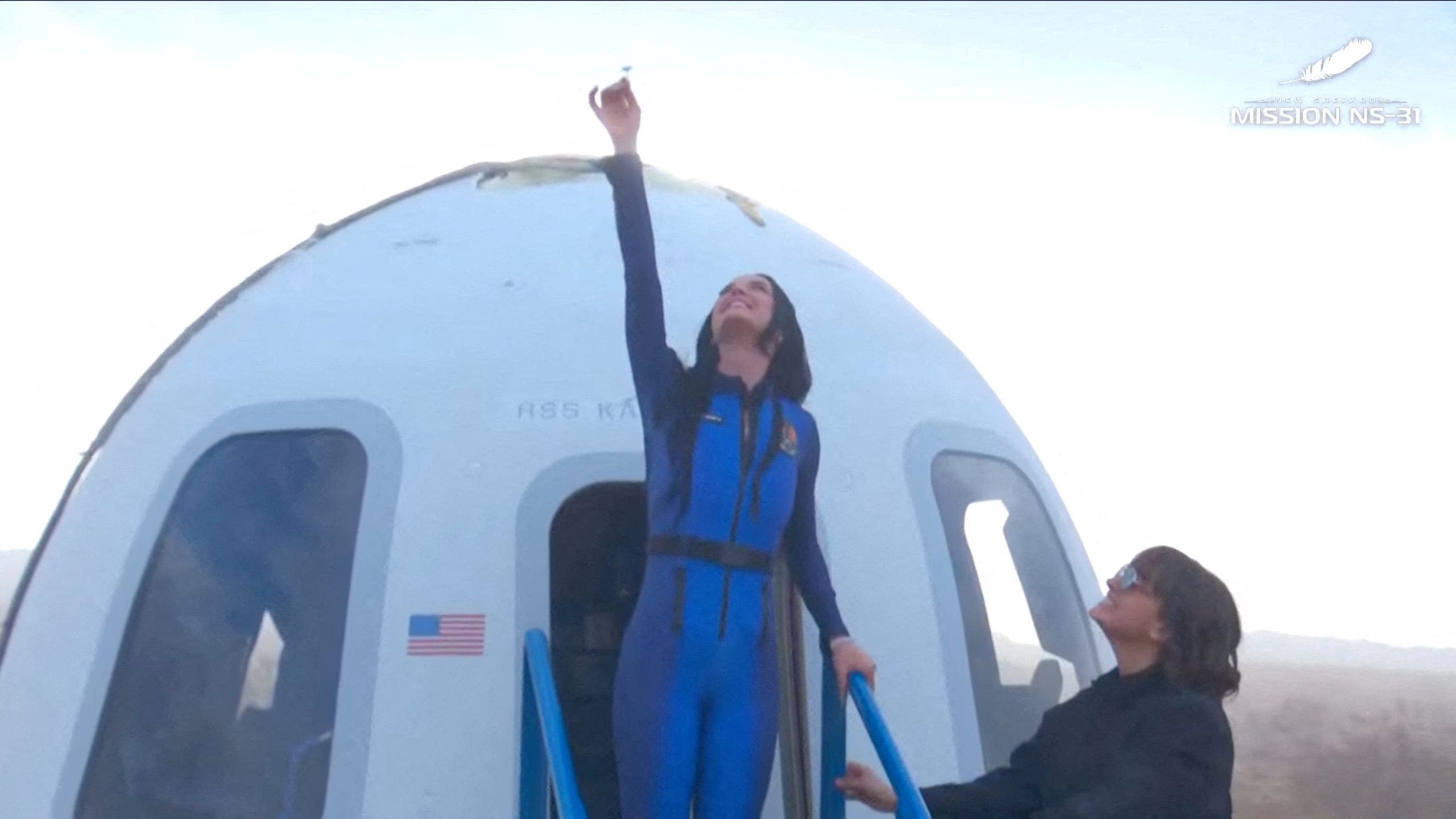
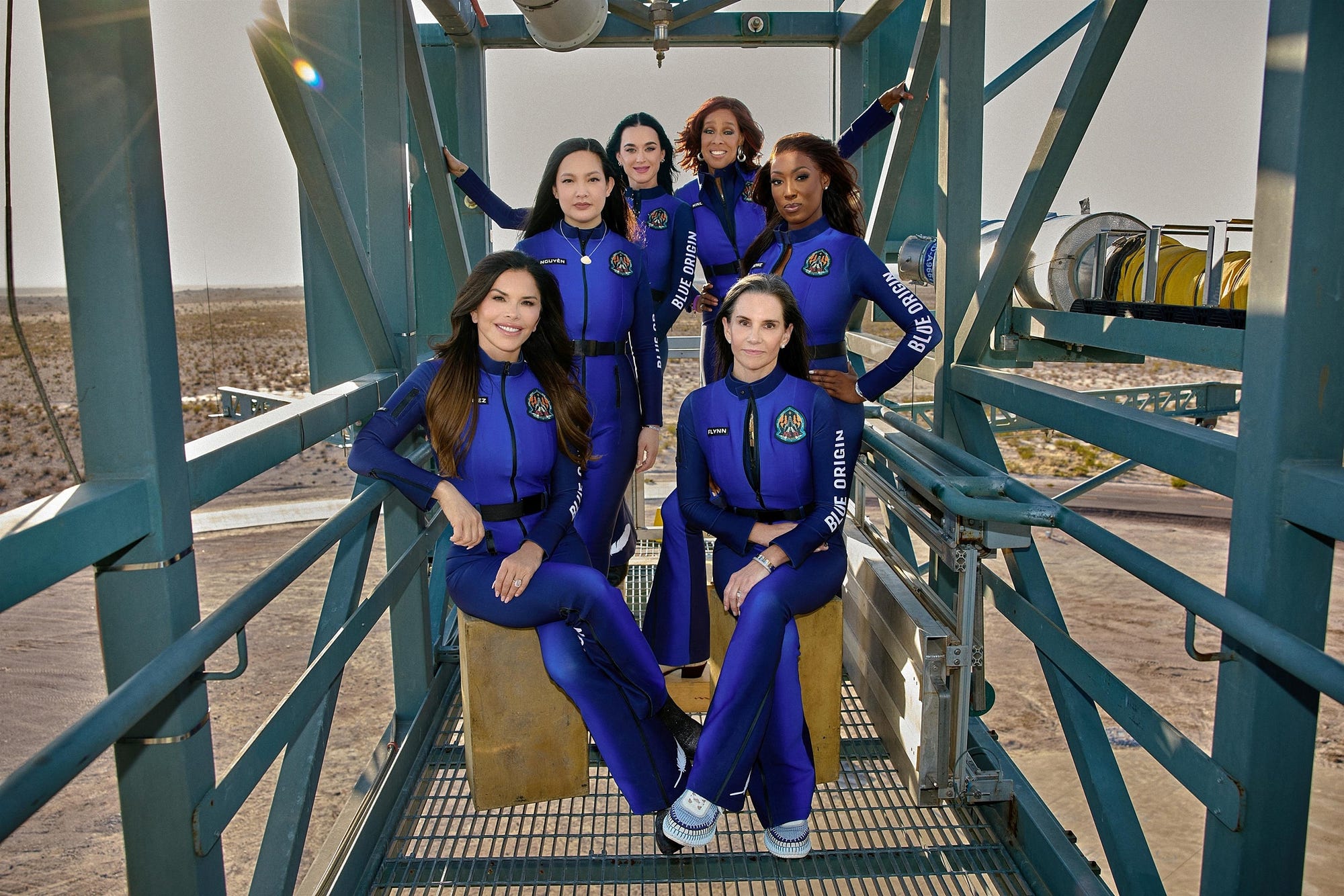
Blue Origin's planned all-female spaceflight represents a dedicated commercial suborbital mission designed to fly an all-women crew beyond the Kármán line aboard the New Shepard rocket system. Spearheaded by media personality and aviat...
Blue Origin's planned all-female spaceflight represents a dedicated commercial suborbital mission designed to fly an all-women crew beyond the Kármán line aboard the New Shepard rocket system. Spearheaded by media personality and aviator Lauren Sánchez, the mission highlights female leadership in aerospace, STEM advocacy, and commercial suborbital research while utilizing Blue Origin's fully reusable launch system.
Contents
Background and Purpose of the All-Female Suborbital Mission
Commercial human spaceflight has transitioned from an era dominated exclusively by government-sponsored military test pilots to a multi-faceted industry supporting scientific research, payload testing, and private exploration. Within this evolving ecosystem, Blue Origin’s initiative to launch a dedicated all-female crew aboard its New Shepard launch vehicle marks a symbolic and operational milestone for gender representation in aerospace.
The initiative was publicly announced by Lauren Sánchez, who partnered with Blue Origin to curate a six-person crew comprising women who have demonstrated leadership across aviation, scientific research, journalism, and social advocacy. Unlike traditional government missions managed by NASA or Roscosmos, private commercial missions allow organizers to establish mission profiles tailored to specific cultural, educational, or technical objectives.
The primary objective of the mission extends beyond human spaceflight demonstration. It serves three main functions:
- STEM and Aerospace Advocacy: Raising global visibility for female researchers, engineers, and aviators, encouraging systemic participation of women in technical disciplines.
- Commercial Payload and Human Operations Validation: Demonstrating the operational repeatability of the New Shepard system with non-professional astronaut crews who undergo condensed, specialized pre-flight training.
- Microgravity Research and Media Outreach: Providing a high-altitude platform for scientific observation and educational outreach conducted directly from suborbital space.
While female representation in government space programs has expanded since Valentina Tereshkova’s historic 1963 flight and Sally Ride’s 1983 STS-7 shuttle flight, women historically represent less than 15% of all individuals who have flown above the boundary of space. Dedicated commercial flights provide a targeted mechanism to alter these historical demographics rapidly.
Technical Architecture of the New Shepard Launch System
To understand the operational profile of the all-female flight, one must examine the launch architecture. The New Shepard system—named after Alan Shepard, the first American in space—is a fully reusable, vertical-takeoff, vertical-landing (VTVL) suborbital rocket designed and manufactured by Blue Origin at its West Texas facility near Van Horn.
| Feature | Specification |
|---|---|
| Propulsion | BE-3 Hydrolox Engine (LH2 / LOX) |
| Thrust | 110,000 lbf (490 kN) at Sea Level |
| Crew Capacity | Up to 6 Passengers (Autonomous Capsule) |
| Target Altitude | > 100 km (328,000 ft / Kármán Line) |
| Microgravity Time | 3.0 to 4.5 Minutes |
| Landing Systems | Booster: VTVL Drag Brakes & BE-3 ReigniteCapsule: 3 Parachutes + Retro-Thrust |
The BE-3 Hydrolox Engine
The single-stage booster is powered by a single BE-3 (Blue Engine 3) liquid-propellant engine. The BE-3 utilizes a combination of liquid hydrogen ($\text{LH}_2$) as fuel and liquid oxygen ($\text{LOX}$) as the oxidizer. This hydrolox propellant combination offers high specific impulse (efficiency) and yields clean exhaust consisting primarily of superheated water vapor, minimizing atmospheric pollutant deposition compared to solid-rocket or hydrocarbon-fueled boosters.
The engine produces approximately 110,000 pounds-force (490 kN) of thrust at sea level. Critically, the BE-3 features deep-throttling capability down to 20,000 pounds-force, enabling the booster to decelerate smoothly during atmospheric re-entry and execute a precise, vertical touchdown on the landing pad.
The Pressurized Crew Capsule
The New Shepard crew capsule offers 530 cubic feet (15 cubic meters) of internal pressurized volume, accommodating up to six seats designed to absorb multi-axis G-forces. Key engineering elements of the capsule include:
- Panoramic Windows: The capsule incorporates the largest windows ever flown into space, measuring roughly 3.6 feet tall by 2.4 feet wide. These multi-layer glass structures are thermal and pressure-rated to withstand extreme temperature gradients during re-entry.
- Autonomous Environmental Control: Environmental control and life support systems (ECLS) maintain cabin pressure at normal atmospheric levels ($14.7\text{ psi}$) with an oxygen-nitrogen mix, removing carbon dioxide and managing temperature without requiring crew space-suit pressurization during normal flight phases.
- High-Altitude Escape System: Mounted to the center of the capsule is a solid-rocket launch abort motor. If the booster encounters a catastrophic anomaly on the pad or during ascent, the capsule’s solid motor ignites instantly, pulling the crew safely away from the booster within milliseconds.
Flight Profile: From Ignition to Touchdown
The all-female flight follows the standard flight envelope established across Blue Origin's suborbital mission history. The entire trajectory from liftoff to capsule landing spans approximately 10 to 11 minutes.
- Liftoff: Launch Site One
- Booster Separation (~40 km / Mach 3+)
- Apogee: >100 km (Capsule Coast & Microgravity)
- Atmosphere Re-entry (Max G-loads: 5g)
- Parachute Deployment
- Touchdown: West Texas
1. Powered Ascent Phase
At launch from Launch Site One in West Texas, the BE-3 engine ignites and throttles up to full thrust. The vehicle accelerates vertically, breaking the sound barrier (Mach 1) within 60 seconds of liftoff. During powered flight, passengers experience maximum dynamic pressure (Max-Q) and acceleration loads peaking between $3g$ and $4g$.
2. Separation and Coast Phase
At an altitude of approximately 130,000 feet (40 kilometers), the BE-3 engine shuts down (Main Engine Cutoff, or MECO). Seconds later, pneumatic actuators release the crew capsule from the booster. Both vehicles continue coasting upward on a parabolic trajectory due to momentum.
3. Microgravity past the Kármán Line
The momentum carries the capsule past the internationally recognized boundary of space—the Kármán Line—located 100 kilometers (62 miles or roughly 328,000 feet) above sea level. Once the capsule reaches apogee (the highest point of the flight), passengers unbuckle their harness restraints and experience 3 to 4.5 minutes of true microgravity (weightlessness). During this window, crew members maneuver around the cabin, conduct observations, and perform designated mission activities.
4. Atmospheric Re-Entry and Recovery
As gravity pulls the capsule back toward Earth, crew members return to their custom-molded seats and secure their six-point harness systems. The re-entry phase subjects the capsule to aerodynamic braking, generating deceleration forces up to $5g$.
At an altitude of roughly 15,000 feet, three drogue parachutes deploy to stabilize the capsule, followed by three main red-and-white parachutes at approximately 3,600 feet. Just feet above the West Texas desert floor, solid-fuel retro-thrust rockets on the capsule underside fire for a fraction of a second, cushioning final touchdown to a gentle speed of under 2 mph (3.2 km/h).
Simultaneously, the reusable booster executes an autonomous landing. It uses top-mounted ring fins and drag brakes to control atmospheric descent, reignites its BE-3 engine at low altitude, deploys four landing legs, and settles precisely onto the landing pad.
History of Female Pioneers on Blue Origin Missions
While an all-female crew represents a dedicated program milestone, women have played vital roles throughout the operational history of the New Shepard program as passengers, commanders, and engineers.
| Astronaut Name | Mission | Significance / Role |
|---|---|---|
| Wally Funk | NS-16 (July 2021) | Mercury 13 aviator; oldest female |
| Audrey Powers | NS-18 (Oct 2021) | Blue Origin VP of Mission Ops |
| Katya Echazarreta | NS-21 (June 2022) | First Mexican-born woman in space |
| Sharon Hagle | NS-20 (Mar 2022) | Founder of SpaceKids Global |
| Amanda Nguyen | NS-25 (May 2024) | Civil rights activist & researcher |
| Emily Calandrelli | NS-26 (Aug 2024) | MIT engineer & science communicator |
Wally Funk and Mercury 13 Legacy
On July 20, 2021, during Blue Origin’s inaugural human flight (NS-16), Wally Funk flew alongside Jeff Bezos, Mark Bezos, and Oliver Daemen. Funk had trained in the 1960s as part of the "Mercury 13"—a group of skilled female pilots who underwent secret medical testing for NASA spaceflight but were excluded from government astronaut selection due to gender restrictions of that era. Her flight on New Shepard at age 82 fulfilled a six-decade journey to reach space.
Audrey Powers and Internal Leadership
During NS-18 in October 2021, Audrey Powers, Blue Origin’s Vice President of Mission and Flight Operations, flew aboard New Shepard. Powers played a foundational technical role in certifying the capsule for human occupancy and overseeing safety systems integration, demonstrating internal engineering leadership within the company.
International and STEM Leaders
Subsequent missions highlighted international diverse participation. Katya Echazarreta (NS-21) became the first Mexican-born woman to travel to space, flying through Space for Humanity’s citizen astronaut sponsorship program. Scientific communicator Emily Calandrelli and activist Amanda Nguyen flew on subsequent missions, using their platforms to promote research access and aerospace education for young women worldwide.
Passenger Eligibility, Medical Requirements, and Training Protocols
Flying aboard New Shepard does not require years of military pilot experience or an advanced technical degree in astronautics. However, commercial spaceflight participants must meet explicit physical standards established by federal aviation regulators and Blue Origin safety guidelines.
Physical and Physiological Prerequisites
To safely endure the mechanical forces of launch and re-entry, candidates must satisfy the following basic operational constraints:
- Height and Weight Range: Participants must fit comfortably within the crew seat and harness tolerances, typically ranging between 5'0" and 6'4" (152 cm to 193 cm) and weighing between 110 lbs and 243 lbs (50 kg to 110 kg).
- Physical Mobility: Passengers must be capable of climbing seven flights of stairs up the launch tower in under 90 seconds and unbuckling/rebuckling their six-point safety harness independently in under 15 seconds.
- G-Force Tolerance: Individuals must withstand sustained acceleration of up to $4g$ during launch and $5g$ during atmospheric re-entry without experiencing loss of consciousness (G-LOC).
- Medical Evaluation: While full NASA Class I flight physicals are not mandatory for commercial suborbital passengers, participants must complete a comprehensive medical questionnaire and screening for underlying cardiovascular, neurological, or spinal conditions.
The 2-Day Intensive Astronaut Training Program
Unlike orbital missions that demand years of simulator preparation, New Shepard passengers undergo a structured two-day training program at Launch Site One immediately preceding launch day.
Day 1: Morning: Classroom instruction on system architecture, safety rules, & aerodynamics.
Day 1: Afternoon: High-fidelity cabin mockup training; seat fitting & harness bucklings.
Day 2: Morning: Emergency egress drills, zero-g movement etiquette, & pressure suit/comm checks.
Day 2: Afternoon: Full mission simulation under operational noise, countdowns, & radio calls.
Classroom Instruction: Participants study the flight profile, launch timeline, cabin acoustics, and communication jargon used by mission control.
Hardware Familiarization: Crew members spend hours inside a high-fidelity capsule trainer, practicing entry, seating, restraint securing, and rapid unbuckling protocols.
Zero-Gravity Etiquette: Instructors teach movement techniques for weightlessness to prevent accidental collisions, window contact, or injury during the zero-gravity period.
Emergency Off-Nominal Training: The crew practices emergency egress procedures, including tower descent, smoke hood usage, and unassisted exit protocols in the event of an aborted launch on the pad.
Full Mission Rehearsal: The day before launch, the crew conducts a complete dress rehearsal, climbing the launch tower, strapping into the actual capsule, and completing a simulated countdown.
Technical Comparison: Suborbital Commercial Space Systems
To understand where Blue Origin's New Shepard sits within the commercial human spaceflight landscape, it is helpful to compare its operational parameters with other commercial systems operating or in development, such as Virgin Galactic’s SpaceShipTwo/Delta Class and orbital platforms like SpaceX’s Crew Dragon.
| Specification / Feature | Blue Origin New Shepard | Virgin Galactic SpaceShipTwo / Delta | SpaceX Crew Dragon |
|---|---|---|---|
| Flight Profile | Suborbital (Vertical VTVL) | Suborbital (Air-Launched Spaceplane) | Orbital (Vertical Launch) |
| Propulsion System | BE-3 Hydrolox Rocket (LH2/LOX) | Hybrid Rocket Motor (HTPB/N2O) | Falcon 9 Merlin (RP-1/LOX) |
| Max Altitude (Apogee) | ~100–107 km (> Kármán Line) | ~85–90 km (> FAA Boundary) | ~300–580 km (Earth Orbit) |
| Max Velocity | ~Mach 3.0 to 3.5 | ~Mach 3.0 | Mach 25+ (Orbital Velocity) |
| Microgravity Duration | 3.0 to 4.5 Minutes | 3.0 to 4.0 Minutes | Days to Weeks |
| Passenger Capacity | Up to 6 Crew Members | Up to 6 Passengers (2 Pilots) | Up to 4 Crew Members |
| Flight Control | Fully Autonomous (No Onboard Pilots) | Two Onboard Pilots Required | Fully Autonomous (Crew Overrides) |
| Primary Landing Method | Parachutes + Retro-Rockets (Capsule) | Horizontal Runway Glide (Spaceplane) | Ocean Splashdown (Parachutes) |
As shown in the comparison, Blue Origin relies on full vehicle autonomy. There are no pilot controls inside the New Shepard capsule; flight trajectories, thrust vector adjustments, emergency abort commands, and parachute deployments are managed entirely by onboard triple-redundant flight computers integrated with ground-based tracking systems.
Environmental and Safety Considerations
As commercial flight cadence increases, industry experts, regulatory authorities, and atmospheric scientists evaluate the environmental footprint and flight safety records of suborbital vehicles.
Environmental Footprint of Hydrolox Propulsion
A key advantage of Blue Origin's BE-3 propulsion system is its fuel chemistry. Hydrolox engines burn liquid hydrogen with liquid oxygen:
$$2\text{H}_2 + \text{O}_2 \longrightarrow 2\text{H}_2\text{O}$$
The primary chemical byproduct emitted into the atmosphere is pure water vapor. Unlike solid rocket boosters (which emit chlorine compounds and aluminum oxide particulates) or kerosene-based engines (which produce carbon dioxide and black carbon soot in the upper atmosphere), hydrolox systems exhibit a lower environmental impact per launch. However, the secondary environmental footprint depends on whether green hydrogen electrolysis is utilized during fuel manufacturing.
Safety Framework and FAA Regulation
In the United States, commercial human spaceflight operations are governed by the Federal Aviation Administration (FAA) Office of Commercial Space Transportation. Under current statutory frameworks:
- Informed Consent: Commercial passengers (referred to legally as "spaceflight participants") fly under an informed consent regulatory regime. Operators must disclose all known risks of the launch vehicle, including historical failure rates, engine reliability data, and mechanical hazard analyses.
- Commercial Launch Licenses: Blue Origin must obtain mission-specific launch licenses from the FAA, demonstrating that public safety on the ground and in surrounding airspace is maintained throughout the flight corridor.
- Redundant Abort Systems: New Shepard's launch escape system is capable of firing off-the-pad (0 altitude, 0 speed) up to high-altitude ascent, ensuring crew survivability even in the event of major booster structural failures.
Frequently Asked Questions
What is the goal of Blue Origin's all-female flight?
The flight aims to promote gender diversity in aerospace, provide a platform for female scientific research and advocacy, and highlight the capabilities of commercial suborbital vehicles for civilian crews.
How high does Blue Origin's New Shepard rocket fly?
New Shepard flies beyond the Kármán line—the internationally recognized boundary of space at 100 kilometers (62 miles or approximately 328,000 feet) above sea level—allowing passengers to experience several minutes of weightlessness.
Do passengers on an all-female Blue Origin flight need to be trained pilots?
No. The New Shepard capsule is fully autonomous and operated by onboard computers and ground controllers. Passengers do not pilot the spacecraft; they undergo two days of specialized safety and operational training prior to launch.
How long does a Blue Origin suborbital flight last?
The total mission duration from rocket liftoff to capsule landing in the West Texas desert is approximately 10 to 11 minutes, including 3 to 4.5 minutes of weightlessness.
How does Blue Origin's escape system work during an emergency?
The capsule features a built-in solid rocket motor mounted to its base. If the computer detects a critical booster anomaly, this abort motor fires instantly, driving the crew capsule safely away from the booster at any point from the launch pad up to space separation.
Operational Outlook and Next Actions
For organizations, researchers, and prospective crew members tracking commercial suborbital spaceflight developments, keeping informed requires monitoring regulatory frameworks and operational schedules:
- Review FAA Commercial Spaceflight Updates: Track launch licensing announcements and passenger safety updates through the FAA Office of Commercial Space Transportation.
- Evaluate Scientific Payload Opportunities: Academic researchers interested in utilizing suborbital microgravity windows can submit microgravity experiment proposals directly through Blue Origin's suborbital payload programs.
- Monitor Official Mission Announcements: Official crew rosters, launch windows, and live broadcast details for New Shepard missions are published directly on Blue Origin's Official Portal.
As private aerospace continues to expand, dedicated missions like the all-female New Shepard flight provide structural validation for accessible, reusable suborbital transport across scientific, commercial, and educational sectors.
Image Gallery