Hendra Gunawan: The Revolutionary Indonesian Painter and Cultural Figure
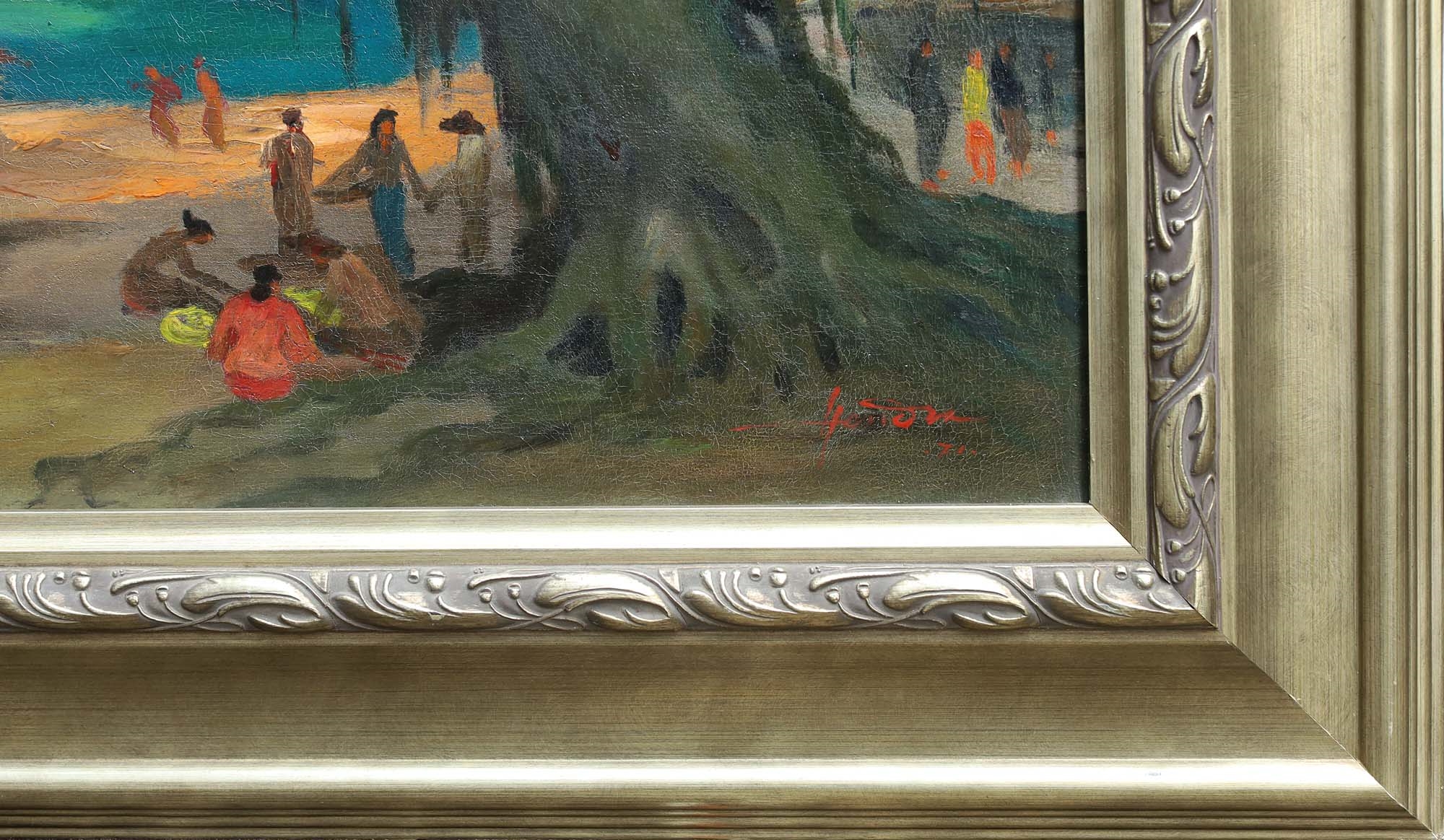
Hendra Gunawan stands as one of Indonesia’s most influential modern painters and cultural figures, renowned for his deeply humanistic portrayals of ordinary working people, vibrant use of color, and steadfast commitment to the anti-col...
Hendra Gunawan stands as one of Indonesia’s most influential modern painters and cultural figures, renowned for his deeply humanistic portrayals of ordinary working people, vibrant use of color, and steadfast commitment to the anti-colonial struggle. His enduring legacy bridges the gap between traditional Indonesian aesthetics and modern expressionism, cementing his status as a pillar of Southeast Asian art history.
Contents
Historical Context and Early Beginnings in Indonesian Art
Born in Bandung, West Java, in 1918, Hendra Gunawan grew up during the tumultuous final decades of the Dutch East Indies colonial administration. This period of rising nationalist consciousness deeply shaped his worldview. Unlike many of his contemporaries who favored romanticized, idyllic landscapes of the Indonesian archipelago—a style pejoratively termed Mooi Indië (Beautiful Indies)—Gunawan turned his artistic gaze toward the gritty realities of everyday life.
Before gaining prominence as a painter, Gunawan immersed himself in various cultural forms, including traditional Sundanese theater (wayang orang) and sculpture. These early multidisciplinary pursuits heavily influenced his later visual vocabulary. His figures often possess dramatic, theatrical postures, reminiscent of stage actors caught mid-motion. By embedding himself within local cultural traditions, Gunawan established an artistic identity that was distinctly Indonesian rather than derivative of European modernism.
The Revolutionary Era and Lekra: Art as a Political Weapon
The declaration of Indonesian independence in 1945 marked a defining turning point in Gunawan's life and career. He did not merely observe the revolution; he actively participated in it. During the Indonesian National Revolution (1945–1949), Gunawan fought against Dutch forces as a member of the People's Security Army (Tentara Keamanan Rakyat) and used his artistic skills to produce propaganda banners, posters, and documentary sketches of the conflict.
Following the recognition of Indonesian sovereignty, Gunawan co-founded Seniman Indonesia Muda (Young Indonesian Artists) in 1946 and later became a leading figure in Lekra (Institute of People's Culture), a leftist cultural organization aligned with the Communist Party of Indonesia (PKI). For Gunawan, art was never neutral. He believed that painters had a moral obligation to represent the proletariat—fishermen, washerwomen, farmers, and market vendors—with dignity and monumental scale.
| Artistic Movement / Group | Key Characteristics | Hendra Gunawan’s Role |
|---|---|---|
| Mooi Indië (Beautiful Indies) | Idealized, romanticized landscapes of the Dutch East Indies designed to appeal to colonial tastes. | Explicitly rejected for ignoring social reality and local struggles. |
| Seniman Indonesia Muda (SIM) | Focus on raw, expressive realism reflecting the spirit of the anti-colonial revolution. | Co-founder and active mentor to younger revolutionary painters. |
| Lekra (Institute of People's Culture) | Promotion of socialist realism and art dedicated to the working class (Politik adalah Panglima). | Prominent leader, theoretician, and practitioner of politically engaged art. |
Imprisonment on Nusakambangan and Creative Resilience
Gunawan’s overt political affiliations and leadership within Lekra proved perilous following the political upheaval of 1965 and the rise of President Suharto’s New Order regime. In 1965, Gunawan was arrested without trial and subsequently imprisoned for 13 years, primarily held in the notorious maximum-security prison on Nusakambangan Island, off the southern coast of Java.
Rather than breaking his spirit, imprisonment intensified his creative output under extreme constraints. Deprived of standard artist canvases and professional oil paints, Gunawan utilized whatever materials he could acquire. He painted on cheap sacking, plywood, and scrap canvas, often mixing his own pigments from local soils, chalk, and plant extracts.
During this dark period, his subject matter shifted inward toward communal solidarity and nostalgia for freedom. His canvases from prison frequently depict groups of prisoners playing music, sharing sparse meals, or weaving baskets. These works served as both a psychological coping mechanism and a subtle form of resistance, preserving human dignity within an inhumane environment. Released in 1978, Gunawan spent his final years in Bali, where local mythology and vibrant island life infused his post-prison palette with renewed energy until his death in 1983.
Distinctive Stylistic Features and Technical Mastery
Hendra Gunawan’s mature style is instantly recognizable through several distinct formal characteristics that merge expressionism with indigenous visual traditions:
- Figurative Distortion: Human bodies are frequently elongated, with exaggerated hands and feet that emphasize physical labor and toil. Fishermen possess powerful, sinewy arms, while market women display calloused hands and sturdy legs balanced against heavy baskets.
- Vibrant, Earthy Color Palette: Gunawan favored high-contrast, saturated colors—brilliant indigos, fiery reds, deep ochres, and sunny yellows—that evoke the tropical brilliance of the Indonesian landscape.
- Crowded Compositional Density: Many of his major works feature dense clusters of interacting figures, creating a tapestry of communal life where individual stories merge into a collective narrative.
- Textural Depth: Utilizing heavy brushstrokes and thick impasto techniques, Gunawan gave his surfaces a tactile quality that mirrored the rugged lives of his subjects.
Legacy and Impact on the Contemporary Art Market
Today, Hendra Gunawan is recognized as a titan of Southeast Asian modern art. His works command multi-million-dollar valuations at international auction houses such as Christie’s and Sotheby’s, making him one of the most commercially sought-after Indonesian artists in history. Major retrospectives held in Singapore, Jakarta, and across international museums continue to reevaluate his contribution not just as a technician of paint, but as an uncompromising cultural chronicler.
For contemporary collectors, acquiring a genuine Gunawan requires rigorous provenance verification due to the presence of historical forgeries circulating in the regional market. Institutional exhibitions and catalogues raisonnés compiled by reputable art historians remain the gold standard for authenticating his oeuvre.
Frequently Asked Questions
What makes Hendra Gunawan’s painting style unique?
Hendra Gunawan combined Western expressionistic techniques with distinctly Indonesian themes, featuring elongated, expressive figures, thick impasto textures, and vibrant palettes that celebrated the working class rather than colonial ideals.
Why was Hendra Gunawan imprisoned?
Because of his leadership role in Lekra (Institute of People's Culture) and his leftist political ties, Gunawan was arrested during the political purge of 1965 under President Suharto's regime and detained without trial for 13 years.
Where can I view Hendra Gunawan’s artwork?
Major collections of his work are housed in prominent regional institutions, including the National Gallery of Singapore, the Museum MACAN in Jakarta, and various private collections across Southeast Asia.
Did Hendra Gunawan paint while in prison?
Yes, despite severe material shortages on Nusakambangan Island, Gunawan continued to paint using improvised materials such as sacks, plywood, and locally sourced pigments.
How has Hendra Gunawan influenced modern Indonesian art?
He demonstrated that Indonesian modern art could remain deeply indigenous while engaging with global modernist movements, inspiring subsequent generations of artists to address social inequality and cultural identity.
Image Gallery