Best Term Life Insurance Options for New Parents
The best term life insurance options for new parents combine high coverage amounts, flexible policy terms (20 to 30 years), affordable premiums, and valuable riders such as accelerated death benefits or child term riders. Level-premium...
The best term life insurance options for new parents combine high coverage amounts, flexible policy terms (20 to 30 years), affordable premiums, and valuable riders such as accelerated death benefits or child term riders. Level-premium term policies from top-rated carriers provide the most cost-effective financial protection during a child's dependent years.
Contents
Why Term Life Insurance Is the Preferred Choice for Young Families
Welcoming a child brings immense joy along with profound financial responsibilities. For most new parents, securing financial protection is a top priority. Term life insurance stands out as the most practical and economical solution for young families compared to permanent life insurance options like whole or universal life.
Term life insurance operates on a straightforward principle: you pay a fixed monthly or annual premium for a specified period—typically 10, 15, 20, 25, or 30 years. If the policyholder passes away during this period, the insurer pays a tax-free lump sum (the death benefit) to the designated beneficiaries.
Term Life vs. Permanent Life
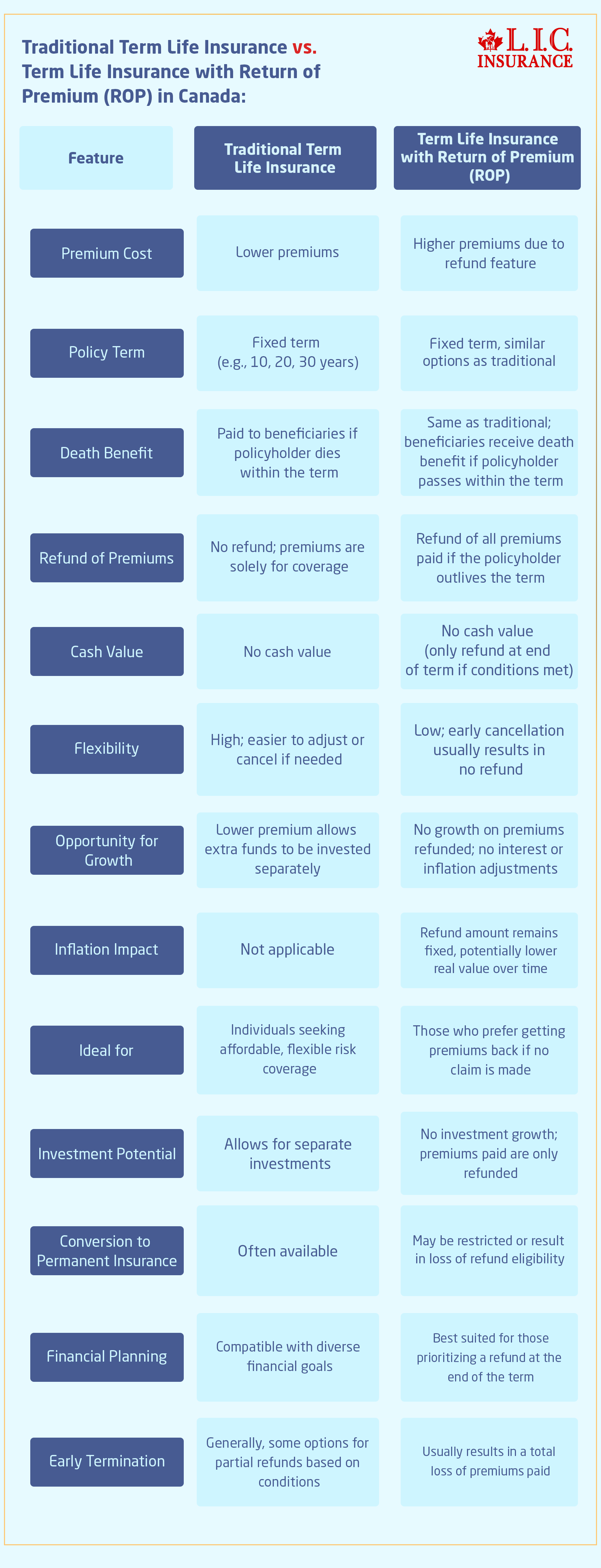
| Aspect | Term Life Insurance | Permanent Life |
|---|---|---|
| Primary Purpose | Income replacement during dependency years | Estate planning & wealth transfer |
| Relative Cost | Highly affordable | 5x to 15x more expensive |
| Cash Value | None | Accumulates cash value |
| Duration | Fixed period (10-30 yrs) | Lifetime coverage |
Because term policies do not include cash-value accumulation components or high administrative fee structures, their premiums are significantly lower than permanent policy premiums. This cost structure allows new parents to purchase substantial death benefits—often $500,000 to $1,500,000 or more—at a price point that fits comfortably within a growing household budget.
Educational & Financial Disclaimer
Life insurance products, policy terms, rates, and rider availability vary by carrier, state jurisdiction, and individual underwriting. The information provided in this guide is for educational purposes only and does not constitute formal financial, legal, or tax advice. Consult a licensed life insurance agent or certified financial planner (CFP) to assess your family's specific financial situation.
How Much Term Life Insurance Coverage Do New Parents Need?
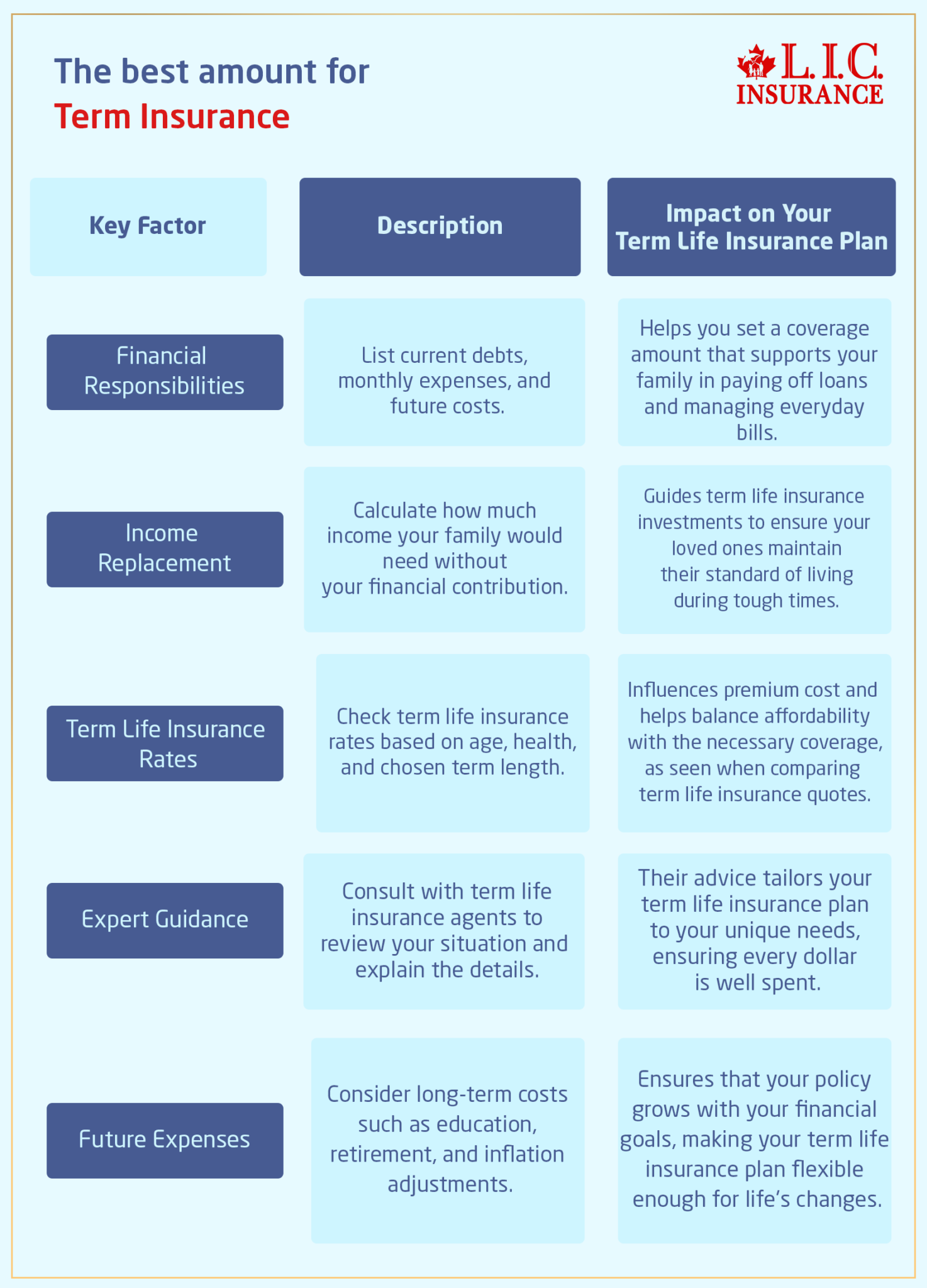
Determining the appropriate coverage amount requires moving beyond vague rules of thumb. While multiplying annual income by 10 is a common starting point, a tailored calculation ensures your family remains fully protected against all potential financial obligations.
The DIME Method
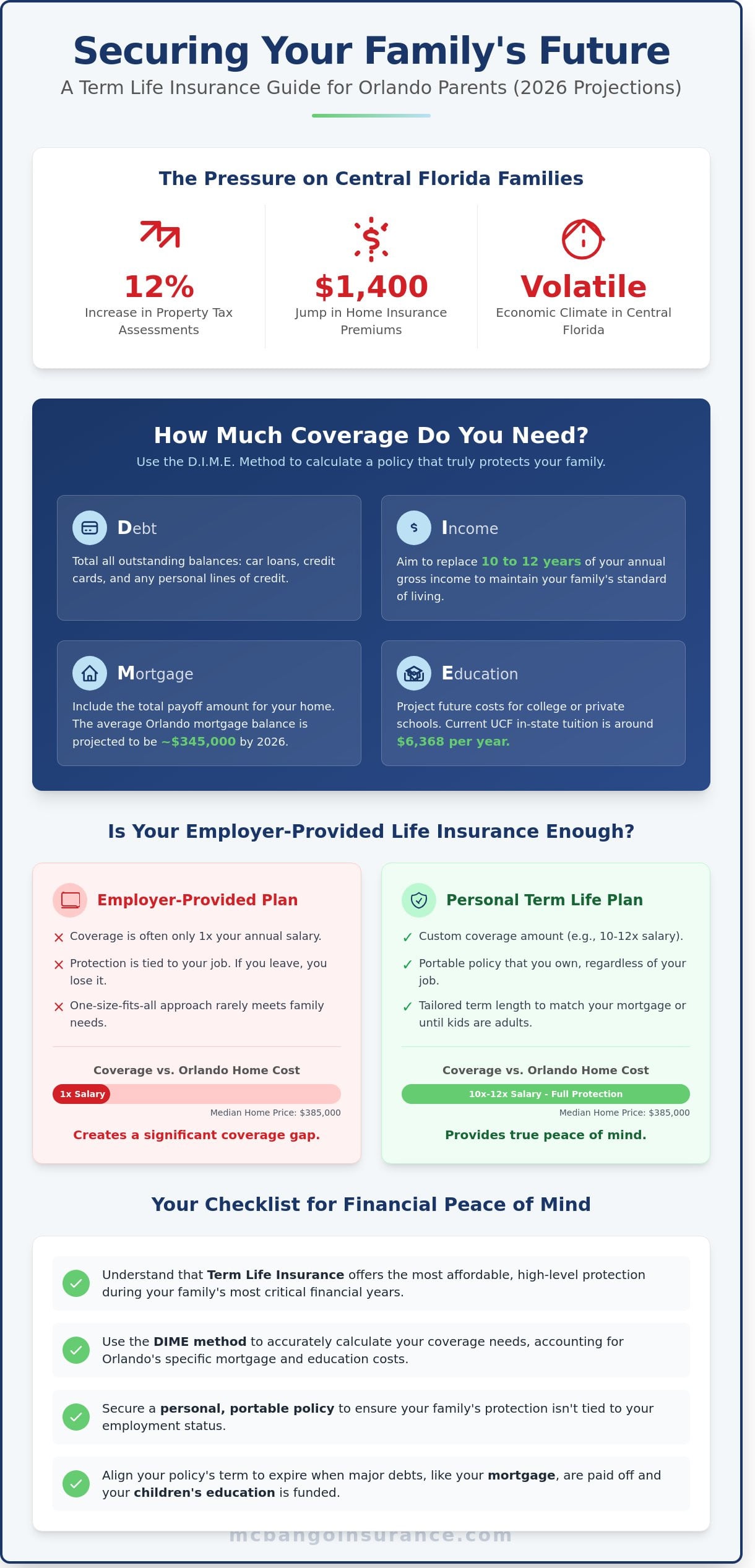
Financial planners frequently recommend the DIME method to calculate precise coverage needs for growing families. DIME stands for Debt, Income, Mortgage, and Education:
- Debt: Sum all short-term and long-term non-mortgage debts. This includes credit cards, auto loans, personal loans, and private student debt.
- Income: Calculate the annual income needed to maintain your family’s lifestyle, multiplied by the number of years until your youngest child reaches financial independence (typically 18 to 25 years).
- Mortgage: Include the remaining balance on your home mortgage to ensure your surviving partner and children can remain in their home without housing insecurity.
- Education: Estimate the projected cost of college or vocational education for each child. Account for tuition, room, board, and educational inflation.
$$\text{Total Coverage Needed} = \text{Debt} + \text{Income Replacement} + \text{Mortgage Balance} + \text{Future Education Costs}$$
Valuing the Stay-at-Home Parent
A common oversight among young couples is failing to insure a non-working or stay-at-home parent. While a stay-at-home parent does not bring in a traditional paycheck, the economic value of their daily labor is substantial.
If a stay-at-home parent passes away, the surviving income-earning parent must fund replacement services for:
- Full-time infant and childcare
- Household management and cooking
- Transportation logistics and tutoring
- Home maintenance and eldercare management
Purchasing a term policy of $250,000 to $500,000 on a stay-at-home parent ensures the surviving spouse can afford commercial childcare and household management services without jeopardizing their own career or exhausting savings.
Selecting the Ideal Policy Term: 10, 20, or 30 Years
The duration of your term policy should align with your child’s growth milestones and your household’s path to financial independence.
Child's Age at Policy Purchase: 0 Years Old
10-Year Term: Covers infant to upper elementary (Ages 0 - 10)
20-Year Term: Covers infant through college entry (Ages 0 - 20)
30-Year Term: Covers infant into financial independence (Ages 0 - 30)
20-Year Term: Ideal for parents of newborn infants or toddlers who expect their children to finish college or become financially self-sufficient around age 20 to 22. This term length offers a balance between extended protection and affordable premiums.
30-Year Term: Highly recommended for younger parents in their 20s or early 30s. A 30-year policy locks in low rates while protecting children through young adulthood and ensuring the mortgage is fully covered.
10- or 15-Year Term: Best suited for parents of older children or as supplemental coverage stacked on top of existing baseline policies.
Advanced Strategy: Policy Laddering
Policy laddering involves purchasing multiple smaller term policies with different expiration dates rather than one large, single-duration policy.
For example, instead of buying one $1,000,000 policy for 30 years, a parent might purchase:
- A $500,000 30-year policy to cover long-term mortgage and partner income needs.
- A $300,000 20-year policy to cover childcare and primary education costs.
- A $200,000 10-year policy to cover high-cost early care and short-term debt.
As the child grows and financial obligations decrease, the shorter policies naturally expire, stepping down your total premium outlay while keeping core coverage intact.
Key Riders and Policy Features for New Parents
When evaluating term life insurance options, look for policy extensions—known as riders—that provide additional flexibility and protection for families:
- Accelerated Death Benefit Rider: Often included at no extra cost, this allows you to access a portion of your death benefit while living if diagnosed with a terminal illness.
- Waiver of Premium Rider: Waives your monthly premium payments if you experience total, permanent disability and cannot work, preventing policy lapse when money is tight.
- Child Term Rider: Adds a small death benefit (typically $10,000 to $25,000) for your children under a single policy. Most child riders can be converted into permanent policies without medical underwriting when the child turns 18 or 25.
- Guaranteed Convertibility: Allows you to convert your term policy into a permanent life policy before the term expires without undergoing a medical exam or proving insurability.
Comparison of Top Term Life Insurance Options for Families
The following matrix compares leading life insurance carrier options based on underwriting models, policy flexibility, and suitability for growing families.
| Provider / Option Category | Target Parent Profile | Available Term Lengths | Key Features & Riders | Underwriting Profile |
|---|---|---|---|---|
| Accelerated Digital Policies (e.g., Haven Life / MassMutual, Ethos) | Tech-focused parents seeking rapid online approval | 10, 15, 20, 25, 30 Years | Instant decision engine, terminal illness acceleration, online account portal | No-med-exam options available for healthy applicants under age 50 |
| Traditional Mutual Carriers (e.g., Northwestern Mutual, MassMutual) | Parents wanting maximum convertibility to permanent life | 10, 15, 20, 30 Years | Superior policy conversion privileges, multi-policy discounts, robust financial strength ratings | Full medical underwriting with comprehensive exam options |
| High-Value Value Carriers (e.g., Banner Life / Legal & General) | Parents seeking the lowest premium per dollar of coverage | 10, 15, 20, 25, 30, 35, 40 Years | Extremely competitive rates, flexible laddering terms, flexible age cutoff points | Standard to full underwriting; accommodating to mild pre-existing conditions |
| Living Benefits Specialists (e.g., Mutual of Omaha, Transamerica) | Parents prioritizing critical and chronic illness access | 10, 15, 20, 30 Years | Chronic, critical, and terminal illness access riders built directly into base policies | Accelerated and traditional underwriting options |
Step-by-Step Guide: How New Parents Can Apply for Coverage
Securing term life insurance at optimal rates involves a clear, step-by-step process. Following these actions helps streamline your application and lock in favorable terms.
- Step 1: Estimate Needs (DIME)
- Step 2: Gather Medical & Financial Data
- Step 3: Compare Quotes Across Top Carriers
- Step 4: Submit Application & Complete Medical Exam (If Required)
- Step 5: Review Underwriting Offer & Activate Policy
1. Estimate Coverage and Term Requirements
Run your calculations using the DIME formula. Determine whether a single 20- or 30-year policy or a laddered approach best fits your financial budget.
2. Prepare Personal and Medical Information
Underwriters evaluate your risk profile using historical data. Before applying, compile:
- Personal medical history, prescription history, and routine screening dates.
- Family medical history (focusing on parents and siblings regarding cardiovascular disease or cancer before age 60).
- Driving history and lifestyle details (such as high-risk hobbies).
3. Compare Independent Quotes
Work with an independent broker or use reputable comparison platforms to pull quotes from multiple carriers rated A or higher by A.M. Best. Standardizing your request (e.g., requesting quotes for $1,000,000 over 20 years across all carriers) makes cost comparisons direct and clear.
4. Complete Application and Underwriting
Submit your application online or via an agent. Depending on the carrier and policy type:
- Accelerated Underwriting: Uses electronic health records, prescription databases, and motor vehicle records to approve coverage within minutes or hours without a physical exam.
- Traditional Underwriting: Requires a free paramedical exam. A technician visits your home to take blood pressure readings, collect blood and urine samples, and record height and weight.
5. Timing Considerations for Expectant Mothers
If you are currently pregnant, timing matters. Most insurance carriers accept applications during pregnancy, evaluating pre-pregnancy weight and health records. However, if pregnancy complications arise (such as gestational diabetes or preeclampsia), underwriters may postpone final approval until several weeks postpartum.
Applying in the first or second trimester or shortly after postpartum recovery yields the most predictable rate outcomes.
Common Life Insurance Mistakes to Avoid
- Relying Exclusively on Employer-Provided Group PoliciesGroup life insurance provided by an employer is a convenient benefit, but it usually caps coverage at one to two times your annual salary—far below what a dependent child requires. Crucially, employer policies are rarely portable; if you change jobs, get laid off, or leave the workforce, coverage terminates.
- Postponing Coverage to "Get Healthy" FirstWaiting to lose weight or clear a temporary medical condition often backfires. Every year you age increases baseline premiums by roughly 8% to 10%. Securing coverage now locks in lower age-based rates; if your health improves later, you can request an underwriting re-evaluation or reapply for a cheaper rate.
- Naming Minor Children directly as Primary BeneficiariesInsurance companies will not disburse funds directly to minor children. Naming a minor child as a direct beneficiary can force the court system to appoint a guardian to oversee the money until the child turns 18 or 21—a process that incurs legal fees and delays benefit delivery. Instead, name your surviving spouse as the primary beneficiary, or establish a revocable living trust for the benefit of your children and name the trust as the beneficiary.
- Ignoring Non-Working Partner ProtectionAs noted, failing to insure a stay-at-home spouse leaves the surviving earner vulnerable to severe financial hardship from sudden childcare and household labor expenses.
Frequently Asked Questions
What happens to a term life policy if I outlive the term?
If you outlive your policy term (e.g., your 20-year term ends), coverage simply expires, and no death benefit is paid out. Most policies offer an option to convert to permanent insurance or renew annually, though annual renewals after term expiration are typically cost-prohibitive.
Can parents buy term life insurance on behalf of their adult children?
Yes. As long as there is an insurable interest (such as co-signed loans or shared financial obligations) and the adult child consents by signing the application and completing underwriting requirements, a parent can own and pay for a policy on an adult child.
How does smoking or nicotine use affect term life rates for new parents?
Nicotine use—including cigarettes, cigars, smokeless tobacco, and vaping products—typically doubles or triples life insurance premiums. If you quit using all nicotine products for at least 12 to 24 consecutive months, most insurers will reclassify you under non-smoker rate tiers.
Can non-U.S. citizens or green card holders apply for term life insurance?
Yes. Many major insurance carriers offer term policies to permanent residents (green card holders) and valid visa holders (such as H-1B, L-1, or O-1 visas). Underwriting guidelines require proof of established U.S. residency, a Social Security number, and financial ties to the United States.
Is the payout from a term life insurance policy taxable?
In almost all circumstances, life insurance death benefit payouts paid to named human beneficiaries or living trusts are completely exempt from federal income taxes under Internal Revenue Code Section 101(a). However, interest earned on death proceeds held by the insurer prior to disbursement may be subject to ordinary income tax.
Actionable Next Steps for New Parents
Protecting your child’s financial future requires deliberate action. Follow these concrete steps to put proper coverage in place:
- Calculate your target number: Use the DIME method to determine your precise coverage total and term duration.
- Review existing employer coverage: Check your current group policy to identify gaps between what your employer provides and what your household actually requires.
- Gather competitive quotes: Request quotes from at least three top-rated life insurance carriers (A.M. Best rating of A- or higher).
- Establish your beneficiaries correctly: Ensure your primary and contingent beneficiary designations reflect your estate plan, using trust structures where appropriate rather than naming minor children directly.
Image Gallery