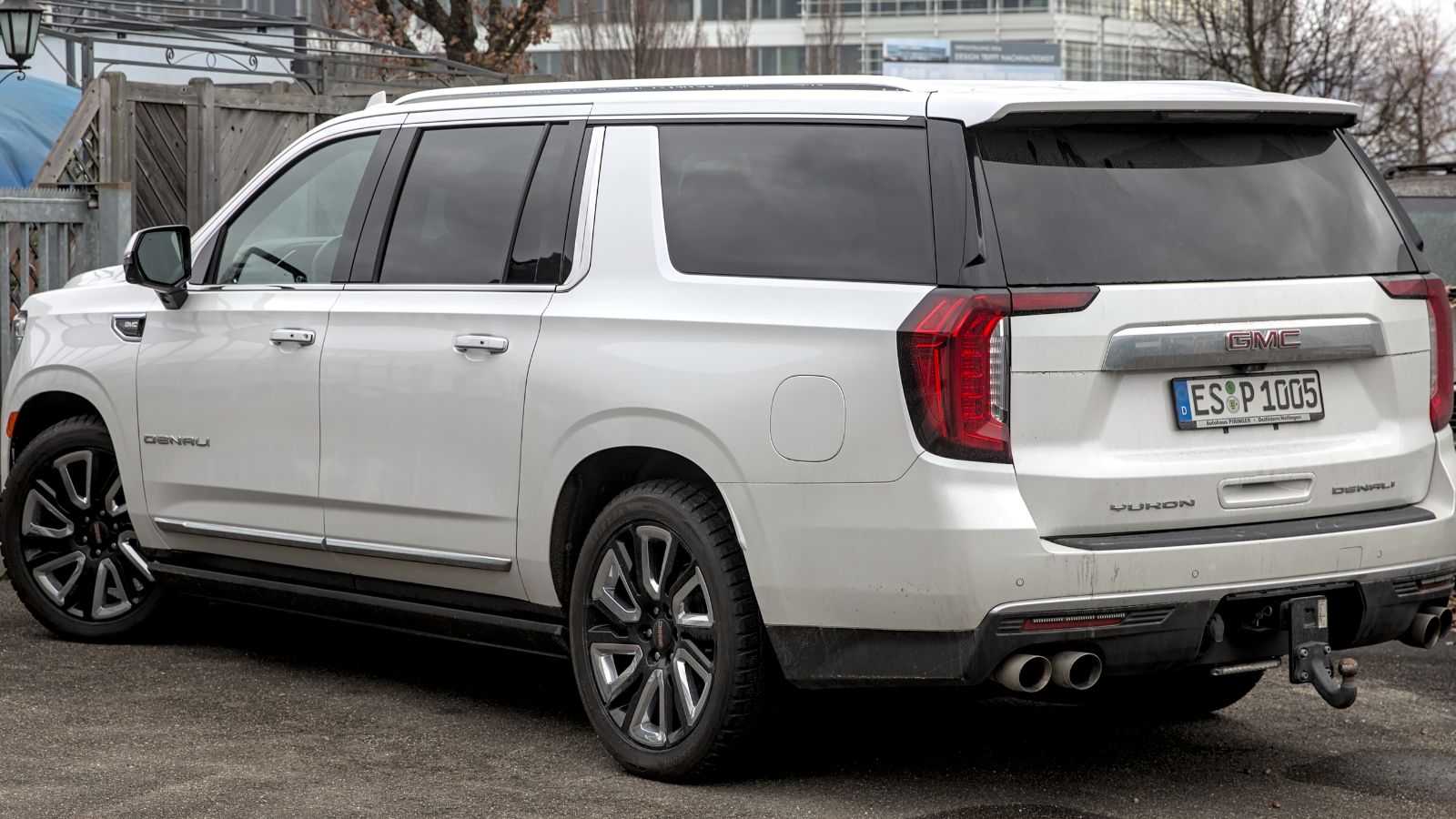
Why the GMC Yukon Denali’s Fuel Economy Matters in 2026
The fuel economy of the GMC Yukon Denali is critical because it directly influences long-term ownership costs, towing range, and the vehicle's environmental footprint in an era of fluctuating energy prices. For owners, choosing between...
The fuel economy of the GMC Yukon Denali is critical because it directly influences long-term ownership costs, towing range, and the vehicle's environmental footprint in an era of fluctuating energy prices. For owners, choosing between the 6.2L V8 and the 3.0L Duramax diesel determines whether this luxury SUV remains a practical daily driver or a high-cost specialized hauler.
Contents
The Intersection of Luxury and Efficiency in the Full-Size Segment
The GMC Yukon Denali has long stood as the pinnacle of General Motors' professional-grade luxury. However, in 2026, the conversation surrounding this flagship SUV has shifted from pure horsepower and chrome accents to a more nuanced discussion of efficiency. As fuel prices remain volatile and environmental regulations tighten, the "fuel economy" of a vehicle weighing nearly 6,000 pounds is no longer a secondary concern—it is a primary factor in the vehicle’s value proposition.
For the modern Denali owner, fuel economy is not just about the cost at the pump; it is about the operational efficiency of a multi-purpose tool. Whether the vehicle is being used for executive transport, family expeditions, or hauling heavy trailers, the rate at which it consumes energy dictates the frequency of stops, the total cost of ownership (TCO), and the vehicle's eventual resale value. In 2026, a "gas-guzzler" reputation can be a significant liability in the secondary market, making the Denali’s MPG ratings a vital metric for savvy buyers.
The Dual-Engine Strategy: Performance vs. Range
To understand why fuel economy matters for the Yukon Denali, one must look at the two distinct ways GMC achieves it. The Denali trim typically offers two primary powertrains: the traditional 6.2L V8 and the 3.0L Duramax Turbo-Diesel.
The 6.2L EcoTec3 V8
The 6.2L V8 is the soul of the Denali. It provides 420 horsepower and the smooth, linear power delivery that luxury buyers expect. However, it requires premium gasoline to achieve its peak performance and efficiency. GMC utilizes Dynamic Fuel Management (DFM), a sophisticated system that allows the engine to operate in 17 different cylinder patterns. This means the engine can run on anywhere from two to eight cylinders depending on the load. While this significantly improves highway cruising efficiency, the physical reality of moving a large SUV means the V8 remains the thirstier option.
The 3.0L Duramax Turbo-Diesel
The 3.0L Duramax has revolutionized the fuel economy narrative for the Yukon Denali. In 2026, this engine is often the preferred choice for those prioritizing range. It offers the same torque as the V8 (460 lb-ft) but at much lower RPMs. The primary reason fuel economy matters here is the extended cruising range. A diesel-equipped Denali can often exceed 600 miles on a single tank, a feat that its gasoline counterparts cannot match. This reduces "range anxiety" during long-distance towing and minimizes the time spent at fueling stations.
The Financial Impact of Operating a Denali
The financial implications of fuel economy are more pronounced in 2026 than in previous decades. With the average American driving approximately 14,000 to 15,000 miles per year, the difference between 16 MPG and 24 MPG represents thousands of dollars in annual operating costs.
| Feature/Spec | 6.2L V8 Gasoline (4WD) | 3.0L Duramax Diesel (4WD) |
|---|---|---|
| City MPG (Est.) | 14 | 20 |
| Highway MPG (Est.) | 18 | 26 |
| Combined MPG | 16 | 22 |
| Fuel Type | Premium Unleaded | Ultra-Low Sulfur Diesel |
| Annual Fuel Cost (15k mi) | ~$4,200 - $4,800 | ~$3,100 - $3,600 |
| Max Towing Range | ~400 Miles | ~600+ Miles |
Note: Estimates based on 2026 projected fuel prices and EPA cycles. Actual results vary based on driving habits and load.
By examining the table above, it becomes clear that fuel economy matters because of the cumulative savings. Over a five-year ownership period, a driver choosing the more efficient diesel engine could save upwards of $6,000 to $8,000 in fuel costs alone. This is money that can be diverted toward insurance, maintenance, or simply reducing the overall cost of the vehicle’s luxury premium.
Towing Efficiency: The Denali’s Workhorse Credibility
A significant portion of Yukon Denali owners use their vehicles for towing boats, horse trailers, or campers. This is where fuel economy becomes a technical necessity rather than just a financial preference. When a vehicle is under a heavy load, its MPG can drop by 40% or more.
If a gasoline V8 drops from 18 MPG to 9 MPG while towing, the driver is forced to stop every 200 miles to refuel. This adds significant time and frustration to long trips. Conversely, the high torque and inherent efficiency of the Duramax diesel allow it to maintain better fuel economy under load. For the heavy-duty user, "why it matters" is simple: it is the difference between reaching your destination in one go or having to plan your route around high-clearance gas stations.
Technological Drivers of 2026 Efficiency
The 2026 Yukon Denali isn't just relying on engine displacement to manage fuel. Several auxiliary technologies contribute to why the vehicle's economy is better than its predecessors:
- 10-Speed Automatic Transmission: The Hydra-Matic 10-speed transmission is standard. By having more gears, the engine can stay in its most efficient "sweet spot" for longer periods, whether accelerating or maintaining highway speeds.
- Active Aero Shutters: These shutters, located behind the grille, close at highway speeds to reduce aerodynamic drag. In a vehicle with the frontal area of a Yukon, even small aerodynamic improvements lead to measurable MPG gains.
- Lightweighting Initiatives: GMC has increasingly used high-strength steel and aluminum alloys in the chassis and body panels. Reducing the curb weight directly correlates to lower energy requirements for acceleration.
- Low Rolling Resistance Tires: Standard on many Denali configurations, these tires are designed to reduce the energy lost as heat when the tire rolls, further squeezing out an extra mile or two per gallon.
Environmental and Regulatory Context
In 2026, social and regulatory pressures regarding carbon footprints have reached the luxury SUV market. Corporate Average Fuel Economy (CAFE) standards require manufacturers to improve the efficiency of their entire fleet. When a consumer chooses a more efficient Yukon Denali, they are participating in a broader shift toward sustainable luxury.
Furthermore, many urban centers are implementing "low emission zones" or considering congestion pricing based on vehicle efficiency. Owning a high-end SUV that manages respectable fuel economy ensures that the vehicle remains compliant with future urban driving restrictions, preserving the owner's freedom of movement.
Resale Value: The Efficiency Premium
Historically, large SUVs suffered from massive depreciation when fuel prices spiked. However, the latest generation of Yukon Denalis has mitigated this through better efficiency options. In the 2026 resale market, a Denali with the 3.0L Duramax or a well-maintained 6.2L V8 with the latest DFM technology holds its value better than older, less efficient models.
Buyers in the pre-owned market are often more sensitive to operating costs than those buying new. Therefore, the fuel economy of the vehicle today dictates its desirability five years from now. A Denali that is "expensive to feed" will see its market pool shrink, whereas an efficient luxury liner remains a hot commodity.
Common Mistakes When Evaluating Yukon Fuel Economy
One frequent error is looking only at the "Combined MPG" sticker without considering the driving environment. The Yukon Denali is a heavy vehicle; it uses a massive amount of energy to overcome inertia. If your driving is 90% stop-and-go city traffic, the V8's fuel economy will suffer significantly more than the diesel's.
Another mistake is ignoring fuel price spreads. In some regions, diesel or premium gasoline may be significantly more expensive than regular 87-octane. While the Denali is more efficient on diesel, if diesel costs 30% more than premium gas in your specific area, the "efficiency" might not translate to "savings." Always calculate based on local fuel availability.
FAQ
Does the 6.2L V8 require premium fuel to get good fuel economy? Yes. While the engine can run on lower octanes, the onboard computer will retard ignition timing to prevent engine knock, which results in decreased power and lower fuel efficiency. To achieve the EPA-rated MPG and the advertised 420 horsepower, premium fuel is required.
How does the "Denali Ultimate" trim affect fuel economy? The Denali Ultimate often comes with larger 22-inch wheels and more standard equipment, which increases the vehicle's curb weight. This additional mass and the increased rolling resistance of wider tires can lead to a slight decrease (typically 1 MPG) compared to a base Denali with smaller wheels.
Is there a hybrid version of the 2026 Yukon Denali? While GMC has focused heavily on the fully electric Yukon EV and the Duramax diesel for efficiency, traditional plug-in hybrid (PHEV) options for the Yukon platform have historically been limited. Most buyers looking for "hybrid-like" efficiency in this class opt for the 3.0L Duramax diesel.
Does towing at maximum capacity significantly change the fuel economy rankings? Yes. Under maximum load, the diesel engine typically maintains its efficiency much better than the gasoline V8. While both will see a drop, the V8's fuel consumption increases more dramatically when the engine is forced to stay in high-RPM power bands to move the weight.
Are there aftermarket ways to improve a Denali's fuel economy? Beyond maintaining proper tire pressure and using the recommended synthetic oils, significant aftermarket gains are rare. Some owners use "tuner" chips, but these can void warranties and may actually increase emissions. The most effective way to improve MPG is through driving habits, such as utilizing the cruise control and avoiding rapid acceleration.
Practical Recommendation
If you are purchasing a GMC Yukon Denali in 2026, the engine choice should be dictated by your primary use case. For those who prioritize the traditional luxury experience, engine sound, and immediate throttle response—and for whom fuel cost is a secondary concern—the 6.2L V8 remains the gold standard.
However, if you plan to use the Denali for frequent long-distance travel, towing, or as a high-mileage daily driver, the 3.0L Duramax Turbo-Diesel is the superior choice. It offers a unique combination of luxury and "smart" economics, providing the range and efficiency that modern regulatory and financial environments demand. Before signing, verify the current price spread between premium gasoline and diesel in your specific region to ensure the math supports your choice.
Image Gallery