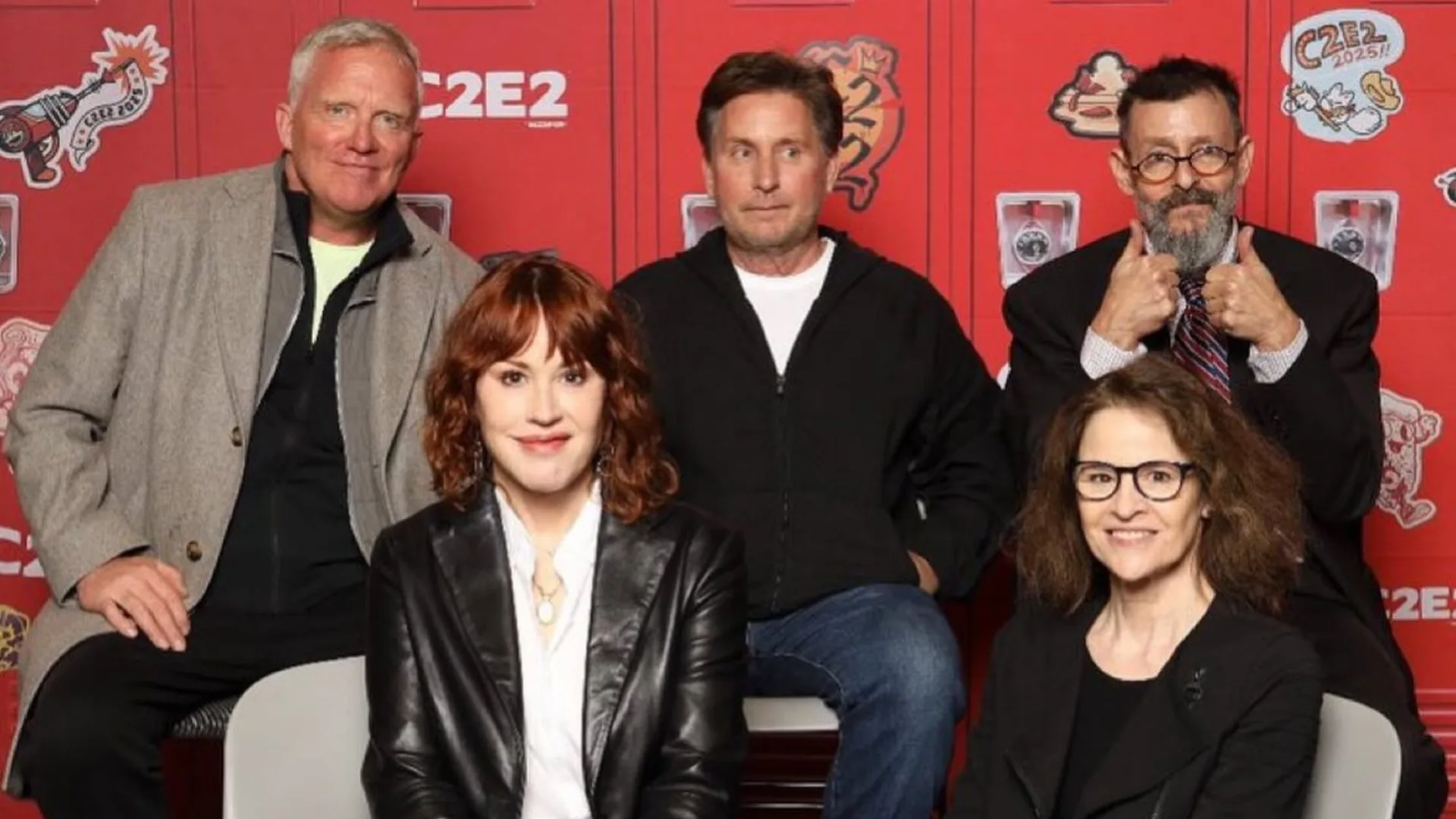
The Original Breakfast Club Cast Explained: Defining a Generation
The original cast of The Breakfast Club, John Hughes’s 1985 quintessential high school drama, consists of Emilio Estevez, Molly Ringwald, Judd Nelson, Anthony Michael Hall, and Ally Sheedy. Often referred to as the "Brat Pack," these f...
The original cast of The Breakfast Club, John Hughes’s 1985 quintessential high school drama, consists of Emilio Estevez, Molly Ringwald, Judd Nelson, Anthony Michael Hall, and Ally Sheedy. Often referred to as the "Brat Pack," these five actors portrayed archetypal teenage characters—the athlete, the princess, the criminal, the brain, and the basket case—who spend a transformative Saturday in detention.
Contents
Understanding the Cultural Impact of the Cast
Released on February 15, 1985, The Breakfast Club serves as a focal point for mid-1980s American cinema. The film’s enduring relevance lies in its ability to strip away the veneers of social cliques. By confining five distinct students to a library for eight hours, director John Hughes forced the audience to look beyond the superficial labels that governed high school life.
The cast selection was instrumental in this success. Each actor was already building a reputation in the teen-movie landscape of the 1980s, but their performances here solidified their status as icons of the era. The chemistry among the five, despite their characters' initial hostilities, created a template for the "ensemble cast" film that has been replicated in countless teen dramas since.
Character Archetypes and Actor Profiles
To understand the cast, one must examine how the actors aligned with their specific roles, which were designed to represent the compartmentalized nature of a suburban American high school.
Emilio Estevez as Andrew Clark (The Athlete)
Emilio Estevez played the quintessential varsity wrestler grappling with the immense pressure exerted by his father. Estevez was already a recognizable face, having appeared in The Outsiders (1983) and Repo Man (1984). His portrayal of Andrew brought a level of athletic intensity and vulnerability that moved the character beyond the "jock" stereotype.
Molly Ringwald as Claire Standish (The Princess)
Molly Ringwald was the muse of John Hughes during this period. As Claire, the popular girl from a wealthy family, she provided the emotional anchor for the group. Ringwald’s performance showcased the social anxiety inherent in high-status popularity, demonstrating that the "princess" archetype often masked significant familial neglect and intense peer-group scrutiny.
Judd Nelson as John Bender (The Criminal)
Judd Nelson’s portrayal of the rebellious, cynical John Bender is arguably the most distinct performance in the film. Bender served as the catalyst for the group’s psychological exploration, using agitation to dismantle the pretenses of his peers. Nelson’s method-leaning approach created a stark contrast to the more reserved members of the cast, grounding the film’s narrative tension.
Anthony Michael Hall as Brian Johnson (The Brain)
Anthony Michael Hall, a staple of Hughes’s previous films, played Brian, the high-achieving academic whose primary struggle was the crushing weight of expectation. Hall’s performance highlighted the academic pressures placed on suburban youth, contrasting sharply with the physical defiance of the other characters.
Ally Sheedy as Allison Reynolds (The Basket Case)
Ally Sheedy’s Allison was an exercise in silence and observational behavior. As the self-described "basket case," Allison offered a commentary on alienation. Sheedy’s performance was largely defined by non-verbal cues and shifts in personality, illustrating the complex coping mechanisms used by teenagers to navigate feelings of invisibility.
The Brat Pack Phenomenon
The media frequently grouped the stars of The Breakfast Club—along with peers like Rob Lowe, Demi Moore, and Andrew McCarthy—into a collective known as the "Brat Pack." This term, coined by journalist David Blum in a 1985 New York Magazine article, initially served as a shorthand for this group of young actors who frequently appeared in films together.
While the term often carried a pejorative connotation, implying a lack of professional discipline or maturity, the actors themselves viewed it differently. It served as both a marketing tool for the film industry and a source of professional frustration for the actors as they sought to distance themselves from their teen-movie origins. In the decades that followed, the label became a cultural touchstone, serving as a reminder of a specific, high-output era in Hollywood.
Cast Dynamics and Production Realities
The production of The Breakfast Club was unique because it functioned almost like a stage play. Because the vast majority of the movie takes place within the confines of the Shermer High School library, the cast had to rely on dialogue and physical interaction rather than changing sets or complex action sequences.
John Hughes famously encouraged the cast to rehearse for weeks before principal photography began. This process allowed the actors to internalize their characters' archetypes and develop the genuine, sometimes contentious, rapport seen on screen. The "group therapy" sequence, where the characters sit in a circle and confess their deepest insecurities, remains one of the most cited moments in cinema history precisely because the actors were allowed to explore those dynamics organically.
Comparison of Principal Roles
The following table outlines the distinct traits associated with the core cast members.
| Actor | Character | Archetype | Defining Conflict |
|---|---|---|---|
| Emilio Estevez | Andrew Clark | Athlete | Parental pressure to excel |
| Molly Ringwald | Claire Standish | Princess | Social status vs. isolation |
| Judd Nelson | John Bender | Criminal | Domestic abuse and distrust |
| Anthony Michael Hall | Brian Johnson | Brain | Academic pressure |
| Ally Sheedy | Allison Reynolds | Basket Case | Neglect and alienation |
Legacy and Career Trajectories
In the years since the film’s 1985 release, the cast members have followed varied career paths. Some transitioned into directing and producing, while others remained dedicated to acting.
- Emilio Estevez: Moved into directing and writing, with notable projects including Bobby (2006) and The Public (2018).
- Molly Ringwald: Continued a steady acting career, appearing in both film and television, with a notable recurring role in the hit series Riverdale.
- Judd Nelson: Maintained a prolific career in television, appearing in numerous guest-starring roles and voice acting projects throughout the 2000s and 2010s.
- Anthony Michael Hall: Successfully transitioned away from his teen-star typecast, taking on darker, more complex roles in television dramas such as The Dead Zone.
- Ally Sheedy: Remained active in independent cinema and television, frequently taking on experimental and challenging roles that expanded upon her early work.
Frequently Asked Questions
Who directed The Breakfast Club and why was the cast chosen? John Hughes directed the film. The cast was chosen based on their ability to embody specific, relatable archetypes that he felt were prevalent in suburban high schools, often selecting actors he had collaborated with or noticed in other coming-of-age projects.
Are all five members of the cast considered part of the "Brat Pack"? Most are, though the definition of the Brat Pack is fluid. The media-driven label generally applied to young actors who starred in films like St. Elmo’s Fire and The Breakfast Club. While the core five from this film are the primary associated figures, the membership of the "pack" often fluctuated in press reports of the mid-80s.
Did the cast members get along during production? The dynamics were complex. While they developed a strong working relationship, there were natural tensions—some of which were encouraged by the director to mirror the friction between their characters. The rehearsal process was designed to foster the vulnerability required for the film's climax.
What is the significance of the "Saturday Detention" premise? The premise serves as a structural device to force characters from different social spheres into a shared environment. By removing their normal social support structures, Hughes forced them to reconcile their identities with how others perceived them, which is the film's primary narrative goal.
How does 2026 reflect the legacy of this cast? In 2026, the film is widely regarded as a historical standard for the teen drama genre. The original cast members are frequently discussed in academic and pop-culture retrospectives as having set a precedent for character-driven storytelling in mainstream cinema.
Recommendation for Further Context
For those interested in the technical and creative history of the film, it is recommended to review the documentary materials provided on the 2008 Criterion Collection release. These materials include extensive interviews that provide a verified look at the rehearsal processes and the interpersonal dynamics of the cast, offering a more nuanced understanding than contemporary media reports from the mid-1980s.
Image Gallery