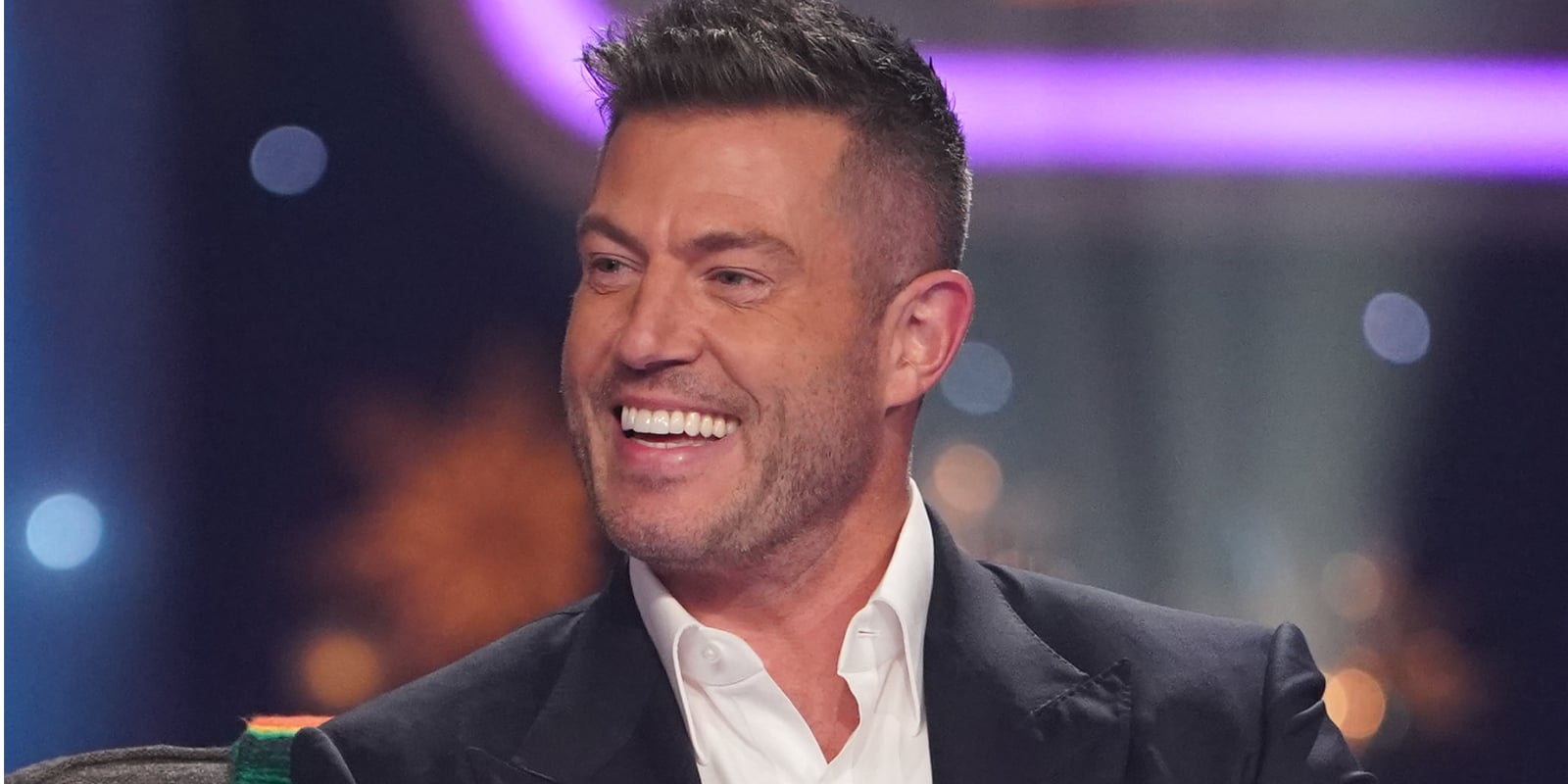
Jesse Palmer’s Professional Football Career: The Giants, 49ers, and Alouettes
Jesse Palmer’s professional football career spanned from 2001 to 2007, primarily as a quarterback for the New York Giants, followed by a brief stint with the San Francisco 49ers and the Montreal Alouettes of the CFL. Although now a pro...
Jesse Palmer’s professional football career spanned from 2001 to 2007, primarily as a quarterback for the New York Giants, followed by a brief stint with the San Francisco 49ers and the Montreal Alouettes of the CFL. Although now a prominent television personality, his athletic foundation was built through years of high-level competition across two different professional leagues.
Contents
The NFL Draft and the New York Giants Era (2001–2004)
Jesse Palmer entered the NFL as a highly-regarded prospect out of the University of Florida, where he played under the legendary coach Steve Spurrier. In the 2001 NFL Draft, the New York Giants selected Palmer in the fourth round with the 125th overall pick. At the time, the Giants were looking for a viable developmental backup behind the established starter, Kerry Collins.
Developmental Years and Backup Roles
Palmer’s first two seasons in New York were defined by the traditional "backup" experience of the early 2000s. Unlike the modern NFL, where high-draft-pick quarterbacks are often thrust into starting roles immediately, Palmer was given time to learn the Giants' West Coast-style offense. During the 2001 and 2002 seasons, he saw very limited action, appearing in only two games and attempting a single pass.
However, the value of a backup quarterback is often measured by their preparedness when the starter goes down. Palmer remained a diligent student of the game, earning the trust of the coaching staff as a reliable second-string option.
The 2003 Season: Stepping into the Spotlight
The 2003 season was the most significant year of Jesse Palmer’s NFL playing career. When Kerry Collins suffered an injury late in a disappointing season for the Giants, Palmer was named the starter for the final three games.
During this stretch, Palmer faced the daunting task of leading a struggling offense against formidable NFC opponents. While the Giants did not win those three starts, Palmer demonstrated an ability to manage the huddle and execute complex play-calling. He finished the 2003 season with 60 completions on 116 attempts for 532 yards, throwing three touchdowns against four interceptions.
The Arrival of Eli Manning
The trajectory of Palmer’s career with the Giants changed irrevocably in 2004. The Giants made a blockbuster trade for the number one overall pick, Eli Manning. With the veteran Kurt Warner also signed to bridge the gap to Manning, Palmer found himself third on the depth chart.
It was during this 2004 season that Palmer famously appeared as the lead on the fifth season of ABC’s The Bachelor. This move was unprecedented for an active NFL player and created a unique crossover between professional sports and reality television that persists in the public consciousness today. Despite the media attention, Palmer remained with the Giants through the end of the 2004 season before being released in September 2005.
The San Francisco 49ers Stint (2005)
After his release from the Giants, Palmer sought to continue his NFL career in a new environment. In November 2005, the San Francisco 49ers signed Palmer to provide depth at the quarterback position.
The 49ers were in a state of significant transition at the time. They had drafted Alex Smith with the first overall pick earlier that year, but the team was struggling with injuries and inconsistent play across the roster. Palmer was brought in to compete for a roster spot and provide a veteran presence in the meeting rooms.
Palmer’s time in San Francisco was relatively short-lived. He worked with the team during the latter half of the season but did not see regular-season game action. In the NFL, "cup of coffee" stints like this are common for quarterbacks who have starting experience, as teams often cycle through veteran backups to find the right fit for their system. Palmer was released by the 49ers in the 2006 preseason as the team moved forward with their younger prospects.
Returning Home: The Montreal Alouettes (2006)
Jesse Palmer’s football journey eventually led him back to his roots. Born in Toronto and raised in Nepean, Ontario, Palmer had a deep connection to Canadian football. His father, Bill Palmer, had played for the Ottawa Rough Riders, making Jesse’s transition to the Canadian Football League (CFL) a natural progression.
Signing with Montreal
In September 2006, Palmer signed with the Montreal Alouettes. The Alouettes were one of the premier franchises in the CFL at the time, led by the legendary quarterback Anthony Calvillo. For Palmer, the move to Montreal was an opportunity to adapt his skills to the Canadian game, which features a wider field, three downs instead of four, and a much heavier emphasis on the passing game.
The Developmental Roster and Retirement
Palmer spent the remainder of the 2006 season on the Alouettes' developmental roster. He was tasked with learning the nuances of the 12-man game and the specific motion rules unique to the CFL. However, the path to a starting role was blocked by Calvillo, one of the greatest passers in the history of gridiron football.
By the start of the 2007 season, Palmer faced a pivotal career decision. He was offered a significant opportunity to move into broadcasting full-time. Recognizing that his window as a professional athlete was closing and his potential in media was skyrocketing, Palmer announced his retirement from professional football before the 2007 CFL season began.
Comparative Overview of Jesse Palmer’s Professional Career
The following table summarizes Palmer's tenure and role with each of his three professional teams.
| Team | League | Years | Role | Notable Status |
|---|---|---|---|---|
| New York Giants | NFL | 2001–2004 | Backup/Starter | Started 3 games in 2003; appeared on The Bachelor while on roster. |
| San Francisco 49ers | NFL | 2005 | Reserve QB | Signed mid-season; part of the Alex Smith era transition. |
| Montreal Alouettes | CFL | 2006 | Developmental | Never saw game action; retired to pursue broadcasting. |
Technical Comparison: NFL vs. CFL for a Quarterback
Palmer’s transition between the NFL and CFL required a specific set of technical adjustments. Understanding these differences provides context for why many NFL quarterbacks struggle to adapt to the Canadian game.
- Field Dimensions: The CFL field is 110 yards long and 65 yards wide, compared to the NFL’s 100-yard length and 53.3-yard width. For a quarterback like Palmer, this meant more space for receivers but also longer throws to the sidelines, requiring significant arm strength and different timing.
- Number of Players: The 12th man in the CFL is typically a receiver or defensive back. This changes the "read" for a quarterback significantly, as the defensive secondary is more crowded, yet the offense has more motion options.
- The Three-Down Rule: In the NFL, a team has four downs to gain ten yards. In the CFL, they only have three. This forces a much more aggressive passing strategy. Palmer, trained in the ball-control West Coast offense of the Giants, would have had to pivot toward a "vertical" mentality in Montreal.
- The Waggle: CFL receivers are allowed to be in full motion toward the line of scrimmage at the snap. For a quarterback, this requires precise synchronization to ensure the ball is delivered exactly as the receiver hits the "void" in the zone.
The Transition to Broadcasting and Media
While Jesse Palmer’s playing days ended in 2007, his career in the public eye was only beginning. By 2026, he has established himself as one of the most versatile personalities in sports and entertainment media.
His experience as a quarterback provided the technical foundation for his work as a college football analyst for ESPN and ABC. Being able to explain the "why" behind a quarterback's decision-making allowed him to bridge the gap between casual fans and hardcore enthusiasts. Simultaneously, his comfort in front of the camera, first honed during his time with the Giants and The Bachelor, led him to host major entertainment programs, including the flagship Bachelor franchise itself.
Palmer's career serves as a blueprint for modern athletes. He leveraged his professional experience in the NFL and CFL to build a brand that transcended the field, proving that the skills learned in the film room and the huddle are highly transferable to the corporate and media worlds.
Frequently Asked Questions
Did Jesse Palmer ever win a Super Bowl?
Jesse Palmer did not win a Super Bowl. He was with the New York Giants from 2001 to 2004. While the Giants reached Super Bowl XXXV in January 2001 (the season before Palmer was drafted), the team did not return to the championship during his tenure. The Giants' next victory came in Super Bowl XLII (the 2007 season), after Palmer had retired from football.
Why did Jesse Palmer choose the CFL after the NFL?
Palmer chose the CFL for two primary reasons: his heritage and his desire for playing time. Being Canadian-born, the CFL held cultural significance for him. Furthermore, after being a backup in the NFL, the CFL offered a chance to compete for a starting role in a league that prioritizes high-volume passing, which suited his skill set as a Florida Gators alumnus.
How many games did Jesse Palmer start in the NFL?
Jesse Palmer started a total of three games in the NFL, all for the New York Giants during the 2003 season. He appeared in a total of 20 NFL games throughout his career, serving primarily as a backup and a special teams contributor on rare occasions.
What were Jesse Palmer's career stats with the Montreal Alouettes?
Jesse Palmer has no official game statistics with the Montreal Alouettes. Although he was signed to the team and spent time on their developmental roster and injured list in 2006, he never appeared in a regular-season or playoff game before retiring in early 2007.
Was Jesse Palmer the first NFL player to be on The Bachelor?
Yes, Jesse Palmer was the first active professional athlete to serve as the lead on The Bachelor. His appearance in Season 5 (2004) occurred while he was still a member of the New York Giants roster, creating significant buzz in both the sports and entertainment industries.
Final Recommendation
For those interested in the intersection of professional sports and media, Jesse Palmer's career offers a fascinating case study. If you are looking to verify his specific playing records, the most accurate sources remain the NFL Official Record and Fact Book and the CFL Historical Database. For fans of his current work, following his analysis on ESPN provides a clear look at how his years in the Giants' quarterback room and his training in Montreal continue to inform his expert perspective on the game today in 2026.
Image Gallery