Florida Workers’ Compensation Requirements for Nonprofits in 2026
In Florida, nonprofit organizations are required to carry workers' compensation insurance if they have four or more employees, including corporate officers who have not formally exempted themselves. For nonprofits engaged in the constr...
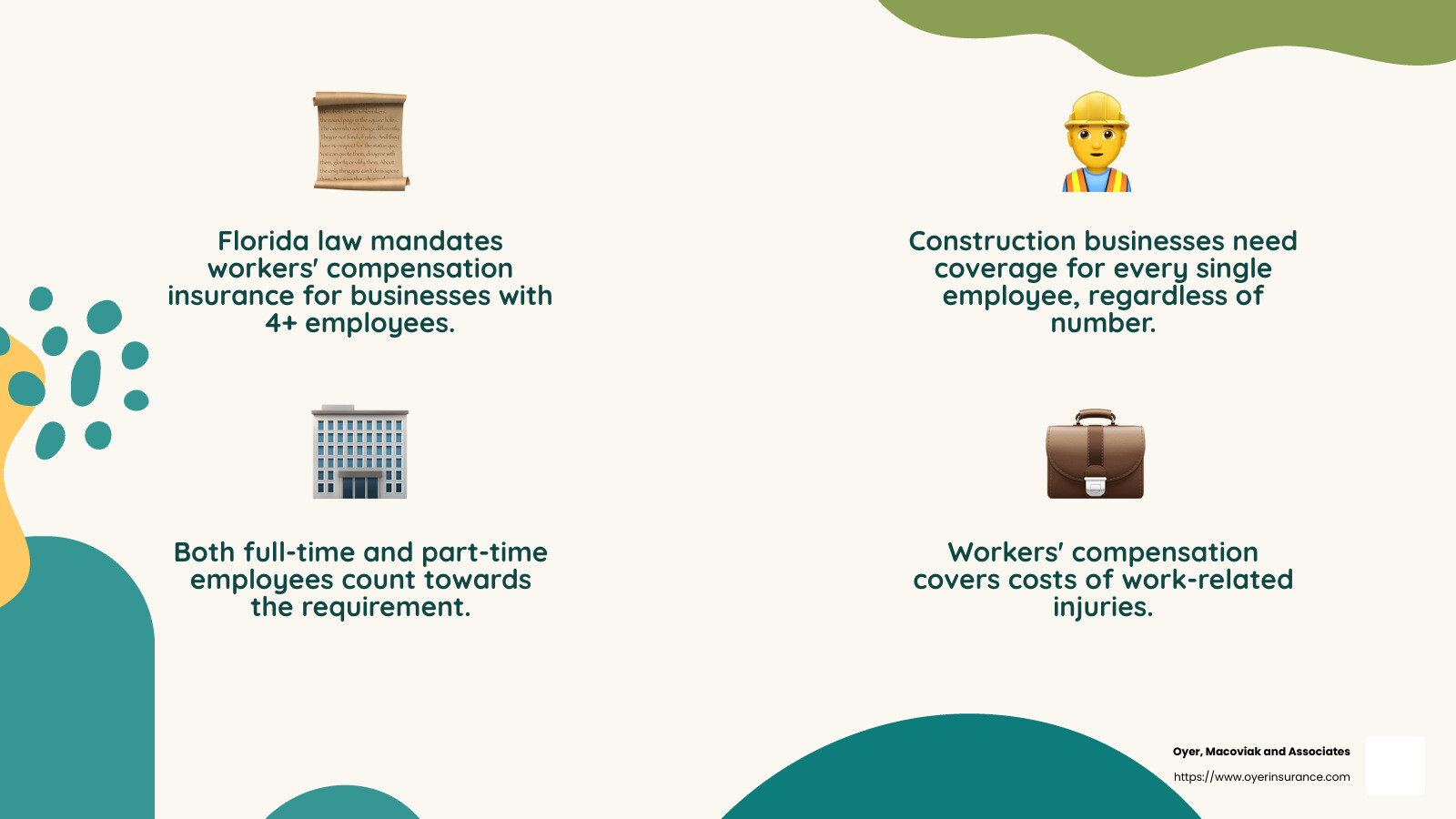
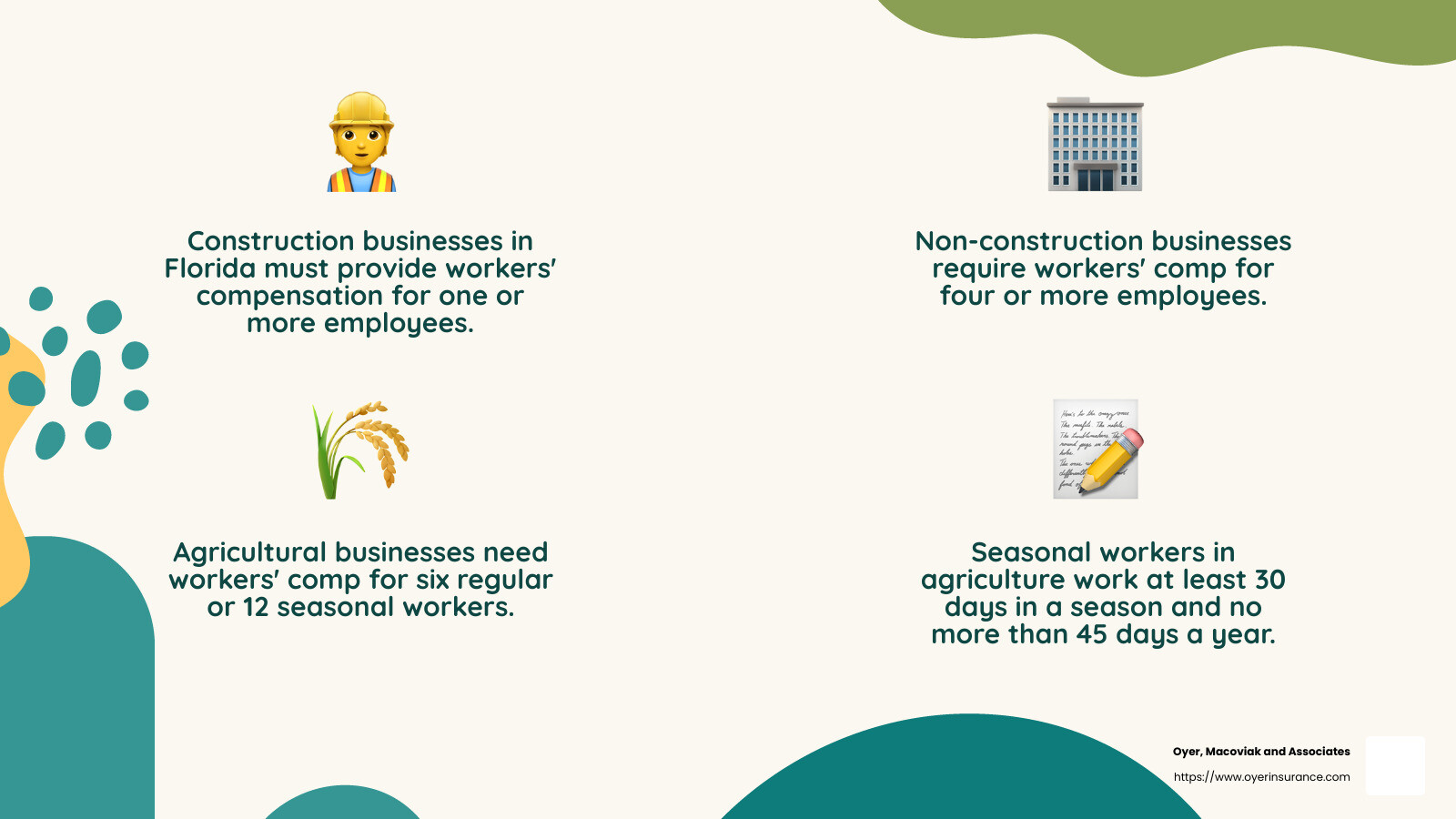
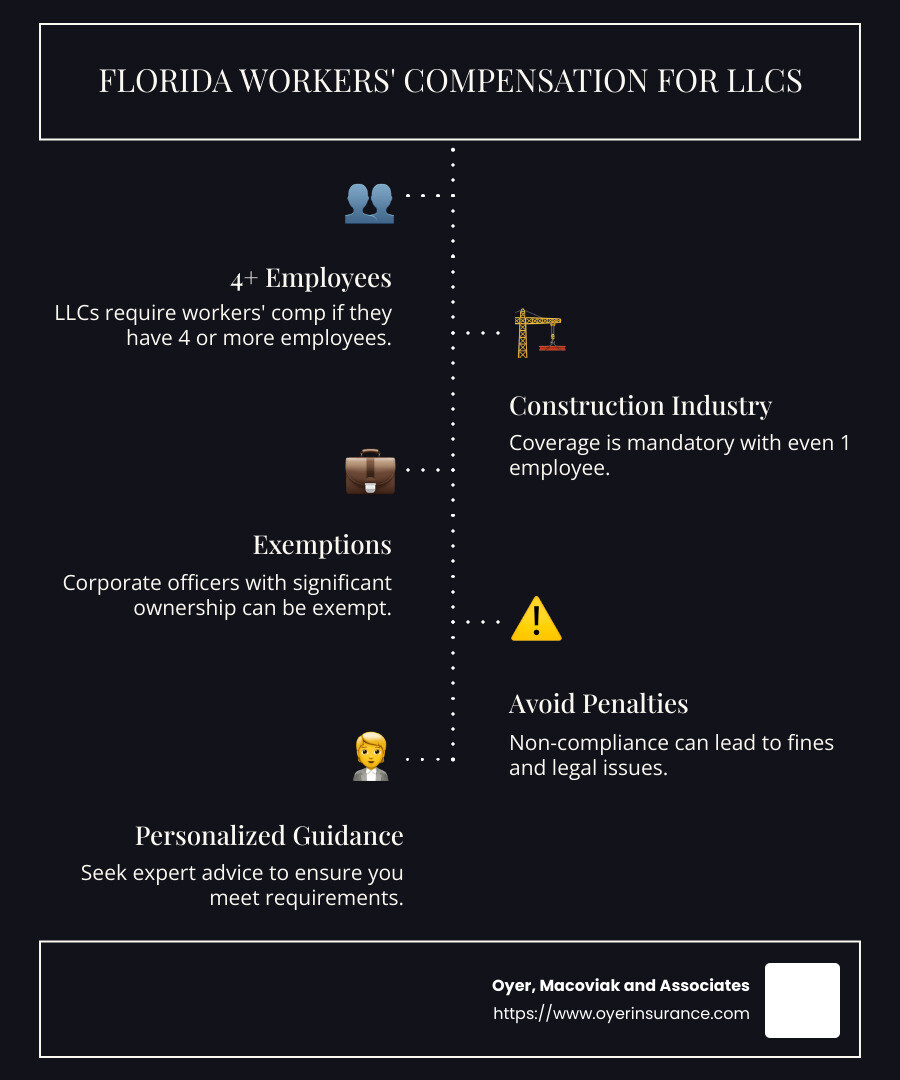
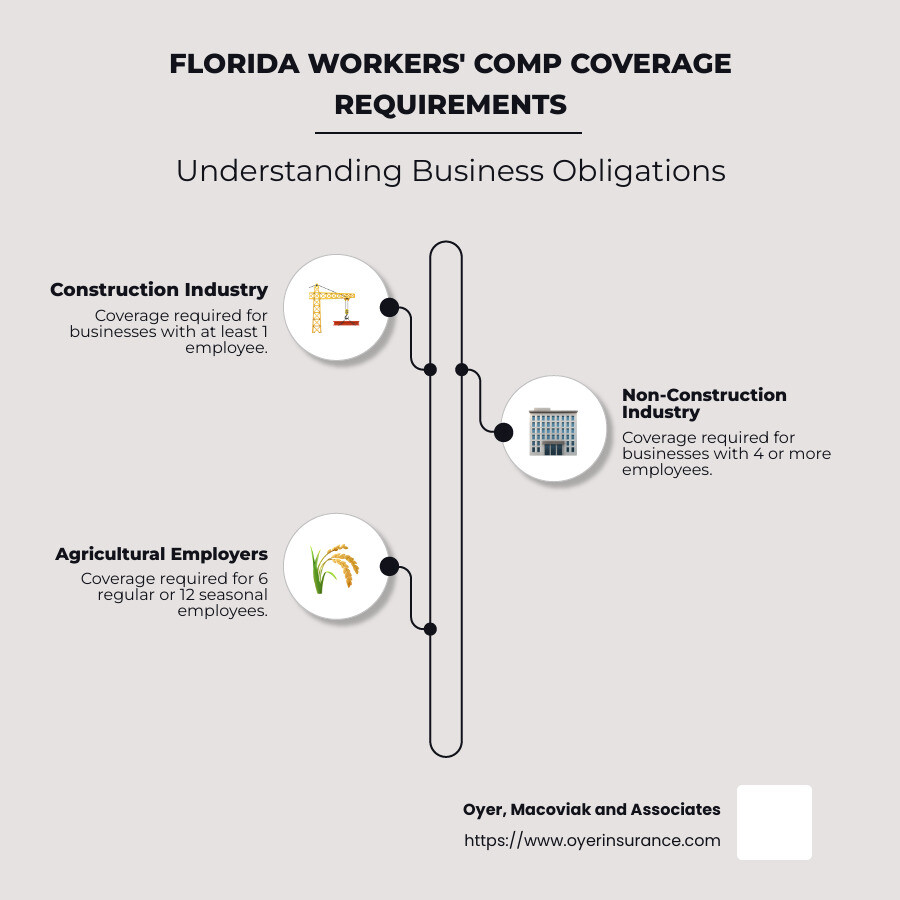
In Florida, nonprofit organizations are required to carry workers' compensation insurance if they have four or more employees, including corporate officers who have not formally exempted themselves. For nonprofits engaged in the construction industry, the threshold is stricter, requiring coverage for organizations with one or more employees.
Contents
As of 2026, the landscape of nonprofit management in Florida necessitates a deep understanding of state labor laws. Many 501(c)(3) organizations operate under the misconception that their tax-exempt status or charitable mission provides an "out" from commercial insurance mandates. However, the Florida Department of Financial Services (DFS), Division of Workers' Compensation, treats nonprofit entities similarly to for-profit corporations regarding the protection of human capital. Failure to comply can lead to devastating financial penalties and the loss of legal protections that shield the organization's assets from personal injury lawsuits.
The Legal Framework: Florida Statute Chapter 440
The primary governing authority for workplace safety and injury compensation in the state is Florida Statute Chapter 440. This statute defines the "exclusive remedy" doctrine, which is a critical legal protection for nonprofit boards. Under this doctrine, if an employee is injured on the job, workers' compensation serves as the sole source of recovery for medical bills and lost wages. In exchange for providing this "no-fault" insurance, the employer—in this case, the nonprofit—is generally immune from civil lawsuits related to the injury.
For a nonprofit in 2026, the definition of an "employee" is the most frequent point of confusion. According to Florida law, an employee is any person engaged in any employment under any appointment or contract of hire or apprenticeship, express or implied, oral or written. This includes both full-time and part-time workers. Even if a worker is seasonal or temporary, they count toward the "four or more" threshold that triggers the insurance mandate.
Determining Your Employee Count
To determine if your nonprofit is legally required to carry coverage, you must accurately calculate your headcount. In the non-construction, non-agricultural sector (where most nonprofits reside), the magic number is four.
The Role of Corporate Officers
One of the most significant nuances in Florida law is that corporate officers are considered employees of the corporation. In the context of a nonprofit, this usually refers to individuals listed in the organization's articles of incorporation or bylaws, such as the President, Vice President, Secretary, or Treasurer.
Unless these officers file a formal Certificate of Election to be Exempt (Form DWC-250) with the State of Florida, they are included in the headcount. For example, if a nonprofit has three paid staff members and two officers who are active but unpaid, the state views the organization as having five employees, thus requiring a workers' compensation policy.
The Construction Industry Exception
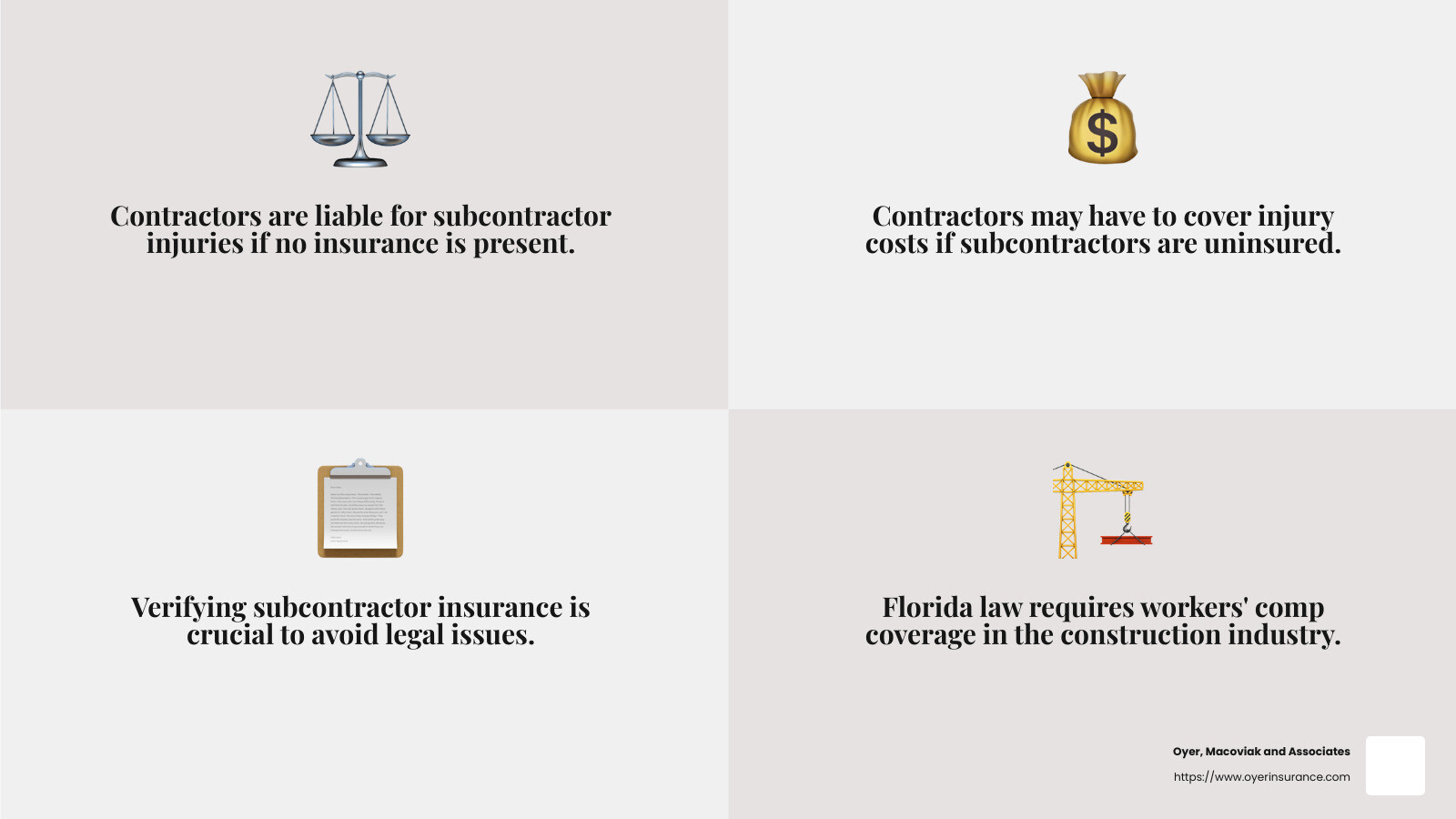
If your nonprofit's mission involves construction—such as organizations that build low-income housing or perform significant home repairs—the threshold drops to one employee. The state defines "construction" broadly. If any portion of your workforce is engaged in activities defined under the North American Industry Classification System (NAICS) as construction, the 4-employee rule no longer applies, and you must secure coverage immediately upon hiring your first worker.
The Volunteer Dilemma: Are They Covered?
Volunteers are the lifeblood of the nonprofit sector, yet their status under Florida workers' compensation law is complex. Generally, a "true volunteer"—someone who performs services for a nonprofit without any expectation of pay or remuneration—is not considered an employee under Chapter 440.
However, the definition of "remuneration" is broad. If your nonprofit provides volunteers with stipends, free housing, significant meals, or other non-cash benefits that could be construed as wages, a judge or a state auditor might reclassify those volunteers as employees. If this reclassification pushes your headcount over the threshold, you could be found in non-compliance retroactively.
Why Many Nonprofits Choose to Cover Volunteers
Even though the law does not mandate coverage for unpaid volunteers, many Florida nonprofits in 2026 opt to add a Volunteer Endorsement to their workers' compensation policy. Without this coverage, a volunteer who is injured while serving your organization could sue the nonprofit in civil court for negligence. By extending workers' comp benefits to volunteers, the nonprofit secures the "exclusive remedy" protection, effectively preventing the volunteer from suing for pain and suffering, while ensuring their medical needs are met.
Cost Factors and Classification Codes
The cost of workers' compensation for a Florida nonprofit is determined by the organization’s total payroll and the specific NCCI (National Council on Compensation Insurance) classification codes assigned to its activities.
Common Nonprofit Classification Codes
| Activity Type | NCCI Code | Risk Profile |
|---|---|---|
| Clerical Office Employees | 8810 | Low risk; primarily desk-based work. |
| Professional/Social Workers | 8868 | Moderate risk; involves field visits and community outreach. |
| Residential Care/Group Homes | 9101 | Higher risk; involves physical assistance and 24/7 care. |
| Maintenance/Janitorial | 9015 | Moderate-high risk; involves physical labor and equipment. |
In 2026, insurance carriers use these codes to apply a rate per $100 of payroll. Because clerical work is statistically safer, the rate for code 8810 is significantly lower than for code 9101. Nonprofits must ensure their employees are classified correctly during the annual premium audit to avoid overpaying or facing "back-billing" for under-reported risks.
Penalties for Non-Compliance
Florida is aggressive in enforcing workers' compensation requirements. The Division of Workers' Compensation regularly conducts investigations and on-site inspections. If a nonprofit is found to be operating without required coverage, the state can issue a Stop-Work Order (SWO).
An SWO requires all business operations to cease immediately until the organization secures coverage and pays a penalty. The penalty is typically calculated as two times the amount the employer would have paid in premiums for the period they were uninsured during the preceding three years. For a nonprofit with a modest payroll, these fines can easily reach tens of thousands of dollars, often exceeding the organization's annual operating reserve. Furthermore, if an injury occurs while the nonprofit is uninsured, the organization is responsible for all medical costs and lost wages out-of-pocket, and the board members could potentially face personal liability in certain scenarios.
How to Obtain and Maintain Coverage
Securing coverage in 2026 is a straightforward process, but it requires diligence. Most nonprofits work with a licensed commercial insurance agent who can shop for policies in the voluntary market.
- Assess Your Headcount: Count all paid staff and decide which officers will seek exemptions (if eligible).
- Identify Your Risks: Document the specific tasks your staff and volunteers perform to ensure correct NCCI coding.
- Shop the Market: Get quotes from multiple carriers. Some insurers specialize in "social services" or "nonprofit" packages that bundle workers' comp with Directors and Officers (D&O) liability.
- The FWCJUA Option: If your nonprofit is in a high-risk category (like disaster relief or heavy manual labor) and cannot find coverage in the private market, you may apply through the Florida Workers' Compensation Joint Underwriting Association (FWCJUA), the state's "insurer of last resort."
- Annual Audits: Be prepared for an annual audit where the insurer verifies your payroll records (Form RT-6) against the premiums paid.
Frequently Asked Questions
Do out-of-state nonprofits need Florida coverage for remote workers?
Yes. If a nonprofit based in another state has employees physically working in Florida (including permanent remote workers), those employees are subject to Florida's workers' compensation laws. If the organization meets the threshold of four employees (regardless of where the HQ is located), they must have a policy that specifically lists Florida in "Section 3A" of the information page.
Can a nonprofit use a PEO to meet this requirement?
Yes. Many nonprofits utilize Professional Employer Organizations (PEOs) to handle payroll and HR. In a PEO arrangement, the workers' compensation coverage is often provided under the PEO’s master policy. However, the nonprofit remains responsible for ensuring the PEO is actually providing the coverage and that all employees are correctly reported.
Are independent contractors counted toward the four-employee limit?
Generally, no. Legitimate independent contractors are not employees. However, Florida uses a "right to control" test to determine if a worker is truly a contractor. If the nonprofit dictates when, where, and how the work is performed, the state may reclassify that contractor as an employee during an audit, potentially triggering a non-compliance penalty.
Is the "four or more" rule based on full-time equivalents (FTE)?
No. Florida law counts individuals, not full-time equivalents. Four part-time employees who each work five hours a week count as four employees, triggering the requirement just as four full-time employees would.
Can board members be sued if the nonprofit lacks insurance?
While Florida's volunteer protection laws provide some immunity to unpaid board members, that immunity is not absolute. If a board's failure to secure mandatory workers' compensation insurance is viewed as a breach of fiduciary duty or gross negligence, the board members could face legal challenges, especially if the organization becomes insolvent due to a massive injury claim.
Practical Recommendation for 2026
For any Florida nonprofit operating in 2026, the safest and most fiscally responsible path is to maintain workers' compensation insurance regardless of the "four employee" threshold. The cost of a "minimum premium" policy is negligible compared to the catastrophic risk of a single workplace injury. Furthermore, many grants, government contracts, and lease agreements now require proof of workers' compensation as a prerequisite for funding or occupancy. By securing coverage early, you protect your mission, your employees, and your board's personal assets from the unpredictable nature of workplace accidents.
Image Gallery