What a Kissing Bug Looks Like: Complete Identification Guide and Lookalikes
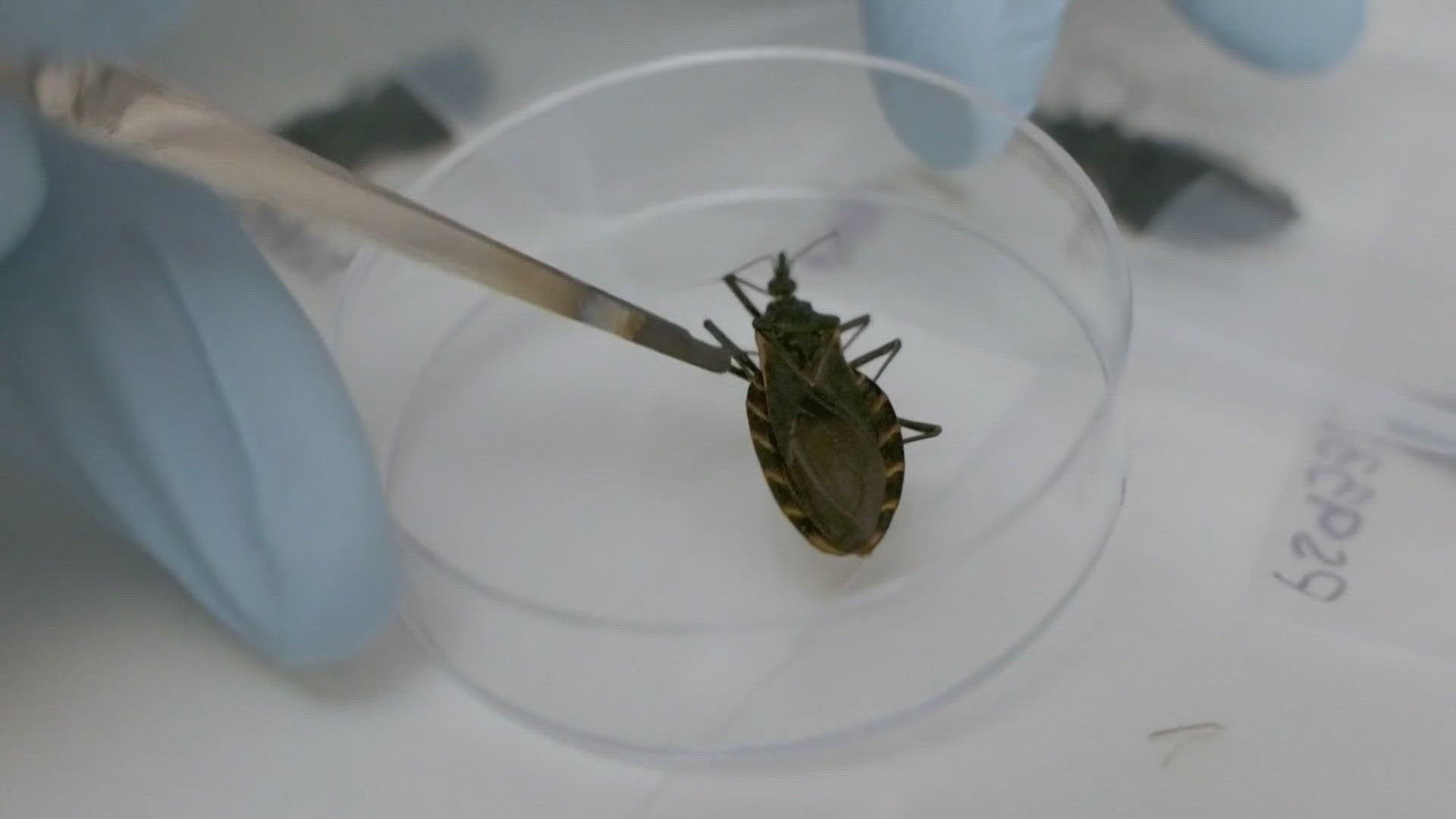
A kissing bug (Triatominae) is a dark brown or black blood-feeding insect measuring 0.75 to 1.25 inches long, best recognized by its elongated cone-shaped head, slender straight beak, and distinctive orange, red, or yellow stripes runn...
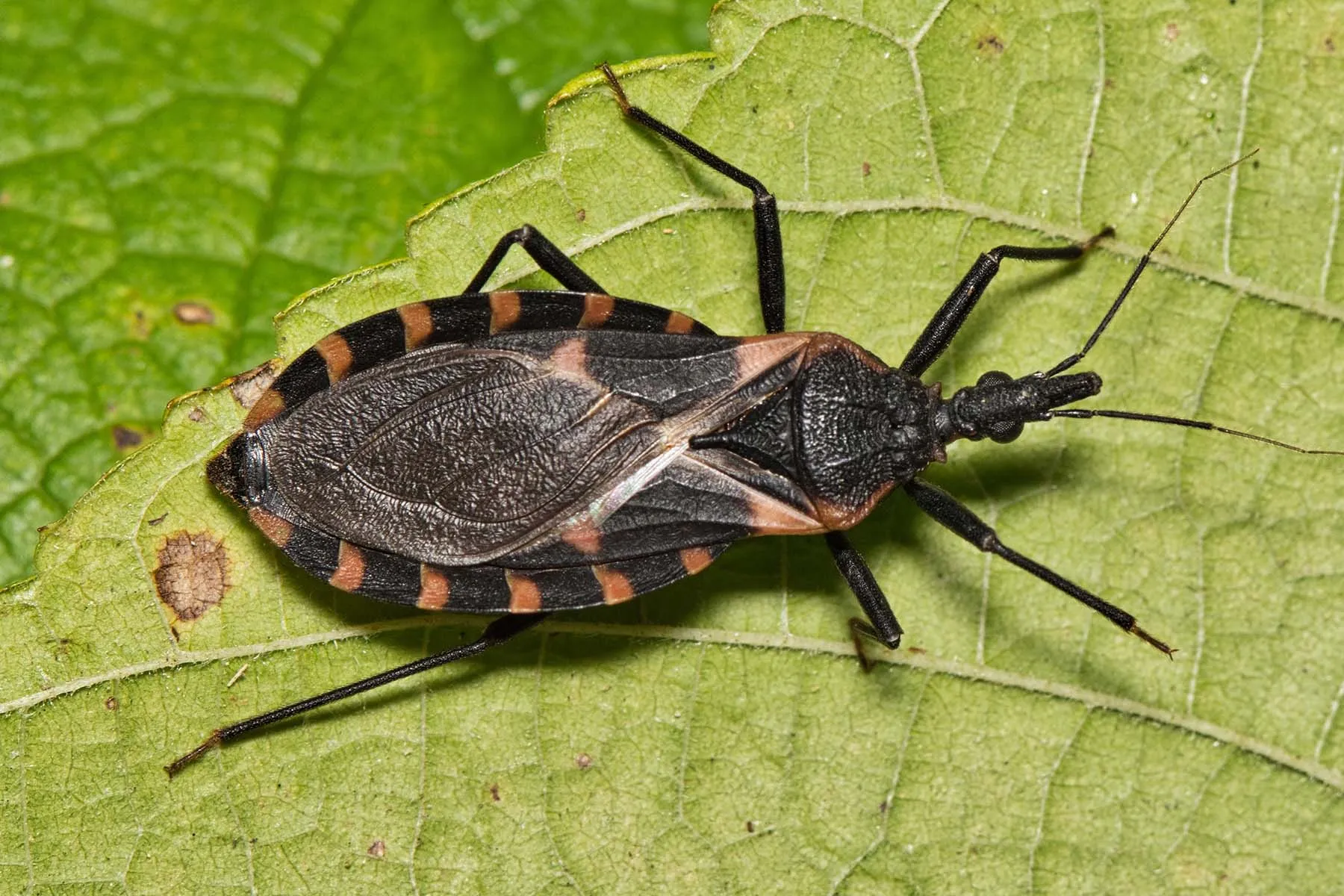
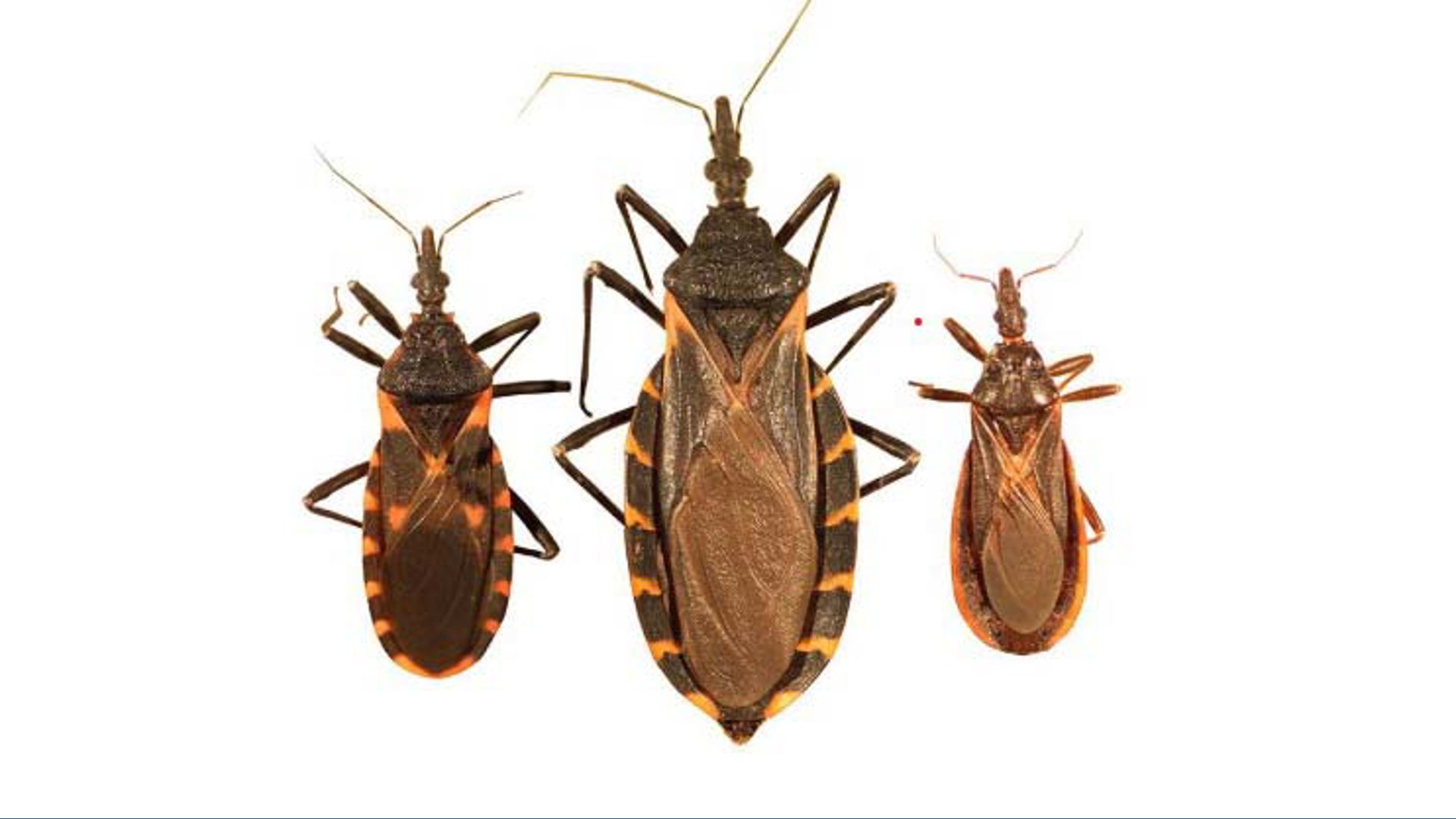
A kissing bug (Triatominae) is a dark brown or black blood-feeding insect measuring 0.75 to 1.25 inches long, best recognized by its elongated cone-shaped head, slender straight beak, and distinctive orange, red, or yellow stripes running along the outer edges of its abdomen. Unlike common lookalikes, its legs are uniformly thin without leaf-like expansions or prominent thorax crests.
Contents
Key Physical Characteristics of a Kissing Bug
Kissing bugs—also known as triatomine bugs, conenose bugs, or assassin bugs—belong to the subfamily Triatominae. Because these insects can transmit Trypanosoma cruzi, the parasite responsible for Chagas disease, accurate visual identification is critical for public health and pest management. While there are over 130 species of kissing bugs globally, eleven species are established across the southern and central regions of the United States, with species like Triatoma sanguisuga in the East and Triatoma protracta or Triatoma rubida in the West.
Despite variations in exact color tone and geographic distribution, all adult kissing bugs share structural features that distinguish them from harmless garden insects.
Kissing Bug Diagnostic Features:
- Cone-Shaped Head: Slender, elongated snout
- Straight Beak: Folds flat beneath head (3-jointed)
- Abdominal Margin: Alternating red/orange/yellow stripes
- Uniform Legs: Thin, smooth, no leaf expansions
1. Head and Mouthparts
The head of a kissing bug is noticeably elongated and cone-shaped, tapering toward a point at the snout. Its compound eyes protrude from the sides of the head. Positioned between the eyes and the tip of the snout are two thin, four-segmented antennae.
The mouthpart consists of a rigid, three-segmented beak (proboscis). When the insect is not feeding, this beak rests folded flat against the underside of its head and chest. Crucially, the beak of a kissing bug is straight and slender. Predatory assassin bugs, by contrast, possess a thick, heavily curved beak that arches away from the head.
2. Abdominal Markings (Connexivum)
The most visually striking feature of a kissing bug is the pattern along the perimeter of its abdomen, known scientifically as the connexivum. The wings cover the central portion of the back, leaving the outer lateral edges of the abdomen exposed. Along these margins, kissing bugs display a pattern of alternating dark and light stripes or spots. The light bands range from bright orange and cherry red to dull yellowish-tan, creating a dashed border around the rear two-thirds of the insect.
3. Body Size, Coloration, and Wings
Adult kissing bugs generally measure between 0.75 inches (19 mm) and 1.25 inches (32 mm) in length. Their primary body color is dark brown or black. When fully grown, they possess two pairs of wings laid flat over their back in an overlapping "X" or shield configuration. The upper wings are leathery near the base and membranous toward the tips. Underneath these front wings are fully functional hind wings that allow adult kissing bugs to fly short distances toward outdoor lighting.
4. Legs and Lower Anatomy
Kissing bug legs are uniform in thickness, long, and spider-like. They lack the enlarged, muscular thighs (femora) seen in jumping insects or predatory ambush bugs. Furthermore, their legs are smooth and slender throughout, without any spiky flanges, wide leaf-like widenings, or thick armor plates.
Geographic Range and Common Habitats
Kissing bugs are native to the Americas, ranging from South America up through Mexico and across the southern half of the United States. In the U.S., they are most widely documented in Texas, Arizona, California, New Mexico, and throughout the Southeast.
In natural environments, kissing bugs inhabit places where they have reliable access to animal blood meals. Common outdoor harborage sites include:
- Rodent Nests and Burrows: Particularly the stick nests built by woodrats (packrats).
- Animal Kennels and Henhouses: Outdoor dog runs, chicken coops, and livestock barns provide abundant hosts.
- Brush Piles and Firewood: Dense piles of organic debris, hollow trees, and rock crevices offer shelter during heat waves.
- Under Porches and Crawlspaces: Dark, undisturbed spaces near human structures where wild mammals nest.
Kissing bugs are nocturnal and are drawn to porch lights or indoor lights shining through uncurtain windows. They generally enter homes inadvertently through torn window screens, unsealed door sweeps, or gaps around utility penetrations.
Kissing Bug Lookalikes: How to Tell Them Apart
Many common, non-dangerous insects belong to the same broad order (Hemiptera, or true bugs) and are frequently mistaken for kissing bugs. Differentiating these lookalikes saves unnecessary alarm while ensuring actual vectors are handled appropriately.
Quick Lookalike Checksheet:
- Has a cog-wheel ridge on back?: Wheel Bug (Not Kissing Bug)
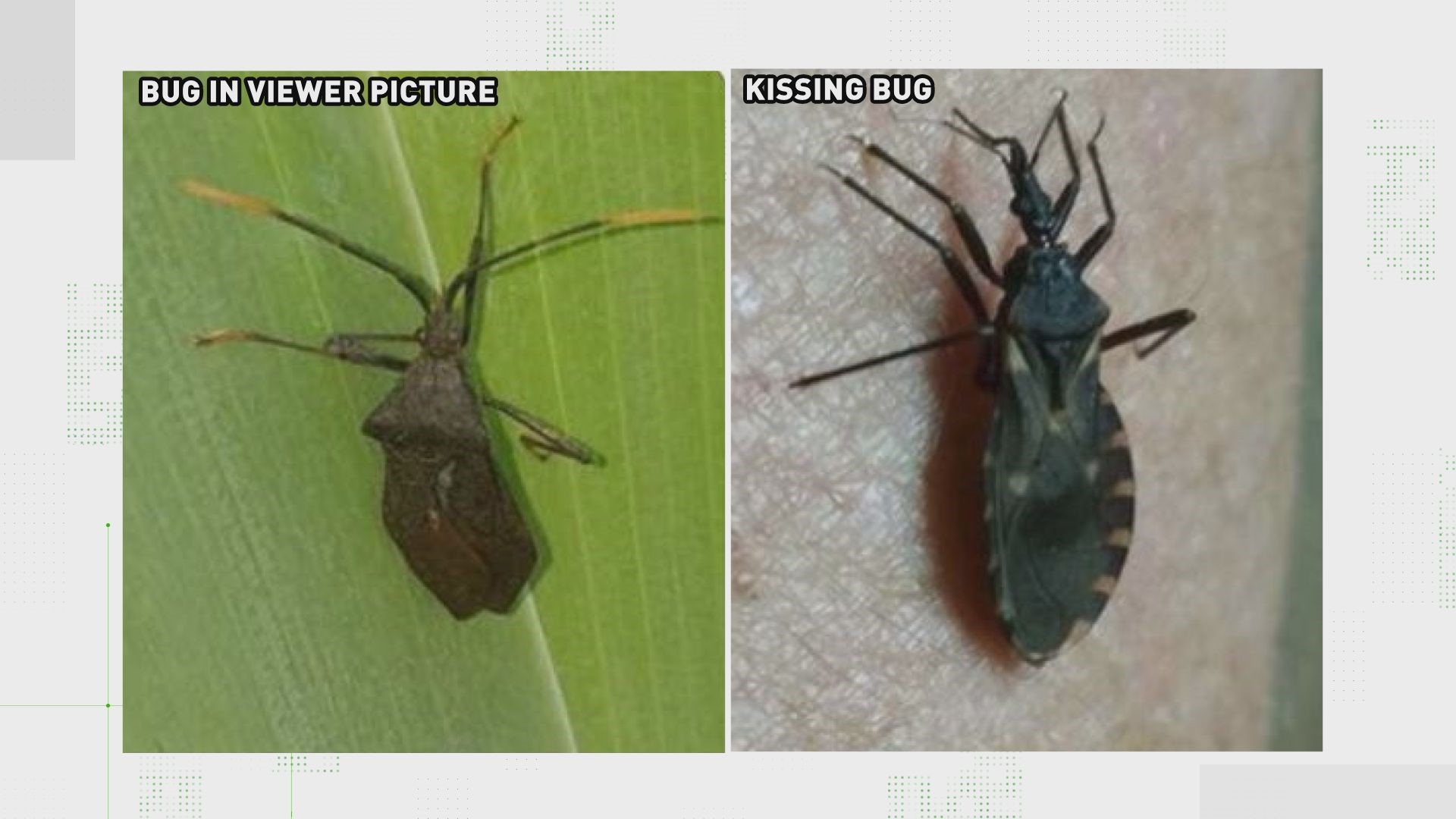
- Has flattened, leaf-like legs?: Leaf-Footed Bug
- Has bright red wing veins?: Boxelder Bug
- Wide, shield-shaped body?: Stink Bug
- Uniformly dark, no orange rim?: Masked Hunter
Wheel Bugs (Arilus cristatus)
The wheel bug is a large predatory assassin bug that feeds on insect pests. It is often mistaken for a kissing bug due to its size (up to 1.5 inches) and overall dark coloration. However, adult wheel bugs feature a prominent, half-cogwheel ridge with visible teeth rising from the top of their thorax. Kissing bugs have a completely smooth thorax without any cog-like crest. Additionally, wheel bugs have a thick, curved beak used to puncture prey, which can inflict a painful bite if mishandled.
Leaf-Footed Bugs (Family Coreidae)
Leaf-footed bugs—such as the Western conifer seed bug (Leptoglossus occidentalis)—are plant-eaters that frequently enter structures during autumn. They share a dark brown color and elongated body shape with kissing bugs. The defining feature of a leaf-footed bug is a distinct, flattened, leaf-shaped expansion on the lower part of its hind legs. Kissing bugs never possess broadened or flattened legs. Leaf-footed bugs also frequently feature a faint, white zigzag line across their wings.
Boxelder Bugs (Boisea trivittata)
Boxelder bugs are significantly smaller than adult kissing bugs, usually measuring around 0.5 inches (12–13 mm) long. While they exhibit orange-red markings, these markings form fine red outlines along the wing veins and the edges of the thorax, rather than discrete, banded spots along the outer edge of the abdomen. Boxelder bugs pose no medical threat to humans or pets.
Brown Marmorated Stink Bugs (Halyomorpha halys)
Stink bugs are easily distinguished by their body proportions. They possess a broad, shield-shaped body that is almost as wide as it is long, contrasting with the narrow, oval profile of the kissing bug. Stink bugs also lack an elongated, cone-shaped head and feature characteristic white bands on their antennae.
Masked Hunters (Reduvius personatus)
The masked hunter is another relative in the assassin bug family. Adults are dark brown or shiny black and measure roughly 0.75 inches long. Unlike kissing bugs, masked hunters completely lack orange or red margin markings on the abdomen. Their nymphs are famous for camouflage, covering their bodies entirely in dust and lint. Masked hunters hunt bed bugs and lace bugs and do not feed on human blood.
Comparison Table: Kissing Bugs vs. Common Lookalikes
| Insect Species | Average Length | Primary Coloration | Abdominal Margin Stripes | Key Distinguishing Feature | Primary Food Source |
|---|---|---|---|---|---|
| Kissing Bug (Triatoma spp.) | 0.75 – 1.25 in (19–32 mm) | Dark brown to black | Bright red, orange, or yellow bands | Cone-shaped head; straight beak; thin legs | Mammal and bird blood |
| Wheel Bug (Arilus cristatus) | 1.00 – 1.50 in (25–38 mm) | Grayish-brown to charcoal | None (uniform dark margin) | Raised cog-wheel crest on back of thorax | Insects (caterpillars, beetles) |
| Leaf-Footed Bug (Leptoglossus spp.) | 0.75 – 1.00 in (19–25 mm) | Dull brown to reddish-brown | Minor pale spots or smooth edge | Broadened, leaf-like flare on hind legs | Plant sap, seeds, fruits |
| Boxelder Bug (Boisea trivittata) | 0.50 in (12–13 mm) | Black with red lines | Red lateral borders on thorax and wings | Small size; distinct red wing vein highlights | Boxelder and maple seeds |
| Stink Bug (Pentatomidae) | 0.50 – 0.75 in (13–19 mm) | Mottled brown, green, or gray | Alternating black and white checkering | Broad, shield-shaped body profile | Plant juices, fruit crops |
| Masked Hunter (Reduvius personatus) | 0.75 in (18–20 mm) | Uniform glossy dark brown/black | None | Lacks light spots; thick curved beak | Small invertebrates |
What Kissing Bug Nymphs Look Like
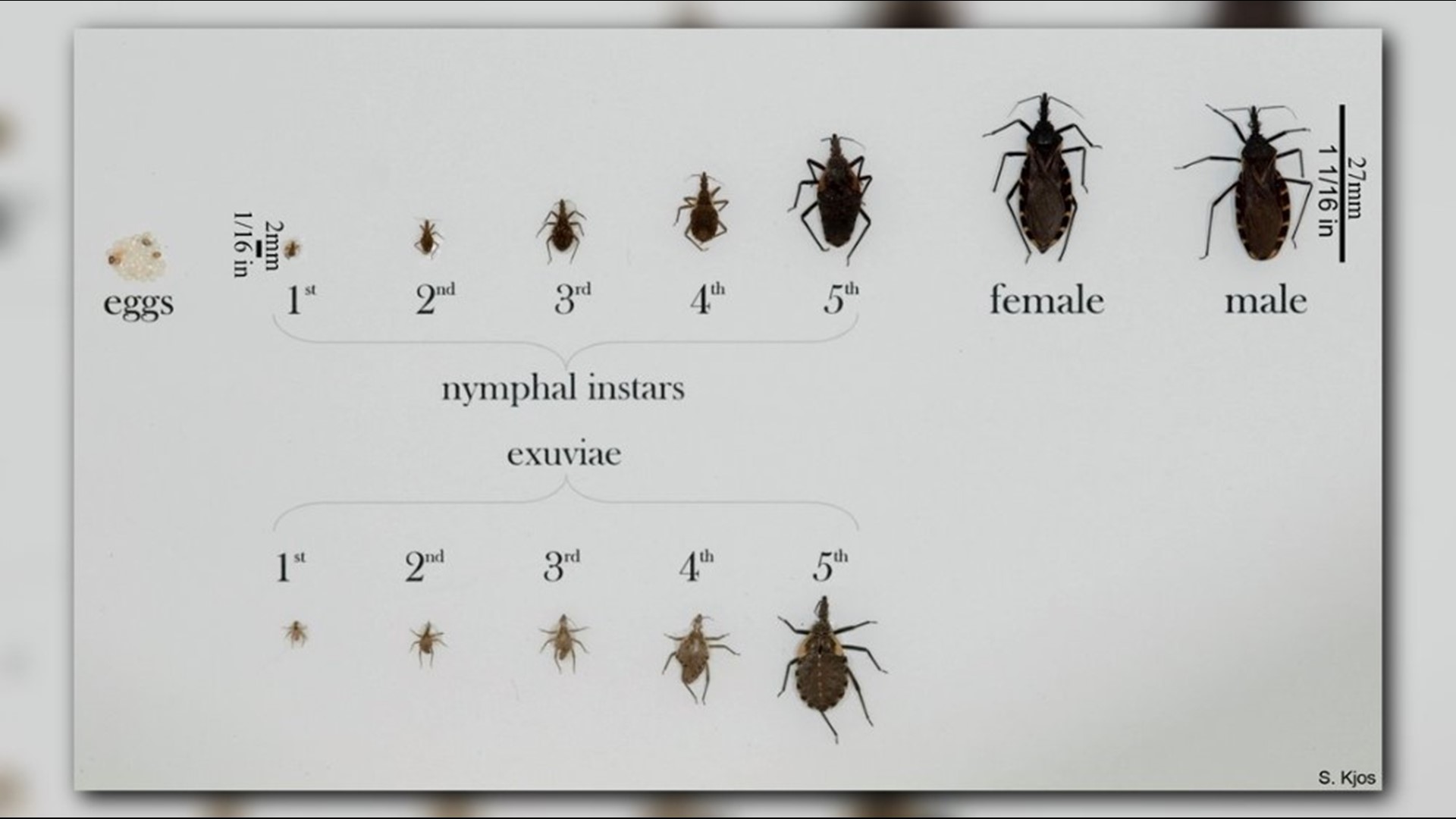
Kissing bugs undergo incomplete metamorphosis, progressing through five immature nymphal stages before reaching adulthood. Nymphs hatch from tiny, oval eggs laid in crevices or animal nests.
- Egg
- Nymph (Instars 1-5): No wings, light brown
- Winged Adult: Full wings, colored stripes
Unlike adults, kissing bug nymphs exhibit distinct visual characteristics:
- Absence of Wings: Nymphs do not have fully developed wings. Early instars show no wings at all, while late-stage nymphs possess small, dark wing pads on their thorax.
- Color Variation: Immature nymphs start out very small (about 2–3 mm) and light tan, pinkish-yellow, or orange. As they mature and feed, their outer exoskeleton hardens into a darker brown.
- Abdominal Patterning: Early-stage nymphs often lack the vivid red or orange connexivum stripes seen on adults. However, their cone-shaped head and slender, three-segmented straight beak remain present throughout all development stages.
- Engorged Appearance: After a full blood meal, a nymph's abdomen swells significantly, turning round and semi-translucent, which can dramatically alter its outline until digestion occurs.
Health Risks and Safe Handling Protocol
Medical Disclaimer: The following information is for identification and educational purposes only. If you suspect you or a family member has been exposed to Chagas disease or experienced an allergic reaction from an insect bite, consult a qualified healthcare provider or public health authority immediately.
Understanding Chagas Disease Transmission
Kissing bugs earn their nickname because they tend to bite humans on soft, exposed skin—frequently around the face and mouth—while hosts sleep. However, the transmission of the parasite Trypanosoma cruzi does not occur through the bug's saliva during a bite. Instead, the parasite is contained in the insect's digestive tract and excreted in its feces during or shortly after feeding.
Transmission occurs when the host inadvertently rubs the infective fecal material into the bite wound, eyes, mouth, or open skin breaks. According to public health data maintained by the Centers for Disease Control and Prevention (CDC), while many kissing bugs in the southern U.S. carry the parasite, the probability of vector-borne transmission from a single bite remains relatively low compared to regions in Central and South America where housing construction allows dense indoor infestations.
Step-by-Step Protocol for Finding a Suspected Kissing Bug
If you locate an insect inside or near your home that matches the description of a kissing bug, follow these safety steps:
- Do Not Touch with Bare Hands: Never handle the bug directly, as parasite particles can contaminate skin or cuticles.
- Do Not Crush the Insect: Crushing the bug spreads bodily fluids and potential parasites, increasing contamination risks on floors or surfaces.
- Capture Safely in a Container: Invert a plastic cup or glass jar over the bug, slide a piece of stiff cardboard underneath to trap it, and flip the container over. Secure the lid tightly with tape.
- Sanitize the Surface: Clean any area where the bug was found using a 10% bleach solution or an EPA-registered disinfectant cleaner.
- Contact Extension or Public Health Services: Many state universities and health agencies—such as the Texas A&M Kissing Bug Research Program—accept photo submissions and physical specimens for laboratory species confirmation and parasite testing.
- Seal Potential Entry Points: Inspect your home's perimeter for cracked window seals, missing weather stripping beneath exterior doors, or unscreened attic vents.
Frequently Asked Questions
Do all kissing bugs carry Chagas disease?
No. Not every individual kissing bug is infected with Trypanosoma cruzi. Infection rates vary widely by species, geographic region, and host availability. Research indicates that between 20% and 60% of wild kissing bugs tested in various regions of the southern U.S. carry the parasite, but an infected bug must feed and defecate on the host for transmission to occur.
Can kissing bugs fly?
Adult kissing bugs have functional wings and are capable flyers. They frequently fly short distances at night, drawn to porch lights, garage illumination, or outdoor security lighting. Kissing bug nymphs, however, lack fully developed wings and can only walk or crawl.
How big is a kissing bug compared to a stink bug?
An adult kissing bug is significantly longer and narrower than a stink bug. Kissing bugs measure between 0.75 and 1.25 inches long with an elongated, oval body. In contrast, stink bugs are shorter (0.5 to 0.75 inches) and much wider, displaying a broad, shield-like shape.
What should I do if I am bitten by a kissing bug?
Wash the bite site thoroughly with soap and water to remove any potentially infectious material. Avoid scratching or rubbing the area. Monitor the site for signs of localized swelling, redness, or secondary bacterial infection. If you experience systemic allergic symptoms (such as hives, difficulty breathing, or facial swelling) or develop a persistent fever and body aches weeks later, seek immediate medical evaluation.
Where do kissing bugs hide inside a house?
When kissing bugs enter a home, they seek dark, cool, undisturbed harbourage during daylight hours. Common indoor hiding spots include under mattress seams, beneath dog beds, inside cracks along baseboards, behind hanging wall art, and inside cluttered storage closets near sleeping quarters.
Final Recommendations for Homeowners
Accurate identification is the foundation of effective vector control. If you confirm the presence of kissing bugs around your property, implement structural exclusionary measures: replace torn door sweeps, repair window screens, switch exterior porch lights to yellow sodium bulbs that attract fewer insects, and elevate firewood piles at least 20 feet away from the home foundation. If an indoor infestation is suspected, contact a licensed pest control professional experienced in perimeter barrier treatments and vector management.
Image Gallery