Deconstructing the Anatomy of a Canada Goose Jacket: Insulation, Fabrics, and Engineering
A Canada Goose jacket is constructed using a precise combination of high-fill-power white duck down insulation, durable synthetic shell fabrics like the proprietary Arctic Tech, and reinforced technical hardware. Each component is engi...
A Canada Goose jacket is constructed using a precise combination of high-fill-power white duck down insulation, durable synthetic shell fabrics like the proprietary Arctic Tech, and reinforced technical hardware. Each component is engineered to provide thermal retention, moisture resistance, and wind protection in extreme sub-zero environments, reflecting the brand’s origins in harsh Arctic climates.
Contents
The Thermal Core: Understanding Down Insulation
The defining feature of a Canada Goose jacket is its insulation. The brand utilizes high-quality white duck down, primarily sourced from North America, which is chosen for its superior ability to trap heat compared to synthetic alternatives. In technical terms, the "fill power" of this down—often ranging between 625 and 800—measures its loft and insulation efficiency.
Down clusters are the soft, fluffy filaments found under the feathers of waterfowl. Unlike feathers, which have quills, down clusters possess a three-dimensional structure that creates air pockets. These pockets trap body heat, creating a thermal barrier between the wearer and the external temperature. Canada Goose blends this down with a small percentage of feathers to ensure the insulation maintains its structure and loft over years of heavy use. This blend is critical; pure down can clump when wet or compressed, while the structural support of feathers helps the insulation recover its shape after the jacket has been packed or stored.
Protective Shells: Arctic Tech and Beyond
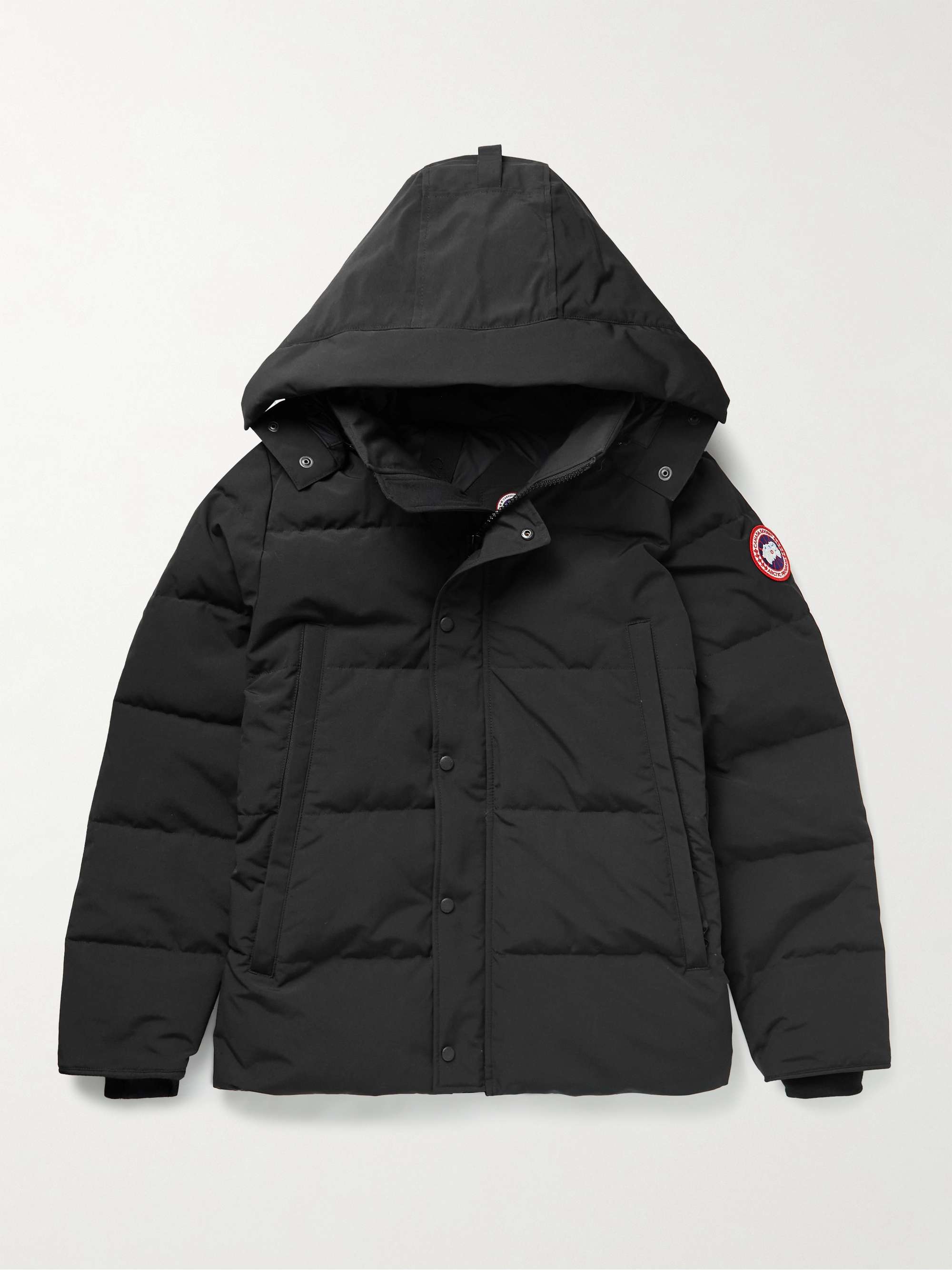
The internal insulation must be housed within a material that can withstand high-friction environments and harsh weather. Canada Goose is best known for its proprietary "Arctic Tech" fabric. This is a heavy-duty blend, typically consisting of 85% polyester and 15% cotton, finished with a Durable Water Repellent (DWR) coating.
The inclusion of cotton provides a classic, rugged texture that resists pilling and abrasion, while the polyester component ensures the garment remains windproof and water-resistant. This combination is designed for durability; in Arctic environments, specialized equipment often encounters ice crystals, jagged rock surfaces, and intense winds. The shell acts as a shield, preventing the down from becoming saturated with moisture, which is the primary cause of heat loss in down-filled garments.
Interior Construction: Baffles and Liners
How the down is held in place is as important as the quality of the down itself. Canada Goose employs specialized baffling techniques to ensure the insulation is distributed evenly throughout the jacket. Baffles are internal fabric walls that divide the jacket into individual chambers, preventing the down from shifting downward due to gravity or movement.
If a jacket lacked these internal compartments, the insulation would drift, leaving "cold spots" in areas like the shoulders or lower back. Many heavy-duty Canada Goose models use "box-wall" construction, a technique where internal vertical fabric walls create a three-dimensional box for the down. This method is superior to "sewn-through" construction, where the outer and inner fabrics are stitched directly together, because it eliminates the thin, uninsulated areas created by the seams.
The liner—the material touching the user’s base layers—is usually crafted from lightweight, down-proof nylon. This fabric is densely woven to prevent the fine down filaments from poking through the surface, a process known as "leaking."
Hardware and Finishing Details
The interior of a Canada Goose jacket also features functional engineering designed for convenience and safety:
- Internal Storage: Most parkas feature large mesh or zippered pockets intended for warming electronics or keeping essential items close to the body, where the temperature is more stable.
- Storm Flaps: Behind the main front zipper, a heavy-duty fabric flap (the storm flap) prevents cold air from penetrating through the zipper teeth.
- Waist Drawcords: These allow the user to cinch the interior of the jacket to trap warm air and create a more personalized, anatomical fit.
- Reinforced Seams: Stress points, such as where sleeves meet the torso or near the hem, are often double-stitched to ensure the jacket retains its shape under the weight of the insulation.
Comparing Jacket Components
The following table outlines the material composition typical of the brand’s flagship cold-weather gear.
| Component | Material/Technology | Primary Function |
|---|---|---|
| Insulation | White Duck Down (625–800 fill) | Traps body heat via high loft. |
| Outer Shell | Arctic Tech (Polyester/Cotton) | Abrasion resistance and weather proofing. |
| Inner Lining | Down-proof Nylon | Prevents feather leakage and wicks moisture. |
| Internal Baffles | Fabric "box-wall" chambers | Prevents down migration and cold spots. |
| Front Closure | YKK Heavy-duty zippers/Snaps | Seals the thermal barrier against wind. |
Addressing Common Questions
Does the down come from live-plucked birds? Canada Goose states that it adheres to strict sourcing standards. According to their transparency reports, the down used is a byproduct of the poultry industry, and they mandate that their suppliers adhere to the Responsible Down Standard (RDS) or similar rigorous animal welfare requirements.
Why does the jacket feel heavy? The weight of a Canada Goose jacket is primarily due to the density of the shell fabric and the volume of insulation. Unlike "ultralight" down jackets designed for mountaineering, these garments are built for extreme durability in urban or industrial Arctic settings, necessitating heavier, high-denier face fabrics.
How do I clean the interior if it gets dirty? Because the insulation is natural down, it is sensitive to improper cleaning. The manufacturer recommends professional dry cleaning. Home washing can cause the down to clump or, if not dried properly, lead to mold growth within the baffles.
Are these jackets waterproof? Most Canada Goose parkas are "water-resistant" rather than "waterproof." They are designed to shed snow and light rain, but the seams are not typically taped to the level required for submersion or heavy rain.
What happens if the down starts leaking? Minor amounts of "migration" (a few fibers poking through) are common in new down garments. If excessive amounts of down are escaping, it may indicate a tear in an internal baffle. If this occurs, the internal integrity of the jacket’s heat distribution may be compromised.
Maintenance and Longevity
To ensure the longevity of your garment, store it in a cool, dry place. Down requires room to "breathe" and maintain its loft. When storing for the off-season, avoid compressing the jacket in a tight stuff sack. Hanging the garment in a breathable cotton garment bag is the preferred method to prevent the down from losing its structural integrity over time. If the jacket loses its loft, gentle agitation or professional laundering can often help restore the fluffiness of the down clusters.
As of 2026, Canada Goose continues to prioritize these material combinations, balancing their historical commitment to cold-weather utility with contemporary design. Inspecting the interior of your jacket—checking for intact seams and uniform insulation distribution—remains the best way to verify that the thermal performance is maintained for the seasons ahead.
Image Gallery