Is a Black Rhino a Herbivore? Understanding the Diet and Ecology of Diceros Bicornis
The black rhino (Diceros bicornis) is strictly a herbivore, meaning its diet consists entirely of plant matter. Specifically classified as a "browser," the black rhino utilizes its unique prehensile upper lip to selectively pluck leave...
The black rhino (Diceros bicornis) is strictly a herbivore, meaning its diet consists entirely of plant matter. Specifically classified as a "browser," the black rhino utilizes its unique prehensile upper lip to selectively pluck leaves, shoots, and branches from trees and shrubs within its African habitat.
Contents
As we look at the state of African wildlife in 2026, the dietary habits of the black rhino remain a central focus for conservationists and ecologists. Unlike many other large mammals that may occasionally supplement their diets, the black rhino is biologically committed to a plant-based existence. This specialized diet not only dictates the animal’s physical anatomy but also its daily movements, social structure, and the specific ecosystems it can inhabit.
Understanding the herbivorous nature of the black rhino requires a deep dive into its classification as a browser, the evolutionary adaptations that allow it to process tough vegetation, and the vital role it plays in maintaining the health of the African savanna and scrublands.
The Browser vs. Grazer Distinction
In the world of herbivorous mammals, there is a fundamental distinction between grazers and browsers. While both eat plants, their food sources and feeding mechanisms are entirely different.
- Grazers: These animals, such as the white rhino (Ceratotherium simum), primarily eat grasses. They have wide, flat mouths designed to act like lawnmowers, cropping short vegetation close to the ground.
- Browsers: The black rhino falls into this category. Browsers seek out "higher-quality" food items like the leaves of woody plants, herbs, and succulents. Because these food sources are often found at varying heights and may be protected by thorns, browsers require more dexterity than grazers.
The black rhino’s status as a browser is its defining ecological characteristic. It occupies a different niche than the white rhino, which allows both species to coexist in the same general regions without directly competing for the same food resources. In 2026, habitat management strategies continue to prioritize the preservation of diverse "browse" plants—such as acacia and various succulent species—to ensure that black rhino populations have the specific nutrients they need to thrive.
Anatomical Adaptations for a Herbivorous Diet
The black rhino has evolved a suite of physical characteristics specifically designed to facilitate its herbivorous lifestyle. These adaptations are so distinct that they serve as the primary way for researchers and tourists to distinguish them from their white rhino cousins.
The Prehensile Upper Lip
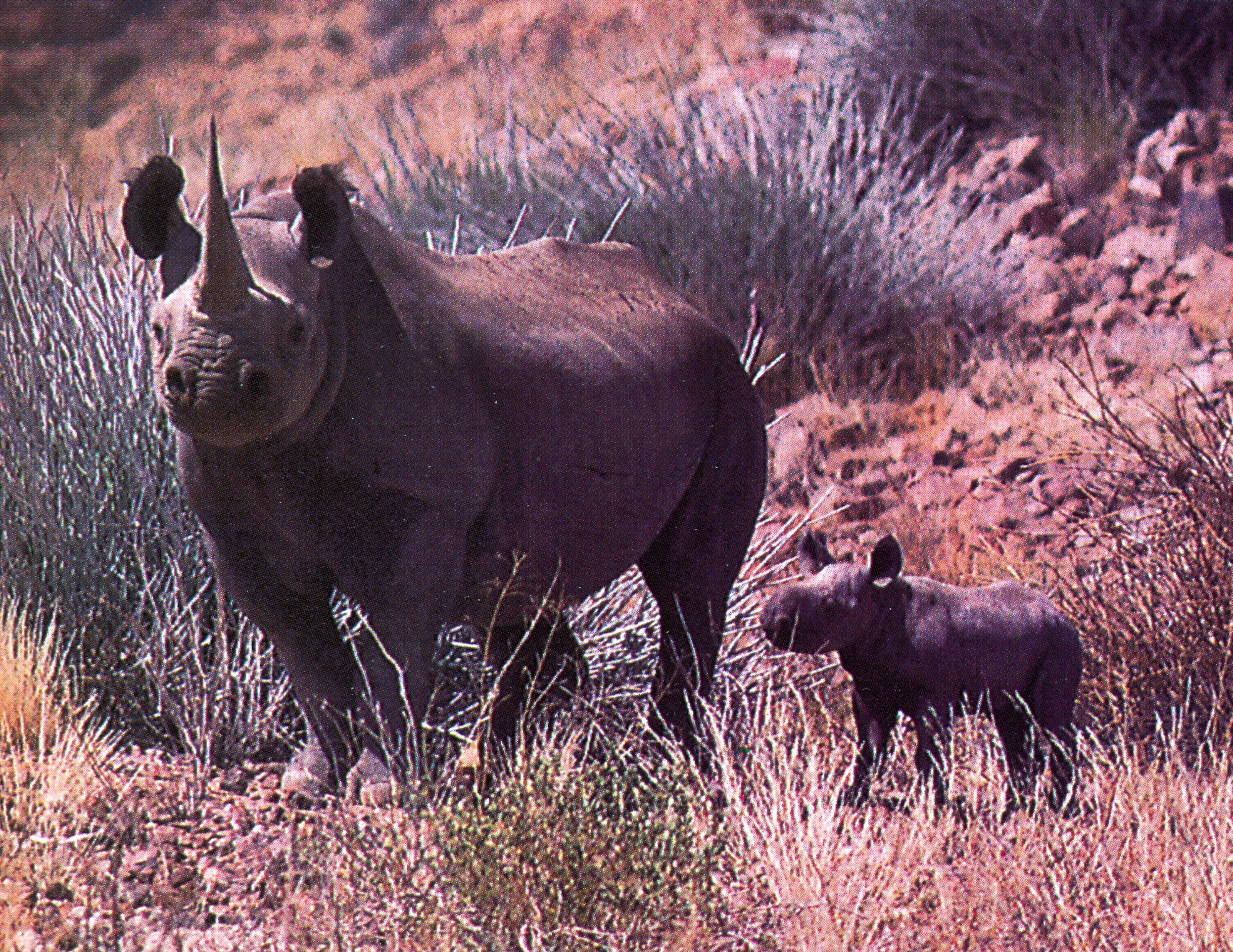
The most famous adaptation of the black rhino is its prehensile upper lip. Often referred to as a "hooked lip," this muscular structure acts almost like a finger or a short trunk. The rhino uses this lip to wrap around branches, pull them toward its mouth, and strip off the leaves and soft bark. This allows the rhino to feed on plants that are heavily guarded by thorns, such as the Acacia species, which are a staple of their diet.
Specialized Dentition
Because the black rhino does not eat grass, which contains abrasive silica, its teeth have evolved differently than those of grazers. Black rhinos lack front teeth (incisors and canines) for biting. Instead, they rely on their powerful lips to bring food into the mouth. Once inside, the vegetation is processed by large, high-crowned premolars and molars. These teeth are designed to grind down woody stems and tough fibrous material into a digestible pulp.
Digestive System: The Hindgut Fermenter
As a large-bodied herbivore, the black rhino utilizes hindgut fermentation. Unlike ruminants (such as cows or giraffes) that have multi-chambered stomachs to ferment food before it reaches the intestine, rhinos ferment their food in a greatly enlarged cecum and colon. This system allows them to process large volumes of high-fiber plant material relatively quickly. While it is less efficient at extracting every nutrient compared to rumination, it enables the rhino to survive on a wide variety of woody plants that other herbivores might find indigestible.
What Does a Black Rhino Eat?
The diet of a black rhino is remarkably diverse. Studies of rhino dung and feeding tracks have shown that a single individual may consume over 200 different species of plants depending on the season and location.
- Woody Trees and Shrubs: This forms the bulk of their diet. They are particularly fond of legumes, including various species of Acacia and Dichrostachys.
- Succulents: In more arid regions, black rhinos rely heavily on succulents and euphorbias. These plants provide not only nutrition but also a critical source of moisture during the dry season.
- Forbs and Herbs: During the rainy season, when the ground is carpeted with flowering plants, rhinos will lower their heads to browse on nutrient-rich herbs.
- Fruits: While not a primary food source, black rhinos will opportunistically eat fallen fruits, which provide a burst of concentrated sugars and energy.
Interestingly, black rhinos are known to consume plants that are toxic to other animals. Certain species of Euphorbia produce a caustic latex, yet the black rhino’s digestive system is capable of neutralizing these toxins, giving them access to food sources that remain untouched by competitors.
Black Rhino vs. White Rhino: A Comparison
To understand the black rhino’s herbivory, it is helpful to compare it to the white rhino. Despite their names, both species are actually gray; their names likely stem from a mistranslation of the Dutch word "wijd" (wide), referring to the white rhino's mouth.
| Feature | Black Rhino (Diceros bicornis) | White Rhino (Ceratotherium simum) |
|---|---|---|
| Dietary Class | Browser (leaves, shoots, twigs) | Grazer (grasses) |
| Mouth Shape | Pointed, prehensile (hooked) upper lip | Broad, flat, "square" lips |
| Head Position | Held high to reach bushes and trees | Held low, close to the ground |
| Size | Smaller (approx. 800–1,400 kg) | Larger (approx. 1,800–2,700 kg) |
| Habitat | Thick bushveld, scrub, and woodland | Open grassy savannas and plains |
| Feeding Style | Selective; picks individual leaves/stems | Bulk feeder; mows large patches of grass |
The Ecological Role of the "Megaherbivore"
The black rhino is considered a megaherbivore, a term used for plant-eaters that exceed 1,000 kg in weight. Because of their size and the sheer volume of vegetation they consume, they act as "landscape architects."
By browsing on shrubs and small trees, black rhinos prevent woody plants from overgrowing and choking out the grasslands. This process, known as preventing "bush encroachment," is vital for the survival of grazers like zebras, wildebeest, and white rhinos. If the black rhino were to disappear, many African savannas would eventually transform into dense, impenetrable thickets, destroying the habitat for dozens of other species.
Furthermore, black rhinos play a key role in seed dispersal. Many of the fruits and seeds they consume pass through their digestive tracts intact. As the rhino moves across its range, it deposits these seeds in nutrient-rich dung, effectively planting the next generation of trees and shrubs miles away from the parent plant.
Conservation and Nutritional Challenges in 2026
As of 2026, the black rhino remains "Critically Endangered" on the IUCN Red List, though intensive conservation efforts in Namibia, South Africa, and Kenya have led to a modest increase in numbers. One of the primary challenges in rhino translocation—moving rhinos to new, safer areas—is ensuring the target habitat has the correct nutritional profile.
Because black rhinos are such specialized browsers, they cannot simply be moved to any open space. Conservationists must conduct detailed botanical surveys to ensure there is a sufficient density of palatable woody plants. In 2026, satellite imaging and AI-driven ecological modeling are being used to map "browse availability," helping wildlife managers identify areas where rhinos can flourish without facing nutritional stress.
Poaching remains the greatest threat, driven by the illegal trade in rhino horn. However, habitat loss is a close second. As human settlements and agriculture expand, the specific thickets and scrublands that black rhinos require are being fragmented. Protecting the herbivorous lifestyle of the black rhino requires protecting the entire botanical diversity of the African landscape.
Frequently Asked Questions
Do black rhinos ever eat meat?
No, black rhinos are obligate herbivores. Their digestive systems are not designed to process animal proteins or fats. Any reports of rhinos "attacking" other animals are defensive in nature, as black rhinos are notoriously territorial and have poor eyesight, often charging at perceived threats.
How much does a black rhino eat in a day?
An adult black rhino can consume between 2% and 3% of its body weight in vegetation each day. For a 1,000 kg rhino, this equates to roughly 20 to 30 kg of leaves, twigs, and branches.
Where do black rhinos get their water?
While they get some moisture from the succulent plants they eat, black rhinos typically need to drink water every day or two. They are usually found within 5 to 10 miles of a permanent water source. In extreme droughts, they can survive up to 4 or 5 days without water if they have access to moisture-rich succulents.
Why is the black rhino called a "hook-lipped" rhino?
This name refers to its prehensile upper lip. It is a more accurate descriptive name than "black rhino," as it highlights the primary physical adaptation that allows the animal to be an effective browser.
Are black rhinos aggressive because of their diet?
There is no direct link between a herbivorous diet and temperament. The black rhino's aggressive reputation stems from its solitary nature and its evolution in environments with high predator pressure (lions and hyenas). Unlike the more social white rhino, the black rhino tends to be more "nervous" and likely to charge when startled.
Summary of Next Actions
To help support the continued survival of this magnificent herbivore, consider the following actions:
- Support Habitat Preservation: Organizations like Save the Rhino International and the World Wildlife Fund (WWF) work to protect the specific ecosystems black rhinos need.
- Educate Others: Spread awareness about the differences between black and white rhinos, emphasizing that their survival depends on the health of the entire African botanical landscape.
- Support Ethical Ecotourism: Visiting national parks that house black rhinos provides the financial incentive for local governments to maintain anti-poaching units and habitat restoration projects.
Image Gallery