Auto Moving Insurance Cost Explained: Coverage Types, Pricing, and Protection Options
Auto moving insurance costs generally range from $0 (when relying solely on mandatory carrier liability included in basic transport fees) to $500 or more for comprehensive third-party or full-value coverage. The exact cost depends on y...
Auto moving insurance costs generally range from $0 (when relying solely on mandatory carrier liability included in basic transport fees) to $500 or more for comprehensive third-party or full-value coverage. The exact cost depends on your vehicle's market value, the transport method selected, and whether you purchase add-on transit policies to cover deductibles or non-covered perils.
Contents
Understanding Auto Transport Insurance Fundamentals
When shipping a vehicle across state lines or internationally, understanding how auto moving insurance works prevents costly surprises in the event of transit damage. Auto transport insurance—often referred to as car shipping insurance or transit coverage—protects your vehicle against physical loss or damage while it is in the custody of a commercial motor carrier.
Under United States federal law, commercial motor carriers transporting property inter-state must maintain mandatory minimum levels of insurance. The Federal Motor Carrier Safety Administration (FMCSA) requires interstate motor carriers to maintain public liability insurance, and legitimate auto transport carriers carry commercial cargo insurance policies to protect the vehicles on their trailers.
However, basic carrier insurance does not cover every scenario. Carrier coverage often contains strict limits, high deductibles, and exclusions for natural disasters or road debris. Understanding the distinction between mandatory carrier liability, broker liability, and third-party supplemental insurance is essential before handing over your vehicle keys.
- Auto Moving Insurance Options
- Basic Carrier Coverage
- Mandatory via FMCSA
- Included in base transport fee
- Covers carrier negligence
- Typical limits: $50k-$100k
- Supplemental / Third-Party
- Optional add-on coverage
- Low/zero deductible
- Covers gap risks (Acts of God)
- Typical cost: $50 - $350
- Basic Carrier Coverage
Basic Carrier Coverage vs. Supplemental Transit Insurance
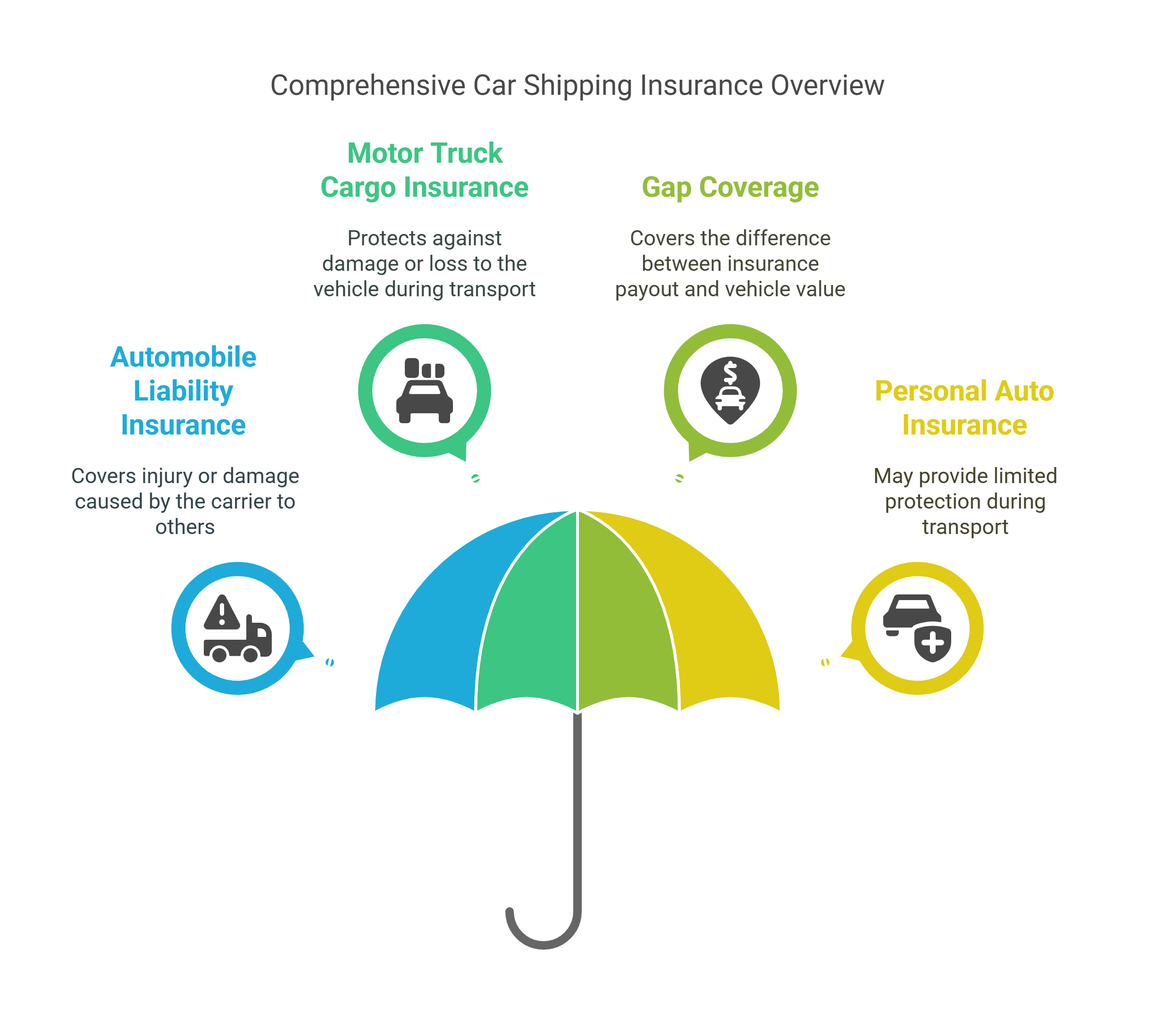
- Basic Carrier Cargo Insurance: Included in your quoted shipping price. By law, the carrier transporting your vehicle must carry cargo insurance, which typically ranges from $50,000 to $250,000 per vehicle depending on whether the carrier operates an open or enclosed trailer. This covers direct negligence by the carrier or driver, such as mechanical failures leading to accidents.
- Supplemental Third-Party Insurance: Purchased independently or through an auto transport broker. Rates generally range from $50 to $350. Supplemental insurance covers gaps left by primary carrier policies, including acts of nature (hail, hurricane, falling trees), stone chips, and carrier deductibles.
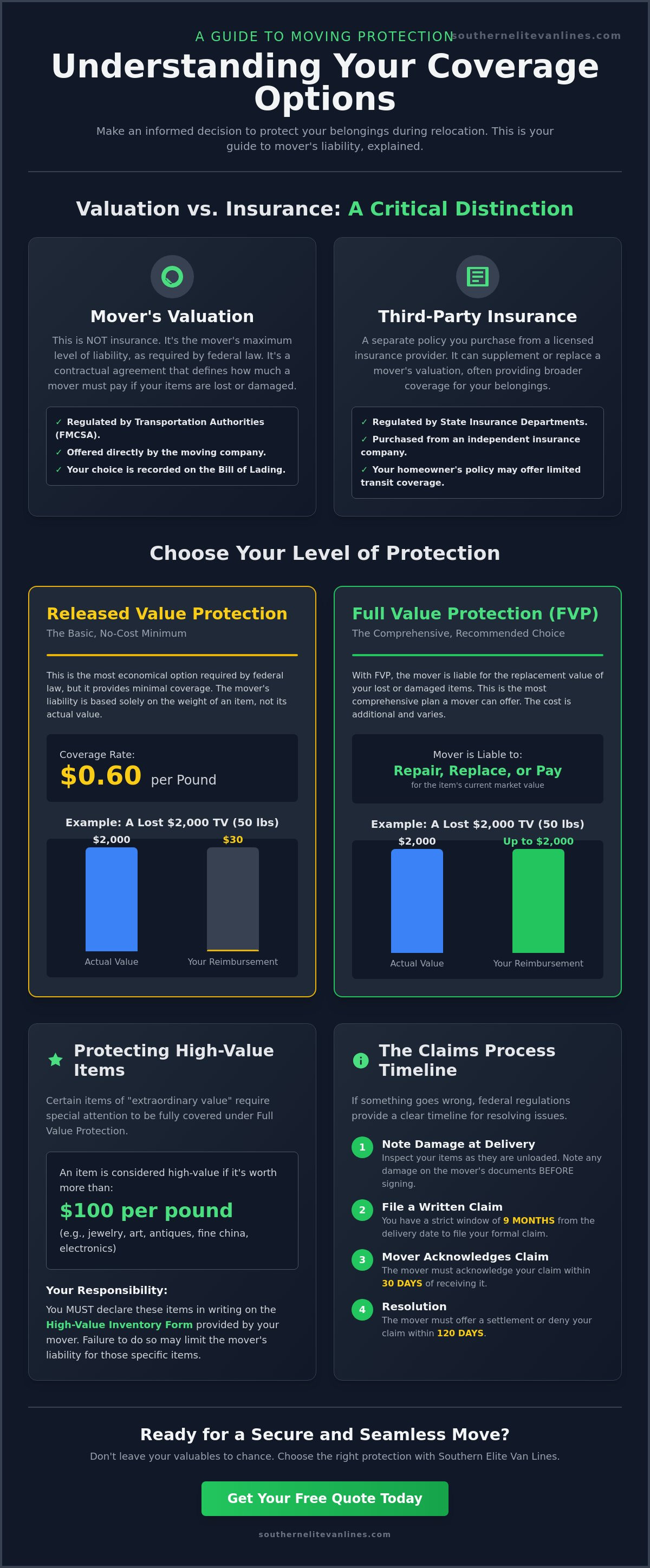
- Full Value Protection (FVP): Offered by select premium carriers and brokers, FVP binds the transporter to repair, replace, or compensate the owner for the vehicle's full market value without accounting for standard depreciation or arbitrary liability caps.
Key Factors That Influence Auto Moving Insurance Costs
Insurance providers and auto transport brokers evaluate several operational and financial metrics when determining the price of supplemental coverage or calculating total risk exposure.
1. Vehicle Valuation and Market Price
The primary cost driver for supplemental auto transport insurance is the total declared or appraised value of the automobile. A standard daily sedan valued at $20,000 requires significantly lower cargo liability limits than a vintage collector car or exotic vehicle worth $250,000.
For high-value assets, standard carrier cargo policies ($100,000 maximum per hull slot) may be insufficient. Owners must purchase gap coverage or request an endorsement to increase cargo coverage limits, which increases the total cost of transport.
2. Transport Method: Open vs. Enclosed Trailers
The choice between open and enclosed auto transport directly impacts both baseline shipping costs and insurance premiums:
- Open Auto Transport: Vehicles are exposed to weather elements, road debris, stones, and atmospheric conditions. Insurance for open carriers often excludes minor cosmetic damage caused by flying debris unless explicit supplemental policy endorsements are purchased.
- Enclosed Auto Transport: Vehicles travel inside a fully shielded trailer, protecting them from weather and road hazards. Enclosed carriers carry higher cargo insurance liability coverage (often $250,000 to $500,000 per vehicle), which is factored into the higher overall shipping rate.
3. Route Distance and Transit Risks
Longer transit routes across multiple climate zones or heavy traffic corridors statistically increase collision and weather risks. Shipping a vehicle cross-country (e.g., New York to California) exposes the shipment to greater cumulative risk than a regional 300-mile move, leading to higher premiums for third-party insurance policies.
4. Deductible Structure and Policy Exclusions
Selecting a zero-deductible supplemental policy will increase upfront costs compared to a policy with a $500 or $1,000 deductible. Additionally, policies that cover "Acts of God" (storms, earthquakes, floods) require higher premiums than baseline carrier liability policies that strictly cover motor carrier negligence.
Comprehensive Cost Breakdown by Coverage Level
The following table outlines standard auto moving insurance cost structures, coverage limits, covered perils, and typical recommendations based on vehicle type.
| Insurance Level / Type | Average Additional Cost | Typical Coverage Limit | Primary Covered Perils | Recommended For |
|---|---|---|---|---|
| Standard Carrier Liability | $0 (Included in shipping quote) | $50,000 – $100,000 per vehicle | Carrier negligence, transit collisions, trailer rollover | Standard daily vehicles, used cars under $40,000 value |
| Broker Gap / Claims Protection | $35 – $90 | $250 – $1,000 (Deductible reimbursement) | Carrier deductible costs, minor damage dispute resolution | Standard commuters seeking deductible protection |
| Third-Party Supplemental Policy | $75 – $250 | $50,000 – $150,000 | Acts of God, weather damage, road debris, vandalism | Long-distance moves, open-carrier transport |
| Full Value Protection (FVP) | $150 – $500+ | Full appraised market value | Complete replacement, full structural and cosmetic repair | Classic cars, luxury exotics, restored vehicles |
| Enclosed Carrier Certificate (High-Limit) | Included in premium enclosed rate ($300–$800 extra transit fee) | $250,000 – $500,000+ | All-risk physical damage, enclosed trailer isolation | High-value exotic, vintage, or custom vehicles |
Does Personal Auto Insurance Cover Car Shipping?
A common misconception among vehicle owners is that personal auto insurance automatically covers vehicles while in transit on a commercial car carrier. In reality, personal insurance coverage during transport is limited:
- Comprehensive Coverage: If your personal auto insurance policy includes comprehensive coverage, it may cover certain non-collision events during transport, such as fire, theft, or severe storm damage. However, personal insurers will usually subrogate the claim—meaning they will attempt to recover payouts directly from the commercial carrier's insurance company.
- Collision Coverage: Personal collision coverage rarely applies while the vehicle is stationary on a commercial trailer, as the vehicle is not being actively operated by the insured driver.
- Personal Policy Deductibles: If your personal policy does pay out for a transit incident, you remain responsible for your personal deductible (e.g., $500 or $1,000), and the claim may affect your personal loss history and future premium rates.
Before booking a car shipping company, contact your personal insurance provider to verify whether your policy extends to commercial transit and whether geographical boundaries (such as overseas or cross-border transport to Canada or Mexico) apply.
How to Verify Carrier Insurance Before Shipping
Relying blindly on a broker or carrier's verbal claim that they are "fully insured" is a common operational mistake. Always verify a carrier's insurance credentials directly through federal regulatory databases before signing a contract.
- Request Carrier USDOT / MC Number
- Check License & Insurance Status via FMCSA SAFER System
- Request Certificate of Insurance (COI) from Insurance Agent
- Verify Cargo Coverage Limits & Exclusions
- Complete Joint Pre-Shipment Inspection (Bill of Lading)
Step 1: Request USDOT and MC Numbers
Every legitimate interstate car hauler must possess a United States Department of Transportation (USDOT) number and a Motor Carrier (MC) number issued by the FMCSA.
Step 2: Check the FMCSA SAFER Database
Visit the official FMCSA Company Snapshot (SAFER System) database. Enter the carrier's USDOT or MC number to view their active operating authority, safety rating, and on-file liability insurance records. Confirm that the policy status shows Active rather than Pending or Revoked.
Step 3: Request a Certificate of Insurance (COI)
Ask the carrier or broker to provide a Certificate of Insurance (COI). This document lists:
- The insurance policy issuer (underwriter).
- Policy numbers and effective dates.
- Cargo insurance coverage limits (verify that the cargo limit adequately covers your car's market value).
- Policy deductibles.
Ensure that the legal business name listed on the COI matches the carrier name operating the truck.
Bill of Lading: The Essential Document for Transit Claims
The Bill of Lading (BOL) is the legal contract between you and the auto transport carrier. It serves as your receipt, transport contract, and primary inspection report. If damage occurs during transit, the BOL is the foundational evidence used by insurance adjusters to approve or deny a claim.
- Bill of Lading Inspection
- Origin Inspection (Pick-up)
- Clean vehicle thoroughly
- Record pre-existing scratches
- Take timestamped HD photos
- Both parties sign copy
- Destination Inspection (Delivery)
- Inspect before signing delivery
- Compare against origin BOL
- Note new damage clearly on BOL
- Obtain driver's signature
- Origin Inspection (Pick-up)
Inspection Best Practices
- Clean the Vehicle Prior to Pick-Up: Dirt and grime obscure minor chips and scratches. Wash your car before the carrier arrives so pre-existing conditions are clearly documented.
- Conduct a Joint Walk-Around: Walk around the vehicle with the driver during origin loading. Document every scratch, dent, or mechanical flaw on the BOL inspection sheet.
- Capture High-Resolution Photos and Video: Take clear, timestamped photographs of all four exterior sides, the roof, wheels, windshield, and odometer reading immediately prior to loading.
- Inspect Thoroughly at Delivery: Upon delivery, inspect the vehicle in daylight before signing the final Bill of Lading. Compare its physical condition against the origin inspection report.
- Annotate Damage Explicitly: If new damage is found, write detailed notes directly on the driver's copy and your copy of the BOL before signing. Signatures provided on a BOL marked "Received in Good Condition" make subsequent insurance claims exceptionally difficult to win.
Frequently Asked Questions
Is auto transport insurance required by law?
Yes. Commercial carriers operating in interstate commerce are required by federal regulations enforced by the FMCSA to carry liability insurance. Additionally, carriers carry commercial cargo insurance to protect transported freight. However, supplemental third-party coverage for consumers is optional.
What happens if the carrier's insurance limit is lower than my car's value?
If a carrier carries $100,000 in cargo insurance divided among nine vehicles on an open trailer, the available coverage per vehicle may fall short if the entire load is total-loss damaged. In such cases, you must arrange supplemental third-party transit insurance or request high-limit enclosed transport to ensure full asset protection.
Does carrier insurance cover personal items left inside the car?
No. Standard auto transport cargo insurance strictly covers the motor vehicle itself. Personal belongings, luggage, or aftermarket goods left inside the cabin or trunk are explicitly excluded from carrier cargo insurance policies. Leaving items in the vehicle can also violate weight regulations set by the Department of Transportation.
How long do I have to file an insurance claim after vehicle delivery?
While federal regulations allow up to nine months to file formal written freight claims against commercial motor carriers under the Carmack Amendment, insurance policies typically require immediate notification—often within 24 to 48 hours of delivery. Any damage must be noted on the Bill of Lading at the exact moment of delivery.
Will acts of nature (like hail or storms) be covered by standard carrier insurance?
Standard carrier cargo insurance typically covers damage resulting from motor carrier negligence or vehicular accidents. Non-negligent environmental events, known as "Acts of God" (such as severe hail, tornadoes, or fallen trees), are usually excluded from basic carrier policies. Covering these risks requires a third-party supplemental policy or personal auto comprehensive coverage.
Actionable Steps Before Shipping Your Vehicle
To safeguard your financial interests when shipping a vehicle, complete this practical checklist:
- Obtain written confirmation of cargo limits from your broker or carrier before paying a deposit.
- Verify active licensing and insurance status on the FMCSA SAFER System database.
- Review your personal auto policy to determine whether your comprehensive insurance applies during commercial transit.
- Evaluate third-party supplemental insurance if shipping an exotic vehicle, using an open carrier over long distances, or seeking protection against high deductibles and environmental hazards.
- Document pre-shipment vehicle condition thoroughly with clean exterior surfaces, high-resolution photos, and detailed annotations on the Bill of Lading.
Disclaimer: Auto transport insurance regulations, policy terms, and mandatory limits vary by jurisdiction, carrier contract, and transport broker. Always review the written terms of your specific carrier agreement and insurance policy prior to transit.
Image Gallery