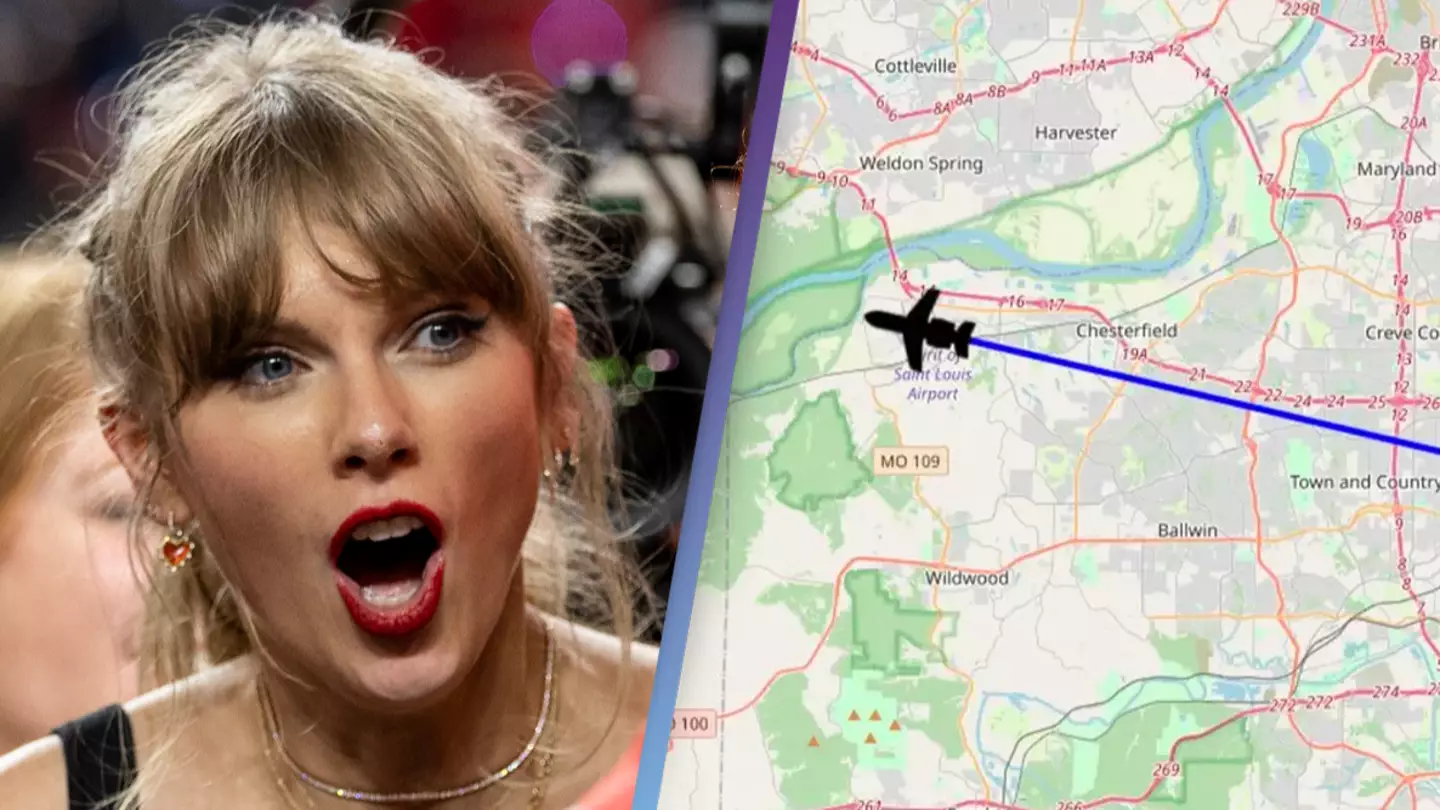
Taylor Swift Private Jet Map Explained: Tracking, Technology, and Privacy Debates
A Taylor Swift private jet map is a digital visualization of flight data generated by the aircraft’s Automatic Dependent Surveillance-Broadcast (ADS-B) transponder. These maps track the real-time movements and historical routes of jets...
A Taylor Swift private jet map is a digital visualization of flight data generated by the aircraft’s Automatic Dependent Surveillance-Broadcast (ADS-B) transponder. These maps track the real-time movements and historical routes of jets linked to Swift’s holding companies. While used by environmentalists and fans, they remain the center of intense legal and privacy disputes.
Contents
The phenomenon of tracking celebrity aircraft has evolved from a niche hobby into a global conversation about environmental accountability, personal security, and the limits of public data. As of 2026, the technology used to monitor Taylor Swift’s travel has become more sophisticated, even as the legal frameworks surrounding flight privacy have tightened. To understand how these maps work and why they are so controversial, one must look at the intersection of aviation technology, corporate registrations, and international privacy laws.
The Technical Infrastructure of Flight Tracking
The "map" that users see on social media or dedicated websites is not a single government-provided tool. Instead, it is a compilation of data points sourced from a global network of receivers. The primary technology enabling this is Automatic Dependent Surveillance-Broadcast (ADS-B).
How ADS-B Functions
Most modern aircraft are required by aviation authorities, such as the FAA in the United States and EASA in Europe, to be equipped with ADS-B Out transponders. These devices periodically broadcast the aircraft’s GPS location, altitude, airspeed, and a unique identification code (the ICAO hex code). Unlike traditional radar, which relies on ground stations "bouncing" signals off an airplane, ADS-B is a broadcast system.
The signals are unencrypted and can be picked up by anyone with a relatively inexpensive ADS-B receiver (often built using a Raspberry Pi and a specialized antenna). These hobbyists then feed their data to aggregators like ADS-B Exchange, FlightAware, or FlightRadar24.
The Role of Raw Data vs. Filtered Data
There is a critical distinction between commercial tracking sites and "uncensored" data networks. Commercial sites like FlightAware often honor government requests to hide certain tail numbers under programs like the FAA’s Limiting Aircraft Data Displayed (LADD). However, networks like ADS-B Exchange do not filter their data based on owner requests. This is where most "Taylor Swift Jet Tracker" accounts derive their information; they pull the raw, unfiltered hexadecimal data and map it against known tail numbers associated with the singer.
Identifying the Aircraft: Tail Numbers and Corporations
You cannot simply search "Taylor Swift" in a flight database to find her plane. Tracking her movements requires identifying the specific aircraft owned by her management or shell companies.
Historically, Swift’s travel has been linked to two primary aircraft:
- Dassault Falcon 7X: A long-range business jet often identified by the registration N621MM.
- Dassault Falcon 900: Formerly identified as N800QT, though reports in early 2024 confirmed this aircraft was sold, streamlining her fleet.
The ownership of these jets is typically shielded through corporate entities. For years, Swift’s aircraft were registered under SATA LLC and Firefly Entertainment, both based in Nashville, Tennessee. Private jet maps work by "tagging" these specific registration numbers. Once a tracker knows that N621MM belongs to Swift’s operation, they can automate alerts every time that specific transponder hex code broadcasts a "takeoff" or "landing" event.
Privacy Measures and the FAA "Privacy ICAO Address" (PIA)
In response to the rise of celebrity flight tracking, the FAA implemented the Privacy ICAO Address (PIA) program. This allows aircraft owners to request a temporary, randomized hex code that is not publicly linked to their permanent tail number in the FAA registry.
Limitations of PIA
While the PIA program was designed to offer anonymity, it has not been a perfect shield for high-profile individuals. Persistent trackers use several methods to bypass these protections:
- Correlative Tracking: By monitoring which "anonymous" jet leaves an airport at the exact same time a celebrity is spotted at the terminal, trackers can re-identify the plane.
- Consistent Routing: If an anonymous jet frequently travels between Nashville, New York, and Kansas City (common hubs for Swift’s team), it becomes easy to deduce the owner.
- Ground Spotting: Enthusiasts at airports often take photos of planes (plane spotting) and upload them to databases, confirming that a specific "anonymous" hex code belongs to a specific physical aircraft.
The Jack Sweeney Controversy and Legal Precedents
The most prominent figure associated with the Taylor Swift private jet map is Jack Sweeney, a university student who gained notoriety for tracking the jets of Elon Musk and various Russian oligarchs. In late 2023 and early 2024, Swift’s legal team issued "cease and desist" letters to Sweeney, alleging that his tracking accounts constituted "stalking and harassing behavior."
The Legal Argument: Public Data vs. Harassment
The core of the dispute rests on a fundamental legal tension:
- The Defense: Sweeney and his supporters argue that the data is public. The signals are broadcast on open frequencies, and the FAA registry is a public record. They contend that aggregating public information does not constitute a crime.
- The Allegation: Swift’s counsel argued that providing a "real-time map" of her movements poses a direct threat to her safety, effectively giving stalkers a roadmap of her arrival times and locations.
By 2026, this debate has influenced new aviation privacy guidelines, yet the act of sharing public ADS-B data remains largely protected under the First Amendment in the United States, provided it does not cross into direct incitement of violence.
Environmental Impact and Carbon Footprint Calculations
The primary motivation for many people following the Taylor Swift private jet map is environmental activism. High-profile reports in 2022 and 2023 labeled Swift as one of the top celebrity CO2 emitters due to her frequent use of private aviation.
How the Maps Calculate Emissions
Advanced jet tracking maps do more than show a line on a globe; they estimate the environmental cost of the flight. This involves:
- Fuel Burn Rates: A Dassault Falcon 7X burns approximately 300 to 400 gallons of Jet A fuel per hour, depending on altitude and weight.
- Flight Duration: Calculating the time between the "wheels up" and "wheels down" signals.
- CO2 Coefficients: Multiplying the fuel consumed by the standard carbon dioxide emission factor (roughly 9.57 kg of CO2 per gallon of jet fuel).
Swift’s representatives have frequently stated that the singer purchases more than double the carbon offsets required to cover her travel. However, environmental groups argue that offsets are not a substitute for reducing actual emissions, keeping the "jet map" a focal point of climate discussions.
Comparing Tracking Methods and Privacy Tools
The following table outlines the different layers of visibility and privacy currently available in the aviation sector as of 2026.
| Feature/Program | Purpose | Tracking Visibility | Primary Weakness |
|---|---|---|---|
| ADS-B Out | Safety and Air Traffic Control | Fully visible to anyone with a receiver. | Cannot be turned off in controlled airspace. |
| LADD Program | Commercial Privacy | Hidden on sites like FlightRadar24. | Ignored by "uncensored" sites like ADS-B Exchange. |
| PIA (Privacy ICAO Address) | Identity Masking | Visible as an "anonymous" aircraft. | Can be unmasked through correlation and ground spotting. |
| Third-Party Bots | Automated Reporting | Real-time alerts on social media. | Subject to platform Terms of Service (e.g., X/Twitter bans). |
| Carbon Calculators | Impact Awareness | Provides estimated tons of CO2. | Relies on generalized fuel burn averages. |
Ethical Considerations: Transparency vs. Security
The existence of the Taylor Swift private jet map forces a difficult conversation about the rights of public figures. On one hand, the "right to privacy" is a cornerstone of personal safety, especially for someone who has faced documented stalking threats. On the other hand, the "right to know" how the ultra-wealthy impact the environment and utilize public airspace is a matter of significant public interest.
While the maps are often simplified into "fan accounts" or "hater accounts," they are technically sophisticated manifestations of Open Source Intelligence (OSINT). They demonstrate how decentralized data collection can hold powerful entities accountable, even when those entities use corporate layers to hide their activities.
Frequently Asked Questions
Is it illegal to track Taylor Swift’s private jet?
In the United States, tracking an aircraft using public ADS-B data is generally legal. The information is broadcast on public frequencies. However, using that information to harass, threaten, or physically follow an individual can lead to criminal charges or civil lawsuits. Laws regarding "cyberstalking" are evolving, but the act of data aggregation itself remains protected as a form of journalism or public interest reporting.
Which jet does Taylor Swift currently use?
As of 2026, Swift is primarily associated with a Dassault Falcon 7X. She previously owned a smaller Dassault Falcon 900, but records indicated that the aircraft was sold in early 2024. The Falcon 7X is a larger, longer-range jet capable of transcontinental and transoceanic flights, which was essential for her global touring schedules.
Can Taylor Swift stop the flight tracking maps?
Total prevention is nearly impossible due to the nature of aviation safety requirements. While she can use the FAA’s LADD and PIA programs to mask her identity from casual observers, she cannot legally disable the ADS-B transponder while flying in most controlled airspaces. Her primary recourse has been legal pressure on the individuals who run the automated social media accounts that broadcast her flight paths.
Why are there multiple "jet tracker" accounts?
There are multiple accounts because the data is decentralized. If one account is banned on a platform like X (formerly Twitter), the data remains available on ADS-B Exchange or dedicated Discord servers. Different accounts also serve different purposes; some focus exclusively on carbon emissions, while others are maintained by fans interested in her location for upcoming events.
How accurate are the carbon emission estimates on these maps?
The estimates are generally considered "high-fidelity approximations." While they accurately track flight time and aircraft type, they often cannot account for specific variables like passenger load, head-to-head winds, or the use of Sustainable Aviation Fuel (SAF). Most trackers use standardized fuel-burn models provided by aviation authorities.
Practical Recommendation for Readers
If you are interested in the environmental or privacy implications of celebrity travel, it is best to use flight tracking data as a tool for systemic advocacy rather than individual monitoring. Instead of focusing on a single person’s daily movements, many experts suggest using these "jet maps" to support policies that tax private aviation emissions or encourage the development of electric regional aircraft. For those concerned with privacy, following "delayed" flight data (which reports movements 24 hours after they occur) provides a balance between transparency and ensuring the immediate safety of the individuals on board.
Image Gallery