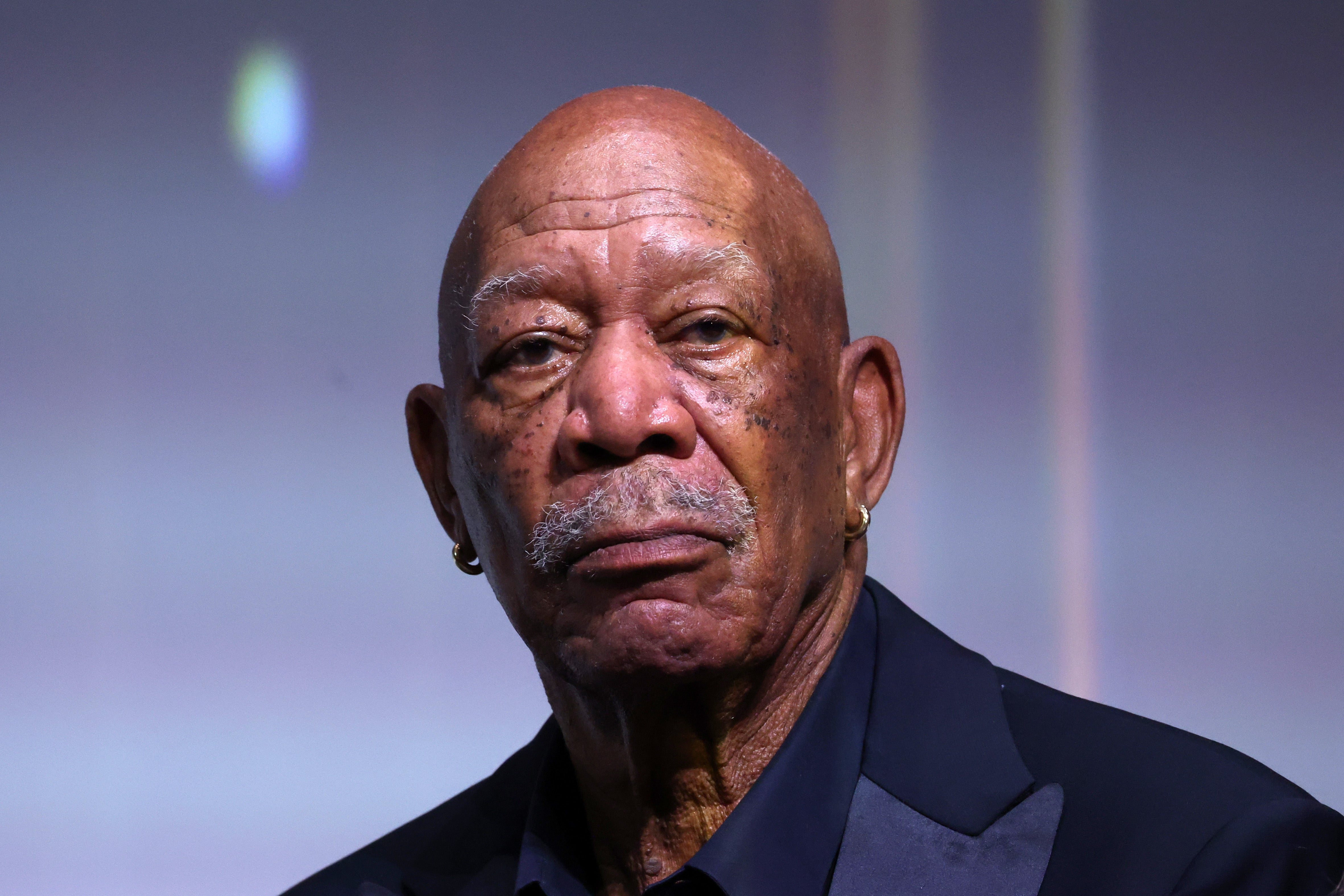
True Facts About Morgan Freeman: The Life and Legacy of a Cinema Icon
Morgan Freeman is a legendary American actor, director, and narrator whose career spans over six decades. Known for his distinctive authoritative voice and calm demeanor, he transitioned from a late-blooming film star to an Academy Awa...
Morgan Freeman is a legendary American actor, director, and narrator whose career spans over six decades. Known for his distinctive authoritative voice and calm demeanor, he transitioned from a late-blooming film star to an Academy Award winner and one of the most respected figures in global cinema history.
Contents
Born on June 1, 1937, in Memphis, Tennessee, Morgan Freeman’s path to Hollywood was neither direct nor easy. His journey involved years of theater work, a stint in the United States Air Force, and a significant period in children’s television before he became a household name. As of 2026, his body of work stands as a testament to the power of persistence and the mastery of the acting craft. To understand the man behind the iconic voice, one must look at the specific milestones and personal convictions that have shaped his life.
The Formative Years and Military Service
Before he was an actor, Freeman was a young man with a passion for aviation. After graduating from high school in 1955, he turned down a partial drama scholarship to Jackson State University, opting instead to join the United States Air Force. His dream was to become a fighter pilot, a goal fueled by a childhood spent watching war movies.
However, the reality of military service differed from his cinematic expectations. While he served as a radar technician, he eventually realized that his romanticized vision of combat flying did not align with the technical and lethal requirements of the job. He famously remarked that when he finally sat in a cockpit, he felt like he was "sitting in the nose of a bomb." This epiphany led to his honorable discharge in 1959. Freeman then moved to Los Angeles, working as a transcript clerk and taking acting and dancing lessons, effectively beginning his long climb toward professional recognition.
The Long Road to Professional Recognition
A common misconception is that Freeman was an immediate success. In reality, he spent nearly thirty years working in the shadows of the industry. His early professional years were spent on the stage, where he earned a Tony Award nomination in 1978 for his role in The Mighty Gents.
During the 1970s, many children became familiar with Freeman through his role on the PBS show The Electric Company. He played several characters, most notably "Easy Reader," a hipster who loved to read. While this job provided financial stability, Freeman has often spoken about the fear of being "typecast" or stuck in children’s television, a concern that motivated him to push back into serious dramatic theater and film.
The Breakthrough: Street Smart (1987)
The true turning point in Freeman’s career occurred when he was 50 years old. His performance as Fast Black, a volatile pimp in the film Street Smart, stunned critics and audiences alike. This role earned him his first Academy Award nomination for Best Supporting Actor. It was a radical departure from the "wise and grandfatherly" image he would later cultivate, proving his range as a high-stakes dramatic actor. Following this success, the late 1980s and early 1990s saw him dominate the screen in classics such as Glory (1989), Driving Miss Daisy (1989), and The Shawshank Redemption (1994).
The Science and Impact of the "Voice of God"
Perhaps the most recognizable "true fact" about Morgan Freeman is the cultural weight of his voice. Often referred to as the "Voice of God," his narration has become the industry standard for gravity and trustworthiness.
This phenomenon is not merely subjective. Acoustically, Freeman’s voice occupies a low-frequency range that humans naturally find soothing and authoritative. His deliberate pacing and perfect enunciation allow listeners to process information without feeling rushed, which is why he was the natural choice for documentaries like March of the Penguins (2005) and the series Through the Wormhole. In 2016, his voice was even added to Google’s navigation app, Waze, proving that his vocal presence has a functional, calming utility in modern life.
Morgan Freeman’s Career Milestones
The following table outlines the pivotal films and accolades that defined Freeman's status as a cinematic titan.
| Year | Film Title | Role | Key Achievement/Award |
|---|---|---|---|
| 1987 | Street Smart | Fast Black | First Oscar Nomination (Supporting Actor) |
| 1989 | Driving Miss Daisy | Hoke Colburn | Golden Globe Winner; Oscar Nomination |
| 1994 | The Shawshank Redemption | Ellis Boyd 'Red' Redding | Nominated for Best Actor; Iconic Narration |
| 2004 | Million Dollar Baby | Eddie "Scrap-Iron" Dupris | Academy Award Winner (Best Supporting Actor) |
| 2005 | March of the Penguins | Narrator | Documentary became a global box-office hit |
| 2009 | Invictus | Nelson Mandela | Nominated for Best Actor; Personal request by Mandela |
| 2012 | The Dark Knight Rises | Lucius Fox | Conclusion of the legendary Batman trilogy |
Life Beyond the Screen: Beekeeping and Aviation
Morgan Freeman’s personal life is characterized by interests that mirror his screen presence: intellectual, disciplined, and slightly unconventional. One of the most fascinating aspects of his private life is his dedication to environmentalism. In 2014, deeply concerned about the global decline of honeybee populations, Freeman converted his 124-acre ranch in Mississippi into a bee sanctuary.
He imported 26 hives from Arkansas and planted bee-friendly vegetation like clover, lavender, and magnolia trees. Notably, Freeman has stated that he does not wear a protective suit when feeding his bees, claiming that he has never been stung because he approaches them with a sense of "oneness" rather than fear.
A Late Return to the Skies
Despite his early exit from the Air Force, Freeman never lost his love for flight. In a remarkable display of lifelong learning, he earned his private pilot's license at age 65. He has owned and operated several aircraft, including a Cessna Citation 501, a Cessna 414, and an Emivest SJ30. For Freeman, flying is not a hobby of luxury but a pursuit of technical mastery and the ultimate expression of personal freedom.
Philosophical Stance on Race and Identity
Freeman is often cited for his unique and sometimes controversial views on race in America. In a famous 2005 interview with Mike Wallace on 60 Minutes, he expressed his belief that the way to end racism is to "stop talking about it." He argued that labels like "Black History Month" are unnecessary because black history is American history.
His philosophy emphasizes individual identity over collective labels. He often points out that he does not want a "Black History Month" just as his interviewer wouldn't want a "Jewish History Month." These views have sparked extensive debate, yet they remain consistent with his lifelong focus on character and individual merit rather than sociopolitical categorizations.
Philanthropy and Business Ventures
Freeman is deeply rooted in his home state of Mississippi. Unlike many Hollywood stars who reside permanently in Los Angeles or New York, he maintains a primary residence in the Mississippi Delta. He has invested heavily in the local community, most notably as the co-owner of the Ground Zero Blues Club in Clarksdale. This venue serves as a hub for preserving the musical heritage of the region.
Furthermore, his philanthropic efforts are often quiet but substantial. He co-founded the Grenada Relief Fund (now Plan!t Now) to assist victims of Hurricane Ivan and has been a major donor to educational institutions and artistic funds that support underprivileged youth in the South.
Frequently Asked Questions
Why does Morgan Freeman wear gold earrings?
Freeman wears gold earrings for a practical and historical reason: they are intended to pay for a coffin if he should die in an unfamiliar place. This is a tradition he adopted from old sailors, who wore gold jewelry so that no matter where they washed ashore, they would be guaranteed a proper burial.
Has Morgan Freeman ever played a villain?
While he is best known for "good" or "wise" characters, his breakout role in Street Smart was as a dangerous and manipulative pimp. He also played a more antagonistic role in the film Wanted (2008), where he portrayed the leader of a secret society of assassins with a questionable moral code.
Does Morgan Freeman actually keep bees?
Yes, he is a dedicated hobbyist beekeeper. He began beekeeping in 2014 to support the ecosystem and has since turned his Mississippi estate into a massive sanctuary for various species of bees.
What was Morgan Freeman's first major movie role?
While he had small parts earlier, his first major credited film role was in Who Says I Can't Ride a Rainbow? (1971). However, his significant Hollywood breakthrough did not arrive until 1987 with Street Smart.
Is Morgan Freeman a pilot?
Yes, he is a licensed pilot. He achieved his certification in his mid-60s and is qualified to fly both single-engine and multi-engine aircraft, including private jets.
Why is Morgan Freeman's voice so famous?
His voice is famous due to its low timbre, steady cadence, and clear articulation. Psychologically, his vocal patterns are associated with reliability and wisdom, making him the most sought-after narrator in the entertainment industry.
Final Recommendations for Further Exploration
To truly appreciate the depth of Morgan Freeman’s career, one should look beyond his major blockbusters. Watching his early work in The Electric Company provides a glimpse into his versatility and comedic timing, while his stage work (where recordings are available) reveals a classically trained actor of immense power. For those interested in his environmental work, researching the Plan!t Now initiative offers insight into how he uses his platform for disaster preparedness and ecological protection. Whether through his films or his philanthropic efforts in Mississippi, Freeman continues to be a defining figure of American culture well into 2026.
Image Gallery