The History and Evolution of Dial-Up Internet: When Did It Start?
Consumer dial-up internet access first emerged in 1979 with the launch of services like CompuServe and The Source. While the underlying modem technology dates back to military applications in the late 1950s, it wasn't until the late 19...
Consumer dial-up internet access first emerged in 1979 with the launch of services like CompuServe and The Source. While the underlying modem technology dates back to military applications in the late 1950s, it wasn't until the late 1980s and early 1990s that dial-up became a household staple, providing the first widespread gateway to the World Wide Web.
Contents
The Technical Origins of Modem Technology (1950s–1960s)
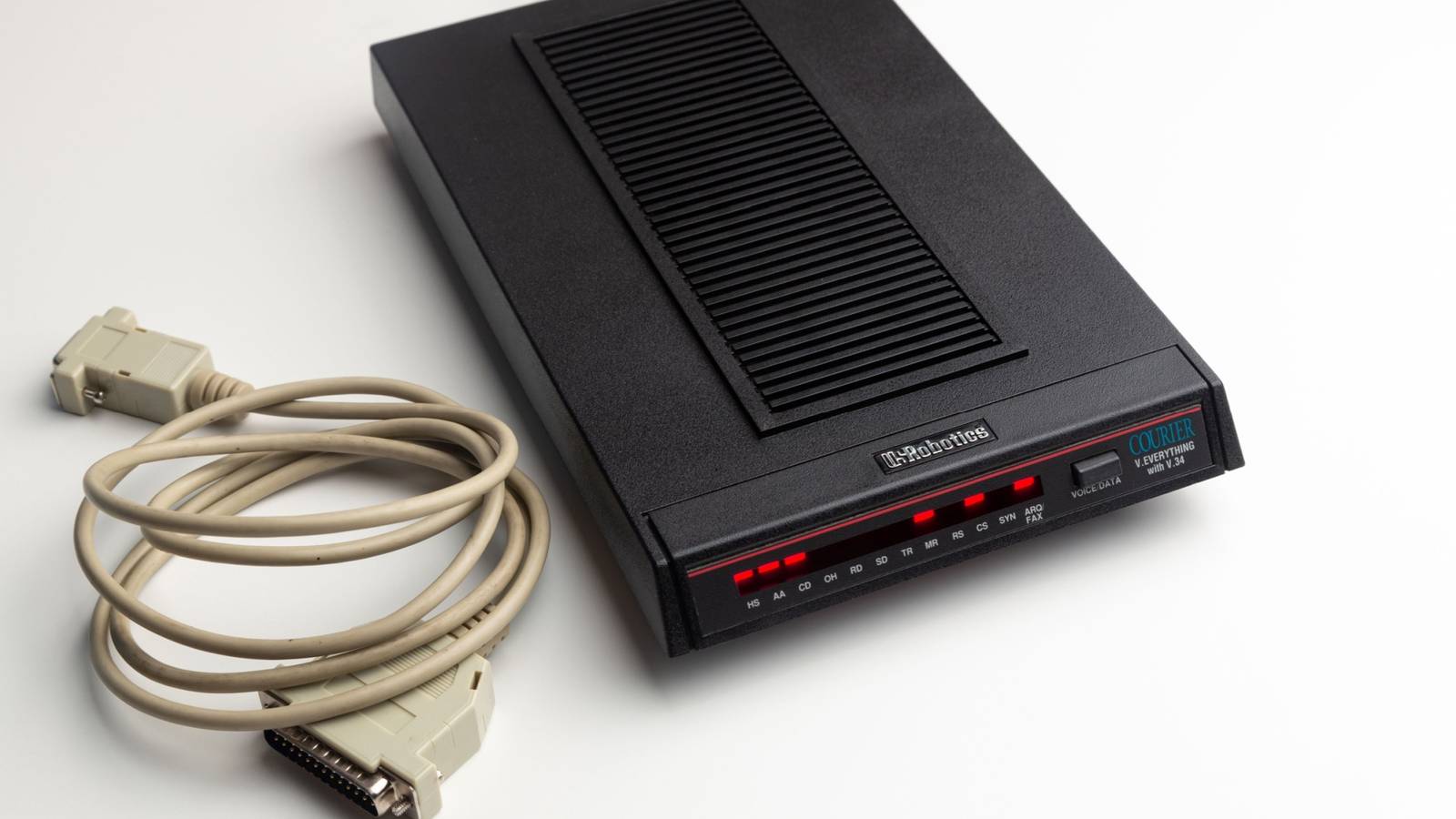
To understand when dial-up "came out," one must distinguish between the invention of the modem and the commercial availability of internet services. The word "modem" is a portmanteau of Modulator-Demodulator. The device’s primary function was to convert digital data from a computer into analog signals (sound) that could travel over copper telephone lines, and then reverse the process at the receiving end.
The earliest functional modems were developed for the North American air defense system in the late 1950s. The Bell 101 dataset, released by AT&T in 1958, is widely considered the first commercial modem, though its use was restricted to large corporations and government entities. It operated at a speed of 110 bits per second (bps). During this era, the concept of the "internet" did not exist in the public consciousness; these devices were used to transmit data between massive mainframes via the Public Switched Telephone Network (PSTN).
In the 1960s, the development of the acoustic coupler allowed users to connect a computer to a phone line without electrically hard-wiring the device to the Bell System’s network. By placing a standard telephone handset into a cradle with a microphone and speaker, data could be transmitted via sound. This was a crucial step in making data communication portable, even if it was still incredibly slow and prone to interference from background noise.
The Birth of Consumer Dial-Up (1970s–1980s)
The transition from institutional use to consumer access began in the late 1970s. In 1978, Ward Christensen and Randy Suess created the first Computerized Bulletin Board System (CBBS) in Chicago. This allowed hobbyists to "dial in" to a central computer to leave messages and share files.
The year 1979 marked a turning point with the launch of CompuServe. Originally a time-sharing service for businesses, CompuServe began offering "MicroNET" to home users, allowing them to access news, weather, and basic electronic mail during off-peak hours. Shortly thereafter, "The Source" launched as a competitor. These services were the precursors to the modern ISP (Internet Service Provider), though they were closed "walled gardens" rather than the open internet we recognize today.
A major hardware milestone occurred in 1981 with the release of the Hayes Smartmodem. Before this device, users had to manually dial the phone number on a physical telephone and then flip a switch to connect the modem. The Hayes Smartmodem introduced the AT command set (where "AT" stands for "Attention"). This allowed the computer to send instructions directly to the modem to pick up the line, dial the number, and hang up automatically. The AT command set remains a foundational standard in telecommunications hardware even in 2026.
The Golden Age and the 1990s Explosion
While dial-up existed in the 1980s, it was largely the domain of "techies" and academics. The 1990s saw dial-up become a cultural phenomenon. Several factors converged to make this possible:
- The World Wide Web: In 1991, Tim Berners-Lee released the software for the World Wide Web, giving the internet a graphical and navigational framework that was accessible to non-experts.
- AOL (America Online): AOL pioneered the mass-marketing of dial-up. By the mid-1990s, the company was famous (and sometimes infamous) for mailing millions of 3.5-inch floppy disks and later CD-ROMs offering "100 Hours Free" to households across the United States and Europe.
- Operating System Integration: When Microsoft released Windows 95, it included a built-in TCP/IP stack and the "Internet Connection Wizard." This eliminated the need for third-party software to manage a dial-up connection, making the setup process plug-and-play for the average user.
During this decade, the primary limitation was speed. The industry went through a rapid succession of standards. In 1990, a 2400 bps modem was common; by 1994, 14.4 Kbps was the standard; and by 1998, the V.90 standard pushed dial-up to its theoretical limit of 56 Kbps.
Understanding the "Handshake" Sound
Anyone who used dial-up between 1990 and 2005 remembers the distinct cacophony of squeaks, hisses, and static that occurred during the connection process. This was not random noise; it was a sophisticated negotiation called the handshake.
Because telephone lines were designed to carry human voices (analog signals), modems had to "test" the line to see how much data it could handle without corruption. During the handshake, the two modems would:
- Identify their maximum supported speeds.
- Check for line noise and echoes.
- Agree on an error-correction protocol.
- Establish a "carrier tone" to maintain the link.
If the phone line was particularly "noisy"—common in older houses or during rainstorms—the modems would "fall back" to a lower speed (e.g., connecting at 33.6 Kbps instead of 56 Kbps) to ensure a stable connection.
The Technical Evolution of Dial-Up Speeds
The following table outlines the progression of dial-up technology from its early corporate origins to the final consumer standards.
| Era/Standard | Approximate Year | Maximum Speed | Primary Usage/Feature |
|---|---|---|---|
| Bell 101 | 1958 | 110 bps | First commercial modem for mainframe data. |
| Bell 103 | 1962 | 300 bps | Introduced Full-Duplex (simultaneous send/receive). |
| V.22bis | 1984 | 2400 bps | First worldwide standard for high-speed (at the time) dial-up. |
| V.32bis | 1991 | 14.4 Kbps | Enabled early graphical web browsing (Mosaic). |
| V.34 | 1994 | 28.8 Kbps | The standard during the initial "dot-com" boom. |
| V.90 | 1998 | 56 Kbps | Used digital ISP connections to break the 33.6 Kbps barrier. |
| V.92 | 2000 | 56 Kbps | Added "Modem on Hold," allowing users to receive voice calls. |
Why 56 Kbps Was the Hard Limit
A common question is why dial-up never moved past 56 Kbps. This limitation was dictated by both physics and the infrastructure of the phone system, specifically Shannon’s Law.
The Public Switched Telephone Network (PSTN) was designed to filter out frequencies above and below the human voice range to save bandwidth. This created a "narrowband" channel. While the V.90 and V.92 standards achieved 56 Kbps by utilizing a digital connection at the ISP’s end, the "upload" speed from the home user was typically capped at 33.6 Kbps.
Furthermore, 56 Kbps was rarely achieved in practice. Most users saw speeds between 40 Kbps and 53 Kbps due to FCC regulations on power output (to prevent crosstalk between lines) and the general quality of residential copper wiring. This inherent ceiling is what eventually necessitated the shift to Broadband (DSL and Cable), which uses much higher frequencies on the same copper or coaxial wires.
The Legacy of Dial-Up in 2026
By 2026, dial-up has almost entirely vanished from the urban and suburban landscape, replaced by Fiber-to-the-Home (FTTH), 5G/6G fixed wireless, and satellite services like Starlink. However, dial-up remains a vital piece of telecommunications history and survives in niche applications.
Some legacy industrial systems, such as remote utility meters, older point-of-sale (POS) terminals, and specialized medical equipment, still utilize dial-up because the data packets they send are extremely small and the infrastructure is already in place. In some extremely remote global regions where satellite coverage is obstructed and cellular towers are non-existent, a basic landline with a dial-up modem remains the only "last resort" for text-based communication.
For the modern enthusiast, "retro-computing" has kept dial-up alive. Hobbyists use VOIP-to-Modem adapters or "DreamPi" setups to allow vintage computers and gaming consoles (like the Sega Dreamcast) to browse the modern web or play legacy online games through simulated dial-up environments.
Frequently Asked Questions
Can I still get dial-up internet today?
While extremely rare, some providers still offer dial-up service for legacy systems or as a low-cost backup. However, as telecommunications companies phase out copper "POTS" (Plain Old Telephone Service) lines in favor of digital fiber networks, the physical infrastructure required for dial-up is rapidly disappearing.
Why did dial-up make that screeching noise?
The noise was the process of two modems communicating in the audible frequency range. They were essentially "talking" to each other to determine the quality of the phone line and agreeing on the fastest possible speed they could both support without dropping the connection.
Did dial-up use the same line as my phone?
Yes. Dial-up used the exact same frequencies as human speech. This meant that if you were online, your phone line was "busy" to anyone trying to call you, and if someone picked up another extension in the house, the noise they introduced would often cause the modem to disconnect.
When did broadband finally overtake dial-up?
In the United States, the "tipping point" occurred around 2004 or 2005. This was the first time the number of residential broadband subscribers (DSL and Cable) surpassed the number of dial-up subscribers. By 2010, dial-up had fallen to less than 10% of the market.
Is dial-up safer than broadband?
Dial-up is often perceived as "safer" because you are only connected when you manually dial in, creating a natural "air gap" when you are offline. However, when you are actually connected, you are just as vulnerable to malware and phishing as any other user. Modern broadband routers provide far superior security through built-in firewalls that dial-up modems lacked.
Final Practical Considerations
If you are researching dial-up for historical purposes or trying to connect a vintage device, remember that modern digital phone lines (VOIP) often compress audio in a way that breaks modem communication. To successfully use a dial-up modem in the current era, you generally need a high-quality analog telephone adapter (ATA) that supports the G.711 codec without compression, or a traditional "copper" landline if your local utility still maintains one. For most users, dial-up is now a closed chapter of history, representing the "pioneer days" of the digital world.
Image Gallery