How Chip and PIN Machines Shape US Retail Payments
Chip and PIN technology, the global standard for secure credit and debit card transactions, has fundamentally restructured the United States retail landscape by shifting the burden of security from physical signatures to dynamic crypto...
Chip and PIN technology, the global standard for secure credit and debit card transactions, has fundamentally restructured the United States retail landscape by shifting the burden of security from physical signatures to dynamic cryptographic verification. In 2026, this infrastructure serves as the primary defense against counterfeit fraud, while simultaneously driving the adoption of contactless payments and forcing a multi-billion dollar hardware evolution across American storefronts.
Contents
The Evolution of Payment Standards in the United States
The transition to Chip and PIN, technically known as the EMV (Europay, Mastercard, and Visa) standard, represented the most significant change to the U.S. financial infrastructure in decades. For nearly half a century, the American retail sector relied on magnetic stripe technology. This legacy system stored static data on a card’s rear stripe, making it an easy target for "skimming"—a process where criminals copy the static information to create counterfeit cards.
By 2026, the magnetic stripe has largely become a vestigial feature. The shaping of the U.S. market began in earnest with the 2015 liability shift, an event that moved the financial responsibility for fraudulent transactions from card issuers to merchants if those merchants had not upgraded to EMV-compliant terminals. This transition was slower in the U.S. than in Europe or Canada, primarily due to the sheer scale of the American merchant ecosystem and a long-standing preference for "Chip and Signature" over the more secure "Chip and PIN" model.
However, as we move through 2026, the industry has reached a tipping point. The demand for higher security and the reduction of friction at the point of sale (POS) has led to a standardized environment where the majority of high-value transactions now require a Personal Identification Number (PIN), aligning the U.S. more closely with international security protocols.
Technical Mechanics: Beyond the Magnetic Stripe
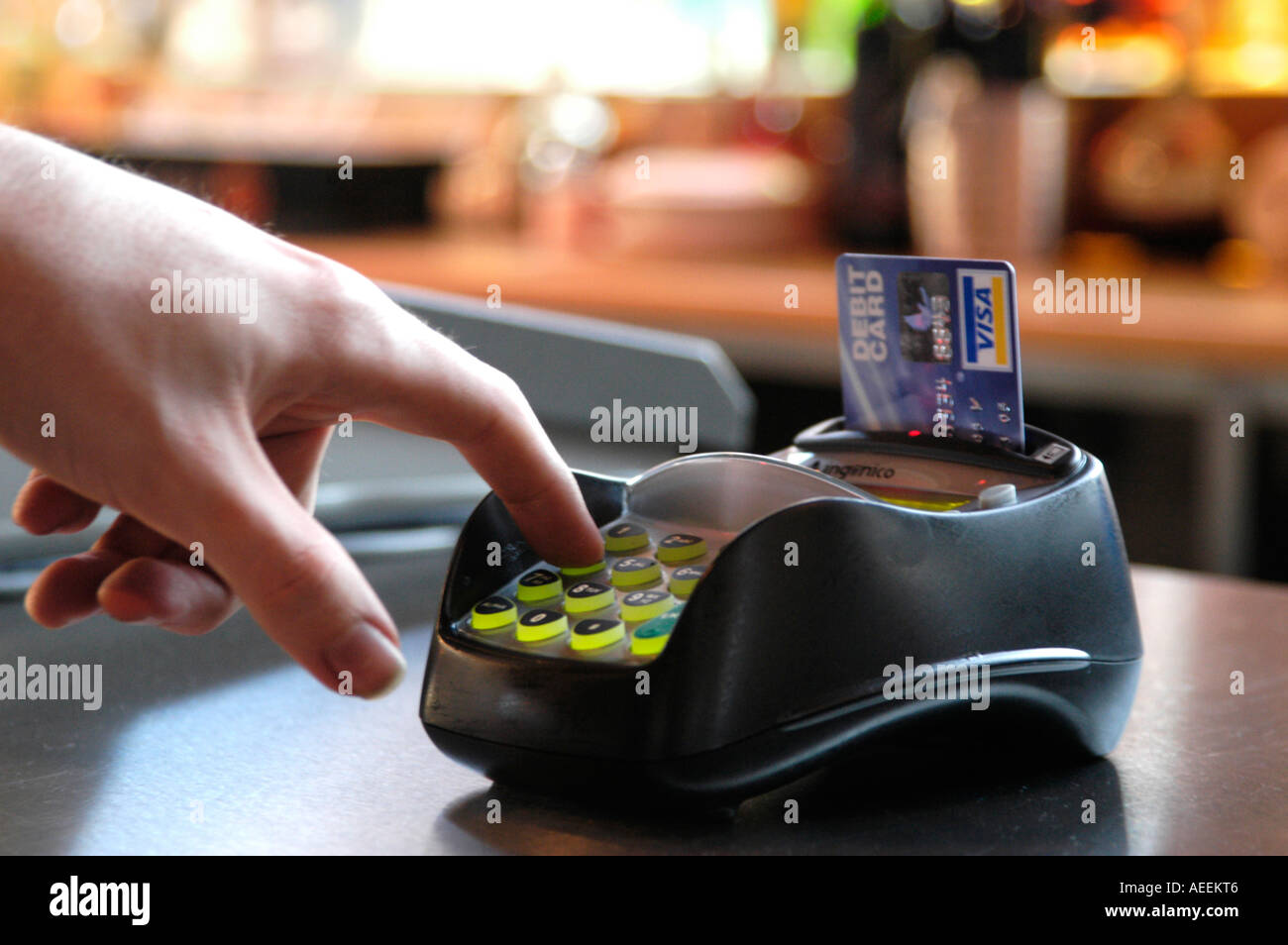
To understand how these machines shape retail, one must look at the technical shift from static to dynamic data. When a consumer inserts a card into a Chip and PIN machine, the embedded microchip creates a unique, one-time transaction code.
Dynamic Cryptography
Unlike a magnetic stripe, which transmits the same credit card number every time it is swiped, the chip functions as a small computer. It performs a cryptographic "handshake" with the merchant's terminal. Even if a sophisticated hacker were to intercept the data from a single transaction, the information would be useless for future purchases because the specific transaction code expires immediately.
Multi-Factor Authentication
Chip and PIN introduces a form of multi-factor authentication (MFA) to the physical retail world. The "something you have" is the physical card with the embedded chip, and the "something you know" is the four-to-six-digit PIN. This dual-layer approach is what has specifically shaped the reduction in "lost and stolen" card fraud, which "Chip and Signature" failed to address effectively.
Impact on Fraud Mitigation and Liability
The primary driver for the adoption of Chip and PIN machines has always been the mitigation of counterfeit fraud. The impact on the U.S. retail market has been profound and measurable.
- Reduction in Counterfeit Fraud: Since the widespread adoption of EMV terminals, card-present counterfeit fraud has dropped by over 80% for merchants who have fully implemented the technology.
- Fraud Migration: A significant side effect of hardening physical retail locations is "fraud migration." As it became harder to use counterfeit cards in person, criminal activity shifted toward Card-Not-Present (CNP) environments, such as e-commerce and mobile apps. This has forced U.S. retailers to invest heavily in secondary security layers like 3D Secure and advanced AI-driven fraud detection for their online storefronts.
- The Liability Framework: The 2015 shift established a permanent rule: the party with the least secure technology bears the cost of fraud. In 2026, this remains a cornerstone of retail economics. Small businesses that delayed upgrading their hardware have, in many cases, been forced out of the market by the high costs of fraudulent chargebacks.
Operational Hurdles and Triumphs for US Retailers
The physical presence of Chip and PIN machines has changed the literal flow of a retail store. The "dip" of a chip takes longer than the "swipe" of a stripe, a reality that initially led to longer queues and consumer frustration.
Training and Consumer Behavior
Retailers had to retrain millions of staff members to guide customers through the "insertion" process. In 2026, this has evolved into a "customer-facing" terminal standard where the clerk rarely touches the card. This shift in autonomy has empowered consumers but also requires merchants to maintain more durable, user-accessible hardware.
Hardware Maintenance
Chip and PIN machines are more complex than their magnetic predecessors. They require regular software updates, security patches, and physical maintenance to ensure the chip readers (which are prone to debris buildup) remain functional. The "shaping" of retail here involves a move toward "Terminal-as-a-Service" models, where merchants pay a monthly fee to providers like Clover, Square, or Verifone to ensure their hardware is always compliant and operational.
Economic Considerations: Costs and Comparisons
The transition to Chip and PIN was not cheap. For a large retailer with thousands of lanes, the cost of upgrading hardware, back-end software, and encryption protocols reached into the hundreds of millions of dollars. For small businesses, a single compliant terminal can cost anywhere from $200 to $600, not including processing fees.
| Feature | Magnetic Stripe (Legacy) | Chip and PIN (EMV) | Contactless (NFC) |
|---|---|---|---|
| Primary Security | Static Data (Easy to clone) | Dynamic Cryptography | Dynamic Cryptography + Biometrics |
| Transaction Speed | High (1-2 seconds) | Moderate (3-8 seconds) | Very High (<1 second) |
| Hardware Cost | Low ($50 - $100) | Moderate ($200 - $600) | Moderate to High (Integrated) |
| Fraud Resistance | Poor | Excellent (In-person) | Excellent (In-person) |
| Liability Carrier | Usually the Issuer | The Un-upgraded Party | The Un-upgraded Party |
The Convergence with Contactless and Mobile Wallets
Perhaps the most significant way Chip and PIN machines have shaped the U.S. is by acting as a "gateway technology" for Near Field Communication (NFC) or contactless payments. When retailers upgraded their terminals to support chips, almost all of the new hardware came equipped with NFC capabilities.
In 2026, the "tap-to-pay" method—using a card or a smartphone (Apple Pay, Google Pay)—is often faster than inserting a chip. However, the security framework that allows contactless payments to be safe is the exact same EMV standard used by chip machines. Without the initial push for Chip and PIN hardware, the infrastructure for the current contactless revolution in the U.S. would not exist.
Future-Proofing Retail Terminals for 2026 and Beyond
As we navigate 2026, the role of the Chip and PIN machine is expanding. It is no longer just a payment terminal; it is a data hub. Modern terminals now integrate with inventory management, loyalty programs, and real-time analytics.
- PIN-on-Glass: Many retailers are moving toward software-based PIN entry on tablets, allowing for a more mobile "line-busting" experience.
- Biometric Integration: Some advanced terminals are beginning to experiment with fingerprint or facial recognition as a supplement to the PIN, further hardening the security of high-value retail transactions.
- Encryption Standards: The industry has moved toward Point-to-Point Encryption (P2PE), ensuring that card data is encrypted from the moment it enters the Chip and PIN machine until it reaches the payment processor.
Frequently Asked Questions
Why does the U.S. use "Chip and Signature" for some cards instead of PIN?
Historically, U.S. banks were concerned that customers would forget their PINs, leading to abandoned transactions. However, by 2026, most major issuers have transitioned to "PIN-preferring" cards because the security benefits significantly outweigh the minor inconvenience to the consumer.
Can I still use a card with a broken chip in a PIN machine?
Most Chip and PIN machines allow for a "fallback" transaction. After three failed chip attempts, the machine may prompt you to swipe the magnetic stripe. However, these transactions are flagged as high-risk, and the merchant may be liable for any fraud that occurs during a fallback swipe.
Is a PIN more secure than a signature?
Yes, significantly. A signature is easily forged and rarely verified by retail staff at the point of sale. A PIN requires the user to possess secret knowledge, which provides a much higher barrier to entry for a criminal who has physically stolen a card.
Do small businesses have to provide Chip and PIN machines by law?
There is no federal law mandating EMV hardware. However, the "Liability Shift" of 2015 created a powerful financial incentive. If a merchant does not have a chip-enabled machine and a fraudulent chip card is used, the merchant is responsible for the refund, not the bank.
Are Chip and PIN transactions safer than online shopping?
Generally, yes. Physical Chip and PIN transactions use a physical hardware security module to generate codes. Online shopping relies on the "Card-Not-Present" framework, which is more susceptible to phishing, database breaches, and sophisticated digital interceptors.
Practical Recommendations for Retailers
For merchants operating in 2026, maintaining a robust payment infrastructure is vital for both security and customer retention.
- Audit Hardware Annually: Ensure that your terminals are PCI-DSS compliant and that the firmware is updated to protect against new vulnerabilities.
- Enable All Payment Methods: While Chip and PIN is the focus, ensure your machines fully support NFC tap-to-pay to reduce transaction friction and wait times.
- Educate Staff on "Fallback" Fraud: Train employees to be cautious when a customer's chip fails repeatedly, as this is a common tactic used by fraudsters to force a less-secure magnetic stripe swipe.
- Invest in P2PE: Work with your processor to ensure Point-to-Point Encryption is active, which devalues your data in the event of a network breach.
Image Gallery