Clindamycin as an Antibiotic: A Comprehensive Overview
Clindamycin is a lincosamide antibiotic primarily used to treat serious bacterial infections by inhibiting bacterial protein synthesis. It is effective against a wide range of aerobic and anaerobic Gram-positive bacteria, making it a c...
Clindamycin is a lincosamide antibiotic primarily used to treat serious bacterial infections by inhibiting bacterial protein synthesis. It is effective against a wide range of aerobic and anaerobic Gram-positive bacteria, making it a critical tool for clinicians managing skin, soft tissue, respiratory, and intra-abdominal infections, particularly in patients with penicillin allergies.
Contents
The Mechanism of Action
At its core, clindamycin functions through a specific interaction with the bacterial cell. It binds to the 50S subunit of the bacterial ribosome. By occupying this site, it prevents the formation of peptide bonds between amino acids, effectively halting the synthesis of essential proteins required for the bacterium’s survival and replication.
Depending on the concentration of the drug at the site of infection and the specific susceptibility of the target organism, clindamycin acts as either bacteriostatic (inhibiting growth) or bactericidal (killing the bacteria). Because it does not rely on cell wall disruption, it remains effective in environments where beta-lactam antibiotics—which target cell wall synthesis—might be rendered ineffective by bacterial enzymes.
Spectrum of Activity and Clinical Indications
Clindamycin possesses a robust spectrum of activity against many anaerobic pathogens, including Bacteroides fragilis and various Clostridium species. It also demonstrates high potency against aerobic Gram-positive cocci such as Staphylococcus aureus (including some community-acquired methicillin-resistant strains) and Streptococcus pyogenes.
In modern clinical practice, it is frequently prescribed for:
- Skin and Soft Tissue Infections: Such as cellulitis, impetigo, and abscesses.
- Dental Infections: Particularly for individuals who are allergic to penicillin or for deep-space oral infections.
- Respiratory Tract Infections: Including pneumonia and lung abscesses.
- Intra-abdominal Infections: Often used in combination with an aminoglycoside to provide broad coverage against aerobic and anaerobic flora.
- Bone and Joint Infections: Due to its excellent tissue penetration, including into bone.
Pharmacokinetics and Administration
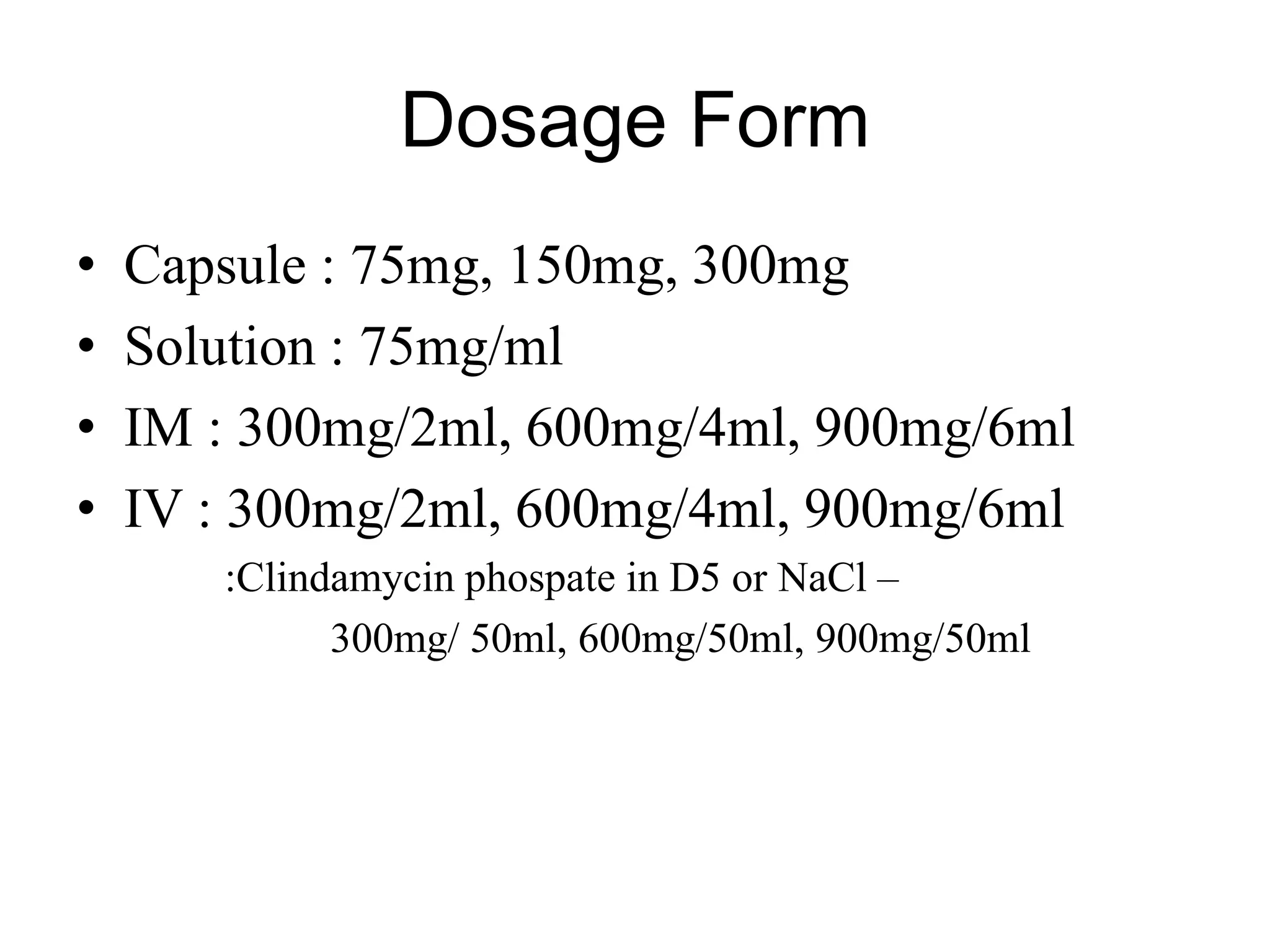
Clindamycin is available in multiple formulations, including oral capsules, topical gels and lotions, and intravenous injections. Its oral bioavailability is excellent, reaching peak plasma concentrations within approximately 60 minutes after ingestion.
A defining pharmacokinetic feature of clindamycin is its ability to penetrate deep into tissues and accumulate within leukocytes (white blood cells), which then transport the antibiotic directly to the site of an infection. It is primarily metabolized by the liver into active and inactive metabolites, with subsequent excretion occurring through both the bile and the urine.
Comparative Overview of Clindamycin Forms
| Formulation | Primary Use Case | Administration Notes |
|---|---|---|
| Oral (Capsules) | Systemic infections | Should be taken with a full glass of water to avoid esophageal irritation. |
| Intravenous | Severe or systemic infections | Must be diluted; rapid injection is strictly contraindicated due to cardiac risks. |
| Topical (Gel/Lotion) | Acne vulgaris | Localized application only; minimal systemic absorption. |
| Vaginal (Cream) | Bacterial vaginosis | Targeted localized treatment for vaginal mucosa. |
Important Safety Considerations and Cautions
The most significant safety concern associated with clindamycin is its link to Clostridioides difficile-associated diarrhea (CDAD). Because clindamycin alters the normal bacterial flora of the gastrointestinal tract, it can allow the opportunistic pathogen C. difficile to proliferate. This can lead to conditions ranging from mild antibiotic-associated diarrhea to severe, life-threatening pseudomembranous colitis.
Patients should be advised to seek medical attention if they develop significant, watery, or bloody stools while taking the medication or in the weeks following its discontinuation. Due to this risk, clinicians typically reserve clindamycin for infections where it provides a distinct therapeutic advantage over safer alternatives.
Drug Interactions and Contraindications
Clindamycin can interact with other medications, potentially altering the efficacy of either drug or increasing the risk of adverse effects. It is known to enhance the action of neuromuscular blocking agents, such as rocuronium or vecuronium, which can lead to prolonged respiratory depression during surgical procedures.
Patients with a history of regional enteritis, ulcerative colitis, or antibiotic-associated colitis should generally avoid clindamycin. Furthermore, while it is often used for patients with penicillin hypersensitivity, it is not an appropriate substitute for patients who have previously experienced severe allergic reactions to lincosamides.
Frequently Asked Questions
Is clindamycin effective against all types of bacteria?
No. Clindamycin is ineffective against aerobic Gram-negative bacilli, such as Escherichia coli or Pseudomonas aeruginosa. It is also ineffective against viral infections, such as the common cold or influenza.
What should I do if I miss a dose of clindamycin?
Take the dose as soon as you remember. However, if it is nearly time for your next scheduled dose, skip the missed dose entirely. Do not take a double dose to compensate for the oversight, as this may increase the risk of gastrointestinal side effects.
Can clindamycin be taken with food?
Yes, clindamycin can be taken with or without food. Taking it with food may help reduce the likelihood of stomach upset, which is a common side effect for many oral antibiotics.
How long does it take for clindamycin to work?
While the medication begins working almost immediately after reaching systemic circulation, clinical improvement in symptoms may take 24 to 48 hours. It is essential to complete the entire course prescribed by the healthcare provider to ensure the infection is fully eradicated and to prevent the development of antibiotic resistance.
Is clindamycin safe during pregnancy?
Clindamycin is generally considered safe for use during pregnancy when indicated, although it should only be used if clearly necessary. Always consult with an obstetrician or primary care provider to evaluate the risk-benefit ratio for your specific clinical situation.
Next Actions and Recommendations
If you have been prescribed clindamycin, verify the dosage schedule and the intended duration of the treatment. Maintain high fluid intake and monitor your bowel habits closely during the course of therapy. If you experience persistent diarrhea or symptoms of an allergic reaction—such as hives, rash, or difficulty breathing—contact your healthcare provider immediately or seek emergency medical services. Always finish your prescribed course of antibiotics to ensure full recovery, even if symptoms subside early.
Image Gallery