The Mold Remediation Protocol in Katy, TX: 2026 Requirements and Professional Standards
In Katy, Texas, the mold remediation protocol is a legally mandated document developed by a licensed mold assessment consultant that outlines specific cleaning methods and safety measures. Under Texas law, any mold contamination exceed...
In Katy, Texas, the mold remediation protocol is a legally mandated document developed by a licensed mold assessment consultant that outlines specific cleaning methods and safety measures. Under Texas law, any mold contamination exceeding 25 contiguous square feet requires this formal protocol, professional licensing, and state notification to ensure property safety and compliance.
Contents
Understanding Texas Mold Regulations (TMARR) in 2026
Mold remediation in Katy is governed by the Texas Mold Assessment and Remediation Rules (TMARR), which are enforced by the Texas Department of Licensing and Regulation (TDLR). In 2026, these regulations remain some of the strictest in the United States, designed to protect homeowners from substandard work and health hazards. The state classifies mold work into two distinct roles: Assessment and Remediation.
A critical component of the Texas protocol is the mandatory conflict of interest provision. A single company cannot perform both the assessment (testing and protocol writing) and the remediation (the actual cleanup) on the same project. This ensures that the person identifying the problem and the person getting paid to fix it are independent, preventing "up-selling" of unnecessary services. For residents in Katy, whether in Old Town, Cinco Ranch, or Firethorne, this means hiring two separate licensed entities.
The protocol itself serves as the legal "blueprint" for the project. It is not a generic set of instructions but a site-specific document tailored to the unique conditions of the Katy property, such as its foundation type, HVAC configuration, and the extent of the moisture intrusion.
The 25-Square-Foot Threshold: When a Protocol is Mandatory
In Texas, the requirement for a formal, state-filed mold remediation protocol is triggered by the size of the affected area. If the visible mold covers more than 25 contiguous square feet, the project must follow the full legal protocol.
Why 25 Square Feet Matters
If the mold is below this threshold, a homeowner can technically perform the work themselves or hire a non-licensed handyman. However, for properties in the Katy area, especially those subject to high humidity or history of flooding, professional intervention is highly recommended even for smaller spots. If the mold exceeds the 25-square-foot limit, the following must occur:
- A Licensed Mold Assessment Consultant (MAC) must be hired to inspect the property and write the protocol.
- The Licensed Mold Remediation Contractor (MRC) must notify the TDLR at least 10 days before work begins (unless it is an emergency).
- A Certificate of Mold Remediation (CMDR-1) must be issued upon successful completion.
For Katy real estate transactions in 2026, the CMDR-1 is a vital document. It proves to future buyers and insurance companies that the mold was handled according to state law, which protects the property’s market value.
The Role of the Mold Assessment Consultant (MAC)
Before any cleaning begins, the Mold Assessment Consultant arrives to perform an initial investigation. In Katy, where slab-on-grade foundations are common, MACs often look for "wicking" moisture in drywall or leaks in attic-mounted HVAC units.
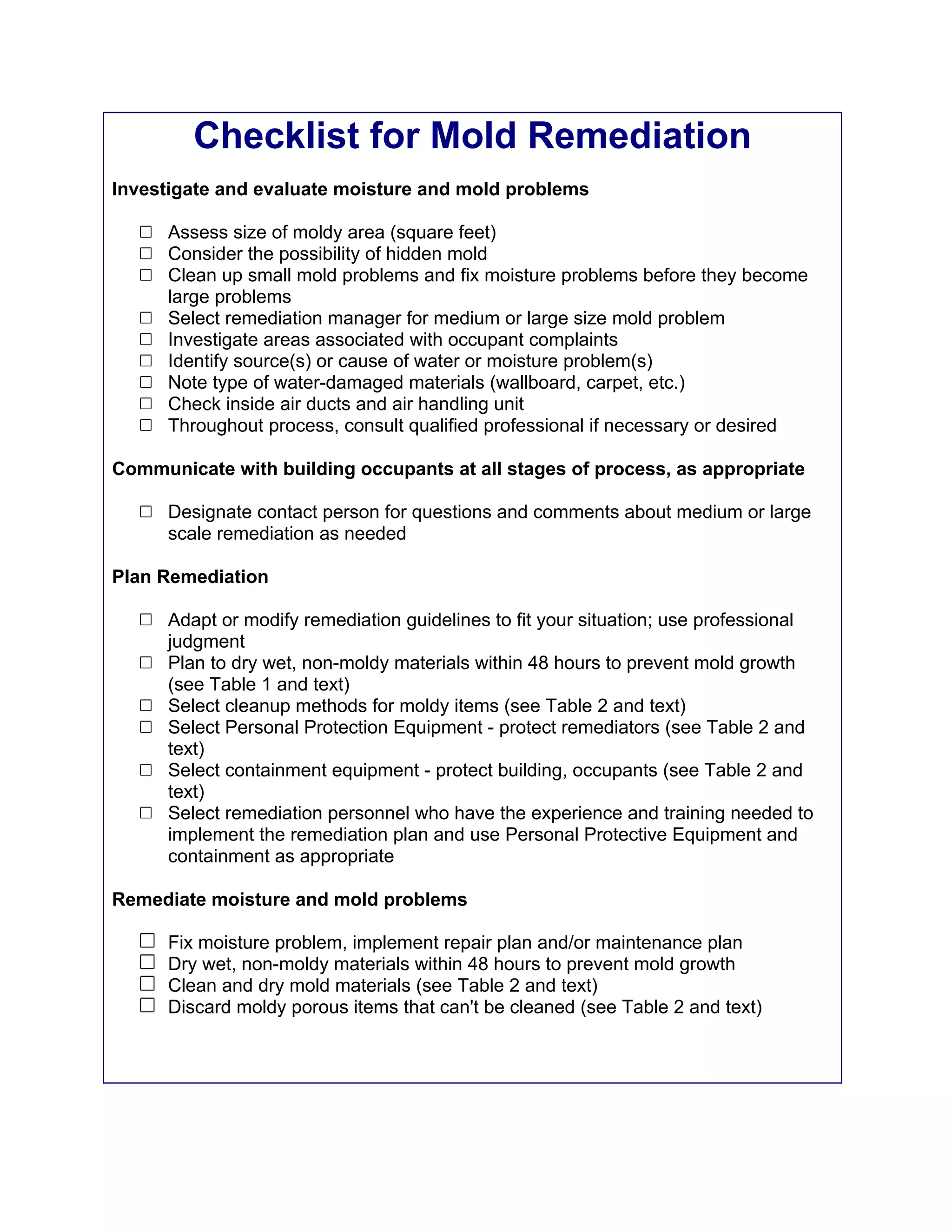
The MAC’s primary responsibility is to create the Mold Remediation Protocol. This document must include:
- The Scope of Work: Which rooms and specific materials (drywall, insulation, cabinetry) must be removed or cleaned.
- Methods of Remediation: Specific instructions on using HEPA vacuums, antimicrobial applications, or "media blasting" (like dry ice or soda blasting) for structural wood.
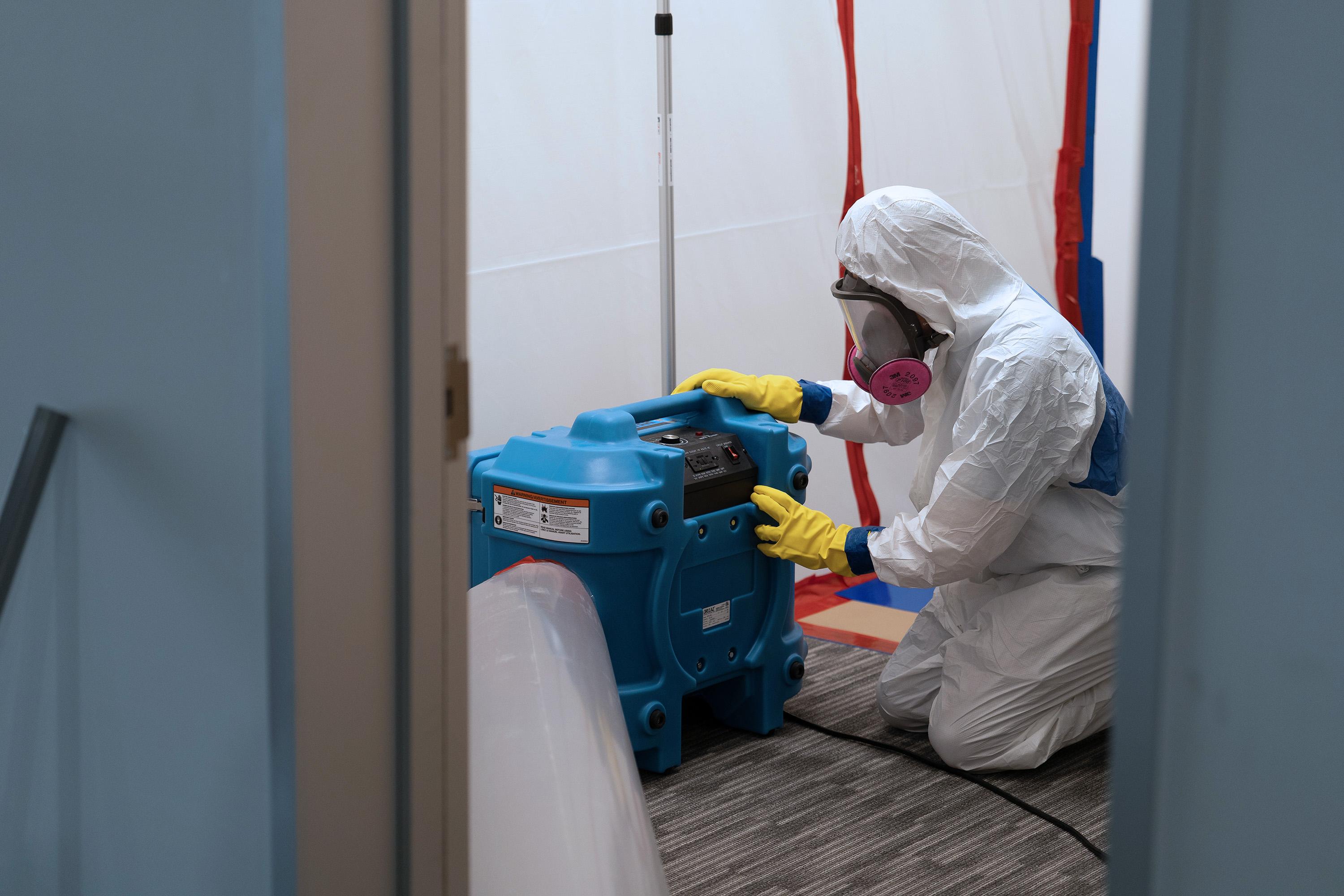
- Containment Requirements: Detailed plans for plastic barriers (polyethylene sheeting) and "decon" chambers to prevent spores from spreading to unaffected areas of the home.
- Personal Protective Equipment (PPE): Requirements for the workers, such as N-95 or P-100 respirators and Tyvek suits.
- Clearance Criteria: The specific metrics (usually air sample counts and visual inspections) that must be met for the project to be declared a success.
The Professional Remediation Process: Step-by-Step
Once the protocol is written, the Mold Remediation Contractor (MRC) takes over. In the Katy climate, where indoor humidity can spike rapidly, the speed and precision of these steps are vital to prevent secondary growth.
Phase 1: Containment and Pressure Control
The MRC seals off the work area using 6-mil fire-retardant plastic. In most Katy residential protocols, the use of Negative Air Machines (NAMs) is required. These machines use HEPA filters to scrub the air and vent it outside, creating a vacuum effect. This ensures that if a seal is breached, air flows into the contaminated zone rather than blowing spores into the rest of the house.
Phase 2: Material Removal and Cleaning
Following the MAC’s protocol, the team removes "porous" materials that cannot be effectively cleaned, such as moldy carpet, pad, and drywall. "Semi-porous" materials like wooden studs are typically cleaned using HEPA vacuuming followed by damp wiping with an EPA-registered antimicrobial solution. In 2026, many Katy protocols prioritize low-VOC (Volatile Organic Compound) chemicals to maintain indoor air quality for sensitive occupants.
Phase 3: HEPA Sanding and Detailing
Structural elements may require "HEPA sanding," where wood is sanded while a vacuum is attached to the tool to capture dust. This removes the "hyphae" (the root system of the mold) that has penetrated the wood surface.
Phase 4: Final Cleaning
Every surface within the containment area—including the plastic barriers themselves—is HEPA vacuumed and wiped down. This "fine cleaning" is often the most time-consuming part of the protocol, as even dead mold spores can trigger allergic reactions and must be removed.
Post-Remediation Verification (The Clearance)
The final stage of the protocol is the Post-Remediation Verification (PRV). This must be performed by the same MAC who wrote the protocol (or another independent MAC), but never by the contractor who did the work.
The MAC performs a visual inspection to ensure no visible mold or dust remains. They then conduct air quality testing, comparing the indoor air inside the containment area to the outdoor air. In Katy’s humid environment, outdoor spore counts can be high, so the MAC looks for specific "indicator" species like Stachybotrys (black mold) or Chaetomium. If these are present indoors but not outdoors, the project fails clearance.
Upon passing, the MAC issues a "Pass" letter. The contractor then provides the homeowner with the Certificate of Mold Remediation (CMDR-1). According to Texas Insurance Code, if you provide this certificate to your insurance company, they cannot disallow coverage or increase your premiums based on that specific mold claim in the future.
Comparison: Professional Protocol vs. DIY Remediation
| Feature | Professional Protocol (Required for >25 sq. ft.) | DIY / Unlicensed Work |
|---|---|---|
| Legal Compliance | Full compliance with TDLR TMARR | No legal standing in Texas |
| Documentation | Protocol, Notification, and CMDR-1 issued | No formal documentation |
| Testing | Independent 3rd-party lab analysis | Consumer-grade DIY kits (often unreliable) |
| Equipment | Industrial HEPA NAMs and Air Scrubbers | Standard shop-vacs (often spread spores) |
| Insurance Impact | Protects future insurability and claims | May lead to future claim denials |
| Real Estate | Required for legal disclosure in Katy/Texas | May complicate or stall home sales |
Financial and Insurance Considerations in Katy
In 2026, most standard Texas homeowners insurance policies have a "mold cap," often ranging from $5,000 to $10,000. However, the cost of a full protocol-based remediation for a medium-sized leak in a Katy home can easily exceed these limits.
Homeowners should review their "Sewer Backup and Sump Overflow" riders and "Mold Remediation" endorsements. When a protocol is active, the insurance adjuster will typically require the MAC’s initial report and the final CMDR-1 before releasing the final payment. For properties in flood-prone zones near the Barker Reservoir or Buffalo Bayou, having a pre-established relationship with a licensed MAC can speed up the claims process significantly after a major weather event.
Common Mistakes to Avoid
- Skipping the MAC: Homeowners often call a remediation company first. If that company starts work without a written protocol from an independent MAC (for areas >25 sq. ft.), they are violating Texas law.
- Using Bleach on Porous Surfaces: Bleach is mostly water. On drywall or wood, the water soaks in and feeds the mold roots while the chlorine evaporates on the surface. Professional protocols in Katy almost never use bleach.
- Neglecting the HVAC: In Katy's humidity, mold often spreads through the ductwork. A proper protocol should specify whether the HVAC system needs to be cleaned and sealed during the process.
Frequently Asked Questions
Do I need a mold protocol if I'm selling my house in Katy?
If mold was remediated in the last five years and it exceeded 25 square feet, you are legally required to provide the buyer with the Certificate of Mold Remediation (CMDR-1). If the remediation is happening during the sale process, a formal protocol is essential to satisfy the buyer's home inspector and the mortgage lender's requirements.
How long does the mold remediation protocol take to complete?
Typically, the entire process takes 7 to 10 days. This includes 2-3 days for the initial assessment and lab results, a 10-day state notification period (which can sometimes be waived for emergencies), 3-5 days for actual cleanup, and 48 hours for final clearance testing and lab processing.
Can I stay in my home during the remediation?
In most cases, yes, provided the containment is properly established and the HVAC system in the work zone is isolated. However, the protocol may recommend relocation if the mold is extensive, if "black mold" is present, or if occupants have compromised immune systems or severe asthma.
Is a "Clearance Letter" the same as a CMDR-1?
No. A Clearance Letter is a report from the Assessment Consultant stating the area passed testing. The CMDR-1 is a state-regulated form signed by both the Consultant and the Contractor, which provides the legal "clean bill of health" recognized by the State of Texas and insurance companies.
What happens if the remediation fails the clearance test?
If the air samples show elevated spore counts, the contractor must perform additional "fine cleaning" or "air scrubbing" at their own expense until the MAC confirms the area meets the standards set in the original protocol.
Professional Recommendation for Katy Residents
If you discover mold in your property, your first action should be to stop the source of moisture (e.g., a roof leak or a plumbing burst). Once the area is dry, contact a Licensed Mold Assessment Consultant in the Katy/Houston area to determine the extent of the damage. Do not attempt to tear out moldy drywall yourself if the area appears large, as this can cross-contaminate your entire home and lead to much higher cleaning costs later. Always ensure your chosen professionals can provide their current TDLR license numbers and proof of mold-specific liability insurance.
Image Gallery