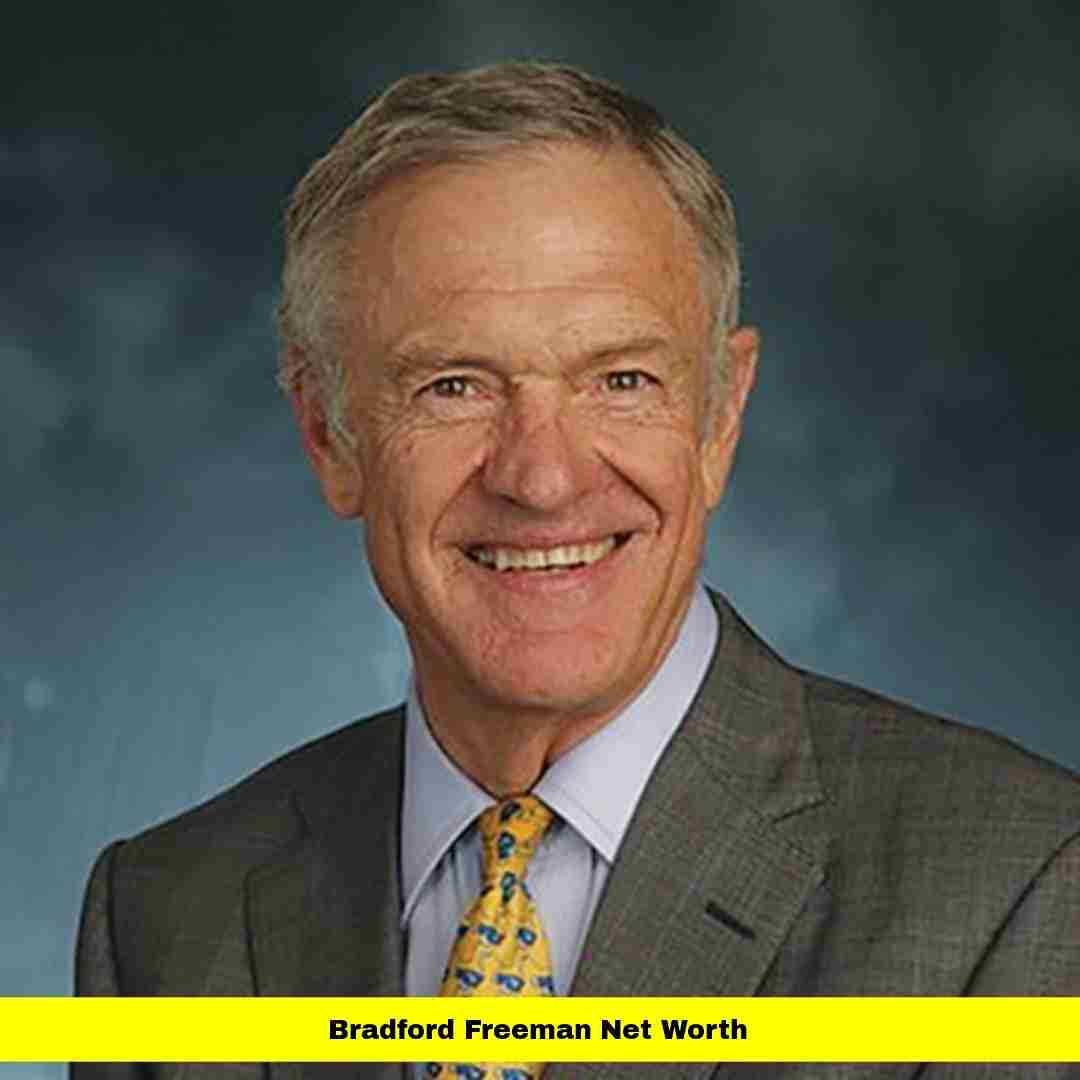
Freeman Exposition Incorporated Net Worth in 2026: Valuation and Financial Analysis
As of 2026, the estimated enterprise valuation of Freeman Exposition Incorporated, commonly known as Freeman, stands between $3.8 billion and $4.5 billion. Because Freeman remains a private, family-owned entity, it does not disclose a...
As of 2026, the estimated enterprise valuation of Freeman Exposition Incorporated, commonly known as Freeman, stands between $3.8 billion and $4.5 billion. Because Freeman remains a private, family-owned entity, it does not disclose a public "net worth" or market capitalization. However, industry analysts base this valuation on projected annual revenues exceeding $3.2 billion and strong EBITDA margins following the global resurgence of the trade show and experiential marketing sectors.
Contents
The Financial Landscape of Freeman in 2026
Freeman has long held its position as the world’s leading provider of integrated event solutions. By 2026, the company has successfully navigated the post-pandemic "event renaissance," which saw a massive shift toward high-tech, high-touch brand experiences. The valuation of the company is a reflection of its dominant market share in North America and its expanding footprint in EMEA (Europe, Middle East, and Africa) and APAC (Asia-Pacific) regions.
Unlike public competitors such as Viad Corp (the parent company of GES), Freeman’s financial health is shielded from the daily volatility of the stock market. This private status has allowed the company to reinvest heavily in proprietary event technology and sustainable logistics infrastructure. Analysts estimate that Freeman’s revenue growth has outpaced the broader GDP growth by nearly 4% annually over the last three years, driven by a surge in B2B conferences and specialized exhibitions in the technology, healthcare, and manufacturing sectors.
Revenue Drivers and Valuation Methodology
To understand Freeman’s $4+ billion valuation in 2026, one must look at the specific segments that contribute to its bottom line. The company operates across several high-margin verticals, each providing a unique layer of value to its overall equity.
Trade Show and Exposition Services
This remains the core of Freeman’s business. As the general service contractor (GSC) for the majority of the world’s largest trade shows—such as CES and various medical association meetings—Freeman earns revenue through booth rentals, logistics, drayage, and electrical services. In 2026, these "bricks and mortar" services have become more profitable due to the integration of automated warehouse management systems and electric transport fleets, which have reduced long-term operational overhead.
Freeman Agency and Creative Services
A significant portion of the company’s valuation growth since 2022 has come from its creative agency arm. Brands no longer want just a physical booth; they want "experiential storytelling." By providing high-level strategy, digital content, and immersive environment design, Freeman captures a higher percentage of a client’s total marketing spend. This shift from "labor-only" to "strategy-and-creative" has significantly expanded Freeman’s profit margins, leading to a higher valuation multiple.
Event Technology and Data Analytics
In 2026, Freeman’s proprietary data platforms are a major asset. These tools provide organizers with real-time insights into attendee behavior, heat mapping, and lead retrieval. Data-driven services are often sold on a subscription or per-event licensing basis, providing a more predictable, recurring revenue stream than traditional labor contracts. In the world of private equity and valuation, software-like revenue carries a much higher multiple than service revenue.
Ownership Structure and the ESOP Model
Freeman’s "net worth" is unique because of its ownership structure. The company is primarily owned by the Freeman family, but it also utilizes an Employee Stock Ownership Plan (ESOP). This model has been a cornerstone of the company’s stability.
- The Freeman Family: The third and fourth generations of the Freeman family, led by Chair Carrie Freeman, maintain controlling interest. This ensures a long-term strategic focus rather than the quarter-by-quarter pressure faced by public firms.
- Employee Stock Ownership (ESOP): By giving employees a literal stake in the company’s success, Freeman has maintained a high retention rate during a period of global talent shortages in the logistics and hospitality sectors. The "value" of this ESOP has grown significantly by 2026, contributing to the overall financial health of the organization by aligning labor costs with productivity and company performance.
This dual-ownership structure means that when we discuss the "net worth" of Freeman Exposition Incorporated, we are discussing the collective wealth of the family and thousands of its employees. In 2026, the value of the shares held within the ESOP is at an all-time high, reflecting the company’s record-breaking profitability over the 2024-2025 fiscal periods.
Market Comparison: Freeman vs. Industry Peers
To contextualize Freeman’s valuation, it is helpful to compare it against other major players in the live events and exhibition space. While Freeman is the largest general service contractor, it competes with both diversified conglomerates and specialized agencies.
| Company | Ownership | Est. 2026 Valuation/Market Cap | Primary Focus |
|---|---|---|---|
| Freeman | Private / ESOP | $3.8B - $4.5B | Full-service event solutions & logistics |
| Viad Corp (GES) | Public (VVI) | $1.2B - $1.6B | Global exhibition services and attractions |
| Informa PLC | Public (INF) | $12.5B - $14B | Event organizing and academic publishing |
| Hyve Group | Private Equity | $800M - $1.1B | Pure-play trade show organizing |
As the table illustrates, Freeman occupies a unique space. While Informa has a higher valuation, it is primarily an "organizer" (the owner of the events), whereas Freeman is the "executor" (the company that builds and manages them). Freeman’s valuation reflects its status as the indispensable infrastructure provider for the entire industry.
Strategic Growth and Future Outlook into 2027
Looking beyond 2026, Freeman’s financial trajectory remains positive, underpinned by two major strategic pivots: sustainability and AI-driven personalization.
The Green Transition
By 2026, corporate sustainability mandates have become non-negotiable. Freeman’s investment in "circular" booth materials—modular systems that can be reused hundreds of times rather than discarded after one show—has positioned them as the preferred partner for Fortune 500 companies with strict ESG (Environmental, Social, and Governance) goals. This leadership in sustainability acts as a "moat," protecting their market share from smaller, less capitalized competitors who cannot afford the R&D for sustainable materials.
AI Integration
The 2026 event landscape is heavily influenced by Artificial Intelligence. Freeman has integrated AI into its floor plan logistics to optimize traffic flow and safety. Additionally, their "Fuzion" technology suite uses AI to match exhibitors with the most relevant attendees. These technological advancements have increased the ROI for Freeman’s clients, allowing the company to command premium pricing for its services.
Potential Risks to Valuation
Despite the robust $4 billion+ valuation, Freeman faces certain headwinds in 2026 that could impact its future net worth:
- Labor Costs: As a service-heavy business, Freeman is sensitive to wage inflation. The cost of unionized labor in major convention hubs like Chicago, Las Vegas, and New York continues to rise.
- Global Economic Volatility: While the B2B sector is resilient, a significant global downturn could lead to reduced marketing budgets and smaller exhibition footprints.
- Technological Disruption: While Freeman currently leads in event tech, the rapid pace of development in Virtual Reality (VR) and Augmented Reality (AR) requires constant capital expenditure to remain at the cutting edge.
Frequently Asked Questions
Is Freeman Exposition Incorporated a public company?
No, Freeman remains a private, family-owned company. It does not have a ticker symbol and its shares are not traded on public exchanges like the NYSE or NASDAQ. A portion of the company is owned by its employees through an ESOP.
How does Freeman generate most of its revenue?
The majority of Freeman’s revenue comes from general service contracting for trade shows. This includes drayage (freight handling), booth design and construction, electrical services, and event technology rentals. Their creative agency and strategy services are the fastest-growing revenue segments in 2026.
Who is the CEO of Freeman in 2026?
As of 2026, the leadership remains stable with Paul Turner serving as CEO, continuing the strategic direction set during the post-2020 recovery. Carrie Freeman continues to serve as the Chair, representing the family’s long-term interests.
What is the difference between Freeman and a company like Informa?
Informa is an event "organizer"—they own the brands and sell the tickets/booth space. Freeman is an event "service provider"—they are hired by organizers like Informa or CTA (Consumer Technology Association) to physically build the show, manage logistics, and provide the technical infrastructure.
How has sustainability affected Freeman's valuation?
Sustainability has increased Freeman's valuation by making them the primary choice for ESG-conscious corporations. Their investment in reusable materials and carbon-neutral logistics has created a competitive advantage that smaller firms find difficult to replicate.
Final Recommendation for Stakeholders
For partners, vendors, and employees, Freeman’s estimated valuation of $3.8B - $4.5B in 2026 signals a period of high stability and market dominance. If you are a vendor looking to partner with Freeman, focus on sustainability and digital integration, as these are the company’s primary investment areas. For employees, the growth in the company's valuation directly enhances the value of the ESOP, making it a critical component of long-term retirement planning. Despite being a private entity, Freeman’s financial health is a bellwether for the entire global meetings and events industry.
Image Gallery