Donald Stratton: The Legacy of a USS Arizona Survivor Remembered
Donald Stratton was one of the final survivors of the USS Arizona explosion during the 1941 Pearl Harbor attack. He is remembered for his harrowing escape across a lifeline, his extraordinary decision to reenlist after suffering life-t...
Donald Stratton was one of the final survivors of the USS Arizona explosion during the 1941 Pearl Harbor attack. He is remembered for his harrowing escape across a lifeline, his extraordinary decision to reenlist after suffering life-threatening burns, and his successful decade-long campaign to honor the sailor who saved his life.
Contents
The history of the United States in World War II is often told through the lens of grand strategy and sweeping naval maneuvers. However, the true weight of that history is best understood through the individual lives of those who stood on the decks of the Pacific Fleet on December 7, 1941. Donald Stratton, who passed away in 2020, remains one of the most significant figures in the act of remembrance surrounding the USS Arizona. His life story encapsulates the transition from the shock of the "day of infamy" to a lifetime of dedicated service and historical preservation.
The Morning of Infamy: Donald Stratton on the USS Arizona
On the morning of December 7, 1941, Donald Stratton was a 19-year-old Seaman First Class serving as a sight-setter for the 5-inch anti-aircraft guns on the USS Arizona (BB-39). Stationed on the forward boat deck, Stratton was part of a crew that was among the first to witness the incoming waves of Japanese Mitsubishi A6M "Zero" fighters and Nakajima B5N "Kate" torpedo bombers.
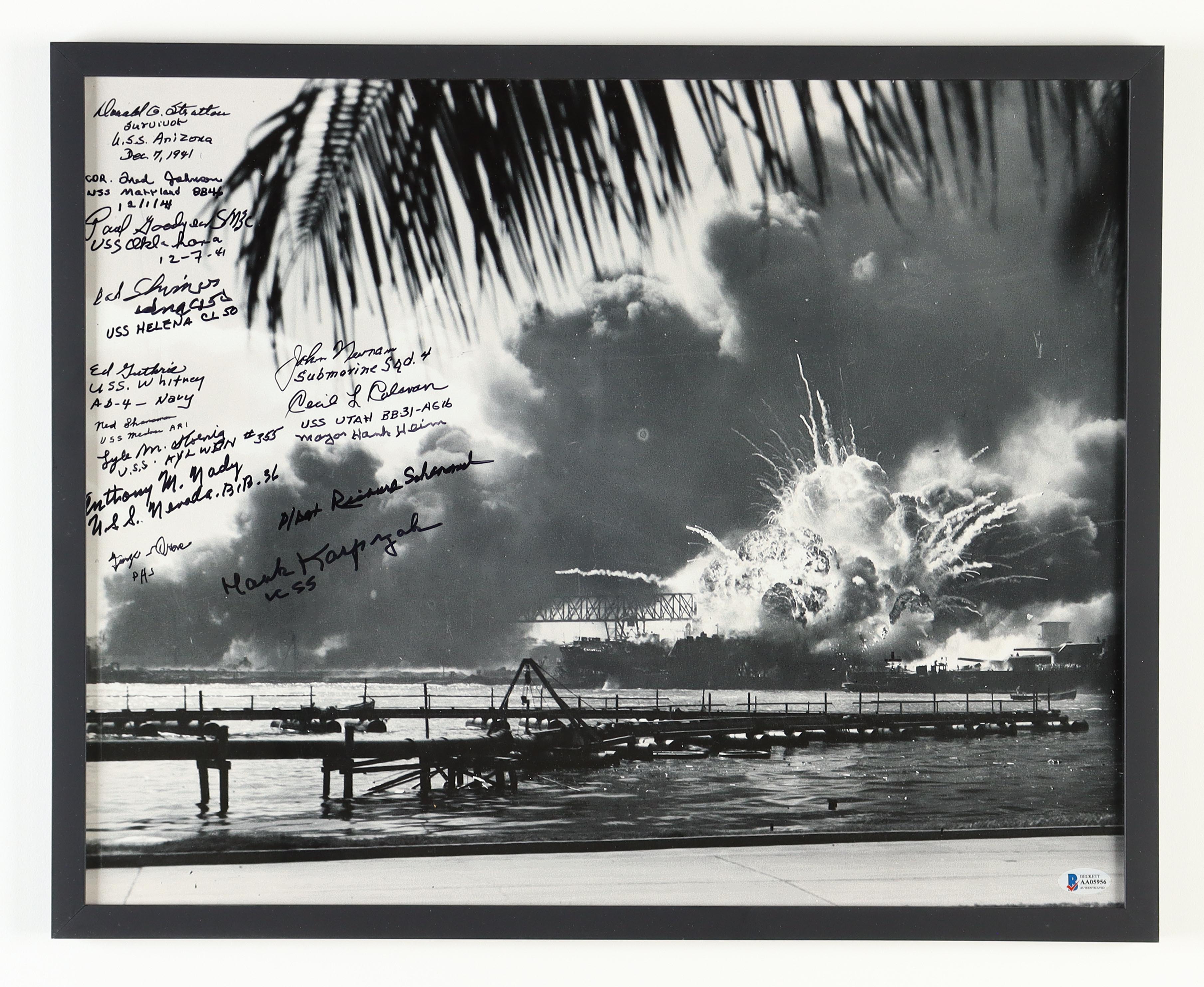
The USS Arizona was the primary target for the Japanese high-altitude bombers. At approximately 8:06 AM, a 1,760-pound armor-piercing bomb, modified from a 16-inch naval shell, struck the ship near Turret II. The bomb penetrated the armored deck and detonated in the forward magazine, which housed over a million pounds of gunpowder. The resulting explosion was catastrophic, lifting the 33,000-ton battleship out of the water and instantly killing 1,177 sailors and Marines—nearly four-fifths of the crew.
Stratton and his shipmates on the sky-high director platform were engulfed in a massive fireball that rose hundreds of feet into the air. The heat was so intense that it reportedly melted glass and steel. Stratton suffered burns over 60 to 70 percent of his body. In the chaos of the sinking ship, the survivors on the platform were trapped, with the deck below them turned into an inferno and the water around the ship slick with burning oil.
The Human Bridge: A Miracle of Survival
The story of Donald Stratton is inextricably linked to the heroism of Joe George, a sailor on the USS Vestal, a repair ship moored alongside the Arizona. As the Arizona burned, George spotted the six men trapped on the director platform. Despite orders from his commanding officer to cut the lines and move the Vestal away from the burning battleship to avoid further explosions, George refused.
Instead, George threw a heavy heaving line across the 70-foot chasm between the two ships. Stratton, despite the excruciating pain of his charred skin peeling from his body, was among the six men who climbed hand-over-hand across that rope to safety. He often remarked in later years that he didn't know how he found the strength to make the crossing, as his hands were burned to the bone in some places.
This specific moment of the Pearl Harbor attack serves as a profound example of individual initiative and the bonds of brotherhood. Without George's defiance of orders and his precision in throwing the line, the story of Donald Stratton would have ended on that December morning.
Resilience and the Rare Act of Reenlistment
Following his rescue, Stratton underwent a grueling recovery process. He spent a year in military hospitals, where medical staff utilized basic and often painful treatments, including immersion in salt water to prevent infection and facilitate the removal of dead tissue. In 1942, he was medically discharged from the Navy, as his injuries were deemed too severe for further service.
However, Stratton’s sense of duty was not extinguished. He returned to his home in Red Cloud, Nebraska, but found it impossible to remain on the sidelines while the war continued. He spent months performing grueling self-rehabilitation to regain his mobility and strength. In a rare and remarkable feat, he successfully reenlisted in the Navy in 1944.
He was eventually assigned to the USS LST-527, a tank landing ship. He returned to the Pacific Theater, participating in the invasions of Leyte and Luzon in the Philippines and the Battle of Okinawa. This second tour of duty cemented his status as a man of exceptional character—someone who had stared into the heart of the Arizona inferno and chose to return to the front lines.
| Key Life Events of Donald Stratton | Date/Detail |
|---|---|
| Birth | July 14, 1922 (Red Cloud, Nebraska) |
| Enlistment (First) | 1940 |
| Pearl Harbor Attack | December 7, 1941 (USS Arizona) |
| Medical Discharge | 1942 |
| Reenlistment (Second) | 1944 |
| Pacific Theater Return | Served on USS LST-527 (Okinawa, Philippines) |
| Death | February 15, 2020 (Colorado Springs, Colorado) |
| Final Resting Place | Red Cloud Cemetery, Nebraska |
Advocacy and the Campaign for Joe George
For many decades, the identity of the man who saved the six sailors on the Arizona platform remained officially unrecognized. Joe George had performed his heroic act against orders, and while his shipmates knew what he had done, the Navy had not officially documented it with a commendation.
In the latter years of his life, Donald Stratton made it his personal mission to ensure Joe George received the recognition he deserved. Alongside fellow survivor Lauren Bruner, Stratton petitioned the Department of the Navy for years. He argued that the "act of mercy" performed by George was one of the most significant individual rescues of the entire attack.
The campaign faced significant bureaucratic hurdles, as the Navy typically requires contemporaneous documentation for medals of valor. However, Stratton’s persistence, supported by historical researchers and members of Congress, finally bore fruit. In 2017, 76 years after the attack, the Navy posthumously awarded Joe George the Bronze Star with a "V" device for valor. Stratton attended the ceremony at the Pearl Harbor National Memorial, stating that he could finally rest easy knowing his savior was honored.
"All the Gallant Men": Preserving History for 2026
In 2016, Stratton released his memoir, All the Gallant Men: An Incredible True Story of Survival and Honor at Pearl Harbor. This book was the first memoir ever published by a survivor of the USS Arizona. In the context of 2026, as we mark the 85th anniversary of the attack, the book remains a vital primary source for historians and the public.
Stratton’s writing is characterized by its lack of sentimentality and its focus on the men he served with—the "gallant men" who remain entombed in the hull of the Arizona. His narrative provides technical details of the ship’s operation, the visceral reality of combat injuries, and the psychological weight of being a survivor. He wrote the book not for fame, but to ensure that the 1,177 men who died that morning were not forgotten as the "Greatest Generation" passed into history.
Remembering Donald Stratton in 2026
As of 2026, the era of living USS Arizona survivors has come to a close. With the passing of Lou Conter in April 2024 (the final survivor of the ship), the responsibility for remembering the events of December 7 falls entirely upon the shoulders of the next generations. Donald Stratton’s legacy is now preserved through the Pearl Harbor National Memorial and his various philanthropic efforts.
His family continues to represent his legacy at annual remembrance ceremonies. Stratton’s life serves as a bridge between the tactical history of naval warfare and the human experience of resilience. He spent his final years in Colorado Springs, Colorado, where he was a fixture at local veteran events, always wearing his USS Arizona hat and sharing his story with anyone who asked.
Frequently Asked Questions
How many survivors of the USS Arizona are still alive in 2026? As of 2026, there are no remaining living survivors of the USS Arizona. The last survivor, Lou Conter, passed away on April 1, 2024, at the age of 102. Donald Stratton passed away in February 2020. This marks the end of a living connection to the battleship's crew, making recorded memoirs and official archives even more critical.
Who was the sailor who saved Donald Stratton's life? Donald Stratton was saved by Joe George, a sailor on the USS Vestal. George threw a line to Stratton and five other men trapped on the burning USS Arizona. Despite being ordered to move his ship away, George stayed until the men had crossed to safety. He was posthumously awarded the Bronze Star in 2017.
Where can I read more about Donald Stratton's experience? The most comprehensive account of his experience is found in his memoir, All the Gallant Men. Additionally, the U.S. Navy History and Heritage Command maintains archives and oral histories that include accounts of the USS Arizona survivors.
What was Donald Stratton's role during his second tour in WWII? After reenlisting in 1944, Stratton served aboard the USS LST-527. He participated in amphibious operations in the Pacific, including the liberation of the Philippines and the invasion of Okinawa. Unlike his role as an anti-aircraft gunner on a battleship, his work on an LST involved the logistical and combat delivery of tanks and troops to beachheads.
Why is Donald Stratton's story considered unique among Pearl Harbor survivors? Stratton is unique because of the severity of his injuries (60-70% body burns) and his subsequent decision to reenlist. Most sailors with such injuries were permanently disabled. His successful campaign for Joe George’s recognition also distinguishes him as a vital advocate for naval history and military justice.
Practical Recommendation for Further Research
For those looking to honor the memory of Donald Stratton and the crew of the USS Arizona, the best course of action is to support the Pacific Historic Parks, which manages the education and interpretive programs for the Pearl Harbor National Memorial. Visitors to the memorial in 2026 can view the Arizona bell and the wall of names, where Stratton’s name was once omitted from the casualty list because he survived—a fact he took great pride in until his final days. Reading his memoir and visiting the memorial provides a dual perspective of the tactical disaster and the personal triumph that defined his life.
Image Gallery