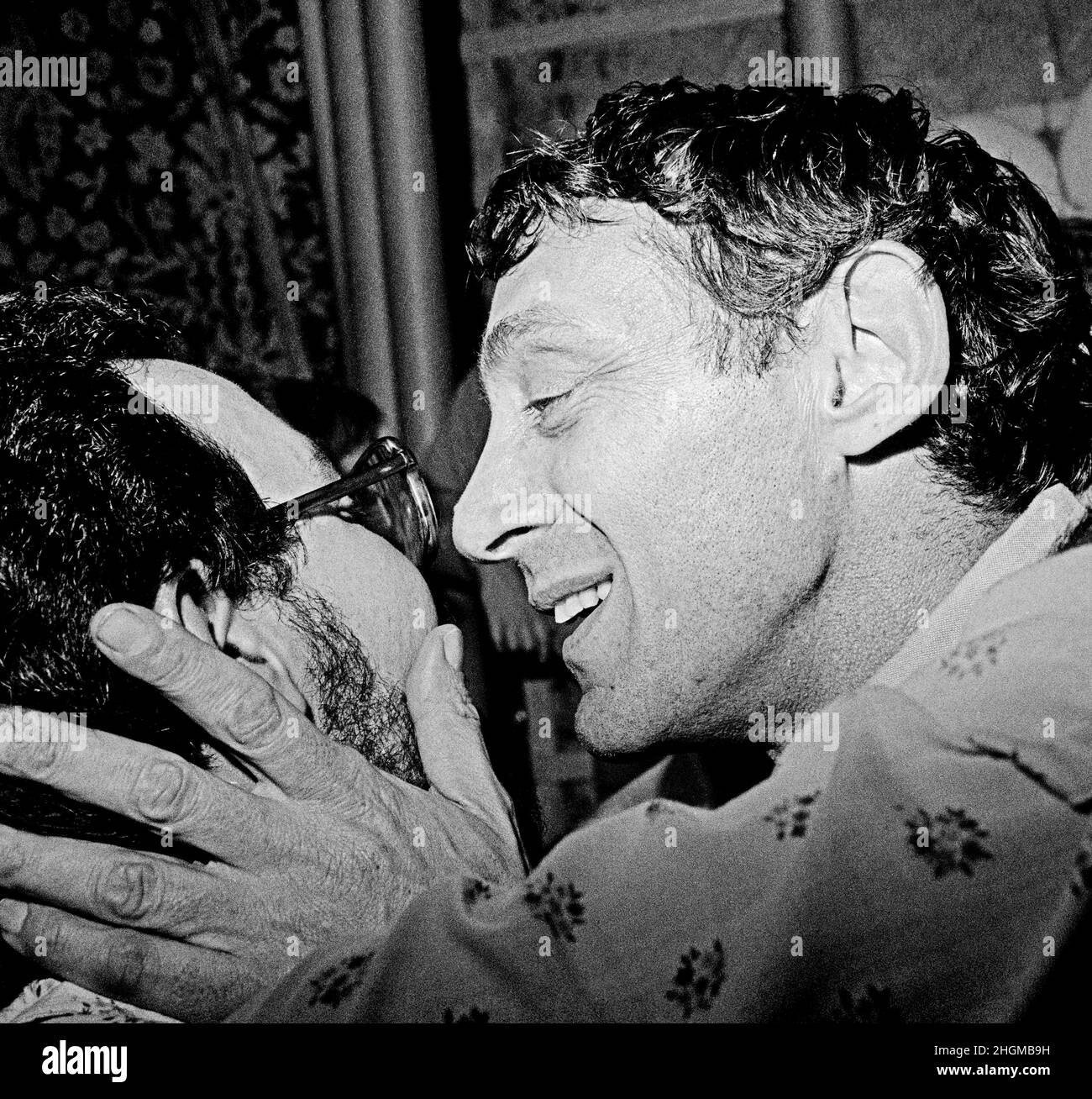
Jack Galen McKinley and Harvey Milk in Context: A Tragic Catalyst for Change
The relationship between Jack Galen McKinley and Harvey Milk was a formative, albeit tragic, partnership that bridged Milk's early life in New York with his emergence as a political icon in San Francisco. McKinley, a talented but troub...
The relationship between Jack Galen McKinley and Harvey Milk was a formative, albeit tragic, partnership that bridged Milk's early life in New York with his emergence as a political icon in San Francisco. McKinley, a talented but troubled young actor, was Milk’s long-term partner whose 1970 suicide profoundly reshaped Milk’s perspective on life and public service.
Contents
The New York Genesis: Wall Street Meets the Avant-Garde
To understand Jack Galen McKinley and Harvey Milk in context, one must first look at New York City in the early 1960s. When they met in 1962, Harvey Milk was a vastly different man than the one history remembers. He was a conservative-leaning investment banker and insurance actuary who lived a largely closeted life. McKinley, significantly younger and deeply involved in the experimental theater scene, represented the bohemian counterculture that was beginning to swell in Manhattan.
McKinley was an aspiring actor and stagehand with a magnetic but fragile personality. Their meeting marked a turning point for Milk, who began to drift away from the rigid expectations of his professional life. Through McKinley, Milk was introduced to the avant-garde world of Off-Off-Broadway. This era was defined by a rejection of mainstream values, a sentiment that McKinley personified.
The dynamic between the two was complex. Milk, nearly 17 years older, often took on a paternalistic role, providing financial stability and emotional grounding for the younger, more volatile McKinley. However, McKinley’s struggles with clinical depression and a sense of professional inadequacy created a tumultuous environment. Despite these challenges, their bond lasted for several years, surviving multiple breakups and reconciliations.
The San Francisco Migration and the "Hair" Era
By the late 1960s, the social climate in New York was shifting, and the allure of the West Coast was growing. In 1969, the couple moved to San Francisco, a city that was then the epicenter of the hippie movement and sexual liberation. This move was not initially driven by political ambition but by McKinley’s involvement in the production of the groundbreaking musical Hair.
Jack Galen McKinley worked as a stage manager and set designer for the San Francisco production of Hair, a show that celebrated the very counterculture that Milk was increasingly embracing. During this period, Milk underwent a radical physical and ideological transformation. He grew his hair long, began wearing tie-dyed shirts, and started to distance himself from his past as a "Goldwater Republican."
Living in an apartment on Caselli Avenue, the couple immersed themselves in the vibrant, chaotic life of the city. For McKinley, San Francisco offered a professional opportunity to prove his worth in the theater world. For Milk, it was an escape from the stifling norms of the East Coast. However, the move also exacerbated McKinley’s mental health issues. The high-pressure environment of a major theatrical production, combined with the instability of the era, weighed heavily on him.
Mental Health and the Tragedy of 1970
The context of Jack Galen McKinley and Harvey Milk’s story is incomplete without addressing the tragedy that ended their partnership. While Milk was beginning to find his footing in the social fabric of San Francisco, McKinley was spiraling into a deep depression. He felt overshadowed by the vibrant personalities around him and struggled with the perceived lack of progress in his own career.
In 1970, the relationship reached a breaking point. Following a series of emotional conflicts, McKinley took his own life. He left behind a suicide note that placed a heavy emotional burden on Milk, expressing a desperate inability to live without him.
The impact of this loss on Harvey Milk cannot be overstated. In the biographical context provided by historians like Randy Shilts in The Mayor of Castro Street, McKinley’s death is viewed as a pivotal moment of trauma. It forced Milk to confront the fragility of life and the devastating consequences of social isolation and personal despair. Those close to Milk noted that he became more somber and focused after the tragedy, eventually channeling his grief into a renewed sense of purpose.
Historical Comparison: Milk and McKinley’s Life Stages
The following table contextualizes the stark differences in their backgrounds and the intersection of their lives during the 1960s.
| Feature | Harvey Milk (1962–1970 Context) | Jack Galen McKinley (1962–1970 Context) |
|---|---|---|
| Professional Background | Investment Banking / Insurance | Theater / Stage Management |
| Age Group | 30s (Mature, seeking stability) | Late teens to early 20s (Searching for identity) |
| Political Stance | Transitioning from Conservative to Liberal | Deeply rooted in Counterculture |
| Role in Relationship | Financial provider and emotional anchor | Artistic muse and emotional catalyst |
| Key Location | Wall Street / Greenwich Village / San Francisco | Off-Off-Broadway / Haight-Ashbury |
| Primary Challenge | Reconciling private identity with public life | Severe clinical depression and career anxiety |
The Transition to Political Activism
Following McKinley’s death, Milk briefly returned to New York before settling permanently in San Francisco in 1972. It was during this second move that he opened "Castro Camera" and began his ascent as a community organizer.
Historians often argue that the empathy Milk displayed for the "usual suspects"—the marginalized, the lonely, and the struggling—was a direct result of his experiences with McKinley. Having witnessed firsthand the toll that mental illness and social alienation took on someone he loved, Milk became a champion for those who felt they had no voice in the system.
McKinley served as the bridge between Milk’s "ordinary" life and his "extraordinary" legacy. Without the radicalization that occurred during his years with McKinley, Milk might have remained a successful but anonymous businessman. Instead, the pain of losing McKinley fueled a drive to ensure that others would not have to live in the shadows or succumb to the same despair.
Technical Context: Theater as a Social Force
It is also important to consider the technical and cultural context of the theater scene they occupied. In the late 1960s, experimental theater was not just entertainment; it was a form of political protest. Shows like Hair and directors like Tom O'Horgan (a close friend of the couple) pushed the boundaries of what was acceptable on stage, incorporating nudity, drug references, and anti-war sentiment.
McKinley’s work in this field exposed Milk to the power of public performance and the importance of visibility. When Milk later ran for office, he used theatricality to capture the public's imagination—using his "Bullhorn" and grand gestures that mirrored the stagecraft he learned through McKinley. The transition from the stage of the theater to the stage of the political rally was a natural progression for a man who had spent years behind the scenes of the most provocative shows of the decade.
Summary of Influence and Legacy
The relationship between Jack Galen McKinley and Harvey Milk is a reminder that personal history often dictates public trajectory. While McKinley is frequently a footnote in the grand narrative of the LGBTQ+ rights movement, his presence in Milk’s life was foundational.
- Emotional Catalysis: McKinley’s struggles and eventual death forced Milk to confront the urgency of social change.
- Cultural Immersion: Through McKinley, Milk was introduced to the radical movements of the 1960s that would later define his political base.
- Humanizing the Icon: Understanding this relationship provides a more human, vulnerable view of Harvey Milk, showing that his strength was born from significant personal loss.
Frequently Asked Questions
Who exactly was Jack Galen McKinley?
Jack Galen McKinley was an American actor and stagehand who was Harvey Milk’s partner for roughly seven years during the 1960s. He is best known in historical circles for his association with Milk and his work on the musical Hair during its initial San Francisco run.
How did Jack Galen McKinley influence Harvey Milk’s politics?
While McKinley was not a political strategist, his involvement in the bohemian and theatrical subcultures of New York and San Francisco helped radicalize Milk. The tragedy of McKinley's suicide also instilled in Milk a deep sense of empathy for marginalized individuals, which became a cornerstone of his political platform.
Where did Harvey Milk and Jack Galen McKinley live in San Francisco?
During their most notable period together in San Francisco (around 1969-1970), they lived in an apartment on Caselli Avenue. This was before Milk moved to the Castro District and opened his famous camera shop.
Is Jack Galen McKinley depicted in the movie "Milk"?
While the 2008 film Milk focuses heavily on Milk's later years and his relationships with Scott Smith and Jack Lira, the influence of his earlier years—including the period with McKinley—is often discussed by biographers as the essential "backstory" that explains Milk’s evolution.
What was the cause of Jack Galen McKinley’s death?
Jack Galen McKinley died by suicide in 1970. His death occurred during a period of intense personal struggle and professional pressure while living in San Francisco.
Practical Recommendation for Further Research
For those looking to gain a deeper understanding of Jack Galen McKinley and Harvey Milk in context, the primary source remains Randy Shilts' definitive biography, The Mayor of Castro Street: The Life and Times of Harvey Milk. This work provides the most detailed account of their relationship and the social atmosphere of 1960s San Francisco. Additionally, exploring the history of the 1969 San Francisco production of Hair can offer technical insights into the professional world McKinley occupied.
Image Gallery