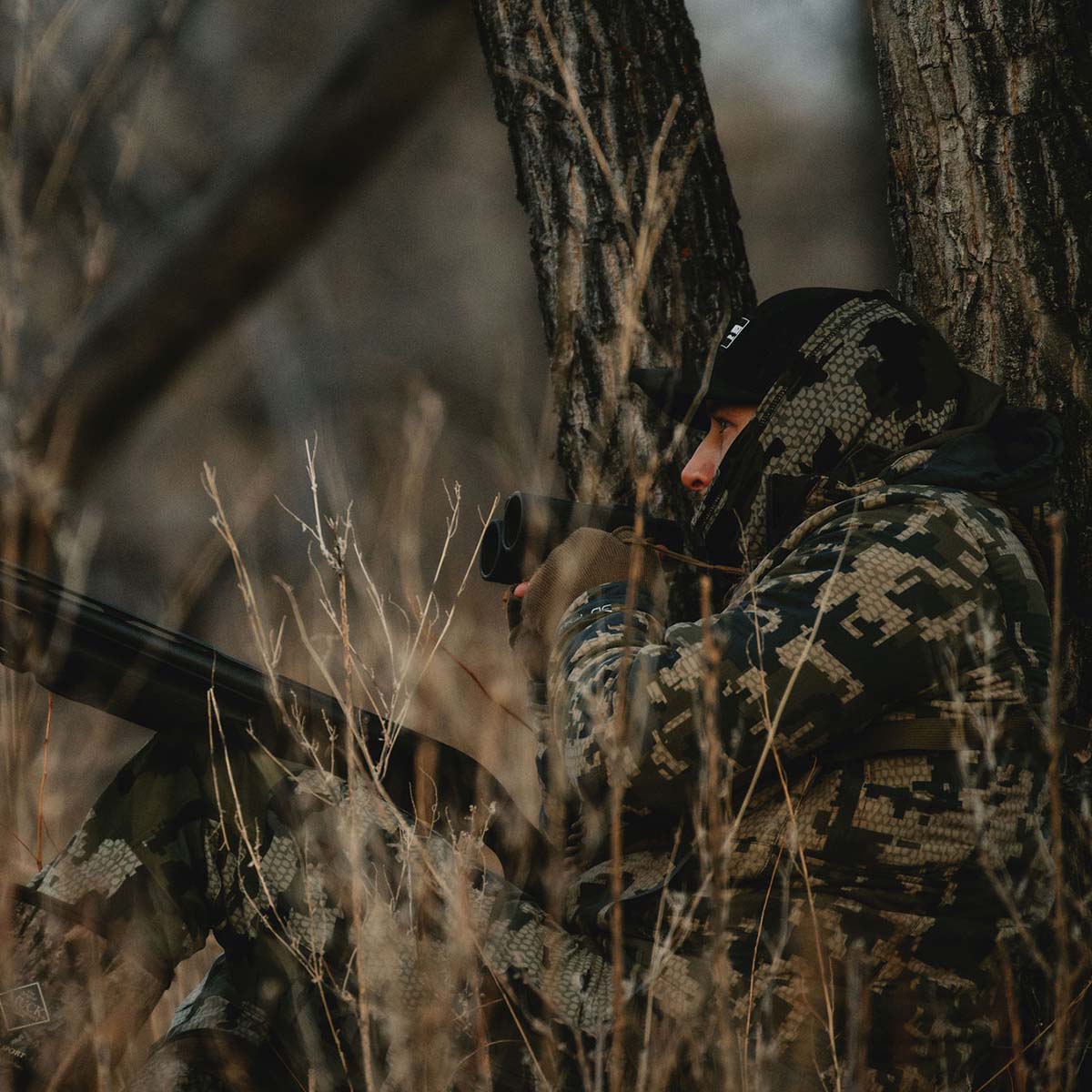
Why the Right Gun Matters for Nevada Turkey Hunting
Selecting the right shotgun for Nevada turkey hunting directly impacts your success because the state's extreme topography, open sagebrush vistas, and strict non-toxic shot regulations demand a firearm optimized for long-range pattern...
Selecting the right shotgun for Nevada turkey hunting directly impacts your success because the state's extreme topography, open sagebrush vistas, and strict non-toxic shot regulations demand a firearm optimized for long-range pattern density, portability, and legal compliance. Matching your gauge, barrel length, choke constriction, and optic setup to Nevada’s specific habitats ensures clean, ethical harvests whether you are pursuing Rio Grande turkeys along desert river bottoms or Merriam’s turkeys on timbered mountain ridges.
Contents
Nevada’s Diverse Terrain and Turkey Hunting Dynamics
Turkey hunting in Nevada is distinct from chasing birds in the eastern hardwoods or southern swamps. Nevada hosts two primary subspecies of wild turkey: the Rio Grande wild turkey (Meleagris gallopavo intermedia) and the Merriam’s wild turkey (Meleagris gallopavo merriami). Each subspecies inhabits environments that place unique physical and technical demands on hunter equipment.
Rio Grande turkeys are primarily found in river valleys, agricultural fringes, and lower-elevation riparian zones such as the Mason Valley, the Humboldt River corridor, and parts of Lincoln County. In these open agricultural edges and low-desert washes, ground vegetation is often sparse. Gobblers possess exceptional visibility and frequently "hang up" at 40 to 50 yards, refusing to cross wide-open terrain toward calls. A shotgun setup in these environments must deliver tight, high-density patterns at extended distances to ethically take birds that will not close the final 15 yards.
Conversely, Merriam’s wild turkeys inhabit high-elevation pine and mountain mahogany habitats across mountain ranges in eastern and southern Nevada, including the Ruby Mountains, Schell Creek Range, and the Spring Mountains. Hunting Merriam's involves trekking across steep, rocky drainages between 6,000 and 9,000 feet of elevation. In this terrain, an overly heavy, long-barreled shotgun becomes a serious physical liability during long spot-and-stalk hikes.
Wind is another constant environmental factor across Nevada’s open landscapes. Gusts exceeding 20 miles per hour can drift light shot payloads off-target or disrupt caller-to-bird acoustics, making precise shot placement on a wild turkey’s vital head and neck region far more challenging.
Shotgun Gauges and Payload Ballistics for the High Desert
The ideal shotgun gauge for Nevada turkey hunting depends heavily on shot material, recoil tolerance, and the distance you expect to cover on foot. Modern developments in shotshell metallurgy have fundamentally altered traditional gauge recommendations.
| Shot Type | Density (g/cc) |
|---|---|
| Lead (#5) | 11.3 g/cc |
| Bismuth (#4) | 9.6 g/cc |
| Steel (#4) | 7.8 g/cc |
| Tungsten (TSS #9) | 18.0 g/cc |
The 12-Gauge Standard
The 12-gauge shotgun remains the most widely used choice for Nevada turkey hunters. Chambered for 3-inch or 3.5-inch shells, a 12-gauge pushes dense payloads of #4, #5, or #6 lead shot—or modern non-toxic alternatives—with high muzzle velocity. The primary advantage of the 12-gauge is raw payload volume, offering maximum pellet counts inside a 10-inch circle at 40 yards. However, traditional 3.5-inch 12-gauge turkey loads produce heavy recoil and are typically housed in heavier firearms weighing between 7.5 and 8.5 pounds.
The 20-Gauge and 28-Gauge TSS Revolution
With the widespread adoption of Tungsten Super Shot (TSS), which has a density of 18.0 g/cc compared to lead’s 11.3 g/cc, smaller gauges have become lethal turkey weapons. A 20-gauge or 28-gauge shotgun firing #9 TSS pellets carries more downrange kinetic energy and higher pellet counts per shell than a standard 12-gauge load of #5 lead shot.
For Nevada hunters scaling steep elevation in pursuit of Merriam's turkeys, a sub-gauge shotgun weighing between 5.5 and 6.5 pounds provides substantial energy savings on foot without sacrificing pattern density or effective range.
Shot Density and Lethality
To ethically harvest a wild turkey, the payload must deliver a minimum of 100 to 120 pellets inside a 10-inch circle at the target distance, with sufficient penetration to crush the vertebrae or brain cavity.
- Lead Shot (11.3 g/cc): Traditional and effective up to 40 yards. Performs best in standard 12-gauge setups, but density limits effective terminal energy beyond 45 yards.
- Tungsten Super Shot (18.0 g/cc): Allows the use of much smaller pellet sizes (#7 to #9). Higher density retains velocity and penetration energy past 50 yards while dramatically increasing total pellet counts in the shell.
- Bismuth (9.6 g/cc) and Steel (7.8 g/cc): Less dense options primarily used on public lands where non-toxic shot is mandated and TSS is unavailable. Because steel is lighter than lead, hunters must upsize shot to #2 or #3 steel to retain lethal penetration, which reduces overall pattern count.
Nevada Regulations and Non-Toxic Shot Requirements
Understanding state-specific hunting regulations is essential when choosing a firearm and ammunition package for Nevada turkey hunts. The Nevada Department of Wildlife (NDOW) sets strict guidelines governing legal weapons, shot sizes, and land-use restrictions.
Nevada Shotgun Legal Limits:
- Gauge: 10-gauge maximum to 20-gauge (or sub-gauge meeting NDOW legal shot criteria)
- Shot Size: Legal range generally #2 through #8 (check annual NDOW regulation digest)
- Capacity: Plugged to 3-shell total capacity (chamber + magazine)
- WMA Shot Rules: Non-toxic shot REQUIRED on state Wildlife Management Areas
Legal Weapon Specifications
NDOW regulations specify legal shotguns for big game and upland/migratory birds. For turkey hunting, shotguns must generally be 10-gauge or smaller. Furthermore, shotguns must be plugged to hold no more than three total shells (one in the chamber and two in the magazine) when hunting managed areas or game species under standard state rules.
Wildlife Management Area (WMA) Mandates
A critical distinction in Nevada is the mandatory use of non-toxic shot when hunting on state-managed Wildlife Management Areas (WMAs), such as:
- Mason Valley WMA (Lyon County)
- Overton WMA (Clark County)
- Key Pittman WMA (Lincoln County)
- Scripps WMA / Washoe Lake (Washoe County)
If you draw a spring or fall tag for a unit containing a WMA, using lead shot on designated WMA acreage is a legal violation. If your turkey gun is choked tightly for soft lead shot, firing hard non-toxic metals like steel or tungsten can damage older barrels or standard chokes. Modern turkey guns designed for interchangeable choke tubes rated for steel and dense tungsten are mandatory for hunting these public lands safely and legally. For current tag quotas, hunt unit maps, and yearly regulation updates, review the NDOW Hunting Regulations.
Choke Selection and Pattern Optimization for Desert Distances
The firearm itself is only half of the ballistic equation; the choke tube determines pattern expansion and pellet distribution. In open desert conditions where turkeys frequently hang up outside ideal decoying distances, choke selection is vital.
| Choke Tube | Exit Diameter (Typical Range) |
|---|---|
| 12-Gauge Standard Extra-Full | 0.665 to 0.675 inches |
| 12-Gauge TSS Specialty Choke | 0.650 to 0.660 inches |
| 20-Gauge Standard Turkey | 0.565 to 0.575 inches |
| 20-Gauge TSS Specialty Choke | 0.555 to 0.565 inches |
Understanding Constriction
Standard factory chokes (Full or Modified) often allow turkey patterns to blow out past 30 yards, leaving lethal voids in the pattern. Specialty turkey chokes restrict the barrel exit diameter to hold the shot column together longer:
- Extra-Full / Standard Turkey Chokes: Design constrictions range from 0.665 to 0.675 inches for 12-gauges. Optimized primarily for traditional lead loads (#4, #5, #6).
- TSS-Specific Chokes: Because tungsten pellets are extremely hard and do not deform under ignition pressure, they pattern tighter than lead through less constriction. Specialized TSS chokes often feature non-ported tight constrictions (e.g., 0.655 inches in 12-gauge or 0.562 inches in 20-gauge) designed to yield smooth pattern distribution without stripping wad components.
The Importance of Point-of-Impact (POI) Patterning
Due to the extreme density of modern turkey chokes, a shotgun at 30 to 40 yards does not throw a wide spread; it throws a tight pattern roughly the size of a dinner plate. If your firearm’s point of aim does not match its point of impact, you can easily miss a turkey entirely or inflict a non-lethal peripheral hit. Prior to hunting in Nevada, you must pattern your shotgun on paper at measured distances of 20, 30, 40, and 50 yards using the exact choke and shell combination you intend to field.
Optics, Ergonomics, and Physical Handling
Nevada’s terrain requires quick adaptability. You may spend hours walking up steep ridges, followed by a sudden setup on an active gobbler behind a patch of big sagebrush.
SHOTGUN ERGONOMIC CONSIDERATIONS FOR NEVADA
- BARREL LENGTH
- 21" - 24": Ideal for brush maneuvering & light weight
- 26" - 28": Smoother swing, but heavier on steep hikes
- OPTICS & SIGHTS
- Reflex/Red Dot: Precise POI, fast target alignment
- Low-Power Scope (1-4x): High clarity across open washes
- Fiber-Optic Beads: Lightweight, no battery failure
- STOCK DESIGN
- Pistol Grip / Camo Synthetic: Better control while seated on rough ground; weather protection
Barrel Length and Weight
A short barrel (21 to 24 inches) offers distinct advantages in Nevada:
- Maneuverability: Short barrels are less prone to snagging on sagebrush, mountain mahogany, or willow thickets along desert streams.
- Weight Reduction: Trimming barrel length reduces front-end weight, making the gun easier to hold steady from a seated position on the ground without a bipod.
Red Dot Sights and Optics Integration
A growing number of turkey hunters use small, micro red dot sights (reflex sights) mounted directly onto drilled-and-tapped receiver rails. In Nevada's open environments:
- Precision Placement: Red dots allow fine alignment on the turkey's neck red wattles, eliminating errors caused by improper cheek weld on the stock.
- Low Light Performance: Early morning setups before sunrise make traditional black bead sights hard to distinguish against dark foliage. An illuminated dot ensures clear target acquisition during early legal shooting hours.
- Wind and Target Motion: When high winds cause a bird to move erratically, a red dot allows open-eyes-up tracking of the target.
Firearms Setup Matrix for Nevada Turkey Hunting
The following matrix compares common shotgun setups tailored for Nevada turkey environments:
| Setup Configuration | Gauge / Action | Barrel Length | Ideal Load & Choke | Primary Nevada Application | Key Advantages | Operational Limitations |
|---|---|---|---|---|---|---|
| High-Country Alpine | 20-Gauge Semi-Auto or Pump | 21" – 24" | #9 TSS (1.5 oz payload) / 0.562 TSS Choke | Lincoln & White Pine County Merriam's (High Elevation) | Ultra-lightweight (under 6 lbs); low recoil; tight 45-yard patterns | Higher ammunition cost for TSS shells |
| Open-Desert Edge | 12-Gauge Semi-Auto | 24" – 26" | #5 Lead or #7 TSS (2.0 oz payload) / Extra-Full Turkey Choke | Mason Valley / Humboldt River Basin Rio Grande | Maximum payload volume; extended effective range (50 yards) | Heavier to carry on long hikes; higher felt recoil |
| WMA Mandated Non-Toxic | 12-Gauge or 20-Gauge Pump | 24" | #4 Bismuth or #9 TSS / Steel-Rated Turkey Choke | State WMAs (Mason Valley, Overton, Key Pittman) | Fully legal on all state WMAs; durable non-corrosive build | Standard steel payloads require larger shot sizes, reducing pellet counts |
| Compact Youth / Lightweight | 28-Gauge Semi-Auto | 22" | #9 TSS (1-3/16 oz payload) / Custom Constriction | All-around lightweight mountain or brush hunt | Virtually zero recoil; extremely maneuverable; highly effective with TSS | Limited non-TSS load performance; specialized choke required |
Common Gun Setup Errors to Avoid in the Nevada Field
Relying on Factory Modified or Full Chokes with Lead AmmunitionOpen desert gobblers rarely present close-range target opportunities. Using standard broad-pattern chokes often leads to poor pattern density beyond 30 yards, increasing the risk of wounding birds.
Failing to Verify Point of Impact with Turkey OpticsInstalling a red dot sight without patterning it on paper at multiple distances can cause off-center patterns. Always zero your optic at 30 yards and verify pattern coverage at 20 and 40 yards.
Carrying Non-Compliant Ammunition into Wildlife Management AreasConservation officers strictly enforce non-toxic shot regulations on Nevada WMAs. Carrying even a single lead shell in your pocket or vest while hunting a designated WMA can result in citations and confiscation.
Underestimating Weather and Terrain Impact on GearFine Nevada alkali dust and wind-blown sand can cause semi-automatic action failures if shotguns are over-lubricated with wet oils. Use dry lubricants on gas systems and bolt slides to prevent grit from causing cycling malfunctions.
Frequently Asked Questions
What gauge is best for turkey hunting in Nevada?
While a 12-gauge shotgun remains the traditional standard due to its payload volume and heavy pattern density, modern 20-gauge shotguns loaded with Tungsten Super Shot (TSS) have become equally lethal. The 20-gauge is often preferred for high-elevation Merriam's hunts due to its lighter weight and reduced recoil.
Can I legally use a .410 or 28-gauge shotgun for Nevada turkey hunting?
Yes, provided your setup complies with overall Nevada Department of Wildlife weapon regulations regarding shot sizes and lethality. Sub-gauge shotguns (.410 and 28-gauge) should be paired with TSS shot to ensure sufficient downrange pattern density and kinetic energy to ethically take wild turkeys.
Do I need non-toxic shot to hunt turkeys in Nevada?
Non-toxic shot is mandatory when hunting on state-designated Wildlife Management Areas (WMAs) such as Mason Valley, Overton, and Key Pittman. On general BLM (Bureau of Land Management) or US Forest Service lands, lead shot is currently permitted unless localized restrictions apply. Check current annual NDOW regulations before hunting.
How far can I ethically shoot a turkey in open Nevada terrain?
Regardless of how open the terrain is, ethical shots should generally be kept within 40 to 50 yards. While TSS payloads can hold patterns to greater distances, environmental factors such as crosswinds, bird movement, and misjudged distances sharply increase the risk of wounding game beyond 50 yards.
What barrel length is ideal for Nevada turkey shotguns?
A barrel length between 21 and 24 inches offers the best balance. Short barrels reduce overall gun weight on steep mountain climbs and allow faster maneuvering through dense desert brush without compromising downrange pattern performance.
Summary and Next Actions
Choosing the right gun for Nevada turkey hunting requires balancing physical weight, target engagement distance, and local legal mandates. If your hunt unit takes you into high-altitude mountain ranges for Merriam's turkeys, prioritize a lightweight 20-gauge or 28-gauge setup paired with TSS loads. If your tag is for low-desert river corridors or agricultural margins where birds hang up in open sightlines, a 12-gauge equipped with an Extra-Full turkey choke or red dot optic delivers maximum downrange energy and precision.
Before heading into the field:
- Confirm whether your hunt unit includes WMA acreage requiring non-toxic ammunition.
- Bench-test your shotgun at 20, 30, and 40 yards with your intended choke and shell payload to confirm point-of-impact.
- Clean and dry-lube your shotgun's action to protect against fine Nevada desert dust.
Image Gallery