CRAC Unit in Data Centers: Definition, Mechanics, and Modern Applications
A Computer Room Air Conditioning (CRAC) unit is a specialized device designed to monitor and maintain the temperature, air distribution, and humidity in a data center or network room. Unlike standard residential air conditioning, a CRA...
A Computer Room Air Conditioning (CRAC) unit is a specialized device designed to monitor and maintain the temperature, air distribution, and humidity in a data center or network room. Unlike standard residential air conditioning, a CRAC unit uses a dedicated refrigeration cycle—specifically a Direct Expansion (DX) system—to provide precise environmental control for sensitive IT equipment 24/7.
Contents
The stability of a data center depends heavily on its thermal management strategy. As server densities increase in 2026, driven by high-performance computing and artificial intelligence workloads, the role of the CRAC unit has evolved from simple "comfort cooling" to a mission-critical component of the facility’s mechanical infrastructure. Understanding how these units function, where they are best applied, and how they differ from alternative cooling methods is essential for any facility manager or infrastructure architect.
Defining the CRAC Unit: More Than Simple Air Conditioning
The term CRAC stands for Computer Room Air Conditioning. At its core, a CRAC unit functions similarly to a traditional air conditioner but is engineered for much higher reliability and different "sensible heat" ratios. In a data center, almost all the energy consumed by IT equipment is converted into heat. This heat is "sensible" (it changes temperature) rather than "latent" (it changes moisture levels, like human perspiration).
CRAC units are designed to handle high sensible heat loads with high airflow rates. They are built to operate 8,760 hours a year, providing the constant environmental stability required by modern blade servers, storage arrays, and networking switches.
The Direct Expansion (DX) Principle
The defining technical characteristic of a CRAC unit is its use of the Direct Expansion (DX) refrigeration cycle. This means the unit contains its own internal compressors and utilizes a refrigerant (such as R-410A or more modern, low-GWP alternatives available in 2026) to cool the air. The process involves:
- Evaporation: Warm return air from the data center passes over an evaporator coil filled with cold liquid refrigerant. The refrigerant absorbs the heat and turns into a gas.
- Compression: The gaseous refrigerant is pumped to a compressor, which increases its pressure and temperature.
- Condensation: The hot gas travels to a condenser (usually located outdoors), where the heat is rejected into the outside atmosphere, and the refrigerant turns back into a liquid.
- Expansion: The liquid refrigerant passes through an expansion valve, dropping its pressure and temperature before returning to the evaporator coil to repeat the cycle.
Primary Components of a CRAC System
To achieve industrial-grade reliability, CRAC units are comprised of several heavy-duty components that differentiate them from light-commercial HVAC systems.
1. Compressors
The compressor is the heart of the CRAC unit. In modern 2026 configurations, Variable Speed Compressors (or Inverter-driven compressors) have become the standard. These allow the unit to scale its cooling capacity up or down based on the actual real-time heat load of the servers, significantly improving energy efficiency compared to older "on/off" fixed-speed models.
2. Evaporator Coils and Blowers
The evaporator coil is where the heat exchange occurs. High-efficiency CRAC units use large surface area coils to maximize cooling. The blowers (fans) move the air through the unit. Modern units often utilize EC (Electronically Commutated) fans, which are more efficient than traditional AC fans and allow for precise control of airflow volume and pressure.
3. Humidifiers and Reheat Coils
Data center cooling is not just about temperature; it is about moisture control. If the air is too dry, static electricity can damage components. If it is too humid, condensation can cause corrosion or short circuits. CRAC units include built-in humidifiers (to add moisture) and reheat coils (to warm the air slightly after dehumidification) to maintain the "sweet spot" defined by ASHRAE guidelines.
4. Filtration Systems
Servers act like high-powered vacuum cleaners, pulling in massive amounts of air. CRAC units utilize high-efficiency particulate air (HEPA) or high-MERV-rated filters to ensure that dust and debris do not accumulate on sensitive circuit boards, which could lead to overheating or "tin whiskers."
CRAC vs. CRAH: Understanding the Difference
In the data center industry, the terms CRAC and CRAH are often used interchangeably, but they represent two distinct technologies. While a CRAC unit uses a compressor and refrigerant (DX), a CRAH (Computer Room Air Handler) uses chilled water.
| Feature | CRAC Unit (DX) | CRAH Unit (Chilled Water) |
|---|---|---|
| Cooling Method | Refrigerant & Internal Compressor | Chilled Water from a Central Chiller |
| Complexity | Higher (contains compressors/valves) | Lower (contains coils and fans) |
| Capital Cost | Lower for small/medium sites | Lower for large-scale deployments |
| Efficiency | Moderate (better for smaller loads) | High (leveraging central plant efficiency) |
| Maintenance | Requires specialized refrigerant tech | Focused on plumbing and fan motors |
| Best Use Case | Edge Data Centers, Server Rooms | Large Enterprise/Colocation Facilities |
A CRAC unit is typically a self-contained system. This makes it ideal for locations where installing a massive central chilled water plant is not feasible or cost-effective. Conversely, for hyperscale data centers, CRAH units connected to a massive chiller plant offer better economies of scale.
Application and Airflow Configurations
How a CRAC unit is positioned and how it moves air is just as important as its internal machinery. There are two primary airflow configurations used in data centers:
Downflow Configuration
In a downflow setup, the CRAC unit is placed on a raised floor. The unit takes in warm air from the top, cools it, and discharges the cold air into the plenum (the space beneath the raised floor). Perforated floor tiles then allow the cold air to escape directly in front of the server racks. This is the traditional method for enterprise data centers and allows for flexible cable management beneath the floor.
Upflow Configuration
Upflow units are used when there is no raised floor. The unit takes in air from the bottom or front, cools it, and discharges it through the top, often into a ducting system or directly into the room. This is common in smaller server rooms or "closet" environments where the ceiling height or structural floor capacity does not support a raised floor.
Implementation in Hot/Cold Aisle Containment
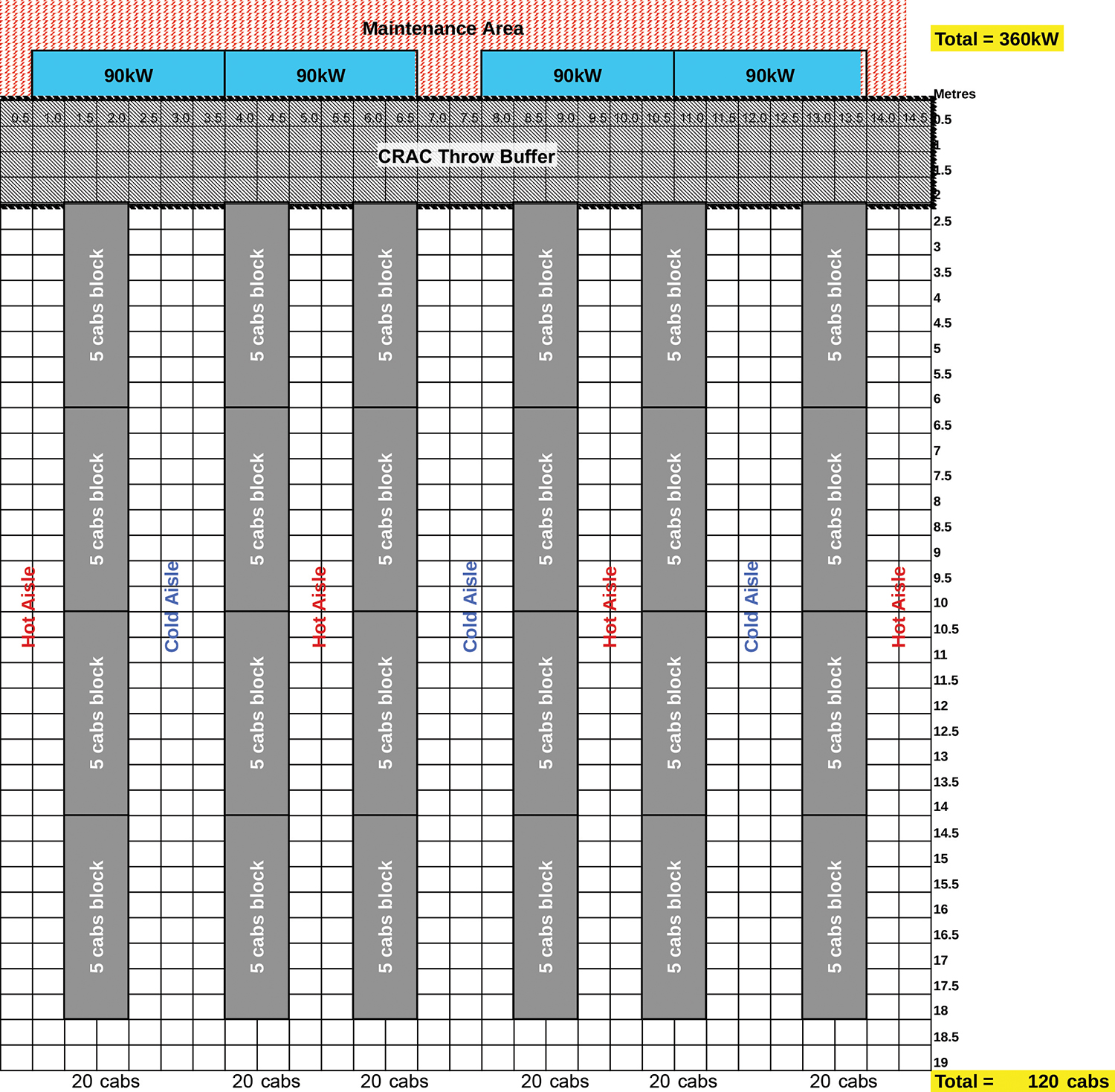
To maximize the application of a CRAC unit, modern facilities use containment. By arranging racks so that the "fronts" face each other (Cold Aisle) and the "backs" face each other (Hot Aisle), the CRAC unit can operate much more efficiently. In a Cold Aisle Containment (CAC) system, the CRAC unit pumps cold air into a sealed aisle, ensuring that only cold air enters the server intakes and preventing the "mixing" of air streams, which is the leading cause of cooling inefficiency.
Strategic Applications for CRAC Units in 2026
As of 2026, the application of CRAC units has specialized into three primary areas:
1. Edge Computing and Modular Data Centers
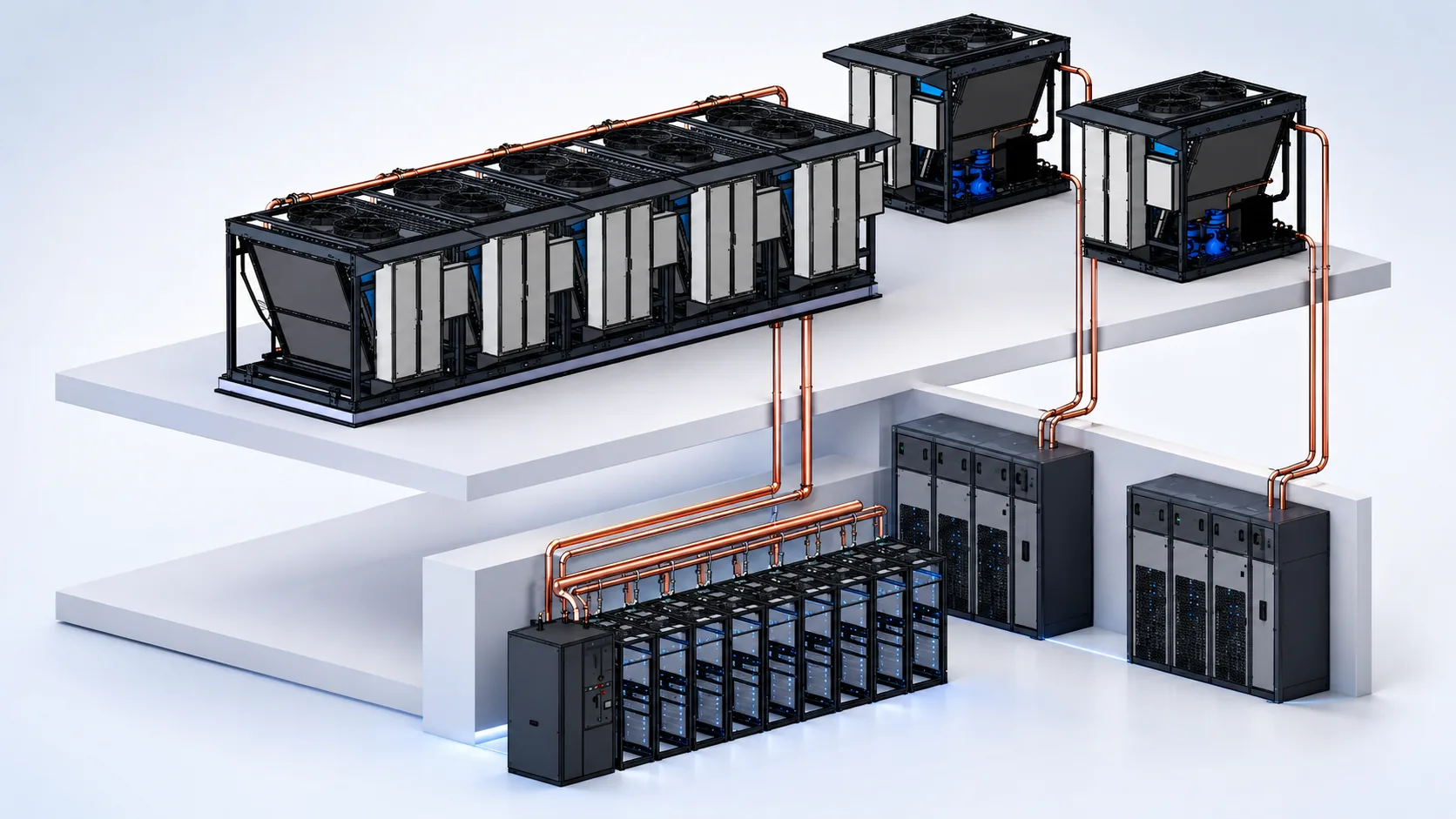
With the expansion of 5G and IoT, many organizations are deploying "Edge" data centers—small, localized facilities near the end-user. CRAC units are the preferred choice here because they are self-contained. You do not need to run miles of chilled water piping to an edge site; you simply need a power source and a place for the outdoor condenser.
2. Legacy Enterprise Refurbishment
Many existing enterprise data centers built in the early 2010s were designed for CRAC units. When upgrading these facilities to handle 2026-era hardware, replacing older fixed-speed CRACs with modern Inverter-driven DX units allows for a 30-50% increase in cooling capacity without requiring a total overhaul of the building’s mechanical architecture.
3. High-Density "Spot" Cooling
In large facilities that primarily use chilled water (CRAH), CRAC units are often used as supplemental cooling for specific "hot spots" or high-density AI clusters that require dedicated, localized temperature control that the main plant cannot easily provide.
Maintenance and Operational Excellence
A CRAC unit is a mechanical system with many moving parts, making regular maintenance mandatory. Failure to maintain these units leads to "short cycling," where the compressor turns on and off too frequently, leading to premature motor failure and unstable room temperatures.
- Filter Changes: Clogged filters reduce airflow, forcing the fans to work harder and potentially causing the evaporator coil to freeze.
- Refrigerant Level Monitoring: Low refrigerant levels indicate a leak and lead to a significant drop in cooling capacity.
- Condensate Drain Cleaning: CRAC units remove moisture from the air. If the drain lines clog, water can back up into the unit and potentially leak onto the data center floor.
- Belt and Motor Inspection: For units not using direct-drive EC fans, checking the tension and wear of blower belts is a critical monthly task.
Common Mistakes in CRAC Deployment
Even the most advanced CRAC unit will fail if deployed incorrectly. A common mistake is sensor placement. If the CRAC unit's temperature sensor is located too close to the unit itself, it may "think" the room is cool because it is sensing its own discharge air. Sensors should be placed at the server intake (the cold aisle) to ensure the unit responds to the actual heat load of the IT equipment.
Another mistake is failing to manage air bypass. If there are gaps in the server racks (empty U-spaces) without blanking panels, the cold air from the CRAC unit will bypass the servers and return to the unit without doing any "work." This wastes energy and can lead to hot spots even if the CRAC unit is functioning perfectly.
Frequently Asked Questions
What is the typical lifespan of a CRAC unit?
In a well-maintained data center environment, a high-quality CRAC unit typically lasts 10 to 15 years. In 2026, many facilities are opting to replace units at the 10-year mark to take advantage of newer, more efficient compressor technologies and smarter AI-integrated controls that offer a rapid return on investment through energy savings.
Can a CRAC unit be used for liquid cooling?
A standard CRAC unit is designed for air cooling. However, in 2026, we see hybrid applications where a CRAC unit manages the room's ambient temperature while a separate Liquid Cooling Distribution Unit (CDU) handles the high-heat components like GPUs. The CRAC unit ensures that the "incidental" heat not captured by liquid plates is still removed from the room.
Why does a CRAC unit need a humidifier?
Computers generate heat but not moisture. As air is cooled, it naturally loses moisture. If the relative humidity drops below roughly 20%, the risk of Electrostatic Discharge (ESD) increases significantly. The CRAC unit’s humidifier ensures the air stays within the ASHRAE-recommended range (typically 40-55% relative humidity) to protect internal circuitry.
How do I calculate the number of CRAC units needed?
The calculation starts with the total "Total Kilowatts" of the IT load. 1 kW of IT load equals approximately 3,412 BTU/hr of heat. However, you must also account for "N+1" redundancy. If your heat load requires four CRAC units to maintain temperature, you should install five, so that if one unit fails or requires maintenance, the data center remains at the target temperature.
Is a CRAC unit the same as a heat pump?
While they both use the refrigeration cycle, a CRAC unit is optimized for cooling-only (or cooling with reheat). It is designed to move heat from the inside to the outside continuously. Unlike a residential heat pump, it is rarely used to "heat" a room in the traditional sense, as servers provide more than enough heat on their own.
Practical Recommendation for Infrastructure Managers
When selecting or upgrading CRAC units in 2026, prioritize modularity and intelligence. Opt for units equipped with integrated microprocessors that can communicate with your Data Center Infrastructure Management (DCIM) software. This allows the CRAC unit to adjust its output based on actual server power consumption rather than just air temperature. Furthermore, always ensure your CRAC strategy includes a robust "Aisle Containment" plan; without it, you are essentially paying to cool the ceiling and the walls rather than the hardware that generates your revenue.
Image Gallery