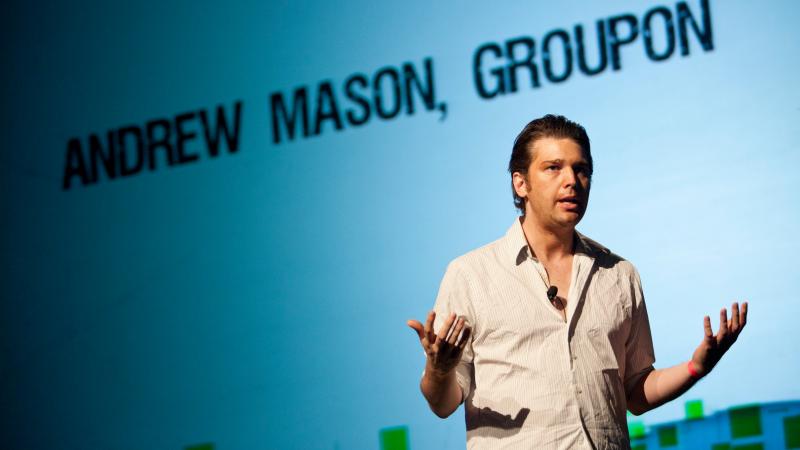
The Legacy of Andrew Mason: Understanding the Founders of Groupon
The primary founder of Groupon is Andrew Mason, who served as the company’s first CEO and the creative force behind its inception. He co-founded the platform in 2008 alongside Chicago-based entrepreneurs Eric Lefkofsky and Brad Keywell...
The primary founder of Groupon is Andrew Mason, who served as the company’s first CEO and the creative force behind its inception. He co-founded the platform in 2008 alongside Chicago-based entrepreneurs Eric Lefkofsky and Brad Keywell, who provided the initial seed capital and strategic business framework that allowed the "daily deal" concept to scale globally.
Contents
In the history of Silicon Valley and the broader technology sector, few narratives are as polarizing or as educational as the rise of Groupon. Born out of a collective action website called The Point, Groupon became a cultural phenomenon that redefined local commerce. By 2026, looking back at the trajectory of its founders offers a masterclass in hyper-growth, the challenges of public market scrutiny, and the art of the entrepreneurial second act. While Andrew Mason remains the name most synonymous with Groupon's quirky identity, the collective efforts of the founding trio created a blueprint for the "social commerce" era.
The Genesis: From "The Point" to Groupon
The story of the Groupon founder begins not with coupons, but with a philosophy of collective action. Andrew Mason, a graduate of Northwestern University with a degree in music, was working as a web developer when he conceived of The Point. Launched in 2007, The Point was a platform designed to help people organize around a specific goal—whether social activism or group purchasing—that would only be triggered once a "tipping point" of participants was reached.
While The Point struggled to find a broad audience for its social causes, Mason noticed that one specific application was gaining traction: users coming together to buy a product in bulk to receive a discount. Recognizing the commercial potential, Mason, with the backing of Eric Lefkofsky, pivoted the technology toward local businesses. In November 2008, Groupon (a portmanteau of "group" and "coupon") was launched in Chicago.
The first deal offered was a two-for-one pizza at Mothey’s Pub, located in the same building as the Groupon office. This humble start quickly exploded into a global enterprise, as the "daily deal" model proved to be an irresistible customer acquisition tool for small businesses and a fun, discovery-based shopping experience for consumers.
The Founding Trio: Roles and Dynamics
While Andrew Mason was the public face and CEO, the success of Groupon was the result of a specific synergy between three distinct personalities. Understanding the "Groupon founder" requires looking at the roles of Lefkofsky and Keywell.
- Andrew Mason (The Visionary & Culture Architect): Mason was responsible for the site’s irreverent voice. He insisted on writing humorous, often surreal product descriptions that made opening a Groupon email a daily habit for millions. His rejection of traditional corporate norms gave Groupon its unique DNA.
- Eric Lefkofsky (The Financial Engine): An experienced entrepreneur, Lefkofsky provided the initial $1 million in seed funding. He was instrumental in the aggressive scaling of the sales force. While Mason focused on the product and voice, Lefkofsky focused on the numbers and the rapid expansion that saw Groupon move into dozens of international markets within months.
- Brad Keywell (The Strategic Architect): Keywell worked alongside Lefkofsky at their venture firm, Lightbank. He helped navigate the complex logistics of building a global sales organization and played a key role in the company's early branding and strategic partnerships.
The Hyper-Growth Era and the $6 Billion Rejection
By 2010, Groupon was the fastest-growing company in history, according to Forbes. The business model was simple: Groupon would take a 50% cut of the revenue from every voucher sold, and the merchant would provide a 50% discount to the consumer. This high-margin, cash-flow-positive model attracted intense interest from tech giants.
One of the most defining moments for the Groupon founders was the rejection of a $6 billion buyout offer from Google in late 2010. At the time, Mason and his board believed the company’s potential as a local commerce utility was far greater than the offer. This decision led to the company’s IPO in November 2011, which was one of the largest for a tech company since Google’s own debut. However, the transition to a public company brought intense scrutiny to the founders' accounting methods and the long-term viability of the daily deal model.
Challenges and the Transition of Leadership
The post-IPO period was tumultuous for Andrew Mason. The company faced criticism over its use of a non-standard accounting metric called "Adjusted Consolidated Segment Operating Income" (ACSOI), which excluded its massive marketing expenses. Additionally, the "merchant fatigue" phenomenon began to set in; many small businesses found that while Groupon brought in customers, they were often "one-and-done" discount seekers who did not become loyal patrons.
As the stock price began to slide from its IPO high, the pressure on Mason mounted. In February 2013, following a disappointing earnings report, Mason was terminated as CEO. His departure was marked by a refreshingly honest resignation letter that began, "After four and a half intense and wonderful years as CEO of Groupon, I’ve decided that I’d like to spend more time with my family. Just kidding - I was fired today."
Following Mason's exit, Eric Lefkofsky stepped in as CEO for a period to stabilize the company and shift its focus from purely "daily deals" to a more permanent marketplace for local services and goods.
Beyond Groupon: The Founders' Ventures in 2026
As of 2026, the founders of Groupon have moved far beyond their original "daily deal" roots, applying the lessons of hyper-growth to new industries.
Andrew Mason and the Evolution of Descript
After leaving Chicago for San Francisco, Mason founded Descript, an AI-powered media editing platform. By 2026, Descript has become an industry standard for podcasters and video creators. Mason’s transition from local commerce to high-end SaaS (Software as a Service) demonstrates his enduring interest in building tools that simplify complex tasks. Descript's use of "generative audio" and "overdub" technology mirrors Mason’s early fascination with the intersection of creativity and technology.
Eric Lefkofsky and the Impact of Tempus
Lefkofsky transitioned his focus toward biotechnology and data science, founding Tempus. By 2026, Tempus has established itself as a leader in precision medicine, using the same aggressive data-collection strategies Lefkofsky used at Groupon to analyze clinical and molecular data. The goal of Tempus is to provide physicians with data-driven insights to personalize cancer treatment, representing a significant pivot from consumer technology to life-saving medical infrastructure.
Comparison of Original Founder Ventures
| Founder | Primary Post-Groupon Venture | Industry Focus | Key Innovation/Impact |
|---|---|---|---|
| Andrew Mason | Descript | AI Media Editing | AI-driven "text-to-audio" editing and regenerative media. |
| Eric Lefkofsky | Tempus | Precision Medicine | Large-scale genomic data libraries for personalized oncology. |
| Brad Keywell | Uptake | Industrial AI | Predictive analytics for heavy industry and manufacturing. |
Strategic Lessons from the Groupon Founding Story
The trajectory of the Groupon founders provides several vital insights for modern entrepreneurs and investors:
- The "Pivot" is Powerful: Groupon only existed because the founders were willing to abandon the failing "The Point" to chase a small feature that was actually working.
- Culture is a Double-Edged Sword: Mason’s quirky culture made Groupon a household name, but it also made the company appear "unserious" to Wall Street during the IPO process.
- Scale vs. Sustainability: The rapid international expansion led by Lefkofsky helped Groupon capture market share, but it also led to massive overhead that became difficult to manage when consumer interest in daily deals began to wane.
- Founding Strength vs. Executive Fit: Mason was an exceptional "zero-to-one" founder, but the specialized demands of a multi-billion dollar public company required a different type of operational expertise.
Frequently Asked Questions
Who is currently the CEO of Groupon in 2026?
By 2026, Groupon has undergone several leadership changes and ownership restructuring. While Andrew Mason and Eric Lefkofsky are no longer involved in day-to-day operations, the company has largely transitioned into a subsidiary of larger private equity or diversified holding companies focused on local commerce data.
Why was Andrew Mason fired from Groupon?
Andrew Mason was removed by the board in 2013 primarily due to the company's underperformance in the public market. Issues included missed earnings targets, a rapidly declining stock price, and concerns over the long-term sustainability of the core business model in the face of rising competition from LivingSocial and Google.
Is Groupon still a "daily deal" site?
While Groupon still offers daily deals, by 2026 it has evolved into a comprehensive "Local Services Marketplace." The focus has shifted from the "tipping point" voucher model to a permanent presence for local merchants, similar to a specialized version of Yelp or Google Maps with integrated booking and payment systems.
What happened to the $6 billion offer from Google?
The Groupon founders and board officially rejected the $6 billion offer in December 2010. While the decision was criticized after the stock price fell post-IPO, the founders argued that the rejection allowed them to maintain their independence and pursue a much larger vision for the future of commerce, even if that vision faced significant execution hurdles.
Final Practical Consideration
For those studying the "Groupon founder" model today, the most important takeaway is the importance of platform adaptability. Andrew Mason’s success with Descript in 2026 highlights that the ability to identify a friction point in a user's life (whether it's the cost of a pizza or the difficulty of editing a video) remains the core skill of a successful founder. If you are launching a startup, prioritize the "tipping point" of your own product—that one feature that users cannot live without—and be prepared to pivot your entire organization to support it.
Image Gallery