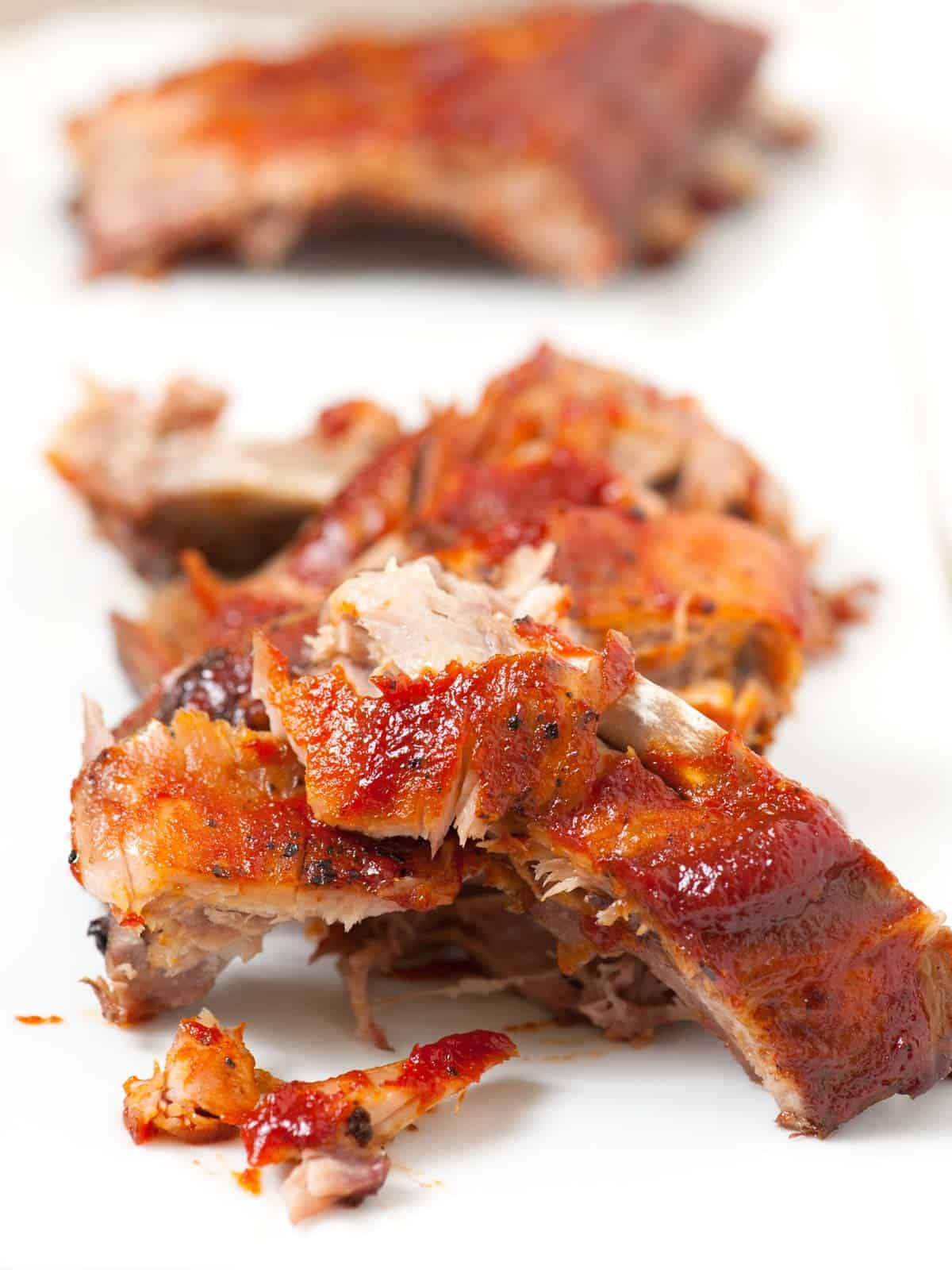
How to Choose the Right Pork Rib Cook Temp
Choosing the right pork rib cooking temperature depends on your cut, equipment, and available time. For traditional low-and-slow barbecue, maintain a cooking environment of 225°F to 250°F (107°C to 121°C). For faster results with excel...
Choosing the right pork rib cooking temperature depends on your cut, equipment, and available time. For traditional low-and-slow barbecue, maintain a cooking environment of 225°F to 250°F (107°C to 121°C). For faster results with excellent tenderness, choose a hot-and-fast range of 275°F to 300°F (135°C to 149°C). Regardless of your pit temperature, target an internal meat temperature of 195°F to 205°F (91°C to 96°C) to ensure tough connective tissue fully renders.
Contents
Ambient Cook Temp vs. Internal Meat Target Temp
A common point of confusion when cooking pork ribs is the difference between the ambient cooking temperature (the heat of your pit, smoker, or oven) and the internal target temperature (the temperature of the meat itself).
Pork ribs contain significant amounts of intramuscular fat and tough connective tissue, primarily collagen. While lean cuts like pork tenderloin are safe and tender at an internal temperature of 145°F (63°C), as noted in the USDA FSIS Safe Minimum Internal Temperature Chart, cooking ribs only to this minimum safe baseline leaves them tough, chewy, and difficult to pull off the bone.
- Ambient Cooking Temp: 225°F - 300°F
- PORK RIB MATRIX
| 145°F Internal Target | 195°F - 205°F |
|---|---|
| Food Safe (USDA Minimum) | Ideal Finish |
| Tough & Unrendered Connective Tissue | Melt-in-your-mouth Texture |
To transform rigid collagen into soft, juicy gelatin, ribs must pass through a rendering phase between 160°F and 180°F. The process culminates when the internal meat temperature reaches between 195°F and 205°F.
Choosing your ambient temperature dictates how quickly and evenly this internal conversion occurs without drying out the exterior meat or scorching the spice rub.
Matching Cook Temperature to the Cut of Ribs
Not all pork ribs are structured the same. The thickness, fat content, and bone density of the cut heavily influence the ideal ambient cooking temperature.
PORK RIB CUT CHARACTERISTICS
| Baby Back Ribs | St. Louis Cut | Country-Style Ribs |
|---|---|---|
| High Lean-to-Fat | Higher Fat | Cut from Shoulder |
| Curved Bones | Flat, Uniform | Thick & Dense Meat |
| 225°F - 250°F Ideal | 250°F - 275°F Ideal | 275°F - 300°F Ideal |
1. Baby Back Ribs (Loin Ribs)
Cut from where the rib meets the spine after the pork loin is removed, baby back ribs are leaner, shorter, and more curved than spare ribs.
- Ideal Ambient Cook Temp: 225°F to 250°F (107°C to 121°C)
- Why: Because baby backs contain less intramuscular fat, high heat can easily dry out the meat. A lower cooking temperature protects the leaner meat from moisture loss while giving collagen enough time to break down.
2. St. Louis Cut & Full Spare Ribs
Taken from the belly side of the rib cage, spare ribs are flatter, meatier, and richer in intramuscular fat and cartilage. St. Louis style ribs are simply spare ribs trimmed into a neat rectangular rack by removing the brisket bone and cartilage tips.
- Ideal Ambient Cook Temp: 250°F to 275°F (121°C to 135°C)
- Why: The abundance of fat and connective tissue in spare ribs acts as a natural buffer against higher heat. Cooking at 250°F to 275°F helps render the heavier fat cap efficiently without prolonging cook times unnecessarily.
3. Country-Style Pork Ribs
Despite their name, country-style ribs are not true ribs; they are cut from the blade end of the pork loin near the shoulder. They are far thicker and meatier than back or spare ribs.
- Ideal Ambient Cook Temp: 275°F to 300°F (135°C to 149°C)
- Why: Due to their thickness, cooking country-style ribs at ultra-low temperatures (225°F) can extend cook times to an impractical length. A slightly higher temperature cooks the thick meat evenly. Braising or wrapping them mid-cook helps hold in moisture.
Low & Slow (225°F–250°F) vs. Hot & Fast (275°F–300°F)
Choosing between low-and-slow and hot-and-fast cooking styles comes down to balancing time, smoke profile, bark formation, and heat control.
| LOW & SLOW (225°F - 250°F) | HOT & FAST (275°F - 300°F) |
|---|---|
| • 5 to 6 Hour Duration | • 3 to 4 Hour Duration |
| • Deeper Smoke Ring | • Crispier, Firmer Bark |
| • Wider Margin for Error | • Requires Active Watch |
| • Maximum Softness | • Retains Bite / Structure |
Low & Slow: 225°F to 250°F (107°C to 121°C)
This classic smoker temperature range is ideal for traditional competition-style barbecue.
- Smoke Profile: The extended cooking duration (5 to 6 hours for spare ribs) exposes the meat to smoke for longer, yielding a deeper smoke ring and pronounced wood flavor.
- Bark Development: Bark builds gradually into a soft, dark mahogany crust.
- Margin for Error: The lower heat profile moves internal temperatures slowly, giving you a wider window of time to catch the ribs at peak tenderness before they overcook.
Hot & Fast: 275°F to 300°F (135°C to 149°C)
Hot-and-fast cooking has gained popularity among home cooks and pitmasters looking to cut cook times almost in half.
- Speed: Spare ribs finish in 3 to 4 hours, while baby back ribs can complete in under 3 hours.
- Bark Development: The higher heat renders fat faster and sets sugars quickly, producing a crispier, firmer bark.
- Risk Factor: The higher heat leaves less room for error. If sugar-heavy rubs are exposed to temperatures exceeding 320°F, the sugar scorches and creates a bitter taste.
Temperature Adjustments by Cooking Equipment
Different cookers manage heat, airflow, and radiant energy in distinct ways. Adjust your target cooking temperature based on the vessel you use.
EQUIPMENT TEMPERATURE TUNING
| Equipment Type | Recommended Temp | Primary Heat Driver |
|---|---|---|
| Pellet Grill | 225°F - 250°F | Convection Airflow |
| Offset Smoker | 250°F - 275°F | Radiant Wood Fire Heat |
| Kettle Grill | 225°F - 250°F | Direct/Indirect Coal |
| Kitchen Oven | 275°F - 300°F | Radiant Heating Element |
Offset Wood Smokers
Offset smokers feature high airflow and strong radiant heat from an active wood fire. Because air moves quickly through the cooking chamber, meat dries out slightly faster if airflow is restricted.
- Target Temp: 250°F to 275°F.
- Tip: The high thermal mass handles 275°F easily, pushing ribs past the stall phase without losing moisture.
Pellet Grills
Pellet grills rely heavily on convection fans to distribute heat. However, higher temperatures (above 275°F) cause the fire pot to burn fuel extremely clean, which produces less smoke flavor.
- Target Temp: 225°F for the first 2 hours to maximize smoke production, then increase to 250°F to finish rendering the fat.
Charcoal Kettle Grills
Using the snake method or a two-zone indirect setup on a charcoal grill provides steady heat, though radiant energy from coal beds can create localized hot spots.
- Target Temp: Aim for an ambient temp of 225°F to 250°F measured directly at grate level near the meat, rather than using the built-in dome thermometer.
Kitchen Ovens
Ovens lack convective wood smoke and air movement, meaning food cooks primarily via static heated air.
- Target Temp: 275°F to 300°F wrapped in aluminum foil or butcher paper with added liquid (such as apple cider or butter) to simulate a moist smoker environment.
Comprehensive Pork Rib Cooking Reference Table
Use this reference table to set your ambient temperature, estimate cooking times, and verify doneness across various cuts and cooking setups:
| Pork Rib Cut | Cooking Method | Ambient Cooking Temp | Target Internal Temp | Approx. Cook Time | Primary Doneness Test |
|---|---|---|---|---|---|
| Baby Back | Low & Slow Smoker | 225°F – 240°F (107°C – 116°C) | 195°F – 202°F (91°C – 94°C) | 4 to 5 hours | Bend Test (rack cracks slightly when lifted) |
| Baby Back | Hot & Fast Smoker | 275°F – 300°F (135°C – 149°C) | 195°F – 202°F (91°C – 94°C) | 2.5 to 3.5 hours | Probe Test (slides in like soft butter) |
| St. Louis Cut | Low & Slow Smoker | 225°F – 250°F (107°C – 121°C) | 200°F – 205°F (93°C – 96°C) | 5 to 6 hours | Bone Pull-Back (meat shrinks back 1/2 inch) |
| St. Louis Cut | Hot & Fast Smoker | 275°F – 300°F (135°C – 149°C) | 200°F – 205°F (93°C – 96°C) | 3.5 to 4.5 hours | Probe Test between ribs |
| Full Spare Ribs | Offset Smoker | 250°F – 275°F (121°C – 135°C) | 200°F – 205°F (93°C – 96°C) | 5.5 to 6.5 hours | Twist Test (rib bone rotates with slight pressure) |
| Baby Back | Kitchen Oven | 275°F – 300°F (135°C – 149°C) | 198°F – 203°F (92°C – 95°C) | 3 to 3.5 hours | Toothpick inserted in thickest section meets zero resistance |
| Country-Style | Charcoal Grill / Oven | 275°F – 300°F (135°C – 149°C) | 200°F – 205°F (93°C – 96°C) | 3 to 4 hours | Temperature Probe / Twist Test |
How Temperature Science Controls Pork Rib Texture
Mastering rib temperatures requires a basic understanding of three physical processes: collagen denaturation, the stall, and sugar caramelization.
- 140°F Internal Meat Temp
- Muscle Fibers Begin Contracting
- 160°F - 180°F Internal Meat Temp
- The Stall Phase
- Evaporative Cooling Stalls Temp Rise
- 195°F - 205°F Internal Meat Temp
- Peak Tenderness
- Collagen Fully Rendered into Soft Gelatin
1. Collagen Denaturation
Collagen is a tough structural protein that holds muscle fibers together. At 140°F, collagen begins to contract, squeezing moisture out of the muscle tissues.
Between 160°F and 180°F, collagen denatures and transforms into gelatin, which absorbs water and lubricates the muscle fibers. This breakdown happens over time.
Holding ribs at ambient temperatures of 225°F to 275°F keeps the cooking environment gentle enough for collagen to break down into gelatin without wringing all the moisture out of the muscle fibers.
2. Overcoming "The Stall"
Around 150°F to 170°F internal meat temperature, moisture evaporates from the surface of the ribs. This evaporative cooling matches the heat input of the pit, causing internal temperatures to plateau for hours—a phenomenon known as the stall.
To manage the stall:
- Maintain Pit Temp: Avoid opening the smoker lid, which drops ambient temperature and prolongs the stall.
- Wrap the Ribs (The Texas Crutch): When the bark is set (usually around 160°F internal), wrap the ribs tightly in aluminum foil or butcher paper with a splash of liquid. Wrapping stops evaporative cooling, pushing the meat past the stall while tenderizing the tissue.
3. Managing Sugar Scorching
Most commercial and homemade pork rubs rely heavily on brown sugar or turbinado sugar to build bark and balance salt and spice. Sugar begins to caramelize around 320°F (160°C) and burns rapidly once temperatures exceed 350°F (177°C).
If your pit spikes above 300°F, the sugars in your rub will burn, coating your ribs in a dark, bitter crust. Keeping your ambient cook temperature between 225°F and 275°F provides a safe buffer that encourages caramelization without burning the rub.
Physical Doneness Tests: Beyond the Thermometer
Because pork ribs are thin and loaded with bones, reading their internal temperature with a probe thermometer can be tricky. Touching a bone with your probe tip gives a false high reading, while hitting a pocket of pure fat gives a false low reading.
Always confirm thermometer readings with these three physical doneness tests:
PHYSICAL DONENESS TESTS
| 1. The Bend Test | 2. The Probe Test | 3. Bone Pull-Back |
|---|---|---|
| Lift rack with tongs; bark should crack open. | Insert probe like warm butter with no drag. | Meat recedes 1/2 inch exposing dry bone ends. |
1. The Bend Test (Flex Test)
Grasp the rack of ribs about one-third of the way down with a pair of long tongs and lift vertically. The rack should bend naturally under its own weight.
If the meat surface cracks open cleanly and the ribs feel on the verge of snapping, they are fully done. If the rack stays rigid, the connective tissue needs more time to render.
2. The Toothpick or Probe Test
Insert an instant-read thermometer probe or a wooden toothpick into the thickest meat section between the rib bones.
When ribs reach the optimal internal target of 195°F to 205°F, the probe slips into the meat effortlessly, offering zero resistance—similar to pushing a probe into a stick of room-temperature butter.
3. Bone Pull-Back
As meat cooks and contracts, it shrinks back along the bone.
When your ribs are near completion, expect 1/2 inch of exposed bone tip at the ends of the rack. While bone pull-back alone does not guarantee doneness, it confirms that the meat has contracted enough to warrant running the bend test.
Frequently Asked Questions
Can I cook pork ribs at 200°F to make them extra tender?
Cooking pork ribs at an ambient temperature of 200°F is not recommended. Because your pit temperature must exceed your target internal meat temperature (195°F–205°F), an ambient temp of 200°F will stall the meat far below its target rendering point. Keep your pit at 225°F or higher to ensure the ribs pass the stall and render properly.
What happens if I cook pork ribs at 320°F or higher?
Cooking ribs above 320°F dramatically increases the risk of burning the sugars in your rub, turning the exterior bark bitter and charred. Additionally, high heat causes muscle fibers to contract violently, squeezing out moisture before the collagen has time to render into gelatin, which leaves the meat tough and dry.
How do I measure temperature accurately on a charcoal kettle or offset smoker?
Never rely on the analog thermometer built into your smoker's lid, as it measures air temperature near the dome—often 25°F to 50°F higher or lower than the grate level. Place a probe digital thermometer directly on the grate surface, 2 to 3 inches away from the ribs, to monitor the ambient temperature accurately.
Is the 3-2-1 method good for all pork rib cook temperatures?
The 3-2-1 method (3 hours smoke, 2 hours wrapped, 1 hour sauced) is designed specifically for spare ribs cooked at 225°F. If applied to baby back ribs or used at a higher cooking temperature like 275°F, 3-2-1 will overcook the meat, causing it to fall completely off the bone and turn mushy. For baby back ribs at 225°F, a 2-1-1 timing schedule works much better.
What internal temperature makes ribs fall off the bone?
Ribs reach a "fall-off-the-bone" texture when internal temperatures exceed 203°F to 208°F, especially when wrapped with liquid for extended periods. Competition barbecue pitmasters prefer ribs pulled at 195°F to 202°F, which leaves the meat tender enough to bite cleanly off the bone without the whole rack falling apart.
Final Action Plan
To cook great pork ribs every time:
- Select your ambient pit target based on your schedule: Choose 225°F to 250°F for maximum smoke absorption and traditional low-and-slow execution, or 275°F to 300°F if you need to serve in under four hours.
- Setup your thermometer: Place an ambient probe directly at grate level next to your meat to ensure your smoker's built-in gauge isn't misleading you.
- Monitor internal rendering: Aim for an internal target range of 195°F to 205°F, using a instant-read probe to check for smooth, butter-like insertion between the bones.
- Confirm with the Bend Test: Lift the rack with tongs. Look for a deep crack along the surface bark before pulling the ribs to rest for 15 minutes before slicing.
Image Gallery