How to Read a Scientific Article Effectively: A Systematic Approach for 2026
Reading a scientific article effectively requires a non-linear, strategic approach often called the "three-pass method." Rather than reading from title to references, you should prioritize the abstract and conclusion, analyze visual da...
Reading a scientific article effectively requires a non-linear, strategic approach often called the "three-pass method." Rather than reading from title to references, you should prioritize the abstract and conclusion, analyze visual data, and then critically evaluate the methodology. This systematic process ensures deep comprehension while preventing cognitive burnout and wasted time.
Contents
Scientific literature is the foundation of evidence-based knowledge, yet its dense language and complex data structures can be intimidating. In 2026, the volume of published research continues to grow exponentially, making it impossible for researchers or students to read every paper in full. Mastering the art of effective reading is no longer just an academic requirement; it is a vital skill for navigating an information-dense professional landscape. This guide provides a comprehensive framework for deconstructing peer-reviewed articles with precision and critical insight.
Understanding the Anatomy of a Scientific Paper
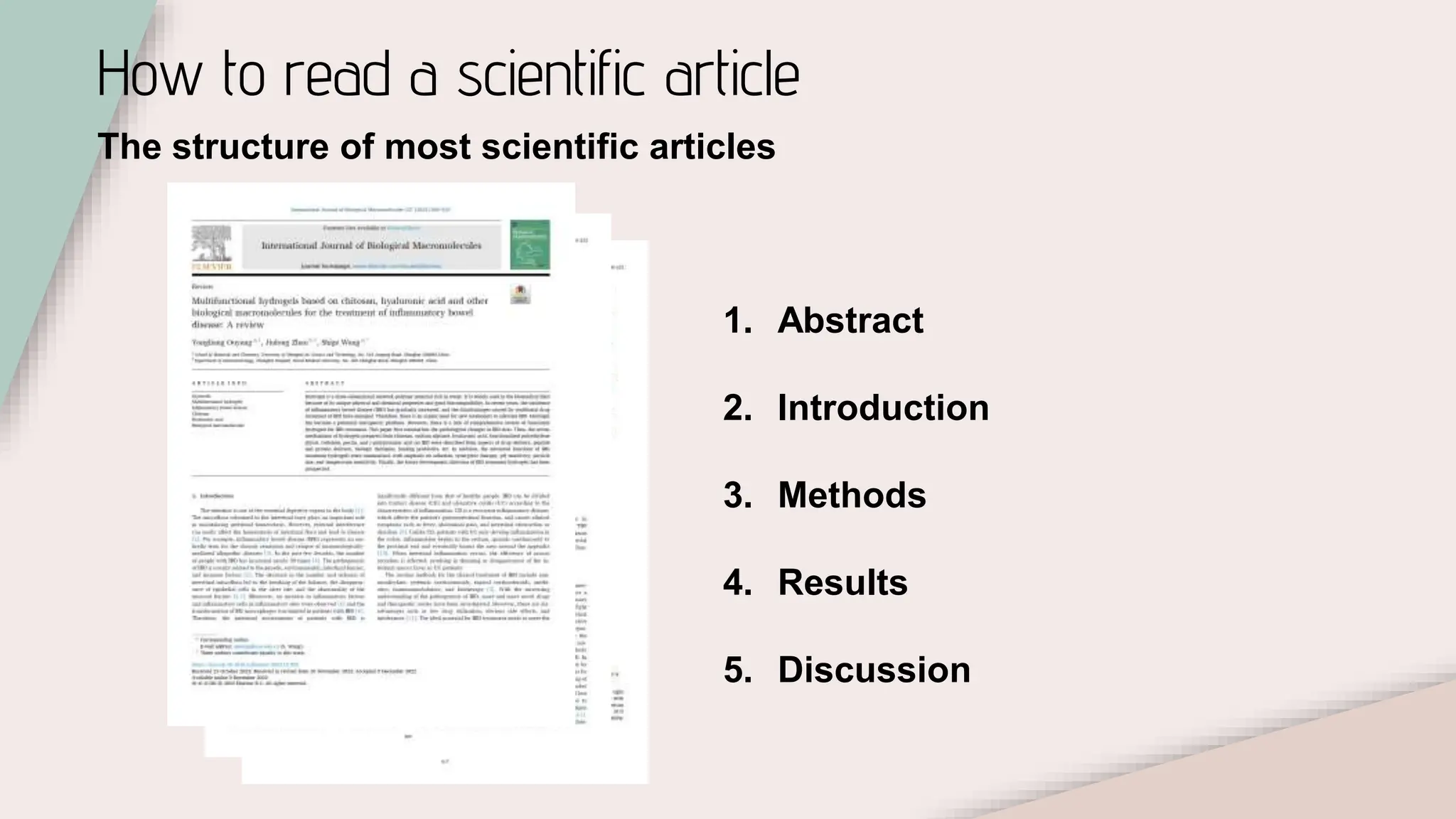
Before attempting to read a paper, you must understand the IMRaD structure, which stands for Introduction, Methods, Results, and Discussion. This standardized format is designed to allow readers to locate specific information quickly. Each section serves a distinct purpose in the narrative of a study.
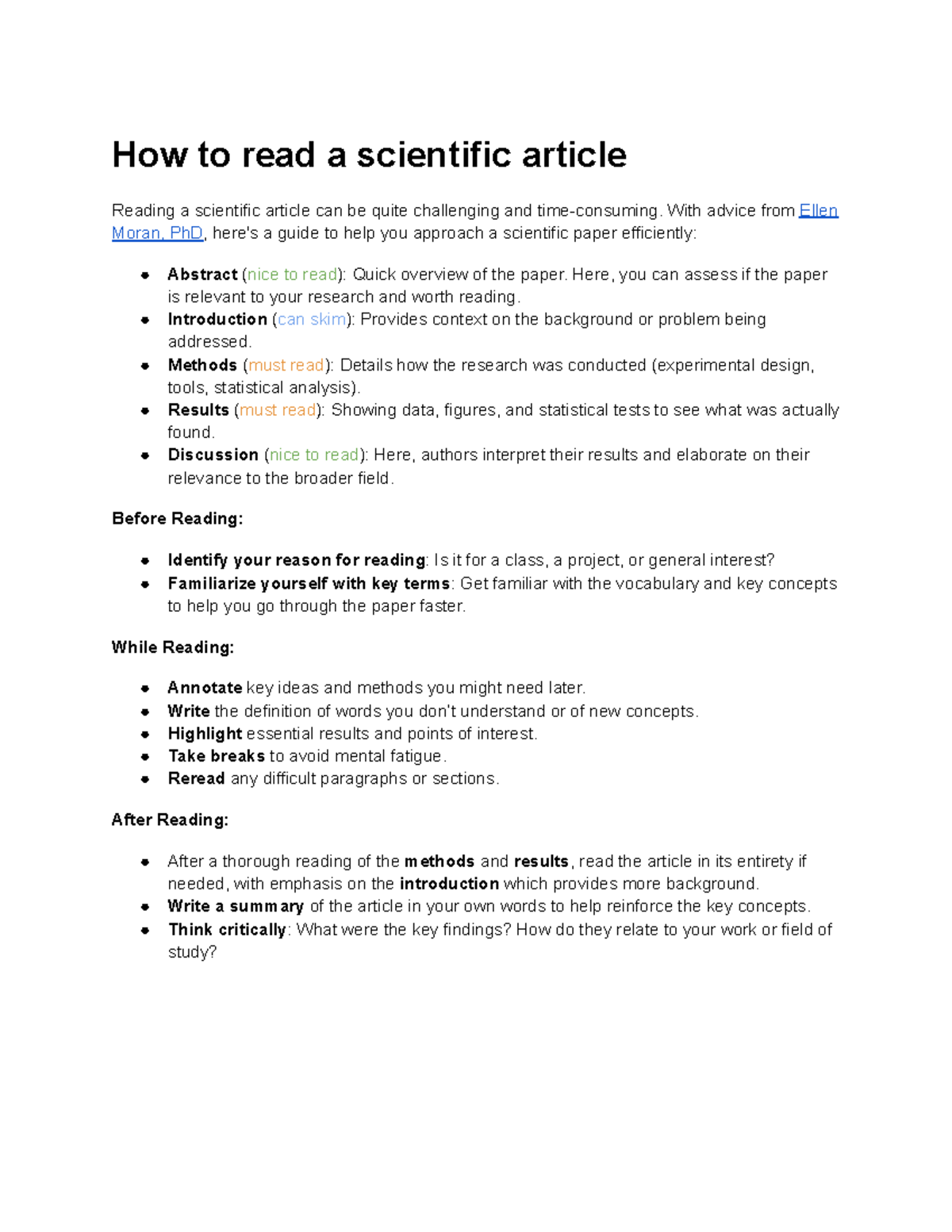
- The Abstract: A 150-to-300-word summary of the study’s purpose, methods, primary findings, and implications. It acts as the "sales pitch" and screening tool for the reader.
- The Introduction: This section provides the context. It outlines what is already known, identifies the "knowledge gap" the researchers intend to fill, and concludes with the specific hypothesis or research question.
- The Methods: Often the most technical section, it describes how the study was conducted. It includes participant demographics, equipment used, statistical models, and the experimental design.
- The Results: This is the objective presentation of what the researchers found, often supported by tables, graphs, and statistical values (such as p-values or confidence intervals).
- The Discussion: Here, the authors interpret their results. They compare their findings with previous research, acknowledge limitations, and suggest future areas of study.
By understanding this structure, you can stop treating a paper like a novel. You are a detective looking for evidence, and knowing where that evidence is stored is the first step toward efficiency.
The Three-Pass Method: A Scalable Reading Strategy
The most effective way to digest a scientific article is through a tiered approach. This prevents you from getting bogged down in the minutiae of a paper that might not even be relevant to your needs.
Pass 1: The Bird’s Eye View (5–10 Minutes)
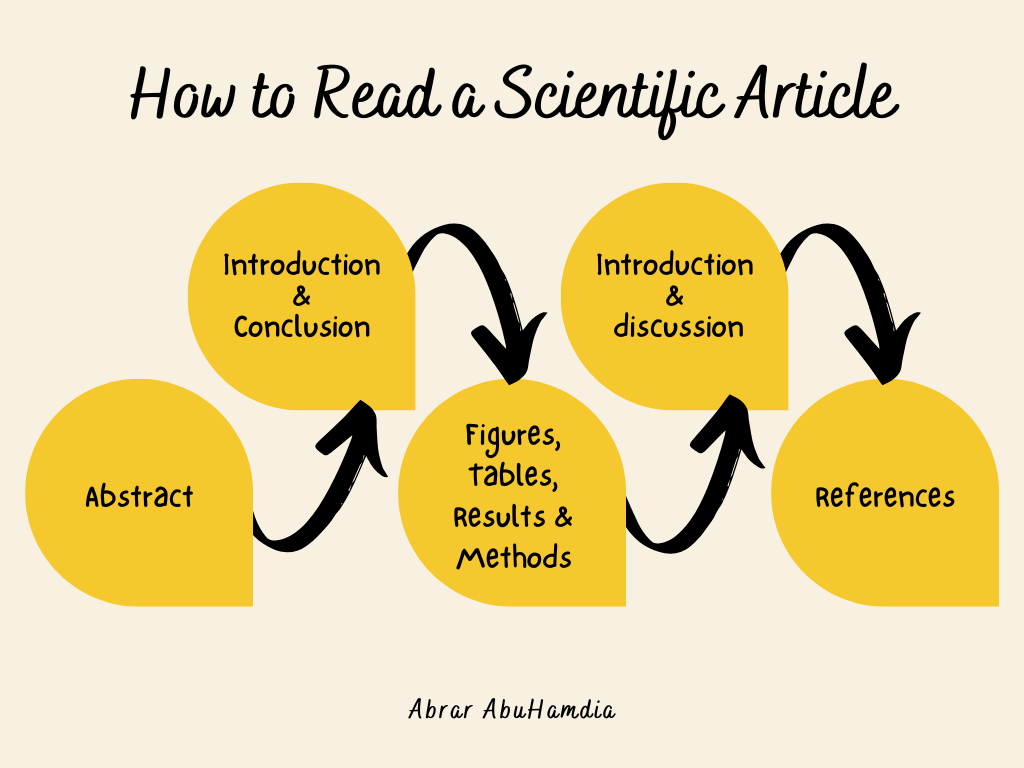
The goal of the first pass is to decide whether the paper is worth a deep dive. Start by reading the Title and the Abstract carefully. If the study seems relevant, skip directly to the Conclusion or the final paragraphs of the Discussion.
During this pass, you are looking for the "Big Picture." What problem are they solving? Is the approach novel? If the paper does not align with your current research goals or if the methodology seems fundamentally flawed for your purposes, stop here. You have saved yourself hours of unnecessary labor.
Pass 2: Grasping the Content (20–30 Minutes)
If the paper passes the first check, move to the second pass. Focus on the Figures and Tables. In high-quality scientific writing, the visual data should tell the core story of the research. Examine the axes of graphs, the labels in tables, and the captions. Look for trends, outliers, and the magnitude of the effects described.
After looking at the visuals, read the Introduction to understand the theoretical framework and the Results to see if the text matches your interpretation of the figures. At this stage, you should be able to summarize the main "story" of the paper to a colleague. If you encounter unfamiliar terminology, look it up now so it does not impede your progress in the final pass.
Pass 3: The Deep Dive and Critical Analysis (1 Hour+)
This is the most intensive phase. You must read the Methods and Discussion sections with a critical eye. To read effectively at this level, you must challenge the authors' assumptions.
Ask yourself:
- Is the sample size sufficient to support the conclusions?
- Are there potential confounding variables that the authors ignored?
- Do the results actually support the claims made in the discussion, or is the interpretation overreaching?
- Is the statistical analysis appropriate for the type of data collected?
Critical Appraisal: Beyond Understanding to Evaluation
Effective reading is not just about comprehension; it is about appraisal. In 2026, the prevalence of open-access publishing and pre-print servers means that not every "published" paper has undergone the same level of rigorous scrutiny. You must act as your own peer reviewer.
Identifying Bias and Conflict of Interest
Check the Funding and Competing Interests section, usually located at the end of the paper. While corporate funding does not automatically invalidate research, it requires a higher level of scrutiny regarding the interpretation of results. Similarly, check the institutional affiliations of the authors to see if there are underlying biases toward specific proprietary technologies or methodologies.
Assessing Statistical Significance vs. Practical Significance
A result can be "statistically significant" (e.g., p < 0.05) without being practically meaningful. For instance, a new drug might lower blood pressure by a statistically significant amount, but if that decrease is only 1 mmHg, it may have no real-world clinical benefit. Look for effect sizes and confidence intervals to determine the actual impact of the findings.
Reproducibility and the "Methods" Section
A hallmark of good science is reproducibility. As you read the Methods section, ask if there is enough detail provided for you—or another researcher in the field—to replicate the experiment. If the descriptions are vague or rely heavily on "data not shown," proceed with caution.
Comparative Reading Strategies
Not all reading tasks require the same depth. Use the following table to match your strategy to your objective.
| Strategy | Primary Goal | Focus Areas | Estimated Time |
|---|---|---|---|
| Scanning | Quick relevance check | Title, Abstract, Headings | 2–5 Minutes |
| Literature Review | Mapping a field | Abstract, Intro, References | 15 Minutes per paper |
| Technical Audit | Verifying data | Methods, Results, Figures | 45–60 Minutes |
| Integrative Reading | Synthesizing new ideas | Full Paper + Supplemental Data | 1.5–3 Hours |
Tools and Workflow Management in 2026
Effective reading is supported by an organized workflow. Digital tools have evolved significantly, allowing for a more interconnected reading experience.
- Reference Managers: Use software like Zotero or Mendeley to organize your library. These tools now offer sophisticated PDF annotation features that sync across devices.
- AI-Assisted Summarization: In 2026, AI tools can provide "tl;dr" summaries of complex sections. Use these to get the gist, but never rely on them for your final analysis. Use them as a "bridge" to help you tackle difficult prose.
- Active Annotation: Never read a scientific paper without a "pen" (digital or physical). Highlight key findings, but more importantly, write questions in the margins. If a sentence confuses you, mark it. If a result contradicts something you read last week, note it.
- The Reference "Rabbit Hole": If the authors cite a foundational study to justify their method, and you don't understand that method, you may need to stop and read the cited paper. This "backward searching" is essential for building a solid knowledge base.
Common Pitfalls to Avoid
Even experienced readers fall into habits that reduce their effectiveness. Awareness of these traps can significantly improve your retention.
- Reading Chronologically: This is the most common mistake. Scientific papers are not designed to be read from page 1 to page 10. If you start at the beginning, you may run out of mental energy before you reach the most important part: the data.
- Accepting the Discussion as Fact: The Discussion section is the authors' opinion on their data. It is often the most biased part of the paper. Always form your own opinion based on the Results section before reading the authors' interpretation.
- Ignoring Supplemental Materials: Frequently, the most granular and revealing data is hidden in the "Supplemental Information" or "Appendix" files. If a paper's main figures seem too "clean," the truth often lies in the raw data files.
- Glossing Over the Statistics: If you don't understand the statistical tests used, you cannot truly evaluate the results. Take the time to look up the difference between a t-test, ANOVA, or regression analysis if the paper relies on them.
FAQ
Is it necessary to read the entire paper from start to finish?
No. In fact, doing so is often counterproductive. You should read only the sections that provide the information you need. For a general overview, the abstract and conclusion suffice. For a deep understanding, focus on the methods and results. Only if you are critiquing or replicating the study do you need to read every single word.
What should I do if the language is too technical?
First, identify if the difficulty is due to jargon or conceptual complexity. If it is jargon, keep a technical dictionary or AI assistant nearby to define terms. If it is conceptual, you may need to find a review article (a "Review Paper") on the broader topic first to build your foundational knowledge before returning to the specific primary research article.
How do I know if a journal is reputable in 2026?
Check for indexing in major databases like PubMed, Web of Science, or Scopus. Look at the journal’s peer-review policy and its editorial board. Be wary of "predatory journals" that charge high fees without providing rigorous peer review. Using tools like Think. Check. Submit. can help you verify the legitimacy of a publication.
How can I remember what I read?
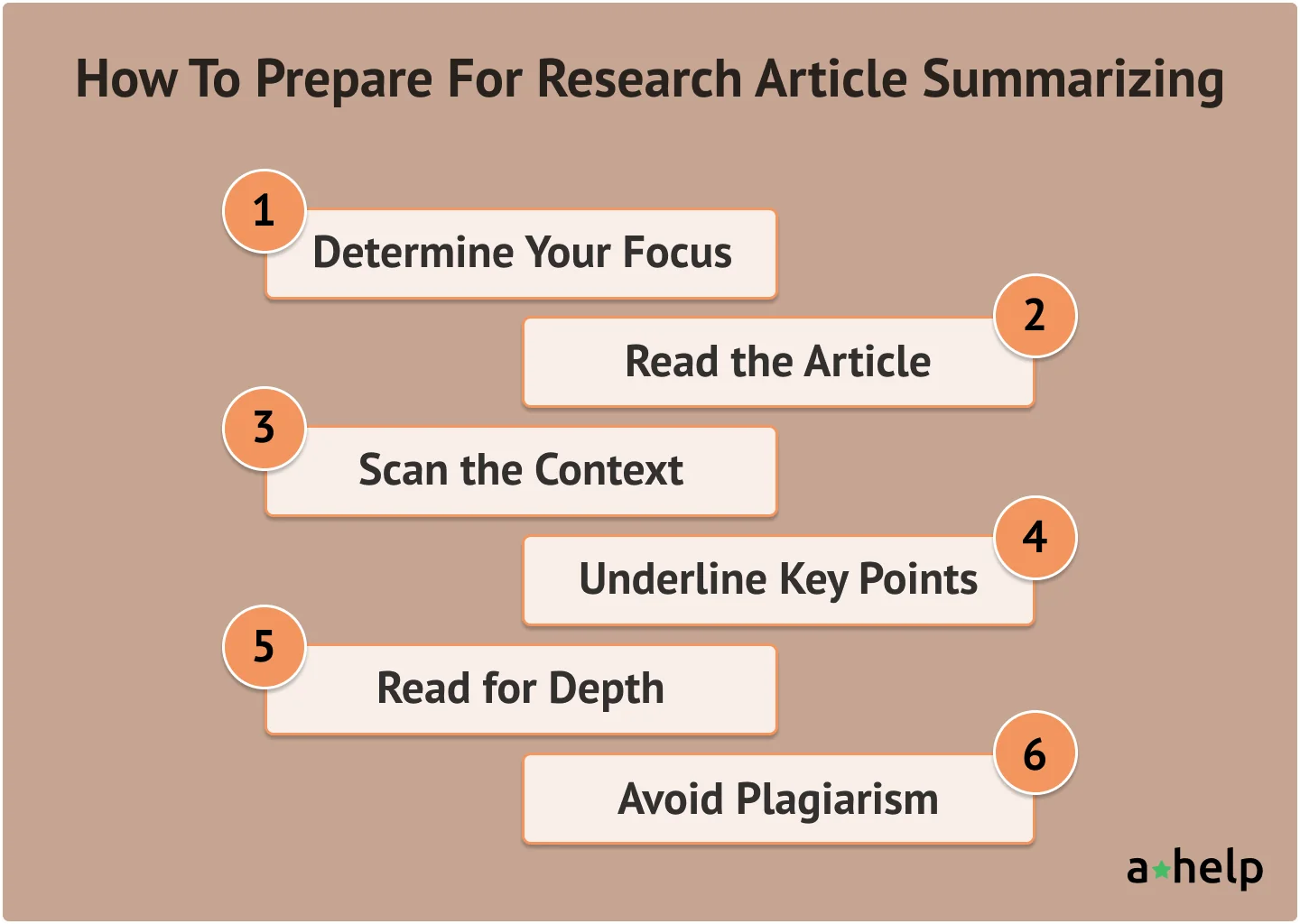
Use a "Synthesis Matrix"—a spreadsheet where rows are papers and columns are specific themes (e.g., sample size, key finding, limitations). This allows you to compare multiple papers at once. Additionally, writing a one-paragraph summary of the paper in your own words immediately after reading is one of the best ways to encode the information into long-term memory.
Should I trust the "Highlights" or "In Brief" sections?
These sections are useful for a quick summary but often omit the nuances and limitations of the research. Treat them like the Abstract: a tool for screening, not a substitute for critical analysis of the actual data.
Final Recommendation
To read a scientific article effectively, you must transform from a passive consumer of information into an active interrogator of the text. Start with the "three-pass" approach to manage your time, focus heavily on the visual data in the Results section, and always maintain a healthy skepticism toward the authors' interpretations in the Discussion. By treating every paper as a collection of evidence rather than an infallible record of truth, you will develop the analytical skills necessary to excel in any scientific or professional discipline.
Image Gallery