Understanding What Basic Auto Insurance Coverage in Georgia Includes
In Georgia, basic auto insurance coverage consists of mandatory liability insurance, which includes minimum limits of $25,000 for bodily injury per person, $50,000 for bodily injury per accident, and $25,000 for property damage. This 2...
In Georgia, basic auto insurance coverage consists of mandatory liability insurance, which includes minimum limits of $25,000 for bodily injury per person, $50,000 for bodily injury per accident, and $25,000 for property damage. This 25/50/25 framework is the legal threshold required to register and operate a vehicle on state roadways as of 2026.
Contents
Navigating the nuances of Georgia’s insurance laws is critical for every driver. While the state-mandated minimums provide a legal "floor," understanding what these numbers represent—and what they leave unprotected—is essential for financial security. Georgia operates under a traditional tort (at-fault) system, meaning the driver found responsible for an accident is liable for the resulting damages. Consequently, "basic" coverage in Georgia is designed primarily to protect other people from your mistakes, rather than protecting your own vehicle or medical well-being.
The Core Components of Georgia’s Minimum Liability Coverage
When people speak about "basic" coverage in Georgia, they are almost exclusively referring to Liability Insurance. Georgia law (O.C.G.A. § 33-7-11) mandates that every driver maintain a policy that can pay for damages they cause to others. This is divided into two distinct categories:
Bodily Injury Liability (BI)
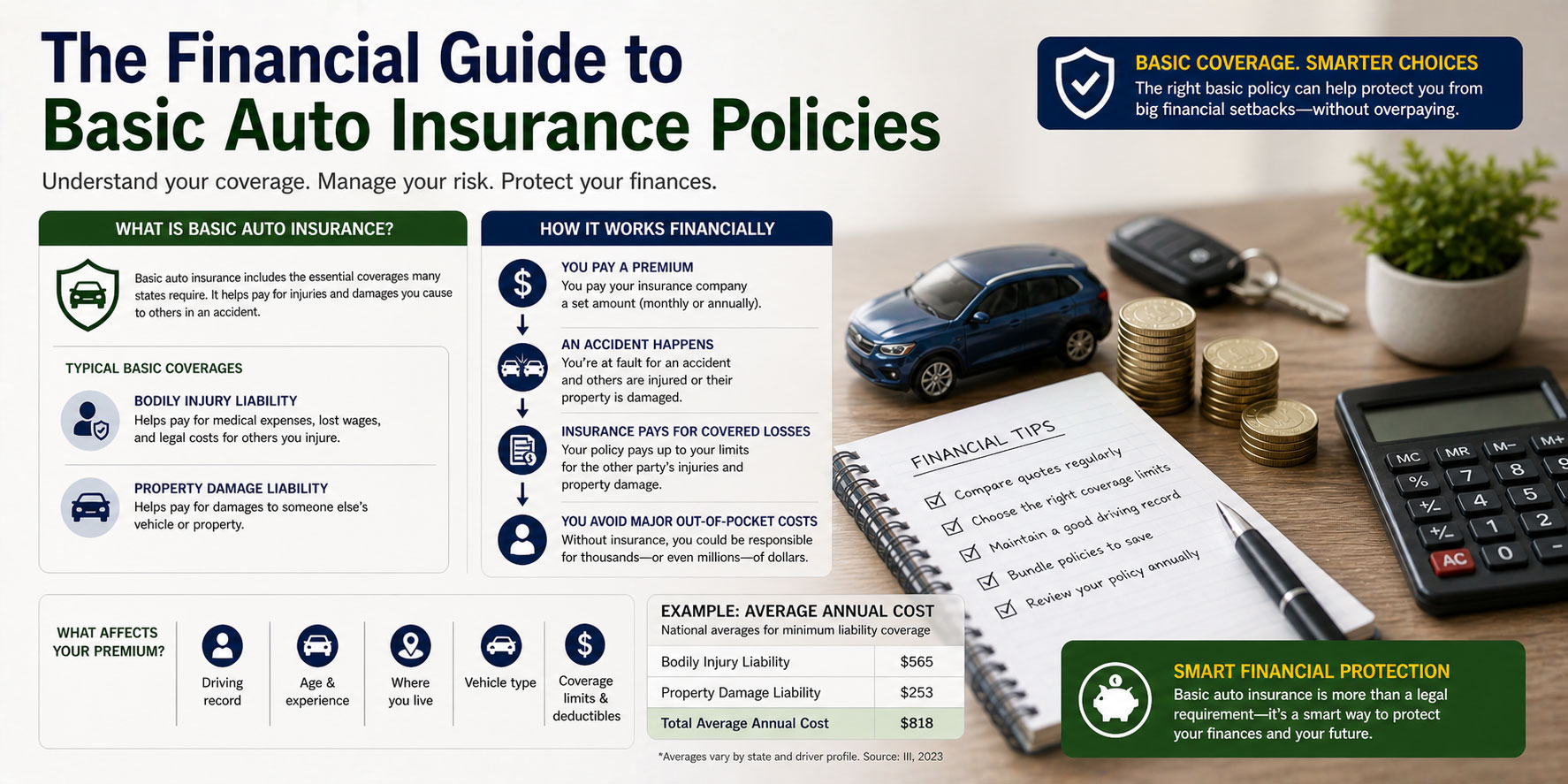
Bodily Injury Liability covers the medical expenses, lost wages, and legal fees of the other party if you are at fault in an accident. In Georgia, the basic requirements are:
- $25,000 per person: This is the maximum amount your insurance will pay for a single individual’s injuries in an accident you caused.
- $50,000 per accident: This is the total cap your insurance will pay for all injuries sustained by all people involved in a single accident, regardless of how many people were hurt.
In the economic climate of 2026, medical costs have continued to rise. A $25,000 limit may cover a standard emergency room visit and minor diagnostic imaging, but it is often insufficient for surgeries, long-term rehabilitation, or multi-day hospital stays.
Property Damage Liability (PD)
The third number in the 25/50/25 equation is Property Damage Liability.
- $25,000 per accident: This covers damage to the other person's vehicle, as well as structures like fences, utility poles, or buildings.
With the average price of new vehicles in 2026 often exceeding $50,000, a $25,000 limit for property damage is increasingly viewed as a high-risk gamble. If you total a late-model SUV or a high-end electric vehicle, you are personally liable for any costs exceeding your $25,000 policy limit.
Georgia’s At-Fault (Tort) System Explained
Georgia follows a "fault" system regarding auto accidents. This distinguishes it from "no-fault" states like Florida or New York, where drivers typically turn to their own insurance first regardless of who caused the crash.
In Georgia, the person who caused the accident is legally responsible for the financial consequences. This means that if you are at fault, the injured party can:
- File a claim with their own insurance (if they have collision or uninsured motorist coverage).
- File a third-party claim with your insurance company.
- File a personal injury lawsuit against you directly.
Because Georgia is a comparative negligence state, if you are less than 50% responsible for an accident, you may still recover damages, though your payout will be reduced by your percentage of fault. If you are 50% or more at fault, you cannot recover damages from the other party.
Uninsured Motorist Coverage: The "Required Offer"
While not technically part of the mandatory "basic" liability minimum, Uninsured Motorist (UM) coverage is a critical element of Georgia insurance law. By law, insurance companies in Georgia must offer you UM coverage at limits equal to your liability limits. You have the right to reject this coverage in writing, but most experts strongly advise against doing so.
In Georgia, there are two types of UM coverage:
- Add-On (Stackable): This pays your UM limits on top of whatever the at-fault driver’s insurance pays. For example, if the at-fault driver has $25,000 in liability and you have $25,000 in "Add-On" UM, you have access to a total of $50,000.
- Reduced (Non-Stackable): This pays the difference between the at-fault driver’s liability and your UM limit. If both you and the at-fault driver have $25,000 limits, a "Reduced" policy may pay nothing at all because the limits cancel each other out.
Given the number of uninsured or underinsured drivers on Georgia roads in 2026, UM coverage acts as a vital safety net for your own medical bills and vehicle repairs.
What Basic Insurance Does NOT Include
It is a common misconception that "full coverage" is a legal requirement. In reality, basic state-minimum insurance leaves significant gaps in protection. The following are not included in basic Georgia liability insurance:
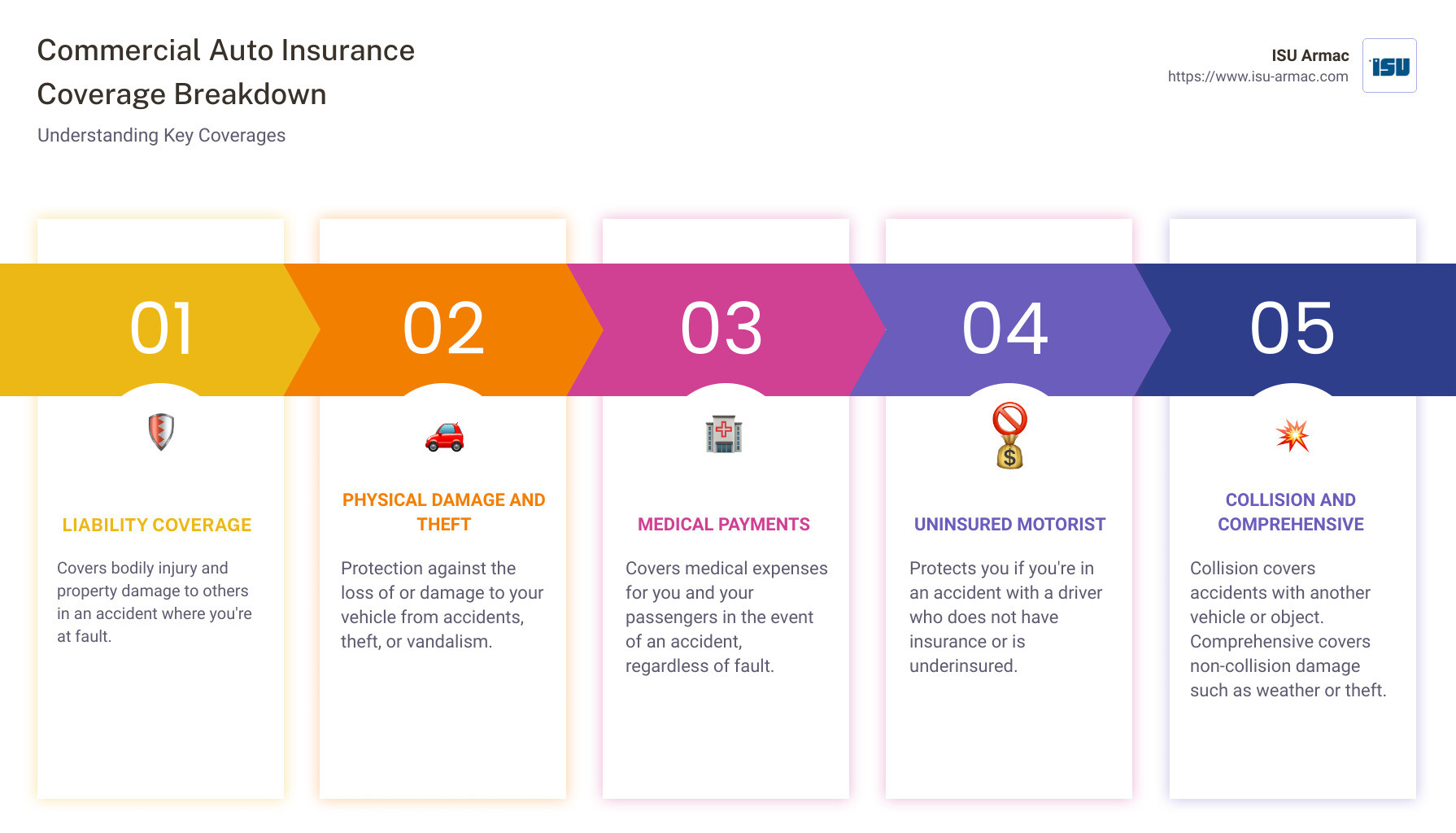
- Collision Coverage: This pays for repairs to your own vehicle after an accident, regardless of fault. Without it, if you cause a wreck, you must pay for your own car repairs out of pocket.
- Comprehensive Coverage: This covers non-collision events such as theft, vandalism, fire, or damage from "acts of God" like Georgia’s frequent hailstorms or falling trees.
- Medical Payments (MedPay): Liability only pays for the other person's medical bills. MedPay covers your own medical expenses and those of your passengers, regardless of fault.
- Gap Insurance: If you have a car loan and your vehicle is totaled, basic insurance only pays the current market value. If you owe more than the car is worth, Gap insurance covers the difference.
If you are financing or leasing a vehicle in Georgia, your lender will almost certainly require you to carry Collision and Comprehensive coverage, even though the state does not.
Comparing Coverage Levels in Georgia
The following table illustrates the difference between basic legal requirements and common recommended coverage levels for 2026.
| Coverage Type | Georgia Minimum (Basic) | Recommended Standard | Premium/Full Protection |
|---|---|---|---|
| Bodily Injury | $25,000 / $50,000 | $100,000 / $300,000 | $250,000 / $500,000 |
| Property Damage | $25,000 | $50,000 | $100,000+ |
| Uninsured Motorist | Optional (can reject) | Match Liability Limits | Match Liability Limits |
| Collision | Not Included | Included ($500 Ded.) | Included ($250 Ded.) |
| Comprehensive | Not Included | Included ($500 Ded.) | Included ($250 Ded.) |
| Medical Payments | Not Included | $5,000 | $10,000+ |
Digital Compliance and Verification: The GEICS System
Georgia utilizes the Georgia Electronic Insurance Compliance System (GEICS) to monitor insurance status in real-time. In 2026, insurance companies are required to transmit policy information directly to the state’s database.
This means that the Georgia Department of Driver Services (DDS) and law enforcement can instantly verify whether a vehicle is insured by scanning a license plate. Paper insurance cards are still issued, but the electronic record is the primary source of truth. If your insurance lapses, the insurer notifies the state, which can lead to the immediate suspension of your vehicle registration.
Penalties for Operating Without Basic Coverage
Driving without the basic mandatory insurance in Georgia carries severe legal and financial consequences. The state views insurance compliance as a matter of public safety.
- Fines and Fees: Initial fines for driving without insurance or with a suspended registration typically range from $200 to $1,000, plus service fees.
- Registration Suspension: Your vehicle’s registration will be suspended. To reinstate it, you must provide proof of new insurance and pay a reinstatement fee (often $60 for the first offense, increasing for subsequent lapses).
- License Suspension: If caught driving without insurance, your driver's license can be suspended for 60 to 90 days.
- Misdemeanor Charges: Driving without insurance is a misdemeanor in Georgia. Repeat offenders may face up to 12 months in jail.
- Financial Responsibility Filings (SR-22): In some cases, you may be required to have your insurer file an SR-22 form with the Georgia Department of Driver Services, proving you carry the necessary coverage for a period of three years. This significantly increases your premiums.
Factors Influencing the Cost of Basic Insurance in 2026
While the coverage limits remain constant, the price you pay for basic insurance in Georgia varies based on several factors. In 2026, Georgia remains one of the more expensive states for auto insurance due to high traffic density in the Atlanta metro area and rising litigation costs.
- Credit-Based Insurance Scores: Georgia law allows insurers to use your credit history as a factor in determining premiums. Drivers with higher credit scores generally pay less for basic coverage.
- Location (Rating Territory): Drivers in urban areas like Atlanta, Augusta, or Savannah typically pay more than those in rural South Georgia due to the higher statistical likelihood of accidents and theft.
- Driving History: Any at-fault accidents, speeding tickets, or DUIs within the last three to five years will substantially increase the cost of even a basic policy.
- Vehicle Usage: How many miles you drive annually and whether you use the vehicle for commuting or business (like ridesharing) impacts your rate.
Frequently Asked Questions
Does Georgia's basic insurance cover me if I drive out of state? Yes. Your Georgia liability policy will follow you across state lines within the U.S. and Canada. Most policies include a "broadening clause" that automatically adjusts your limits to meet the minimum requirements of the state where the accident occurs if those requirements are higher than Georgia's.
Is "Full Coverage" required for an older car in Georgia? No. From a legal standpoint, you only ever need the 25/50/25 liability limits. For older vehicles with low market value, many drivers choose to drop Collision and Comprehensive coverage to save money, as the cost of the premium might eventually exceed the value of the car itself.
What is the "Add-On" vs. "Reduced" UM choice on my Georgia application? This is a specific choice required by the Georgia Office of Commissioner of Insurance. "Add-On" coverage is superior because it adds your limit to the at-fault driver's limit. "Reduced" coverage subtracts the at-fault driver's limit from yours, which can result in zero payout if your limits are the same.
Can I get insurance if I don't own a car but drive frequently? Yes. This is called a "Non-Owner Policy." It provides the basic Georgia liability coverage (25/50/25) for drivers who do not own a vehicle but may borrow cars or use car-sharing services.
Are there any discounts available for basic insurance in Georgia? Yes. Georgia drivers can often access discounts for completing a state-approved defensive driving course, having multiple policies with the same insurer (bundling), or maintaining a clean driving record for three consecutive years.
Practical Recommendation: Moving Beyond the Minimum
While the 25/50/25 basic coverage satisfies the legal requirements of the state of Georgia, it is rarely enough to protect a driver’s assets in 2026. If you own a home, have savings, or earn a steady income, an accident that exceeds your $25,000 or $50,000 limits could lead to a lawsuit and the garnishment of your wages.
For most Georgia drivers, the most cost-effective path to security is to increase liability limits to at least $100,000/$300,000/$50,000 and to ensure that Uninsured Motorist coverage is included in the policy. The difference in monthly premiums between the bare minimum and these higher limits is often surprisingly small, yet the difference in financial protection is substantial.
Image Gallery