Can Tight Ends Score Touchdowns in 2026: Rules, Roles, and Scoring Mechanics
The short answer is an absolute yes. Tight ends can score touchdowns just like wide receivers, running backs, and quarterbacks, and in the modern 2026 era of football, they do so with incredible frequency. Positioned on the line of scr...
The short answer is an absolute yes. Tight ends can score touchdowns just like wide receivers, running backs, and quarterbacks, and in the modern 2026 era of football, they do so with incredible frequency. Positioned on the line of scrimmage as hybrid blockers and pass-catchers, tight ends are among the most versatile weapons in both the National Football League (NFL) and collegiate football. Understanding how tight ends score, the rules governing their eligibility, and their evolution in modern playbooks reveals why this position is vital to any high-powered offense.
Contents
The NFL Rulebook and Tight End Eligibility
To understand how tight ends score touchdowns, one must examine the fundamental rules of offensive positioning and player eligibility. In American football, offensive players are categorized into two groups: eligible receivers and ineligible linemen.
Under standard formations, the players on the outer edges of the line of scrimmage and the players in the backfield are automatically eligible to catch forward passes and run the ball. Because tight ends typically line up on the end of the offensive line next to the offensive tackle, they are classified as end-of-line players and are inherently eligible receivers.
- Line of Scrimmage Placement: A tight end must line up on the very end of the line, meaning no other offensive player is positioned between them and the sideline.
- Jersey Numbers: Tight ends generally wear numbers between 0-49 and 80-89, which instantly designates them as eligible receivers on every play.
- Reporting as Ineligible: If a tight end shifts to an interior line position, they must report as an ineligible receiver to the referee, temporarily stripping them of the ability to catch a forward pass or score via reception.
Ways a Tight End Can Score a Touchdown
Tight ends are not limited to catching passes in the end zone. Their physical attributes, blocking skills, and positioning allow them to score through multiple distinct avenues during a game.
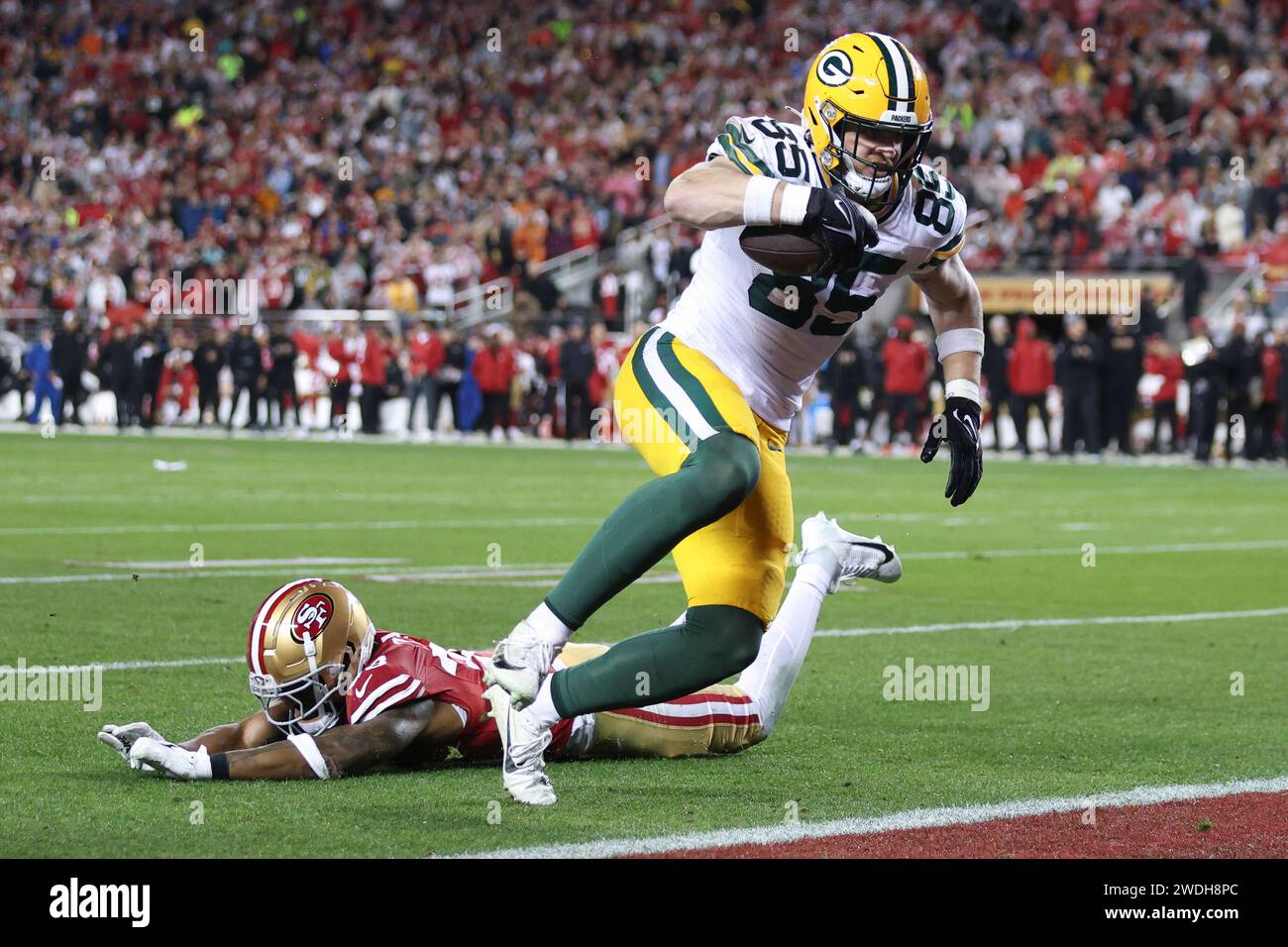
- Receiving Touchdowns: This is the most common method. A quarterback throws a legal forward pass to a tight end who is either running a seam route, sitting in a zone coverage hole, or executing a red-zone fade.
- Rushing Touchdowns: Occasionally, a tight end will take a direct handoff on an end-around, a jet sweep, or a short-yardage fullback dive play near the goal line.
- Fumble Recoveries: If an offensive teammate fumbles the ball in the end zone or advances a loose ball across the goal line, a tight end can secure possession for a touchdown.
- Interception Returns (Defense/Special Teams): While tight ends play primarily on offense, in goal-line defensive packages or trick plays, a tight end playing defense could technically intercept a pass and score, though this is exceedingly rare.
Evolution of the Tight End Position in Modern Football
The role of the tight end has undergone a massive transformation. Historically, tight ends were viewed primarily as extra offensive linemen whose main job was to block for running backs. While blocking remains a core responsibility, modern offensive coordinators design entire passing attacks around elite athletic tight ends who possess wide-receiver speed combined with linebacker size.
In the 2026 tactical landscape, tight ends create severe matchup nightmares for defenses. Linebackers are often too slow to cover dynamic tight ends downfield, while defensive backs are frequently too undersized to handle their physical stature in contested-catch situations. This mismatch makes the tight end one of the most lethal red-zone weapons on the field.
Comparative Analysis: Traditional vs. Modern Tight End Usage
| Attribute / Metric | Traditional Tight End Era | Modern 2026 Tight End Era |
|---|---|---|
| Primary Responsibility | Run blocking and short pass protection | Hybrid route running, slot mismatches, and red-zone scoring |
| Average Physical Profile | 6'4", 250 lbs, slower, bruising blocker | 6'5", 245–260 lbs, elite speed, exceptional catch radius |
| Red Zone Utilization | Occasional play-action dump-off | Primary focal point for fade routes and seam strikes |
| Target Share | Low (10% to 15% of team passes) | High (20% to 30% in pass-heavy schemes) |
Red Zone Strategy and Playcalling for Tight Ends
When the offense approaches the opponent's 20-yard line, the field shrinks, making passing windows significantly tighter. This is where the tight end becomes invaluable for scoring touchdowns. Due to their size, tight ends provide a large catch radius and can box out smaller defenders using their bodies.
Coaches rely on specific route concepts inside the red zone to maximize tight end scoring opportunities:
- The Seam Route: Exploiting single coverage up the middle of the field between the linebackers and safeties.
- The Red Zone Fade: Isolating the tight end on the outside or boundary, allowing them to leap and secure a high-point pass over a defensive back.
- Play-Action Bootlegs: Hiding the tight end behind run-blocking action before leaking them out into the flat or across the back of the end zone completely uncovered.
Expert Coaching Insight: When designing goal-line plays, offensive coordinators often motion the tight end across the formation to identify whether the defense is playing man-to-man or zone coverage. If a linebacker is forced to follow the tight end horizontally across the entire width of the field, it creates an immediate athletic advantage and an open lane for a touchdown pass.
Frequently Asked Questions
Can tight ends score touchdowns by running the ball?
Yes, tight ends can score rushing touchdowns via handoffs, sweeps, or short-yardage fullback dives. Although rare compared to receiving touchdowns, creative playcallers utilize tight ends in rushing situations near the goal line to catch defenses off guard.
Do tight ends need to report to the referee before scoring?
No, standard tight ends wear eligible numbers and line up on the end of the line of scrimmage, making them permanently eligible receivers. They only need to report to the referee if they intentionally line up in an unconventional, interior lineman position.
Are tight ends allowed to throw touchdown passes?
Yes, a tight end can throw a touchdown pass if they receive a lateral or pitch and then throw the ball forward, or if they are utilized as a passer in a trick play such as a halfback or tight end option pass.
What is the record for most touchdowns by a tight end in a single season?
The single-season record for receiving touchdowns by a tight end stands at 17, a historic benchmark set during the modern era of pass-heavy offensive schemes.
Can a tight end score a touchdown on special teams?
Tight ends frequently play on special teams units such as field goal block or punt coverage, meaning they can score by recovering a blocked punt or fumble in the opponent's end zone.
Maximizing Offense Through the Tight End Position
The ability of tight ends to score touchdowns has fundamentally changed how football games are won. From towering red-zone targets to explosive seam runners, these versatile athletes present constant challenges for opposing defensive coordinators. By understanding the rules of eligibility, tactical formations, and strategic red-zone play design, fans and analysts can fully appreciate how integral the tight end is to modern scoring success.
Image Gallery