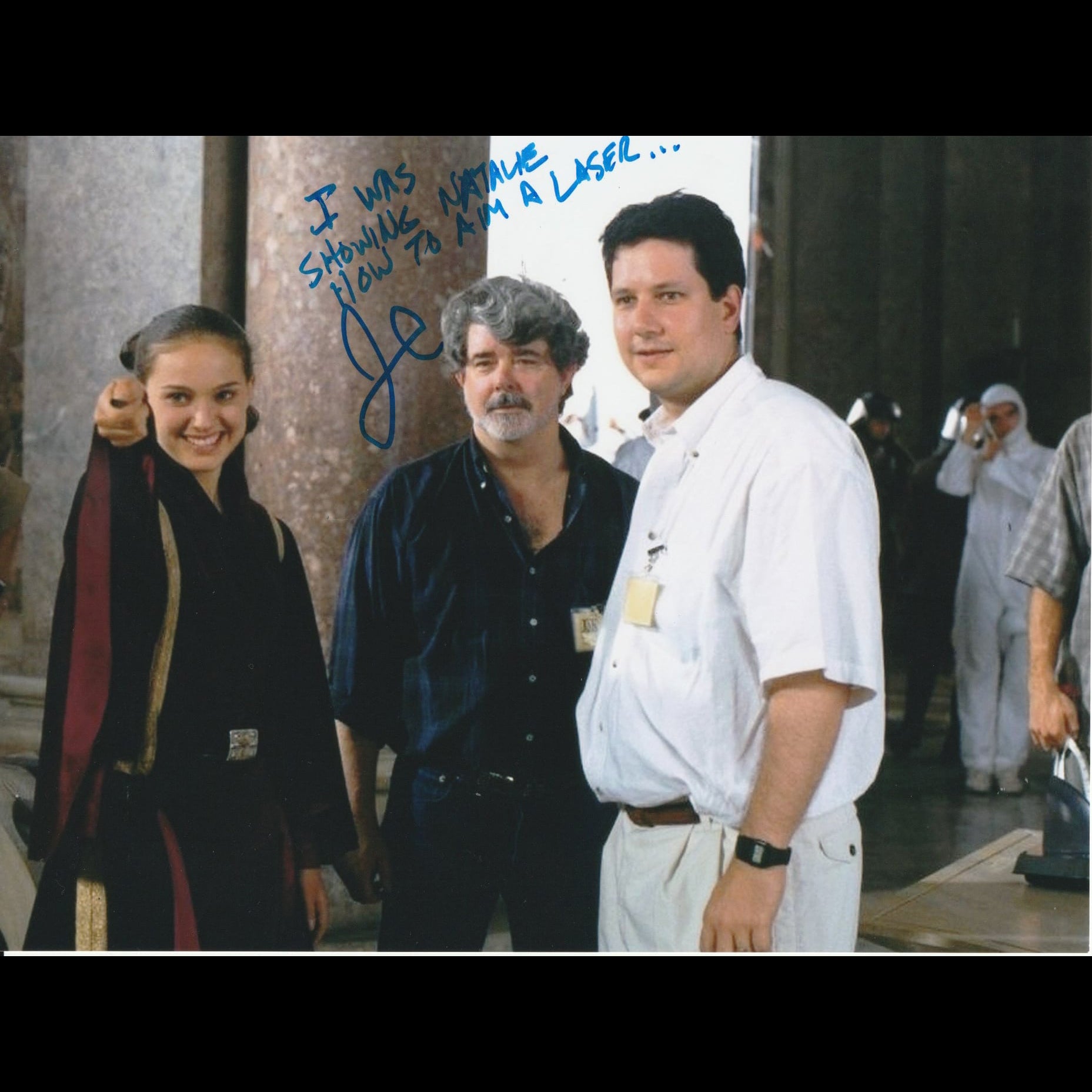
John Knoll and His Net Worth: The Financial Legacy of a VFX Pioneer
John Knoll is an Academy Award-winning visual effects supervisor and the co-creator of Adobe Photoshop. As of 2026, his estimated net worth is approximately $75 million to $150 million. This wealth is the result of the historic sale of...
John Knoll is an Academy Award-winning visual effects supervisor and the co-creator of Adobe Photoshop. As of 2026, his estimated net worth is approximately $75 million to $150 million. This wealth is the result of the historic sale of Photoshop to Adobe, a decades-long executive career at Industrial Light & Magic (ILM), and significant creative contributions to the Star Wars and Pirates of the Caribbean franchises.
Contents
While many in the film industry are known only for their box office contributions, John Knoll represents a rare intersection of software engineering and cinematic artistry. His financial standing is not merely a product of a Hollywood salary; it is built on the foundation of a tool that changed the visual language of the world. Understanding his net worth requires an analysis of his early technological breakthroughs, his steady rise within the Lucasfilm hierarchy, and his enduring influence on modern filmmaking.
The Photoshop Foundation: A Multi-Million Dollar Innovation
The most significant contributor to John Knoll’s financial independence is the creation of Adobe Photoshop. In the late 1980s, John and his brother, Thomas Knoll, developed a pixel-imaging program originally called "Display." While Thomas focused on the complex coding, John saw the practical applications for the burgeoning field of digital visual effects.
In 1988, the brothers struck a licensing deal with Adobe Systems. While the initial terms were modest compared to the software's eventual dominance, the long-term royalties and subsequent buyout of the technology provided a massive financial cushion. By the time Photoshop became the industry standard for photography, design, and digital art, the Knoll brothers had secured their place in technological history.
The Financial Mechanics of the Adobe Deal
Unlike many software developers who sell their IP early for a flat fee, the Knolls benefited from a structured relationship with Adobe. The transition from a licensed product to a full Adobe acquisition in the mid-1990s coincided with the explosion of the personal computing market.
- Royalties: Early versions of Photoshop generated consistent passive income during the software's rapid growth phase.
- Asset Liquidation: The eventual full acquisition by Adobe involved significant capital gains, which, when adjusted for inflation and market growth by 2026, account for a substantial portion of his net worth.
- Brand Value: The "Knoll" name became synonymous with digital excellence, leading to high-value consulting roles and speaking engagements.
Industrial Light & Magic: Decades of Executive Leadership
John Knoll joined Industrial Light & Magic (ILM) in 1986, starting as a technical assistant and camera operator. Over nearly four decades, he ascended to the role of Chief Creative Officer (CCO). His career at ILM is not just a story of artistic achievement but one of executive stability in a volatile industry.
As a high-level executive at a subsidiary of Lucasfilm (and later Disney), Knoll commands a salary and bonus structure consistent with top-tier Hollywood leadership. His work on the Star Wars Prequel Trilogy, the Pirates of the Caribbean series, and Avatar involved managing massive budgets and leading thousands of artists.
Key Film Projects and Their Economic Impact
Knoll’s role as a Visual Effects Supervisor on billion-dollar franchises includes performance-based incentives and high-level contract renewals. His involvement in the following projects solidified his standing as a "bankable" technical director:
- The Star Wars Prequels: Knoll was instrumental in the digital revolution of the late 90s and early 2000s, overseeing the transition from models to full CGI.
- Pirates of the Caribbean: Dead Man’s Chest: His work on Davy Jones earned him an Academy Award and elevated the market value of his technical oversight.
- Rogue One: A Star Wars Story: Uniquely, Knoll also holds a "Story By" credit for this film, which grossed over $1 billion. This credit entitles him to WGA-related residuals and backend participation that is uncommon for VFX personnel.
Diversified Income: Plugins and Patents
Beyond Adobe and ILM, Knoll has leveraged his technical expertise into niche markets. One of the most prominent examples is Knoll Light Factory, a lens flare plugin developed alongside software engineer Peder Norrby.
Originally created to simulate realistic lighting in Star Wars, the tool was eventually commercialized and sold through Red Giant (now part of Maxon). This venture represents a classic example of "develop once, sell many," providing a stream of licensing revenue that operates independently of his film production schedule.
Intellectual Property and Consulting
Knoll holds several patents related to digital image processing and motion control photography. In the 2026 landscape of visual media, where AI-integrated imaging is the new frontier, his foundational patents continue to hold relevance for licensing in both software development and hardware manufacturing.
Comparing Financial Milestones
To understand how Knoll's net worth compares to his peers in the visual effects and technology sectors, the following table outlines the different revenue streams typical of industry leaders.
| Revenue Source | Description | Estimated Financial Impact |
|---|---|---|
| Photoshop IP | Sale and royalties from the world's leading image editor. | High (Primary Wealth Driver) |
| ILM Executive Salary | CCO position at the world's premier VFX house (Disney-owned). | Steady Seven-Figure Annual |
| Producer/Story Credits | Residuals from Rogue One and other creative contributions. | Moderate (Long-term Backend) |
| Software Plugins | Commercial licensing of Knoll Light Factory and related tools. | Moderate (Passive Income) |
| Academy Awards | Oscar wins and nominations increasing "Market Rate" for services. | Indirect (Asset Appreciation) |
The Disney Acquisition Factor
When Disney purchased Lucasfilm for $4.05 billion in 2012, the valuation of the company's internal talent and proprietary technology was a major factor. As one of the most senior and decorated members of the Lucasfilm team, Knoll was a key "retained asset."
Post-acquisition, his role became even more critical as Disney ramped up production on the Star Wars sequels and Disney+ series. Executives of Knoll's stature often receive equity-based compensation in the parent company (The Walt Disney Company), which has likely contributed to his net worth as the company’s streaming and theatrical segments evolved through the mid-2020s.
Current Status in 2026
In 2026, John Knoll remains a vital figure at the intersection of cinema and technology. While he has reached a stage where he can be selective about his projects, his influence on ILM’s "StageCraft" (Volume) technology—used in The Mandalorian—continues to push the company's valuation and his personal prestige.
His wealth is characterized not by flamboyant spending, but by reinvestment into the tools of his trade and the preservation of cinematic history. He is widely respected for his practical approach to filmmaking, often advocating for "invisible" effects that prioritize story over spectacle, a philosophy that has made him a favorite of directors like Gore Verbinski and J.J. Abrams.
Frequently Asked Questions
Does John Knoll still own Photoshop?
No, John and Thomas Knoll do not own Photoshop. They sold the rights to Adobe Systems. While they received significant royalties in the early years and a substantial payout during the full acquisition, the software is now entirely the property of Adobe. John remains a legendary figure at Adobe events but does not manage the software’s daily development.
How much did John Knoll make from Rogue One?
While exact figures are confidential, a "Story By" credit on a film that grossed $1.05 billion is highly lucrative. Between the initial script fee, production bonuses, and ongoing residuals from streaming and physical media, it is estimated that his contribution to Rogue One added several million dollars to his overall career earnings.
Is John Knoll a billionaire?
No, John Knoll is not a billionaire. While he is exceptionally wealthy compared to most film industry professionals, his net worth is in the mid-to-high eight-figure or low nine-figure range. The billionaire tier in Hollywood is typically reserved for major studio owners, A-list actors with massive brands, or tech founders who retain massive equity in public companies.
What is Knoll Light Factory?
Knoll Light Factory is a specialized software plugin used by film editors and motion graphics artists to create realistic "lens flares." John Knoll originally developed the math for these effects to make CG ships in Star Wars look like they were being filmed with real anamorphic lenses. It was later commercialized and remains a popular tool in the industry.
Has John Knoll retired as of 2026?
As of 2026, John Knoll has not officially retired. He continues to serve in a high-level advisory and creative capacity at ILM. While he may take on fewer direct "Supervisor" roles on set, his leadership as Chief Creative Officer ensures that his expertise continues to guide the next generation of digital artists.
Final Guidance for Aspiring Professionals
John Knoll’s financial success serves as a blueprint for technical professionals in the creative arts. His net worth was not built solely through a high salary, but through the creation of scalable intellectual property. For those looking to replicate his path, the focus should be on solving a universal problem—as he did with digital photo editing—while simultaneously mastering a high-demand craft in the entertainment industry. His legacy is a testament to the fact that in the modern era, the person who builds the tools often finds more stability and wealth than the person who simply uses them.
Image Gallery