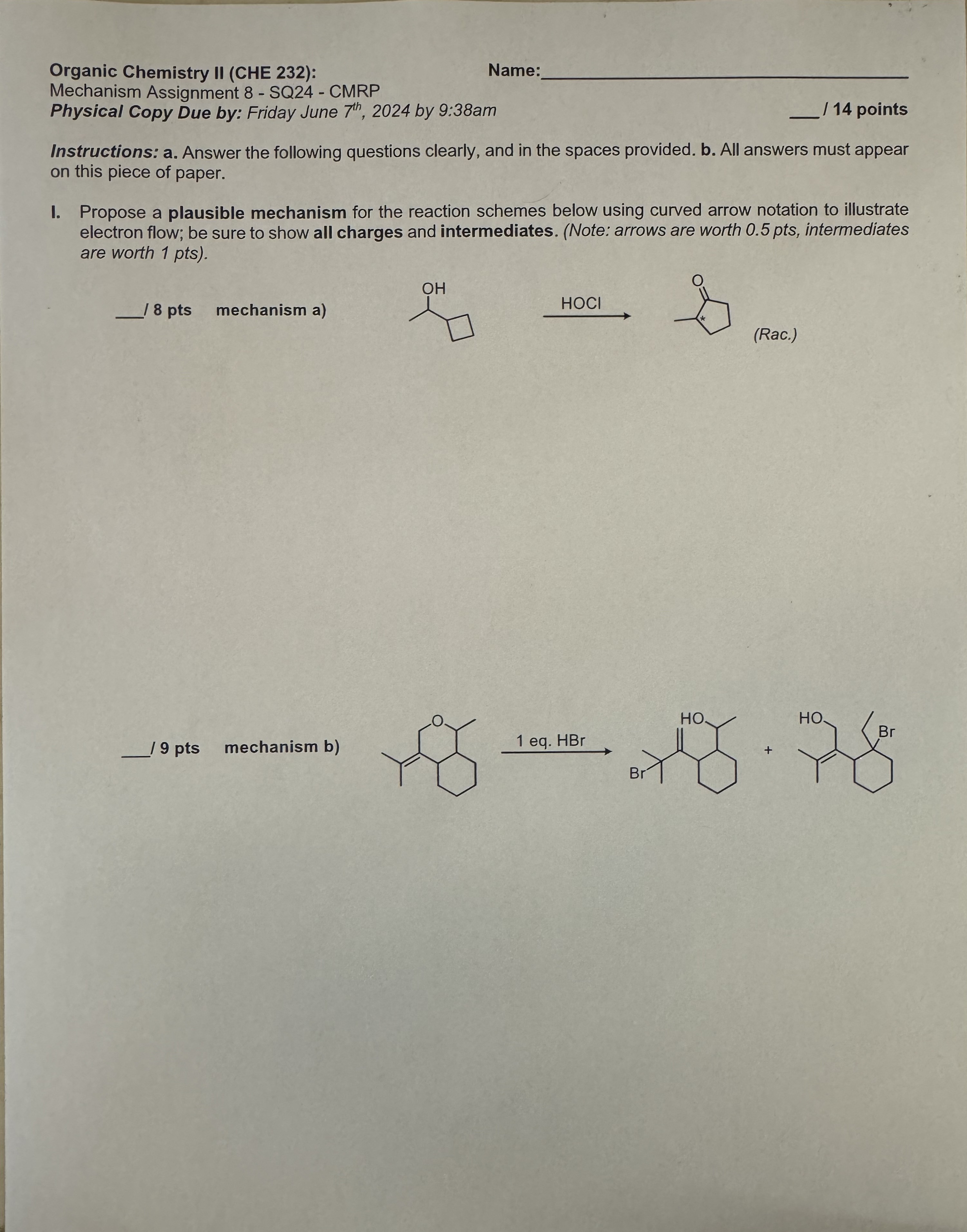
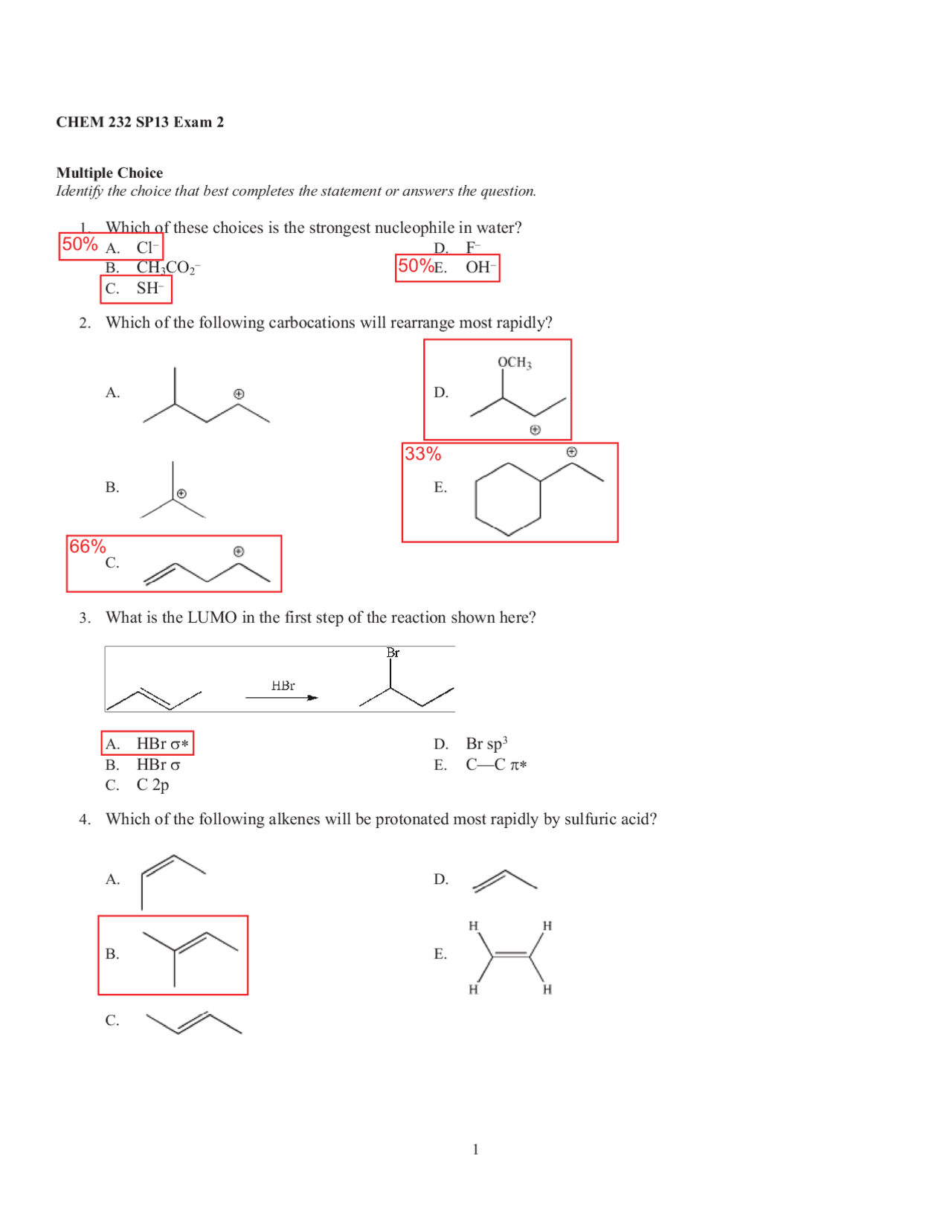
CHEM 232: A Realistic Path for Organic Chemistry Learners
CHEM 232, commonly designated across university curricula as Organic Chemistry II or intermediate organic chemistry, represents a critical milestone for pre-medical, biological science, chemical engineering, and chemistry majors. Succe...
CHEM 232, commonly designated across university curricula as Organic Chemistry II or intermediate organic chemistry, represents a critical milestone for pre-medical, biological science, chemical engineering, and chemistry majors. Success in CHEM 232 requires moving away from brute-force memorization toward mechanistic understanding, active problem-solving, and systematic retrosynthetic analysis. By mastering core reaction patterns, spectroscopy, and electron-pushing fundamentals, learners can successfully navigate the course requirements without overwhelming study schedules.
Contents
Understanding CHEM 232: Scope, Structure, and Prerequisites
Organic Chemistry II builds directly on the foundational concepts introduced in introductory organic chemistry (CHEM 231 or equivalent). While the first course focuses on atomic structure, stereochemistry, acid-base dynamics, and basic addition/substitution reactions, CHEM 232 expands into complex functional group transformations, aromatic systems, carbonyl reactivity, and multi-step synthesis.
- CHEM 231 / O-Chem I: Hybridization, Stereochemistry, Alkanes/Alkenes, Substitution (SN1/SN2), Elimination (E1/E2)
- CHEM 232 / O-Chem II: Spectroscopy (NMR/IR/MS), Aromaticity, Carbonyls, Enolates, Retrosynthesis, Bio-molecules
Essential Prerequisites
To approach CHEM 232 realistically, learners must enter the course with a firm grip on specific foundational tools:
- Arrow-Pushing Formalism: Understanding how curved arrows depict the movement of electron pairs, not individual atoms or positive charges.
- Resonance and Conjugation: Evaluating resonance contributors, delocalization energy, and how delocalization stabilizes carbocations, carbanions, and radical intermediates.
- Brønsted-Lowry and Lewis Acid-Base Theory: Predicting relative pKa values, nucleochemistry, electrophilicity, and equilibrium directions based on inductive effects, resonance, and electronegativity.
- Basic Stereochemistry: Identifying $R/S$ configurations, enantiomers, diastereomers, meso compounds, and how stereocenters invert or retain configuration during substitution reactions ($S_N2$ vs. $S_N1$).
Without these prerequisites firmly established, students often find themselves spending excessive time reviewing baseline concepts when they should be focusing on advanced carbonyl mechanisms or spectroscopic interpretation.
Core Curricular Modules in CHEM 232
While university syllabi vary slightly, standard CHEM 232 courses structured under American Chemical Society (ACS) guidelines consistently cover five primary subject areas.
1. Spectroscopic Structure Elucidation
Structure determination forms the analytical foundation of CHEM 232. Students learn to deduce the three-dimensional structures of unknown organic molecules using complementary spectroscopic techniques:
- Proton ($^1\text{H}$) NMR Spectroscopy: Resolves the chemical environment (chemical shift in ppm), adjacent protons (spin-spin splitting following the $n+1$ rule), and relative proton counts (integration).
- Carbon-13 ($^{13}\text{C}$) NMR Spectroscopy: Reveals the number of distinct carbon environments and identifies specific functional groups (e.g., carbonyl carbons appearing at $\delta > 160\text{ ppm}$).
- Infrared (IR) Spectroscopy: Identifies characteristic vibrational stretch frequencies, such as the sharp carbonyl peak near $1715\text{ cm}^{-1}$ or the broad alcohol hydroxyl stretch between $3200\text{--}3600\text{ cm}^{-1}$.
- Mass Spectrometry (MS): Establishes molecular mass, isotopic distribution patterns (such as the distinct $M$ and $M+2$ ratio for chlorine and bromine), and fragmentation pathways.
2. Aromatic Compounds and Electrophilic Substitution
CHEM 232 explores the unique stability of aromatic systems governed by Hückel's Rule ($4n+2$ $\pi$-electrons in a planar, cyclic, conjugated ring). Key topics include:
- Electrophilic Aromatic Substitution (EAS): Nitration, halogenation, sulfonation, Friedel-Crafts alkylation, and Friedel-Crafts acylation.
- Substituent Directing Effects: Classifying substituents into electron-donating groups (ortho/para directors, activating) and electron-withdrawing groups (meta directors, deactivating, with halogens acting as deactivating ortho/para directors).
- Nucleophilic Aromatic Substitution ($S_N\text{Ar}$) and Benzyne Intermediates: Understanding pathways that operate on electron-deficient aryl halides or under strongly basic conditions.
3. Carbonyl Chemistry: Additions and Substitutions
The chemistry of the carbonyl group ($\text{C}=\text{O}$) forms the core of CHEM 232. Due to the electronegativity difference between carbon and oxygen, the carbonyl carbon is strongly electrophilic.
- Nucleophilic Addition (Aldehydes and Ketones): Reactions with Grignard reagents, organolithiums, hydrides ($\text{NaBH}_4, \text{LiAlH}_4$), primary amines (forming imines), and secondary amines (forming enamines).
- Nucleophilic Acyl Substitution (Carboxylic Acid Derivatives): The relative reactivity cascade of acyl chlorides > acid anhydrides > esters/carboxylic acids > amides. Students master addition-elimination mechanisms across acid- and base-catalyzed conditions.
4. Enolate Chemistry and Condensation Reactions
Enolate ions, formed by deprotonating the $\alpha$-position of carbonyl compounds, serve as potent carbon nucleophiles. Mastered topics typically include:
- Aldol and Claisen Condensations: Self- and crossed-condensations yielding $\alpha,\beta$-unsaturated carbonyls or $\beta$-keto esters.
- Kinetic vs. Thermodynamic Enolates: Regioselective deprotonation using bulky bases like lithium diisopropylamide (LDA) at low temperatures versus weaker bases at elevated temperatures.
- Michael Additions and Robinson Annulations: Conjugate additions of enolates to $\alpha,\beta$-unsaturated systems followed by intramolecular ring closure.
5. Bio-Organic Molecules and Natural Products
Towards the end of the term, CHEM 232 introduces biomolecules to prepare students for biochemistry and medical entrance examinations:
- Carbohydrates: Haworth projections, Fischer projections, mutarotation, and glycosidic bond formation.
- Amino Acids and Peptides: Isoelectric points ($\text{pI}$), peptide bond formation, and protecting group strategies in solid-phase synthesis.
- Lipids and Nucleic Acids: Fatty acid structure, saponification, and nucleoside chemistry.
Technical Comparison of CHEM 232 Reaction Families
Understanding how reaction classes compare in terms of nucleophiles, intermediates, and driving forces prevents confusion during cumulative examinations.
| Reaction Module | Typical Electrophile | Typical Nucleophile | Key Intermediate | Driving Force / Outcome |
|---|---|---|---|---|
| Electrophilic Aromatic Substitution (EAS) | Nitronium ion ($\text{NO}_2^+$), Acylium ion, Nitrosyl, Halogen ion | Aromatic $\pi$-system | Arenium ion (Sigma complex) | Restoration of aromatic stabilization energy |
| Nucleophilic Addition | Aldehyde or Ketone carbonyl carbon | Hydride, Grignard reagent, amine, alcohol | Tetrahedral alkoxide intermediate | Transformation of $\pi$-bond to strong $\sigma$-bonds |
| Nucleophilic Acyl Substitution | Carboxylic acid derivative carbon | Water, alcohol, amine, carboxylate | Tetrahedral intermediate | Leaving group displacement based on basicity |
| Aldol Condensation | Aldehyde or Ketone | Enolate ion ($\alpha$-carbon) | $\beta$-hydroxy carbonyl or conjugated enone | Formation of new carbon-carbon bond ($\text{C-C}$) |
| Conjugate (1,4) Addition | $\alpha,\beta$-Unsaturated carbonyl ($\beta$-position) | Gilman reagent ($\text{R}_2\text{CuLi}$), stabilized enolates | Enolate intermediate | Addition to the soft electrophilic $\beta$-site |
A Practical 4-Step Learning Strategy for CHEM 232
Surviving and excelling in CHEM 232 requires replacing passive study habits (rereading slides, highlighting textbooks) with cognitive engagement. The following framework provides a realistic path for mastering the course content.
- Step 1: Map the Electron Flow
- Identify nucleophile (lone pair/pi bond) and electrophile (partial positive carbon).
- Step 2: Classify the Functional Group Mechanism
- Determine reaction class (Addition, Substitution, Elimination, Condensation).
- Step 3: Predict Stereochemistry & Regiochemistry
- Apply Markovnikov/Saytzeff rules, steric hindrance, and steric/electronic effects.
- Step 4: Execute Retrosynthetic Practice
- Work backward from target molecules using one-step disconnects.
Step 1: Prioritize Arrow-Pushing Over Memorization
Instead of attempting to memorize hundreds of individual reactions independently, group reactions by their underlying mechanism.
For example, almost every base-catalyzed carbonyl addition follows the exact same two-step sequence:
- Nucleophilic Attack: The nucleophile attacks the electrophilic carbonyl carbon, breaking the $\text{C}=\text{O}$ $\pi$-bond and creating a tetrahedral intermediate.
- Proton Transfer: The oxygen alkoxide is protonated to form an alcohol.
By recognizing that Grignard reagents, hydride reductions, and alkoxides all follow this identical pathway, you reduce dozens of distinct reactions to one universal mechanistic template.
Step 2: Implement Retrosynthetic Analysis
Retrosynthesis is the process of planning a chemical synthesis by working backward from the target product to available starting materials. When given a complex target molecule:
- Identify Functional Groups: Locate carbonyls, alcohols, double bonds, or aromatic rings in the target molecule.
- Locate Disconnections: Identify strategic carbon-carbon bonds that can be formed using reactions learned in CHEM 232 (e.g., Grignard additions, Aldol reactions, Friedel-Crafts alkylations).
- Work Backward One Step at a Time: Write down the immediate synthetic precursors (using open double-line arrows $\Rightarrow$).
- Verify Forward Steps: Check that the proposed reagents do not cause side reactions with other functional groups present in the molecule.
Step 3: Standardize Spectroscopy Interpretation
Do not guess structures randomly when analyzing combined spectrum problems. Use a structured, tabular system:
- Calculate Molecular Formula / Unsaturation Index: Compute the Degree of Unsaturation (Double Bond Equivalents, DBE): $$\text{DBE} = C + 1 - \frac{H}{2} - \frac{X}{2} + \frac{N}{2}$$ A DBE of 4 or greater strongly suggests an aromatic ring.
- Examine IR Spectrum: Check for major functional group diagnostic signals: $\text{O-H}$ ($\sim 3300\text{ cm}^{-1}$ broad), $\text{N-H}$ ($\sim 3300\text{ cm}^{-1}$ sharp), carbonyl $\text{C}=\text{O}$ ($\sim 1700\text{ cm}^{-1}$), or alkyne $\text{C}\equiv\text{C}$ ($\sim 2250\text{ cm}^{-1}$).
- Analyze Protons ($^1\text{H}$ NMR): List chemical shift, integration (number of hydrogens), and splitting patterns (singlet, doublet, triplet, quartet, multiplet). Match integration fragments (e.g., a $3\text{H}$ singlet suggests an isolated methyl group $-\text{CH}_3$).
- Assemble and Verify: Draft candidate structures that satisfy all fragments and verify them against the $^{13}\text{C}$ NMR shift data.
Step 4: Utilize Active Recall via Reaction Maps
Creating visual reaction webs (mind maps centered around key functional groups like aldehydes or acyl chlorides) forces your brain to organize connections between functional groups. Test your memory by drawing these maps on a blank whiteboard without notes, then checking for missing reagents or incorrect regiochemistry.
Common Pitfalls and How to Avoid Them
- Confusing Acidic and Basic Mechanisms: Under acidic conditions, strongly basic species (like free hydroxide $\text{OH}^-$ or enolates) cannot exist. Every step in an acid-catalyzed mechanism should involve neutral or positively charged species. Conversely, under basic conditions, strong acids (like hydronium $\text{H}_3\text{O}^+$ or carbocations) are absent.
- Ignoring Stereochemistry in Synthesis: Forgetting whether a reaction yields a racemic mixture (e.g., $S_N1$ or planar carbocation addition) or proceeds with inversion ($S_N2$) leads to point deductions on exams.
- Over-relying on Passive Video Watching: Watching solution videos creates an illusion of competence. You must work practice problems using pen and paper without looking at answer keys until you complete the attempt.
Frequently Asked Questions
Is CHEM 232 significantly harder than CHEM 231 (Organic Chemistry I)?
CHEM 232 is often considered conceptually more challenging because it requires integrating multiple multi-step concepts simultaneously. While CHEM 231 introduces fundamental definitions and single-step mechanisms, CHEM 232 focuses heavily on multi-step synthesis, multi-spectral structural analysis, and combined carbonyl reactivity. However, students who mastered mechanism concepts in CHEM 231 often find CHEM 232 more predictable because the underlying rules remain consistent.
How many hours per week should I dedicate to CHEM 232?
A realistic benchmark for CHEM 232 is 10 to 15 hours of independent study per week outside of lecture and laboratory hours. This time should be allocated primarily to active problem-solving (60%), drawing reaction mechanisms (20%), and reviewing spectroscopy problems (20%).
Do I need to memorize all IUPAC nomenclature rules for CHEM 232?
While basic IUPAC nomenclature rules for carbonyl compounds, carboxylic acid derivatives, benzene derivatives, and amines are tested, deep exhaustive nomenclature is rarely the primary focus of CHEM 232 exams. Focus your study on recognizing functional groups, key common names (e.g., toluene, aniline, benzoic acid), and correctly identifying stereocenters.
How can I prepare for the ACS Organic Chemistry Final Exam?
The standardized ACS Organic Chemistry exam tests both Organic Chemistry I and II concepts. Prepare by practicing timed, multiple-choice questions using the official ACS study guide, focusing on identifying distractors in mechanism questions, verifying stereochemistry, and quickly eliminating incorrect spectroscopic assignments.
Recommended Next Steps
To succeed in CHEM 232 this semester:
- Audit Your Organic Chemistry I Fundamentals: Review curved-arrow mechanisms, relative acidities ($\text{pKa}$ scale), and $S_N1/S_N2/E1/E2$ pathways during the first week of class.
- Establish a Daily Practice Habit: Complete 3 to 5 synthetic or mechanistic problems daily rather than cramming before midterms.
- Form an Active Study Group: Work through multi-step retrosynthesis problems on whiteboards with peers to expose gaps in your mechanistic logic.
Image Gallery