What Unicellular and Multicellular Mean: A Complete Guide to Single-Celled and Complex Organisms
"Unicellular" describes an organism consisting of a single independent cell that carries out all vital life processes, including metabolism, excretion, and reproduction. "Multicellular" refers to an organism composed of numerous specia...
"Unicellular" describes an organism consisting of a single independent cell that carries out all vital life processes, including metabolism, excretion, and reproduction. "Multicellular" refers to an organism composed of numerous specialized cells operating collectively in structured hierarchies—such as tissues, organs, and organ systems—to maintain the survival and biological function of the entire living entity.
Contents
Defining Unicellular Organisms: Structure and Life Functions
The term unicellular comes from the Latin prefix unus-, meaning "one." A unicellular organism—often called a single-celled organism—is an individual biological entity whose entire body consists of just one cell. Despite this structural simplicity, a single cell is not a rudimentary object; it is a fully functional biological factory capable of performing every process necessary to sustain life.
In a unicellular organism, the single cell must intake nutrients, extract energy through cellular respiration or fermentation, eliminate waste products, respond to environmental stimuli, and reproduce. Because all these life processes occur within a single cell membrane, the internal biochemistry must be carefully regulated to prevent conflicting chemical reactions from interfering with one another.
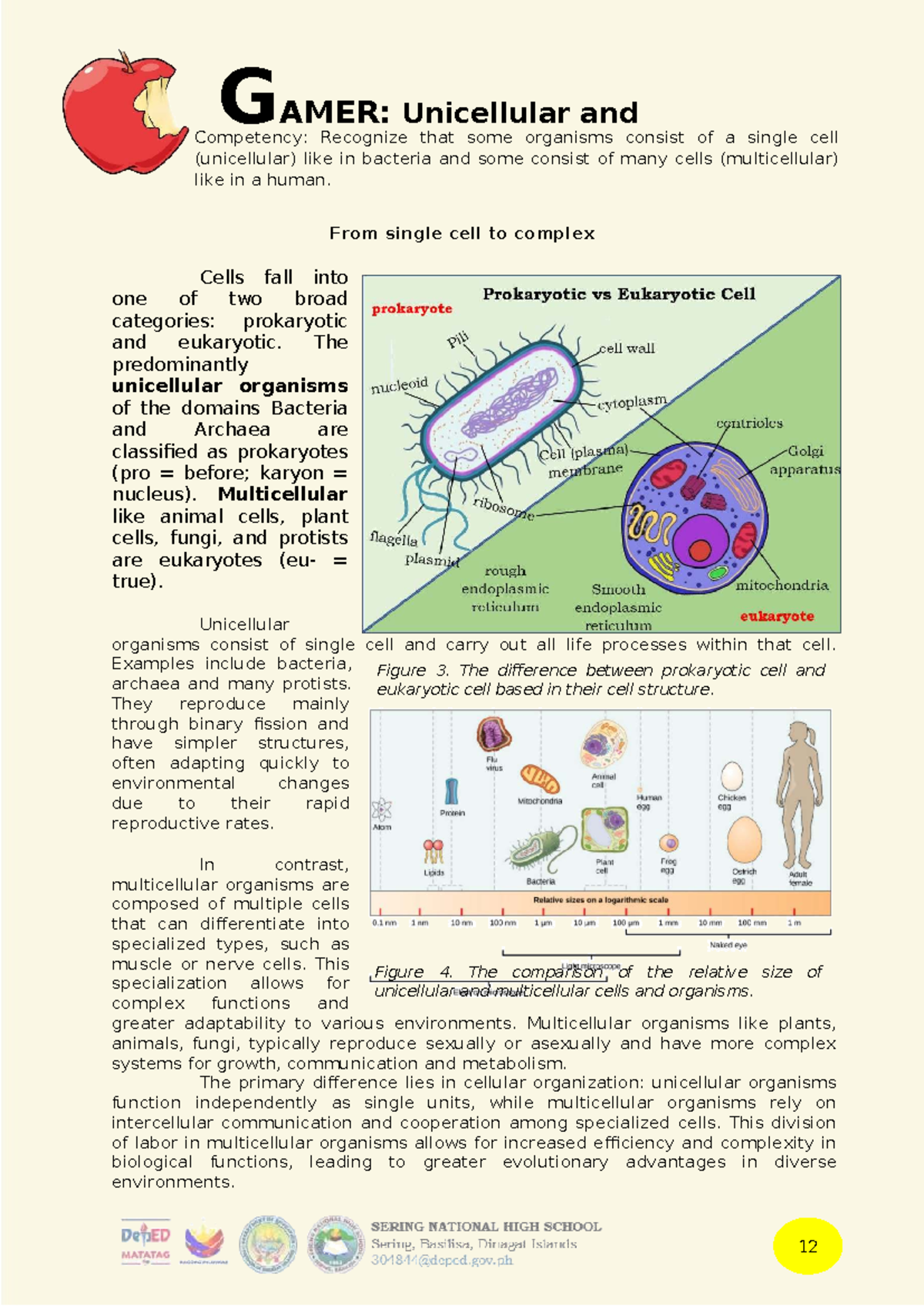
Unicellular life spans two primary domain categories based on internal cellular organization: prokaryotes and eukaryotes.
- Prokaryotic Unicellular Organisms: These are the simplest and historically oldest forms of life on Earth. Prokaryotic cells lack a membrane-bound nucleus and internal membrane-enclosed organelles. Their genetic material (DNA) floats freely within a central region of the cytoplasm called the nucleoid. The domains Bacteria (such as Escherichia coli and Streptococcus pneumoniae) and Archaea (extremophiles living in thermal vents or hypersaline lakes) consist entirely of prokaryotic unicellular organisms.
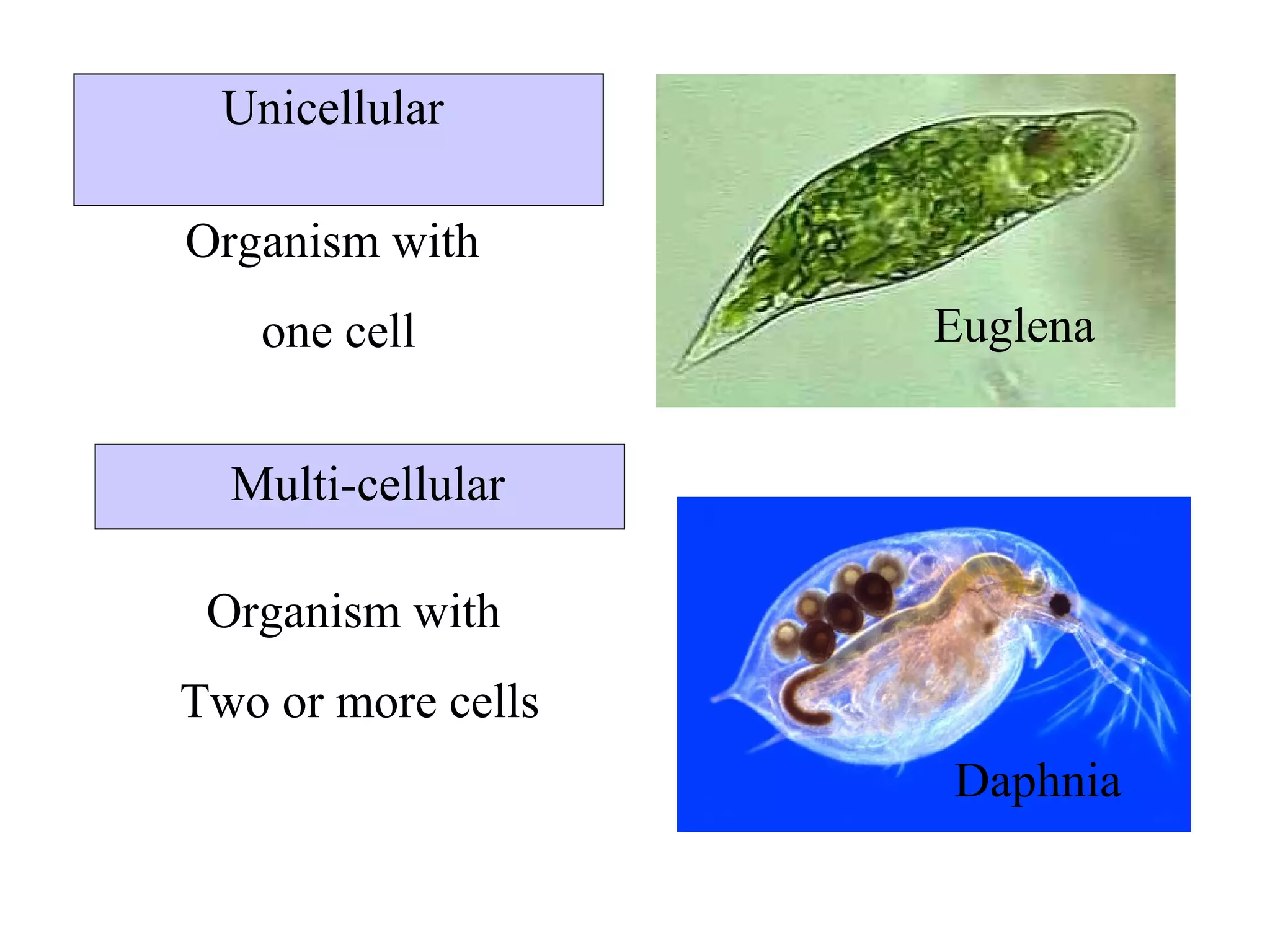
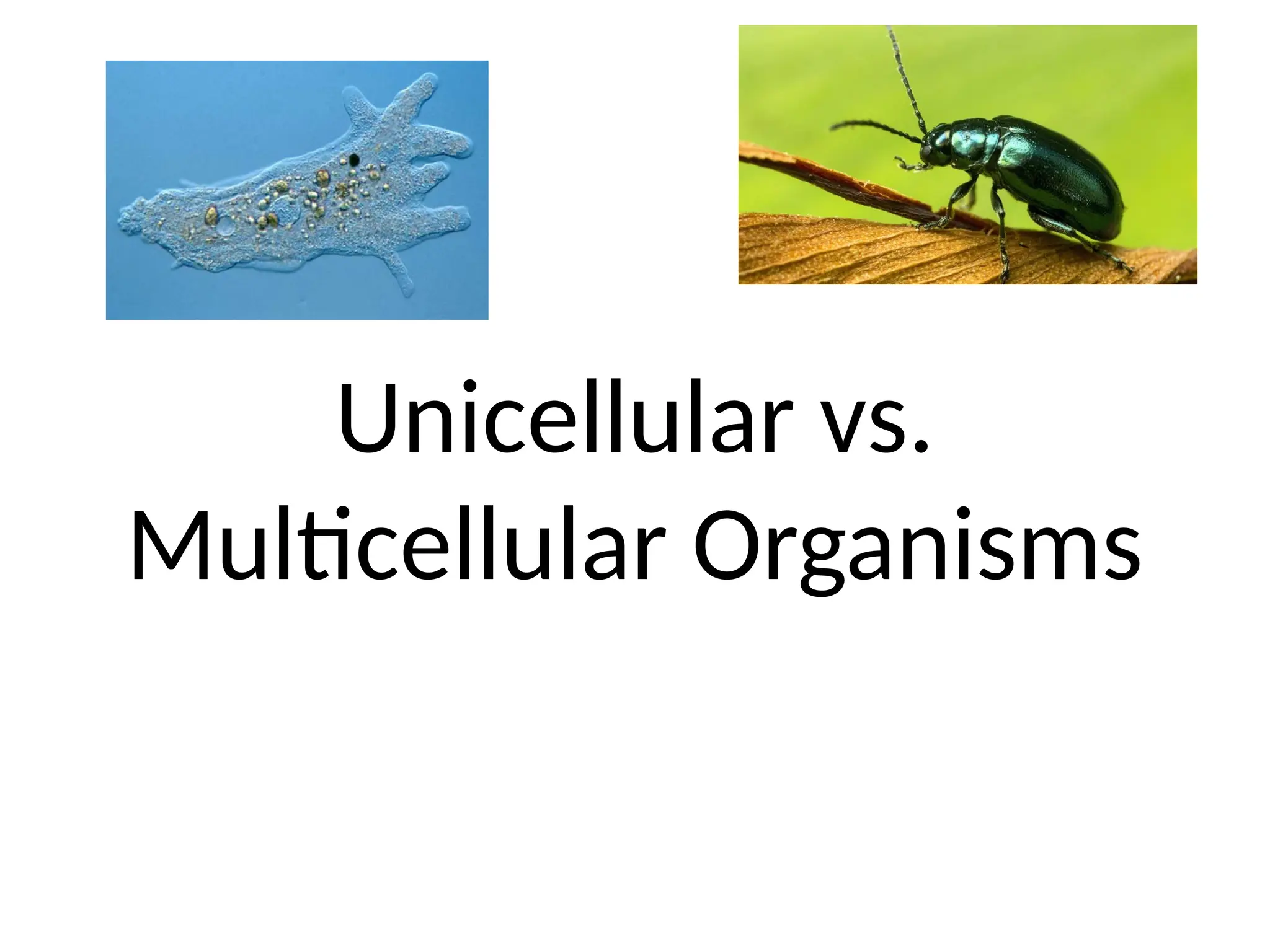
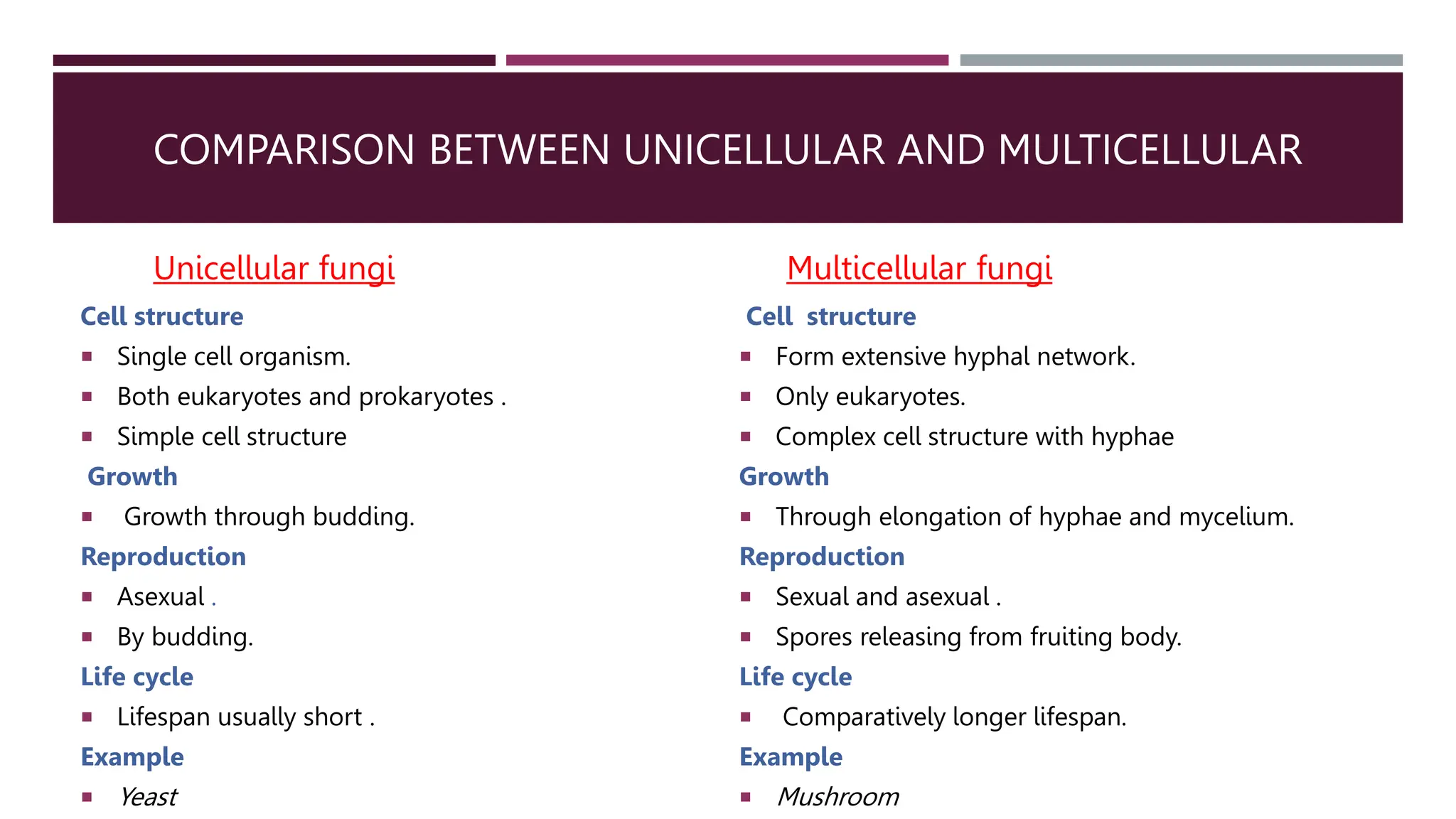
- Eukaryotic Unicellular Organisms: Eukaryotes possess a distinct, membrane-bound nucleus containing their genetic material, along with specialized membrane-bound organelles such as mitochondria, endoplasmic reticulum, and Golgi apparatus. Many protists—including Amoeba, Paramecium, Euglena, and microalgae—are unicellular eukaryotes. Additionally, certain fungi, such as Saccharomyces cerevisiae (baker's yeast), are single-celled eukaryotic organisms.
Unicellular organisms rely heavily on direct contact with their immediate environment. Nutrients and dissolved gases pass into the cell through passive transport (such as simple diffusion and facilitated diffusion) or active transport mechanisms across the cell membrane. Similarly, metabolic waste products pass directly out into the surroundings.
Defining Multicellular Organisms: Structural Organization and Complexity
The term multicellular derives from the Latin multus, meaning "many." A multicellular organism is an living entity constructed from more than one cell—often millions, billions, or trillions of cells—working in a coordinated, highly integrated network. Unlike simple clusters of individual cells, the cells of a multicellular organism are structurally and functionally interdependent; an isolated nerve cell or plant root cell cannot survive indefinitely on its own in the natural environment.
Multicellularity allows organisms to overcome the physical and biological constraints imposed on single cells. Rather than forcing one cell to handle every survival task, multicellular life relies on cellular differentiation and specialized division of labor. During development, cells activate specific subsets of genetic instructions, turning into specialized cell types adapted for specific roles.
Multicellular organisms exhibit a hierarchical structural organization:
- Cells: The basic functional units of structure and life (e.g., muscle cells, red blood cells, epidermal cells).
- Tissues: Groups of similar specialized cells that work together to perform a specific common task (e.g., epithelial tissue, nervous tissue, muscle tissue, or xylem tissue in plants).
- Organs: Structures composed of two or more distinct tissue types combined to execute complex physical tasks (e.g., the mammalian heart, human lungs, stomach, or a plant's leaf and root).
- Organ Systems: Groups of related organs that function in concert to maintain systemic physiological balance or body operations (e.g., the digestive system, nervous system, or vascular system in plants).
- Organism: The complete individual multicellular entity capable of growth, maintenance, and reproduction.
Multicellularity is found primarily within eukaryotic lineages, encompassing virtually all animals (Metazoa), land plants (Embryophyta), and complex fungi (such as mushrooms and molds), as well as multicellular algae like giant kelp (Macrocystis pyrifera).
Key Differences Between Unicellular and Multicellular Organisms
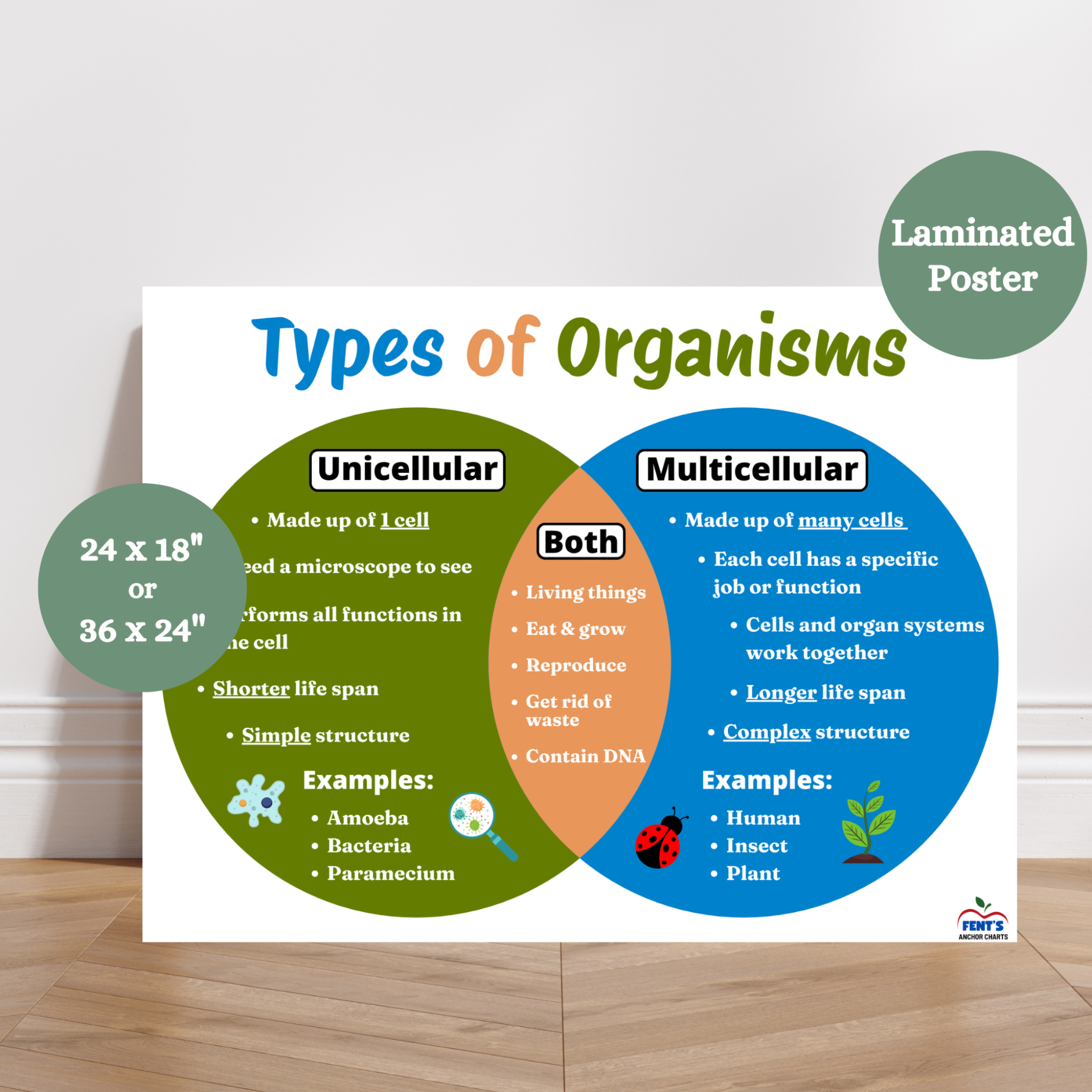
While both unicellular and multicellular entities share fundamental characteristics of life—such as genetic encoding via nucleic acids, metabolic processing, and homeostasis—they differ profoundly in physical structure, scale, operational efficiency, and reproductive mechanisms.
| Feature / Metric | Unicellular Organisms | Multicellular Organisms |
|---|---|---|
| Cell Count | Exactly one cell | Two to trillions of cells |
| Cellular Organization | Single autonomous cell; no tissues or organs | Complex structural hierarchy (cells $\rightarrow$ tissues $\rightarrow$ organs $\rightarrow$ systems) |
| Cell Specialization | Absent; one cell performs all life functions | Present; distinct cell types perform specialized physiological roles |
| Overall Size | Mostly microscopic (typically $1$ to $100\ \mu\text{m}$) | Microscopic to macroscopic (ranging from millimeter-sized animals to giant trees) |
| Exposure to Environment | Entire cell surface is directly exposed to external surroundings | Only outer cell layers are directly exposed; inner cells are bathed in internal fluids |
| Nutrient & Gas Transport | Direct diffusion, osmosis, active transport across the cell membrane | Specialized vascular, circulatory, or respiratory systems |
| Reproduction Methods | Predominantly asexual (binary fission, budding, schizogony) | Sexual (gamete fusion) and asexual mechanisms (vegetative propagation, fragmentation) |
| Lifespan & Injury Impact | Shorter operational lifespan; death of the cell means death of the organism | Generally longer lifespan; damage to individual non-vital cells does not destroy the whole organism |
| Energy Consumption | Low absolute energy requirement per organism | High absolute energy requirement due to large body mass and complex internal systems |
| Representative Examples | Bacteria, Archaea, Amoeba, Paramecium, Baker's yeast | Humans, oak trees, mushrooms, Earthworms, eagles, kelp |
The Surface Area-to-Volume Ratio Constraint
A central reason single cells cannot grow into large organisms is the physical law governing the surface area-to-volume ratio ($SA/V$). As a cell expands in size, its internal volume increases at a cubic rate ($\propto r^3$), whereas its surface area expands only at a quadratic rate ($\propto r^2$).
Because nutrients and oxygen must enter through the cell membrane, a massive unicellular organism would quickly find its surface area insufficient to supply the immense metabolic demand of its internal volume. Multicellular organisms resolve this geometric bottleneck by keeping individual cells small and forming specialized internal transport networks—such as blood vessels or plant vascular bundles—to bring nutrients directly to deep-seated tissues. Research made available through the National Center for Biotechnology Information (NCBI) provides detailed biomechanical models detailing how transport limits constrained cell size throughout early biological evolution.
Division of Labor and Metabolic Efficiency
In single-celled life, a singular plasma membrane and cytoplasmic matrix must host all necessary enzymatic reactions. This limits specialized efficiency, as metabolic processes must occur sequentially or in localized subcellular compartments.
By contrast, multicellular organisms divide labor among distinct cell lines. Specialized muscle cells optimize contractile protein filaments for locomotion, mucosal epithelial cells maximize absorption, and red blood cells specialize in hemoglobin production for efficient oxygen transport. This cellular specialization dramatically increases overall metabolic output and adaptability to varied ecological niches.
Pros and Cons: Comparing Single-Celled and Complex Life
Neither cellular architecture is inherently "superior"; both unicellular and multicellular survival strategies have proven remarkably resilient over biological history.
| Unicellular Organisms | Multicellular Organisms |
|---|---|
| ADVANTAGES:- Rapid reproduction and high population growth- Low resource and total energy requirements- Rapid adaptation through mutations- Can survive in micro-niches & extreme habitatsDISADVANTAGES:- Size strictly limited by diffusion rates- Highly vulnerable to environmental changes- Injury to the single cell causes total death- Limited physiological flexibility | ADVANTAGES:- Large size deters predators- Cellular specialization- High environmental buffer- Extended functional lifespanDISADVANTAGES:- High energy demand- Slower reproduction cycles- Complex gene regulation- Susceptible to systemic cancer |
Unicellular Advantages and Limitations
- Speed of Reproduction: Single-celled organisms can replicate rapidly under favorable conditions. Under optimal nutrient conditions, bacteria like E. coli can undergo binary fission every 20 minutes, yielding massive populations quickly.
- Environmental Versatility: Unicellular prokaryotes can survive in extreme ecological niches—ranging from deep-sea hydro-thermal vents to sub-glacial ice layers—where complex multicellular body plans could not maintain structural stability or homeostatic temperature.
- Structural Vulnerability: Because the whole individual is just one cell, physical membrane damage or toxicity typically results in the immediate death of the entire organism.
Multicellular Advantages and Limitations
- Environmental Independence: Multicellular organisms maintain regulated internal fluid environments (such as blood plasma or extracellular fluid). This insulates delicate internal cells from fluctuating external parameters like pH, salinity, and temperature.
- Systemic Resilience: If individual non-stem cells are damaged or die in a multicellular organism, the surrounding tissue can often heal or replace them through cellular division without risking the life of the entire individual.
- Resource and Regulatory Costs: Building and maintaining a multicellular body demands vast quantities of organic nutrients and energy. Furthermore, coordinated cell growth requires complex regulatory mechanisms; when cell signaling controls fail, multicellular bodies become vulnerable to uncontrolled cellular proliferation, known as cancer.
Evolutionary Context: The Transition from Single Cells to Complex Bodies
For the majority of Earth's history, life was exclusively unicellular. Fossil records indicate that unicellular life emerged approximately 3.5 to 3.8 billion years ago, whereas complex multicellular organisms appeared much later, around 600 to 800 million years ago.
The transition from unicellularity to multicellularity did not occur in a single event; rather, multicellular body plans evolved independently in at least 25 different biological lineages, including animals, plants, true fungi, red algae, and brown algae.
- Unicellular Ancestors
- Simple Colonial Groups (Cells aggregate; minimal specialization)
- Specialized Multicellularity (Cell differentiation, germ-soma separation)
The evolutionary journey typically involved specific transitional stages:
- Colonial Aggregation: Single cells began living in cooperative colonies or clusters, often held together by extracellular matrix secretions (sticky polysaccharide matrixes). An example is the freshwater green alga Volvox carteri, which forms spherical colonies composed of thousands of flagellated cells.
- Cellular Interdependence: Individual cells within a colony began dividing tasks. In Volvox, for instance, most cells perform locomotion and photosynthesis, while a subset of larger germ cells takes responsibility for reproduction.
- Germ-Somatic Division: A fundamental division established between somatic cells (body cells responsible for survival and structure) and germline cells (reproductive cells responsible for transmitting genetic material to offspring).
- Adhesion and Intercellular Communication: Cells developed specialized protein structures (such as cadherins, integrins, gap junctions, and plasmodesmata) that allowed them to adhere tightly to one another and pass chemical signals rapidly across cell boundaries.
Research published in the biological journal Nature highlights experimental evolutionary studies demonstrating that simple unicellular green algae can evolve simple multicellular groupings in laboratory conditions within hundreds of generations when exposed to mechanical filtering or predation stress.
Frequently Asked Questions
Are all microscopic organisms unicellular?
No, not all microscopic organisms are unicellular. While most single-celled organisms are microscopic, several tiny multicellular animals are also invisible or barely visible to the naked eye. For example, tardigrades ("water bears"), rotifers, and certain microscopic nematodes are fully multicellular organisms containing complex digestive systems, nerve networks, and distinct muscular tissues despite measuring less than one millimeter in length.
Is baker's yeast a unicellular or multicellular organism?
Baker's yeast (Saccharomyces cerevisiae) is a unicellular organism. Although it is a fungus—a biological kingdom known for complex mushrooms and extensive multicellular fungal networks (mycelium)—yeast exists primarily as single eukaryotic cells that reproduce through an asexual process called budding. However, under specific nutritional stress, some yeast strains can form pseudo-hyphae, which are chains of connected, un-separated cells.
Can a unicellular organism die of old age?
Yes, unicellular organisms can undergo biological aging, known as cellular senescence. When a single-celled eukaryote divides asymmetrically through budding (such as yeast), the "mother cell" retains damaged proteins, metabolic scars, and extrachromosomal rDNA circles, eventually losing the ability to divide and dying after a predictable number of generations. In contrast, organisms that divide through symmetrical binary fission redistribute damage equally between both daughter cells, effectively renewing their cellular lifespan.
Why can't a unicellular organism grow to the size of a human?
A unicellular organism cannot reach human size primarily due to structural support limits and transport physics. As a cell grows, its volume increases much faster than its surface area. A giant human-sized cell would lack sufficient surface membrane area to absorb oxygen and nutrients or to clear toxic waste quickly enough to avoid cellular collapse. Additionally, simple diffusion across vast internal distances would take days or weeks, preventing biochemical signaling needed for basic metabolic survival.
What is the difference between a colonial organism and a true multicellular organism?
A colonial organism consists of a group of independent single cells living together, where each individual cell can survive, function, and reproduce if separated from the cluster. In contrast, a true multicellular organism features cells that are structurally and functionally specialized, interdependent, and incapable of surviving independently over the long term outside the host body.
Practical Applications in Modern Science
Distinguishing between unicellular and multicellular biology is essential across many areas of modern science:
- Pharmacology and Antibiotics: Antibacterial medications target cellular features specific to unicellular prokaryotes—such as peptidoglycan cell walls or bacterial ribosomes—allowing clinicians to destroy bacterial pathogens inside a human patient without harming the host's eukaryotic multicellular cells.
- Biotechnology and Fermentation: Unicellular organisms like E. coli and S. cerevisiae are widely used in industrial biotechnology. Because they reproduce rapidly and are simple to genetically modify, scientists use them to produce therapeutic proteins, such as human insulin, synthetic enzymes, and biofuels.
- Cancer Research: Cancer represents a breakdown in multicellular regulation, where somatic cells regress to an autonomous, uncoordinated state of rapid proliferation reminiscent of unicellular organisms. Studying how cell-to-cell signaling and adhesion maintain tissue order directly informs modern oncology therapies.
When evaluating an unknown organism in academic or laboratory settings, examining its physical organization under a light or electron microscope offers immediate clarity. Observing a single cell operating independently indicates a unicellular nature; observing specialized tissues bound together with direct cell-to-cell communication signals a multicellular body plan.
Image Gallery