Clomid vs Letrozole for Ovulation Induction: A Clinical Comparison
For patients undergoing fertility treatment, choosing between Clomid (clomiphene citrate) and Letrozole for ovulation induction involves evaluating individual hormonal profiles, diagnostic history, and clinical goals. Clomid is a selec...
For patients undergoing fertility treatment, choosing between Clomid (clomiphene citrate) and Letrozole for ovulation induction involves evaluating individual hormonal profiles, diagnostic history, and clinical goals. Clomid is a selective estrogen receptor modulator traditionally used as a first-line therapy, while Letrozole, an aromatase inhibitor, is increasingly favored for its efficacy in patients with Polycystic Ovary Syndrome (PCOS) and its different side-effect profile.
Contents
Understanding Ovulation Induction
Ovulation induction is a fertility treatment designed to stimulate the ovaries to produce one or more mature follicles, thereby increasing the likelihood of conception. While natural cycles rely on the body's internal feedback loops to trigger ovulation, clinical induction uses medications to manipulate these signals.
The two primary pharmacological agents used for this purpose work through fundamentally different mechanisms. Understanding these mechanisms is the first step in determining which medication might be appropriate for a specific patient’s clinical requirements.
Mechanism of Action: How They Differ
Clomiphene citrate acts by blocking estrogen receptors at the level of the hypothalamus. By "tricking" the brain into sensing low estrogen levels, the pituitary gland is prompted to increase the production of follicle-stimulating hormone (FSH) and luteinizing hormone (LH). This surge in FSH stimulates the growth of ovarian follicles.
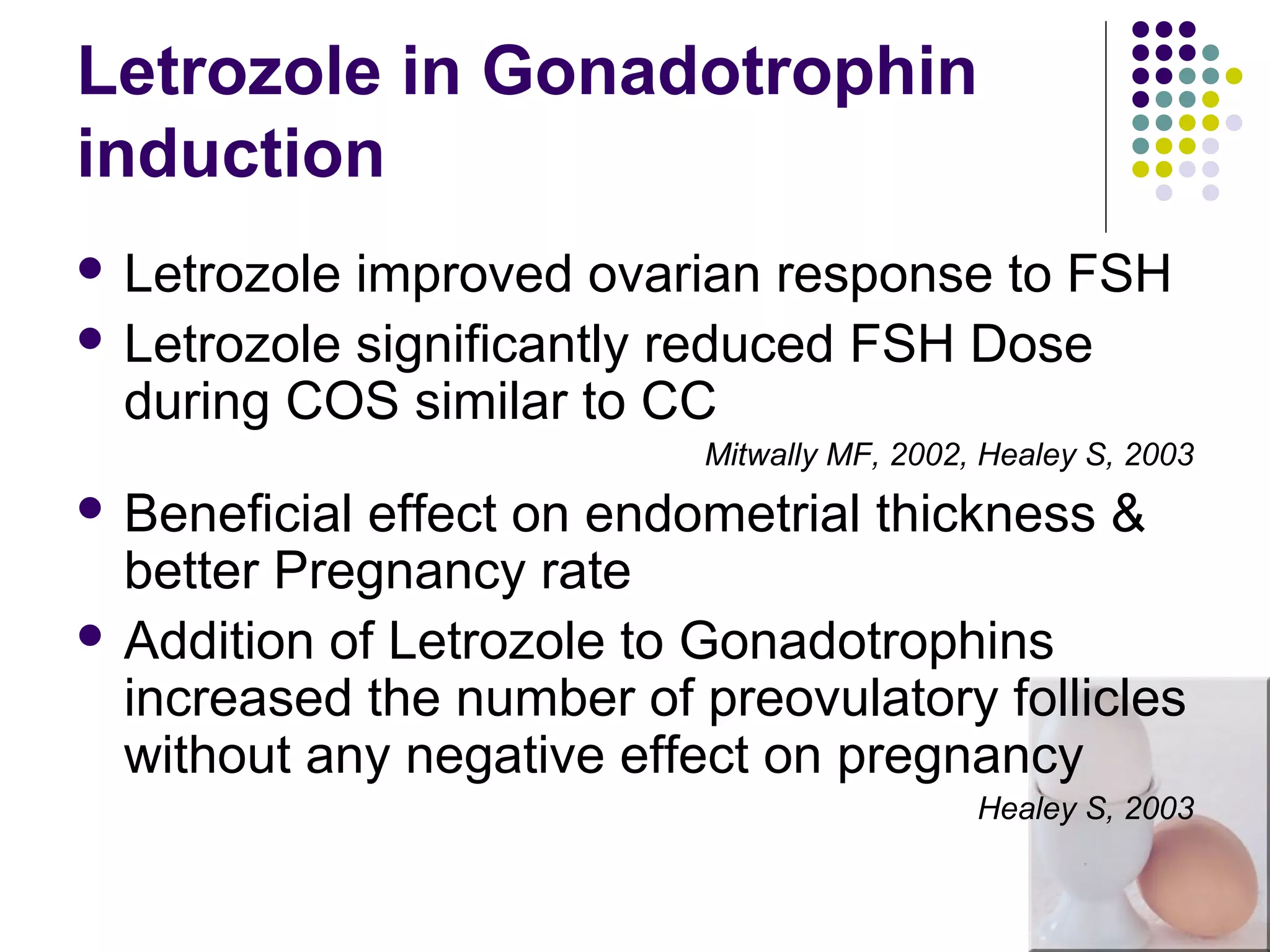
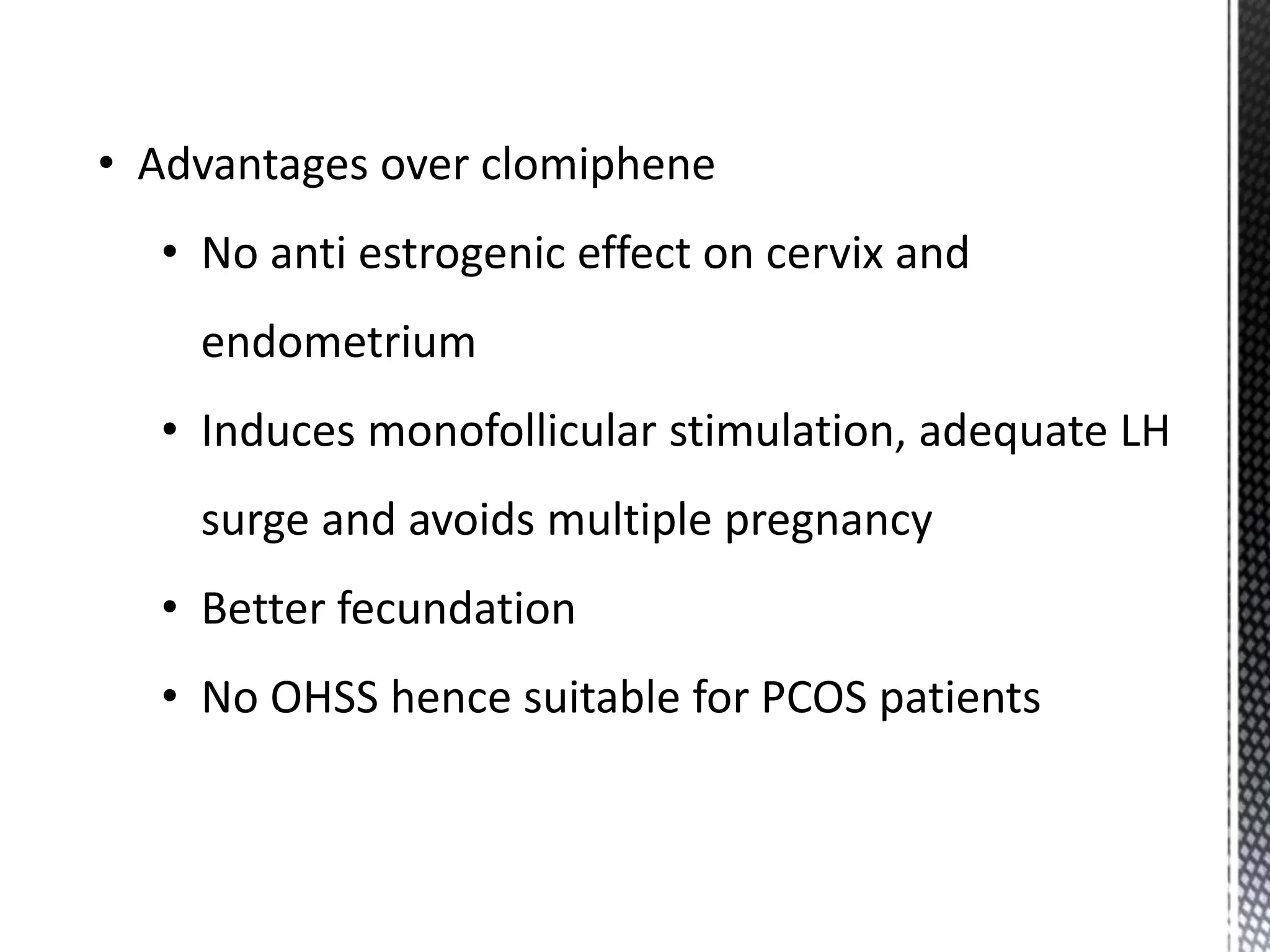
Letrozole functions as an aromatase inhibitor. It blocks the enzyme aromatase, which is responsible for converting androgens into estrogens. By reducing the local and systemic levels of estrogen, the hypothalamus is no longer inhibited by negative feedback from estrogen, allowing for a natural rise in endogenous FSH. Because Letrozole is cleared from the body more quickly than Clomid, it typically has less impact on the estrogen-sensitive tissues of the uterus, such as the endometrial lining and cervical mucus.
Comparative Clinical Efficacy
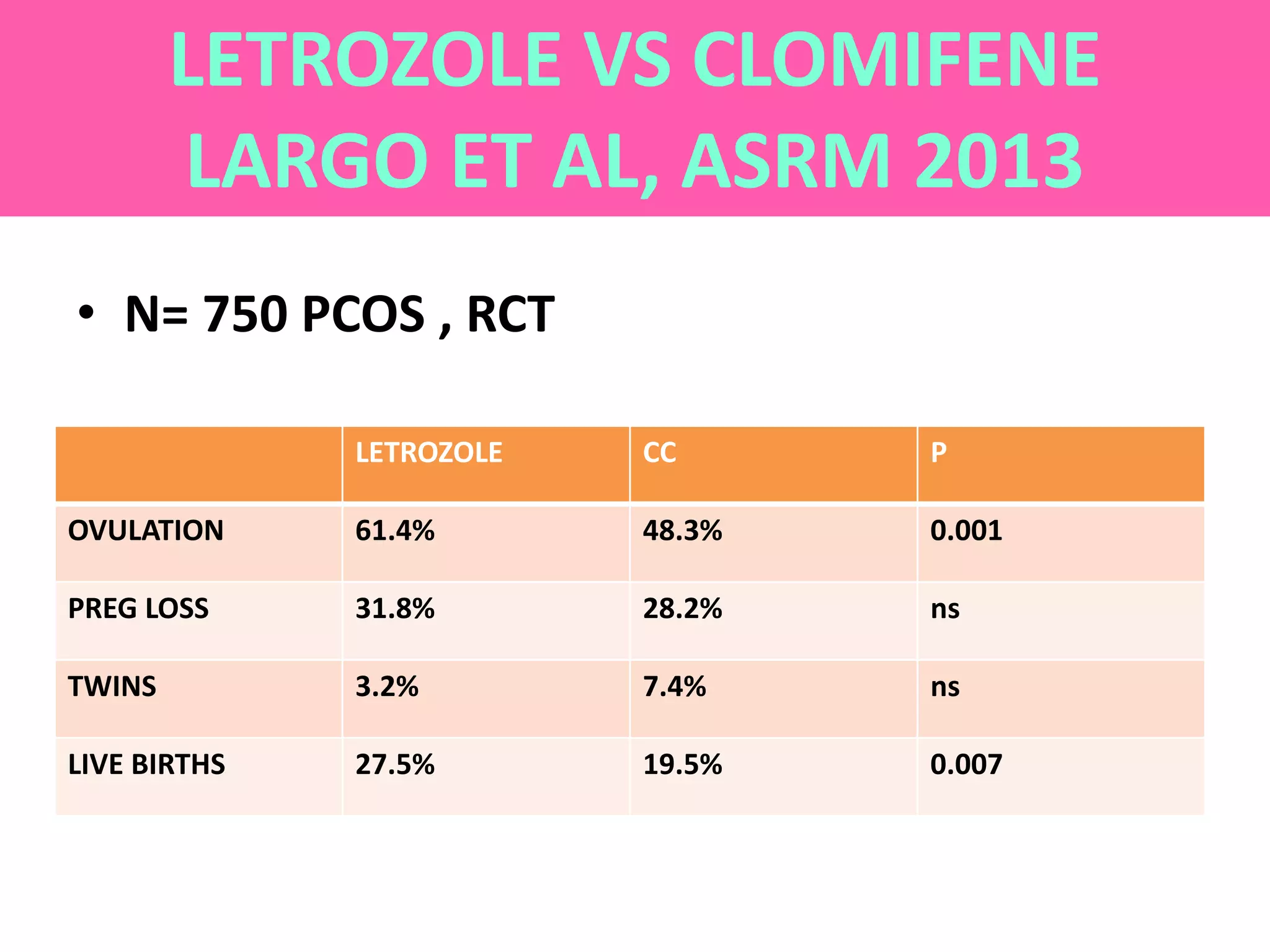
Historically, Clomid was the gold standard for ovulation induction. However, extensive clinical research, including major trials such as the 2014 study published in the New England Journal of Medicine, has demonstrated that Letrozole often yields higher live-birth rates in women with PCOS.
For women with PCOS, the high baseline levels of androgens can make the ovaries particularly sensitive to the hormonal shifts induced by Letrozole. Conversely, Clomid is sometimes preferred in patients with specific hypothalamic-pituitary dysfunctions where the goal is a more potent stimulation of the FSH pathway. The choice often depends on the underlying cause of ovulatory dysfunction.
Treatment Protocol and Monitoring
Both medications are typically administered early in the menstrual cycle, generally starting between day 2 and day 5. The duration of the course is usually five days.
Monitoring is a critical component of both protocols. Clinicians use transvaginal ultrasounds to track follicle development and occasionally blood tests to monitor estradiol and progesterone levels. This monitoring ensures that the patient is responding appropriately to the dosage and helps the physician decide if the cycle should be cancelled—for instance, if there is a risk of multiple gestation or ovarian hyperstimulation syndrome (OHSS)—or if the patient is ready for a trigger shot to induce ovulation.
Side Effects and Tolerability
The side-effect profiles of these two drugs are a frequent consideration for patients.
- Clomid: Users often report hot flashes, mood swings, headaches, and nausea. A significant concern with Clomid is its potential to cause "thinning" of the endometrium, as its anti-estrogenic effects persist in the body for weeks after the final dose. This can sometimes interfere with embryo implantation.
- Letrozole: Patients on Letrozole frequently report fatigue and dizziness. Because Letrozole does not deplete estrogen receptors throughout the entire body, it generally does not negatively impact the thickness of the endometrial lining, which is a significant clinical advantage.
| Feature | Clomiphene Citrate (Clomid) | Letrozole (Femara) |
|---|---|---|
| Drug Class | Selective Estrogen Receptor Modulator | Aromatase Inhibitor |
| Primary Mechanism | Blocks estrogen receptors in hypothalamus | Inhibits estrogen synthesis |
| Endometrial Impact | Potential for thinning (negative) | Minimal to no impact |
| Standard Use | First-line, history of use >40 years | Often preferred for PCOS |
| Multiple Birth Risk | 5%–10% | 3%–5% |
| Metabolism | Long half-life | Rapidly cleared from the body |
Factors Influencing the Decision
Choosing between these treatments is not a "one size fits all" process. A reproductive endocrinologist will consider several factors:
- Diagnosis: If PCOS is the primary diagnosis, Letrozole is often the preferred starting point due to evidence-based improvements in ovulation and pregnancy rates.
- Uterine Health: Patients with a history of thin endometrial linings during prior treatment cycles may be better candidates for Letrozole.
- Hormonal Profile: Baseline FSH and LH levels are analyzed to determine the patient's ovarian reserve and how the ovaries are likely to respond to stimulation.
- Tolerance: If a patient has previously experienced extreme emotional or physical side effects with Clomid, a switch to Letrozole is a standard clinical adjustment.
Potential Risks and Limitations
While both medications are effective, they are not without risks. The primary clinical concern with ovulation induction is the development of multiple mature follicles, which increases the risk of higher-order multiple pregnancies (twins, triplets, etc.). Ultrasound monitoring is essential to mitigate this risk.
Additionally, patients should be aware that these medications are sometimes used "off-label" for ovulation induction. While this is standard medical practice in reproductive endocrinology, it is important to discuss the implications and the specific regulatory status of the medication in your jurisdiction with your fertility specialist.
Frequently Asked Questions
Which medication is more effective for PCOS patients? Clinical evidence indicates that Letrozole is superior to Clomid for inducing ovulation and achieving live births in women with PCOS. It often leads to more robust follicular development without the negative impact on the endometrial lining associated with Clomid.
Can I switch from Clomid to Letrozole if I have side effects? Yes. If you experience significant side effects such as mood disturbances or persistent headaches with Clomid, consult your doctor. Switching to Letrozole is a common practice, as the two drugs act through different metabolic pathways and may be tolerated differently by the same patient.
Do these medications increase the risk of birth defects? Extensive data has been reviewed regarding the risk of congenital anomalies. Currently, there is no definitive evidence to suggest that the use of Clomid or Letrozole for ovulation induction significantly increases the baseline risk of birth defects compared to the general population.
How many cycles should I attempt with these drugs? Most clinicians recommend attempting 3 to 6 cycles of ovulation induction. If conception has not occurred after 3 to 6 cycles, the likelihood of success with continued use of the same medication decreases, and a discussion regarding advanced reproductive technologies (such as IUI or IVF) is typically warranted.
Is insurance coverage different for Clomid versus Letrozole? Coverage varies significantly by plan. Clomid is a branded-generic drug often covered under many fertility plans, while Letrozole (commonly known by the brand name Femara) is a generic medication often used off-label. Always verify your specific pharmacy benefit coverage with your insurance provider.
Professional Advice Recommendation
The decision to pursue ovulation induction should be made under the guidance of a board-certified reproductive endocrinologist. Before beginning any regimen, ensure you have undergone a complete fertility workup, including a semen analysis for your partner and an assessment of your fallopian tubes, to confirm that ovulation induction is the appropriate treatment for your specific situation. Discuss your medical history, including any history of breast cancer or liver disease, as these can influence the choice of medication.
Image Gallery