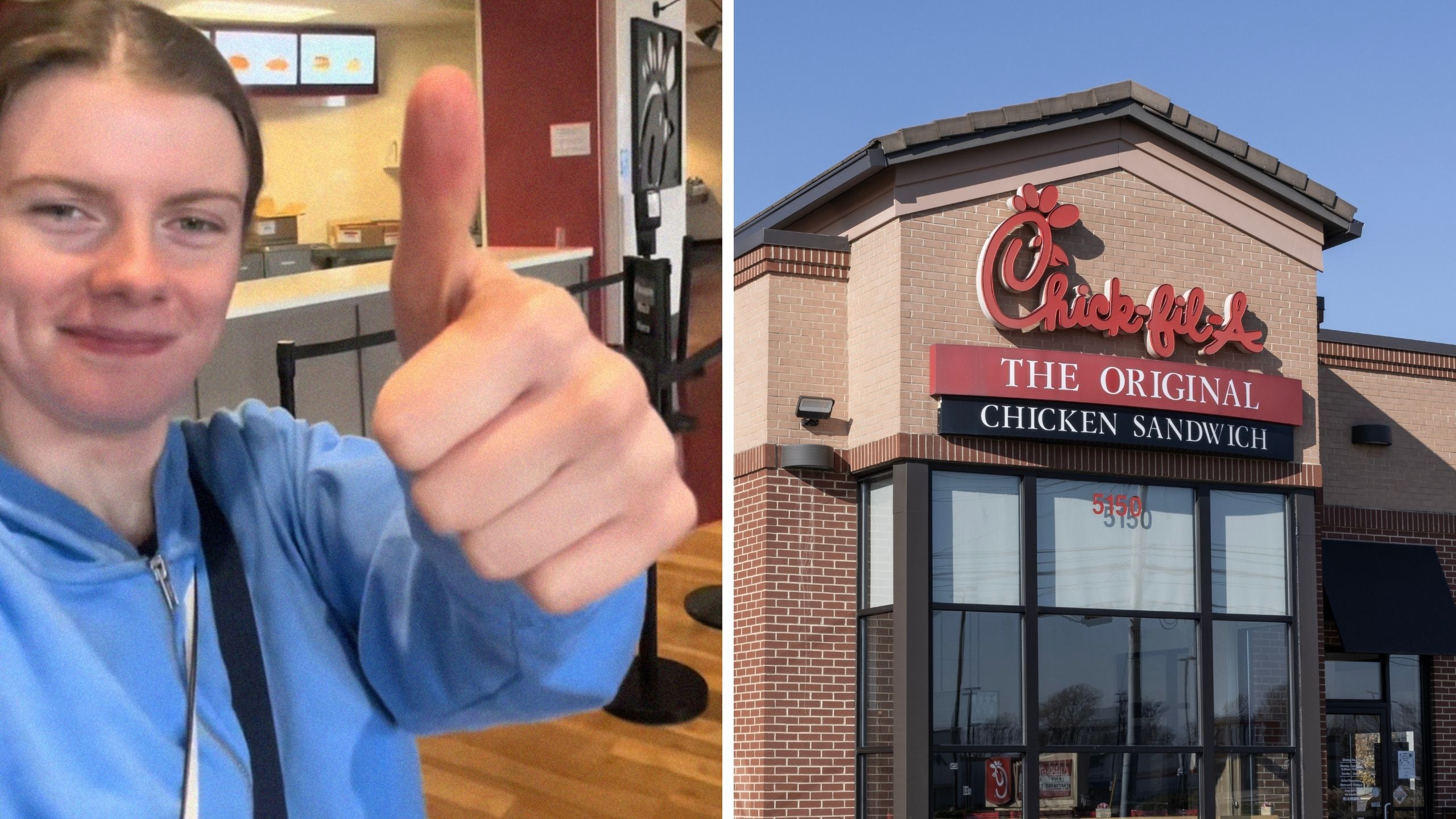
Jimmy Collins Chick-fil-A Net Worth Overview: Financial Legacy and Corporate Impact
Jimmy Collins played a foundational role in the operational success of Chick-fil-A, serving as the restaurant chain’s first senior corporate officer outside of founder S. Truett Cathy. While exact personal net worth figures for private...
Jimmy Collins played a foundational role in the operational success of Chick-fil-A, serving as the restaurant chain’s first senior corporate officer outside of founder S. Truett Cathy. While exact personal net worth figures for private corporate executives from earlier eras are rarely publicized with the precision of publicly traded company CEOs, his wealth stems from decades of executive leadership, equity-adjacent compensation models, and long-term participation in one of the most successful private restaurant chains in the United States. His financial footprint is inextricably linked to the meteoric expansion of Chick-fil-A from a single Atlanta diner into a multibillion-dollar enterprise.
Contents
The Foundations of Chick-fil-A’s Corporate Structure and Executive Compensation
To understand the financial standing of early executives like Jimmy Collins, it is necessary to examine how closely held, private restaurant corporations structure executive compensation and wealth accumulation. Unlike public corporations that issue stock options tied to volatile market indices, private companies like Chick-fil-A utilize distinct internal profit-sharing mechanisms, operational bonuses, and unique developmental incentives.
S. Truett Cathy founded the Dwarf Grill (later renamed the Dwarf House) in Hapeville, Georgia, in 1946, before opening the first official Chick-fil-A restaurant in 1967. As the company scaled throughout the 1970s and 1980s, Cathy relied on a small, tight-knit group of trusted advisors and operators to build the corporate infrastructure. Jimmy Collins joined this inner circle, helping to design and implement the operational policies, franchise models, and real estate strategies that fueled the brand's growth.
Private restaurant executives during this era typically built wealth through several core avenues:
- Base Executive Compensation: Steady, high-tier corporate salaries scaling with the national expansion of restaurant units.
- Performance-Based Bonuses: Direct incentives linked to system-wide sales growth, store opening milestones, and supply chain efficiency.
- Proprietary Operator Models: While Chick-fil-A famously retains ownership of real estate and charges operators a flat fee plus a percentage of sales rather than traditional franchise fees, corporate leadership historically shared in the overarching profitability of the enterprise system.
- Real Estate and Corporate Asset Growth: Long-term appreciation of corporate holdings and strategic commercial real estate acquisitions managed by the parent organization.
Jimmy Collins and the Operational Expansion of the Brand
Jimmy Collins's financial trajectory cannot be separated from his operational contributions. Serving alongside Truett Cathy for decades, Collins held pivotal roles in standardizing the customer experience, kitchen layout efficiencies, and the operator selection process.
The Chick-fil-A business model relies heavily on the "Operator" program, which differs fundamentally from standard fast-food franchising. Operators do not own real estate or equipment; instead, Chick-fil-A purchases the land, builds the restaurant, and equips it, while the operator runs the day-to-day business for a substantial share of the net profits. Collins was instrumental in refining this operator-centric model, ensuring high retention rates among franchise owners and consistent product quality.
As the system grew from a regional southern novelty into a national powerhouse dominating shopping malls and later freestanding drive-thrus, corporate revenues multiplied exponentially. By the time Collins transitioned into advisory or retirement phases, Chick-fil-A was generating billions in annual system-wide sales, establishing a secure financial foundation for the executives who engineered its rise.
Estimated Net Worth Evaluation and Public Financial Disclosures
Because Chick-fil-A remains a privately held, family-owned corporation controlled by the Cathy family, detailed financial audits, executive salaries, and individual equity stakes are not matters of public record. Forbes and other financial tracking publications routinely estimate the collective net worth of the Cathy family, but historical corporate officers like Jimmy Collins occupy a different tier of private wealth.
Estimating Collins's net worth requires synthesizing historical industry standards for executive compensation in the quick-service restaurant (QSR) sector during the late 20th century. Top executives at major private restaurant chains during the 1980s and 1990s typically accumulated multi-million-dollar estates through disciplined real estate investment, corporate profit-sharing, and long-tenure salary accumulation. While internet rumors or unverified biographical blogs occasionally throw out arbitrary multi-million or billionaire figures for early Chick-fil-A executives, financial analysts emphasize that only the founding Cathy family attained multi-billion-dollar status through direct equity ownership of the enterprise. Collins's wealth is best categorized as substantial generational affluence characteristic of a top-tier C-suite executive of a major privately held corporation.
| Financial Dimension | Corporate Reality at Chick-fil-A | Executive Implication for Jimmy Collins |
|---|---|---|
| Ownership Structure | Privately held by the Cathy family; no public stock offerings. | Executive wealth derived from salaries, bonuses, and profit-sharing rather than public stock options. |
| Franchise Model | Corporate-owned real estate with low-cost operator entry. | Reduced individual operator equity accumulation, shifting wealth generation to the corporate entity level. |
| System Growth | Exponential scaling from regional malls to national freestanding units. | Sustained increases in corporate revenue driving high-tier executive compensation packages over decades. |
| Public Disclosure | Exempt from SEC public reporting requirements for stock issuers. | Individual executive net worth figures remain private, requiring reliance on industry benchmarks. |
Comparative Analysis: Early Chick-fil-A Leadership vs. Modern QSR Executives
Comparing Jimmy Collins's financial era with modern quick-service restaurant leadership highlights the evolution of executive compensation.
In contemporary publicly traded giants like McDonald's or Yum! Brands, executive compensation packages are heavily weighted toward stock appreciation rights, restricted stock units (RSUs), and performance shares tied directly to public market valuations. Consequently, modern fast-food CEOs frequently boast net worths exceeding tens or hundreds of millions of dollars driven entirely by public equities.
In contrast, Collins operated in an era where private enterprise expansion was funded through retained earnings and disciplined cash flow management rather than venture capital or public equity markets. Wealth accumulation for executives like Collins was slower, more conservative, and tethered directly to the operational efficiency and cash reserves of the company. This conservative financial philosophy mirrored Truett Cathy's personal aversion to corporate debt, ensuring that Chick-fil-A expanded sustainably without risking insolvency—a strategy that protected corporate stability and, by extension, the financial security of its leadership team.
Frequently Asked Questions
What was Jimmy Collins's exact net worth?
There is no official, verified public figure for Jimmy Collins's exact net worth. Because Chick-fil-A is a privately held family business, individual executive financial disclosures are not published. Reputable financial analyses categorize early top executives as affluent retirees whose wealth stems from decades of high-level corporate compensation and internal profit-sharing rather than public stock ownership.
What was Jimmy Collins's role at Chick-fil-A?
Jimmy Collins served as the first senior corporate officer outside of founder S. Truett Cathy. He played a central role in shaping the company's operational strategies, scaling its infrastructure, refining the unique operator franchise model, and establishing the policies that guided the brand's national growth.
Does Jimmy Collins own a portion of Chick-fil-A?
No public evidence indicates that non-family executives held equity ownership shares in Chick-fil-A. The company has remained strictly under the private ownership and control of the Cathy family since its inception, utilizing internal financial incentives rather than equity distribution for executive compensation.
How does Chick-fil-A’s business model impact executive wealth?
Chick-fil-A retains ownership of all restaurant real estate and charges operators a fee plus a percentage of sales. This model generates massive, highly predictable corporate revenue streams. Historically, this cash flow enabled stable, high-tier compensation and bonus structures for executive leadership without the volatility of public market stock fluctuations.
Where can official financial information about Chick-fil-A executives be found?
Because Chick-fil-A is a private entity, it is not required to file public executive compensation disclosures with the Securities and Exchange Commission (SEC). Reliable insights are derived primarily from corporate histories, autobiographical accounts by S. Truett Cathy, and authorized business case studies examining the company's organizational development.
Conclusion and Next Actions
Evaluating the net worth overview of Jimmy Collins requires separating verified corporate history from unverified speculation. As a foundational architect of Chick-fil-A's operational success, Collins secured a lasting financial legacy rooted in high-level executive compensation and decades of stable corporate growth. For researchers and business analysts investigating private enterprise wealth generation, studying Collins provides valuable insight into how non-family leadership thrives within privately held restaurant empires. To explore further, examine authorized corporate histories such as S. Truett Cathy’s autobiography It’s Easier to Succeed Than to Fail, which details the foundational team behind the brand's rise.
Image Gallery