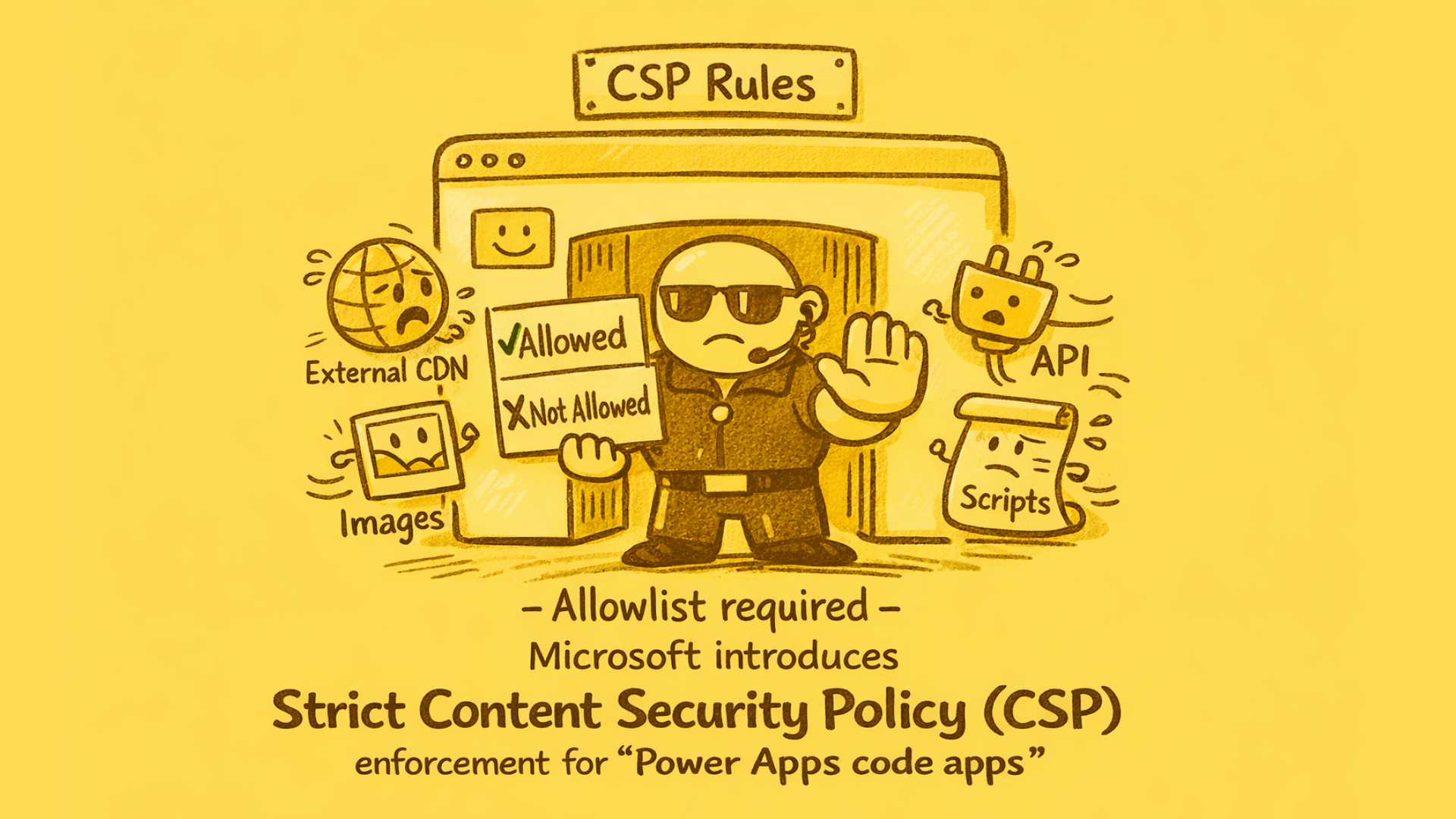
Why You Should Enforce a Strict Content Security Policy
Enforcing a strict Content Security Policy (CSP) is the most effective defense against Cross-Site Scripting (XSS) and data injection attacks. By moving beyond legacy whitelists to a nonce-based approach, you ensure that only cryptograp...
Enforcing a strict Content Security Policy (CSP) is the most effective defense against Cross-Site Scripting (XSS) and data injection attacks. By moving beyond legacy whitelists to a nonce-based approach, you ensure that only cryptographically verified scripts execute, significantly reducing your application's attack surface and protecting sensitive user data from unauthorized exfiltration.
Contents
In 2026, the complexity of web applications has reached a point where traditional perimeter security is no longer sufficient. As frontend architectures rely heavily on third-party dependencies and dynamic content loading, the risk of a single compromised script compromising an entire user session is a constant threat. A strict Content Security Policy (CSP) serves as a critical layer of defense-in-depth, acting as a final barrier when other security measures, such as input sanitization or output encoding, fail.
The Evolution of Content Security Policy
Content Security Policy was originally conceived as a way to tell the browser which sources of content are trusted. In its earliest iterations (CSP Level 1 and 2), security teams primarily used "allow-lists" (whitelists). You would explicitly list domains like apis.google.com or cdn.example.com as trusted sources for scripts. However, real-world research by security teams at major tech organizations revealed a fundamental flaw: almost all large whitelists are bypassable.
Attackers discovered that if a trusted domain hosted an "open redirect" or a library with a known vulnerability (like an old version of Angular or a JSONP endpoint), they could use that trusted domain to execute malicious code. This realization led to the development of the "Strict CSP" model. Instead of trusting a domain, a strict policy trusts specific pieces of code through cryptographic tokens called nonces or via hashes. This shift from "where is the code from?" to "do I specifically know this piece of code?" is what defines modern web security in 2026.
Primary Reasons to Implement a Strict CSP
1. Mitigation of Cross-Site Scripting (XSS)
Cross-Site Scripting remains one of the most prevalent vulnerabilities in web applications. It occurs when an attacker successfully injects malicious scripts into a web page viewed by other users. A strict CSP prevents the execution of any script that does not possess the correct nonce (a number used once). Because an attacker cannot predict the unique nonce generated by the server for each request, their injected scripts are blocked by the browser by default. This protection is effective even if an application has an undiscovered injection vulnerability in its backend code.
2. Prevention of Data Exfiltration
Security is not just about stopping code from running; it is also about stopping data from leaving. Malicious scripts often attempt to send cookies, session tokens, or keystroke data to an attacker-controlled server. A well-configured CSP uses directives like connect-src to limit which APIs and endpoints the browser is allowed to communicate with. By enforcing a strict policy, you ensure that even if a malicious script somehow executes, it cannot send stolen data to an unauthorized external domain.
3. Protection Against Clickjacking and UI Redressing
Clickjacking involves tricking a user into clicking something different from what they perceive, typically by embedding the target site into an invisible iframe. While the X-Frame-Options header was the traditional solution, CSP provides the frame-ancestors directive, which offers more granular control. A strict CSP allows you to specify exactly which domains (if any) are permitted to embed your pages, preventing unauthorized framing and protecting users from UI-based manipulation.
Technical Components of a Strict Policy
To achieve a truly strict security posture, several key directives and keywords must be utilized correctly. The goal is to move away from the 'unsafe-inline' and 'unsafe-eval' keywords, which effectively disable the security benefits of CSP for the sake of convenience.
The Power of the Nonce
A nonce-based policy works by generating a random, base64-encoded string on the server for every single page load. This string is added to the CSP header and to every script tag on the page. The browser then compares the two. If they match, the script runs; if not, it is discarded. This eliminates the need for maintaining an ever-growing list of trusted domains and provides a much higher level of assurance.
Implementing 'strict-dynamic'
The 'strict-dynamic' keyword is a game-changer for modern applications. In older CSP versions, if a trusted script wanted to load another script (a common pattern for analytics or ad platforms), the second script also had to be whitelisted. This created a maintenance nightmare. With 'strict-dynamic', the browser trusts any script that is loaded by a script already verified by a nonce. This allows for the dynamic loading of dependencies while maintaining a high security bar.
Disabling 'unsafe-eval'
The 'unsafe-eval' directive allows the use of functions like eval(), which convert strings into executable code. Attackers frequently use these functions to bypass security filters. Enforcing a strict CSP requires refactoring code to avoid these patterns, ensuring that the application logic remains predictable and secure.
Operational Benefits and Regulatory Compliance
Beyond immediate technical security, a strict CSP provides significant organizational advantages. As global data protection regulations become more stringent, demonstrating a proactive security posture is no longer optional.
- Defense-in-Depth: CSP provides a safety net. If a developer accidentally introduces a vulnerability in a new feature, the CSP remains active to prevent exploitation.
- Auditability: A CSP header provides a clear, machine-readable declaration of an application's security boundaries, making it easier for security auditors to verify compliance.
- Reduced Incident Response Costs: By preventing the most common classes of web attacks, organizations save the immense time and financial resources associated with data breach remediation and notification.
In 2026, standards such as PCI DSS 4.0 and updated ISO/IEC 27001 frameworks emphasize the need for integrity monitoring and the prevention of unauthorized script execution. A strict CSP is a direct technical control that satisfies several of these high-level regulatory requirements.
Comparison: Whitelist-Based vs. Strict CSP
The following table highlights the operational and security differences between the two primary approaches to Content Security Policy.
| Feature | Whitelist-Based CSP (Legacy) | Strict CSP (Modern/Nonce-Based) |
|---|---|---|
| Security Level | Moderate/Low (Bypassable) | High (Cryptographically Secure) |
| Bypass Potential | High via Open Redirects/JSONP | Minimal (requires Nonce leakage) |
| Maintenance Burden | High (Requires frequent URL updates) | Low (Template-driven) |
| Dynamic Loading | Difficult/Requires more whitelisting | Simplified via 'strict-dynamic' |
| Browser Compatibility | Universal (back to IE11/early Edge) | Modern browsers (Level 3+) |
| Implementation Goal | Trusted Origins | Trusted Code |
Handling Third-Party Scripts and Legacy Code
The most common objection to enforcing a strict CSP is the "breaking" of third-party scripts. Services like Google Analytics, Hubspot, or Intercom often require adding scripts to your pages. In a whitelist-based world, these services provided a long list of domains to trust. In a strict CSP world, you simply apply your server-generated nonce to the initial loader script provided by these services.
For legacy code that relies on inline scripts (e.g., ), the transition to a strict CSP can be challenging. The best practice is to move all inline scripts to external files. If that is not immediately possible, you can use hashes (SHA-256) for specific blocks of code. The browser will only execute the inline script if its hash matches the one provided in the CSP header. This allows you to secure legacy blocks without a full rewrite.
Monitoring and Reporting: The Feedback Loop
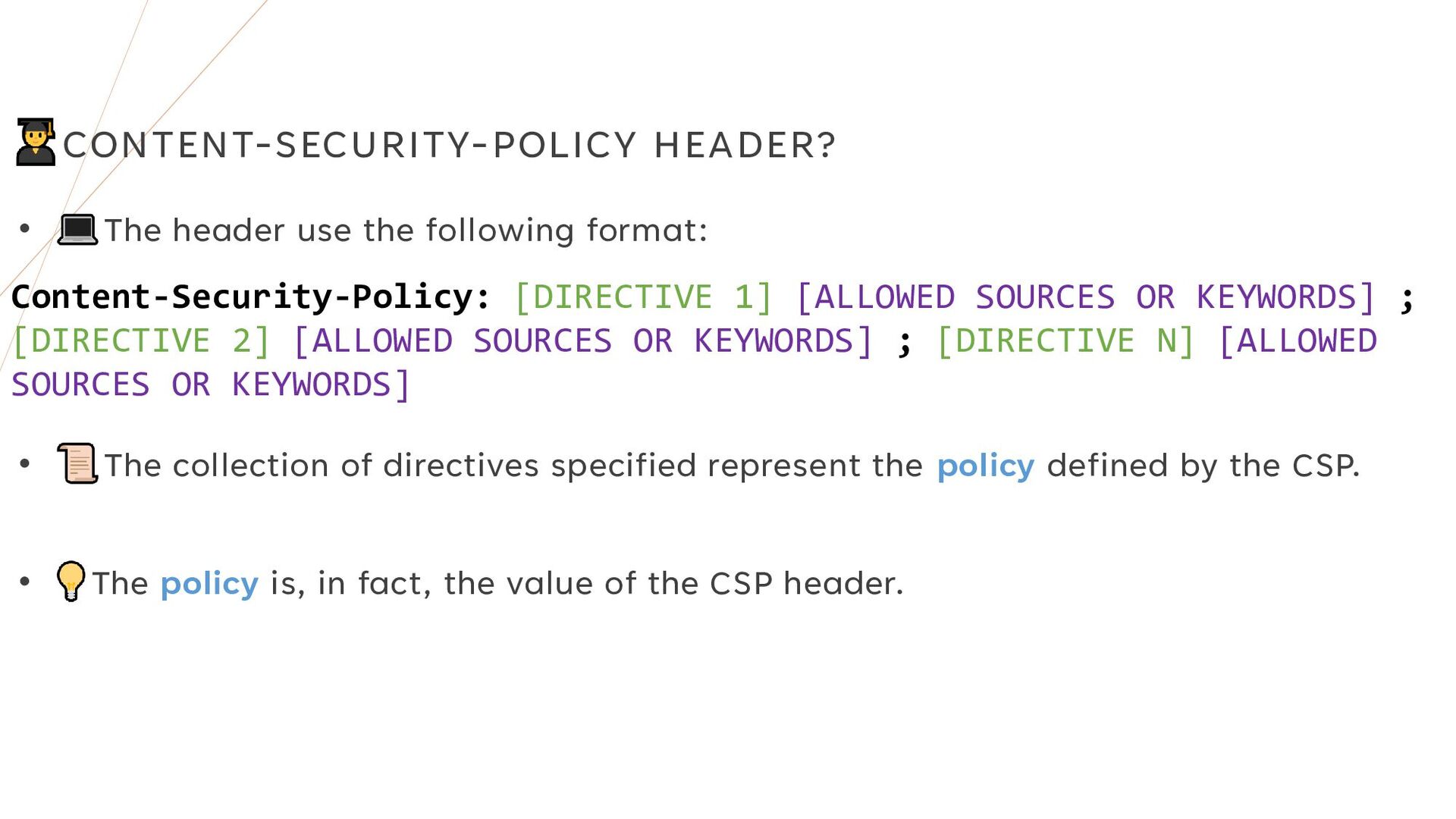
You should never deploy a strict CSP in "enforcement" mode without first using the Content-Security-Policy-Report-Only header. This allows you to see what would have been blocked without actually breaking the site for users.
By setting a report-to or report-uri directive, the browser will send a JSON object to your specified endpoint whenever a policy violation occurs. This data is invaluable for:
- Identifying legitimate scripts that you forgot to nonce.
- Detecting active XSS attempts in the wild.
- Monitoring the behavior of third-party plugins that might be trying to access restricted domains.
Regularly reviewing these reports is a core part of modern security operations. It allows teams to refine their policies and stay ahead of evolving threats.
Frequently Asked Questions
Does CSP replace the need for input sanitization?
No. CSP is a second line of defense. You should always sanitize inputs on the server and encode outputs on the client to prevent the injection from happening in the first place. CSP exists to prevent the exploitation if those primary defenses fail.
Will a strict CSP slow down my website?
No. The overhead of checking a CSP header is negligible for modern browsers. In fact, by preventing the execution of unauthorized, heavy, or malicious scripts, a CSP can occasionally improve the perceived performance and stability of a site.
What happens if a browser doesn't support CSP Level 3?
Modern browsers are designed to be "fail-safe." If a browser does not understand a specific directive like 'strict-dynamic', it will fall back to the other directives in the header. For very old browsers, the CSP may be ignored entirely, but it will not break the page.
How do I generate a secure nonce?
A nonce must be a unique, cryptographically strong random string generated for every request. You should use a library specifically designed for security (like crypto in Node.js or secrets in Python) to ensure the string cannot be guessed by an attacker.
Can I use CSP to block all iframes?
Yes. By using the frame-src 'none'; and frame-ancestors 'none'; directives, you can prevent your site from embedding any external content and prevent any other site from embedding your content.
Moving Toward Full Enforcement
The journey to a strict CSP should be incremental. Start by auditing your current scripts, move inline logic to external files, and implement a reporting endpoint. Once your violation reports are clean, switch from Report-Only to the standard Content-Security-Policy header.
Enforcing a strict policy is not merely a technical checkbox; it is a commitment to protecting user integrity. In an era where browser-based attacks are sophisticated and automated, a strict CSP provides the most robust, scalable, and verifiable method for securing the modern web experience.
Image Gallery