How Life Insurance Protects Human Capital and Secures Future Financial Stability
Life insurance protects human capital by converting an individual's future earning potential into an immediate, guaranteed financial asset that replaces lost wages, covers outstanding liabilities, and funds long-term family security in...
Life insurance protects human capital by converting an individual's future earning potential into an immediate, guaranteed financial asset that replaces lost wages, covers outstanding liabilities, and funds long-term family security in the event of premature death.
Contents
Understanding financial security requires looking beyond physical assets like real estate, vehicles, and investment portfolios to recognize that an individual’s greatest economic engine is their capacity to earn an income. This capability—referred to in economic terms as human capital—represents the present value of all future wages, salaries, professional skills, and expertise a person expects to generate over their working lifetime. While disability insurance and retirement accounts protect portions of this value against injury or old age, life insurance serves as the ultimate backstop against its complete termination. Examining how coverage safeguards this economic value illuminates vital strategies for estate planning, family protection, and business continuity.
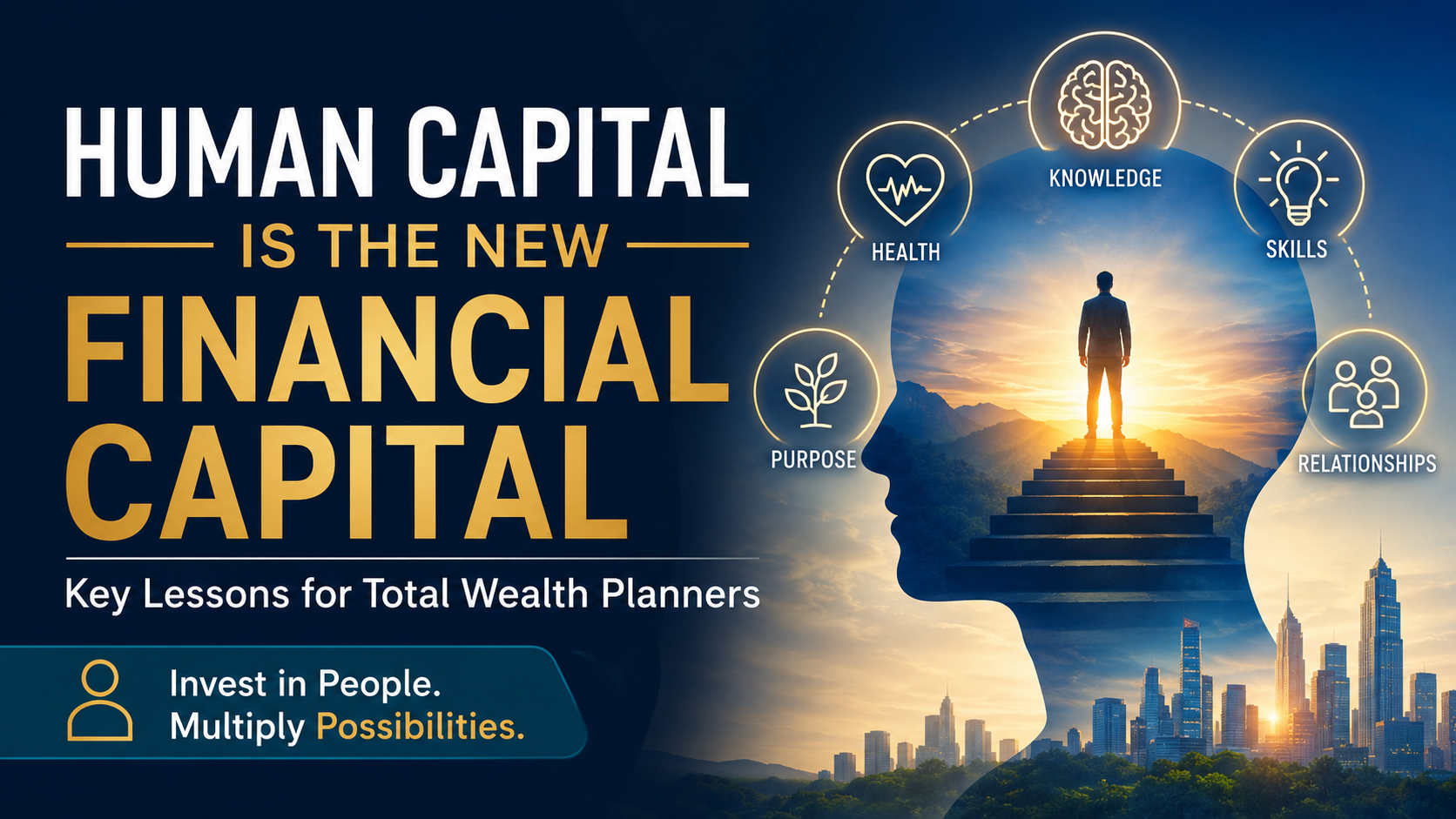
Defining Human Capital in Personal Finance
Human capital is the foundational source of all other wealth. Unlike physical capital, which consists of tangible items that can be bought, sold, or borrowed against easily, human capital is entirely dependent on the living, working individual.
The Economic Value of Future Earnings
To understand why life insurance is essential, one must calculate the economic value of future earnings. For a professional earning a steady salary, a career spanning thirty remaining years yields a multi-million-dollar cumulative income stream. For example, an individual earning $100,000 annually at age 35 will generate $3 million in gross earnings before reaching age 65, excluding raises, bonuses, and compounding investment returns.
Risks to Human Capital
This vast economic engine faces three primary risks:
- Premature Death: The sudden cessation of earnings, which instantly zeroes out the projected income stream.
- Disability or Illness: The partial or complete impairment of earning capacity while living expenses remain constant or increase.
- Involuntary Unemployment: Market shifts or technological changes that devalue specialized professional skills.
While savings and investments can eventually replace human capital, early in a career or family-building phase, accumulated assets are usually minimal. Life insurance acts as a synthetic asset that bridges the gap between current net worth and the total value of projected lifetime earnings.
The Mechanics of Capital Replacement
When an income earner dies prematurely, surviving dependents suffer a dual loss: the emotional devastation of the loss and the abrupt termination of the financial contributions that sustained their standard of living. Life insurance functions as a capital replacement tool designed to mimic the deceased's ongoing economic output.
Determining the Correct Coverage Amount
Financial planners utilize several methodologies to calculate the precise amount of life insurance required to protect human capital. The most common approach is the Human Life Value (HLV) method. This calculation projects the insured's future earnings up to retirement age, subtracts estimated personal consumption taxes and maintenance costs, and discounts the remaining sum to present value using an appropriate interest rate.
Alternatively, the Income Replacement approach multiplies current annual earnings by the number of years until the youngest dependent reaches adulthood or until retirement. For instance, replacing a $120,000 salary over 20 years requires a baseline capital sum that, when conservatively invested, generates equivalent annual distributions without depleting the principal.
Term Life Versus Permanent Life Insurance
Choosing the right policy structure depends on whether the protection need is temporary or permanent:
- Term Life Insurance: Provides coverage for a specified duration (e.g., 10, 20, or 30 years). It matches the timeline of peak human capital accumulation—the years when children are growing, mortgages are active, and retirement accounts are still being funded. It offers high face values for relatively low initial premiums.
- Permanent Life Insurance: Includes whole life and universal life policies that provide lifelong coverage alongside a cash-value accumulation component. These policies protect human capital while simultaneously building a secondary, tax-advantaged asset pool that can be leveraged during the insured's lifetime.
Comparison of Life Insurance Structures for Capital Protection
| Feature | Term Life Insurance | Whole Life Insurance | Universal Life Insurance |
|---|---|---|---|
| Duration | Specific term (10–30 years) | Lifelong | Lifelong, with flexible terms |
| Primary Purpose | Pure income replacement | Lifetime protection and cash growth | Flexible protection and investment growth |
| Premium Structure | Level throughout the term | Fixed and guaranteed | Adjustable within contractual limits |
| Cash Value | None | Guaranteed growth rate | Tied to interest crediting or market indexes |
| Cost Efficiency | High (lower initial cost per dollar of coverage) | Lower (higher initial cost due to cash value) | Moderate to High (depends on funding strategy) |
Protecting Business Human Capital
Human capital protection is not limited to individual households; it is equally critical in the corporate world. Key employees, founders, and specialized executives represent concentrated human capital that drives enterprise value, secures client relationships, and dictates operational success.
Key Person Insurance
When a business relies heavily on a specific individual—such as a chief executive, top salesperson, or lead engineer—the sudden loss of that person can cause severe revenue drops, credit tightening, and operational disruption. Key person insurance is a corporate-owned policy where the business acts as the owner and beneficiary. If the key employee dies, the death benefit provides immediate liquidity to stabilize cash flow, recruit and train a replacement, and reassure creditors and investors.
Buy-Sell Agreements
Partners in closely held businesses often use life insurance to fund buy-sell agreements. If a co-owner dies, the surviving partners need capital to purchase the deceased's ownership stake from their estate without liquidating business assets or taking on burdensome debt. A properly structured cross-purchase or entity-purchase life insurance plan ensures that the deceased's family receives fair market value for their share of the business's human capital and enterprise value, while the surviving partners retain full control of operations.
Integrating Coverage into Comprehensive Financial Planning
Viewing life insurance merely as a death benefit overlooks its broader utility in holistic financial planning. Protecting human capital requires coordinating insurance portfolios with estate planning, tax strategy, and asset allocation.
Estate Liquidity and Tax Mitigation
Substantial human capital often translates into significant estate value upon retirement, but premature death can trigger unexpected tax liabilities. Estate taxes, probate fees, and final medical expenses can force the premature liquidation of real estate or business interests at distressed prices. Life insurance payouts provide immediate, generally income-tax-free liquidity that settles these obligations, ensuring that accumulated wealth passes intact to intended beneficiaries.
Asset Diversification
As individuals build wealth through real estate and equities, their portfolios become heavily exposed to market volatility. Term and permanent life insurance policies provide a non-correlated asset class. The death benefit is guaranteed by the financial strength and reserves of the issuing insurance carrier, remaining insulated from economic downturns, stock market corrections, and real estate valuation drops.
Common Pitfalls in Human Capital Protection
Navigating life insurance requires careful attention to detail to avoid gaps in coverage. Several common missteps can compromise an otherwise sound financial strategy:
- Underestimating Future Earning Potential: Calculating coverage based solely on current expenses rather than lifetime earning capacity leaves dependents vulnerable to inflation and rising living costs.
- Relying Exclusively on Group Life Insurance: Employer-sponsored group policies typically offer limited coverage (often one or two times salary) and terminate when employment ends, leaving the individual unprotected during job transitions.
- Failing to Update Policies: Major life events—such as marriage, the birth of children, business expansion, or purchasing a home—alter human capital requirements, necessitating periodic policy reviews and coverage adjustments.
Frequently Asked Questions
Why is life insurance considered a tool for protecting human capital?
Life insurance converts an individual's future earnings capacity into an immediate financial asset. Because a person's ability to generate income ends at death, a life policy replaces those lost future wages to ensure dependents can maintain their standard of living and meet financial obligations.
How much life insurance do I need to adequately cover my human capital?
The required coverage amount is typically determined by calculating your Human Life Value (projected earnings up to retirement minus personal expenses) or by using an income multiplier approach that provides a lump sum capable of replacing your annual salary over your peak earning years.
Does business human capital require different insurance strategies than personal human capital?
Yes. Business human capital is protected through specialized corporate-owned policies such as key person insurance and policies that fund buy-sell agreements, ensuring the enterprise has immediate liquidity to survive the loss of a vital executive or owner.
Can term life insurance effectively protect human capital?
Term life insurance is highly effective for protecting human capital during peak earning and family-rebuilding years. Because it provides high coverage amounts at lower initial premiums, it allows younger earners to secure comprehensive financial protection within a manageable budget.
What happens to my human capital protection if I change employers?
If your primary coverage relies on an employer-sponsored group life insurance plan, you lose that protection when you leave the company. Purchasing an individual, portable term or permanent policy ensures your human capital remains protected regardless of career changes.
Next Steps for Securing Your Economic Value
Evaluating your human capital requires a rigorous assessment of your current income, remaining working years, and the financial dependencies of your family or business partners. Begin by calculating your projected lifetime earnings and comparing that figure against your existing savings, investments, and insurance coverage. Consult with a qualified financial advisor or insurance professional to design a customized policy structure that aligns your coverage limits with your long-term economic objectives, ensuring your family and enterprise remain shielded against unforeseen events.
Image Gallery