Russell Henderson: Case Analysis, Legal History, and Federal Legislative Impact
Russell Henderson is an American inmate serving two consecutive life sentences for his role in the October 1998 kidnapping and murder of Matthew Shepard in Laramie, Wyoming. As of 2026, Henderson remains incarcerated at the Wyoming Sta...
Russell Henderson is an American inmate serving two consecutive life sentences for his role in the October 1998 kidnapping and murder of Matthew Shepard in Laramie, Wyoming. As of 2026, Henderson remains incarcerated at the Wyoming State Penitentiary, with no eligibility for parole under the terms of a 1999 plea agreement that allowed him to avoid the death penalty.
Contents
Historical Context: The 1998 Laramie Incident
The events involving Russell Henderson and his co-defendant, Aaron McKinney, began on the night of October 6, 1998, at the Fireside Lounge in Laramie. According to court records and investigative reports, Henderson and McKinney encountered Matthew Shepard, a 21-year-old student at the University of Wyoming, and lured him into their vehicle by posing as gay men.
Once inside the truck, the nature of the encounter shifted from a purported social interaction to a violent robbery and kidnapping. Shepard was driven to a remote area on the outskirts of Laramie, where he was tied to a buck-rail fence, severely beaten with a .357 Magnum pistol, and left in near-freezing temperatures. Shepard was discovered 18 hours later by a cyclist who initially mistook him for a scarecrow. He died on October 12, 1998, at Poudre Valley Hospital in Fort Collins, Colorado, due to severe head injuries.
Henderson’s involvement was characterized by his assistance in the kidnapping and his presence during the assault. While McKinney was identified as the primary assailant who inflicted the fatal blows, Henderson played a critical role in restraining Shepard and failing to intervene or seek medical help. This complicity formed the basis for the capital murder charges later brought against him.
The Legal Proceedings: A Deep Dive into the 1999 Trial
The legal resolution for Russell Henderson was reached through a strategic plea bargain, a common mechanism in high-profile capital cases where the prosecution and defense seek to balance the certainty of punishment against the costs and risks of a death penalty trial.
The Plea Bargain Mechanism and Death Penalty Avoidance
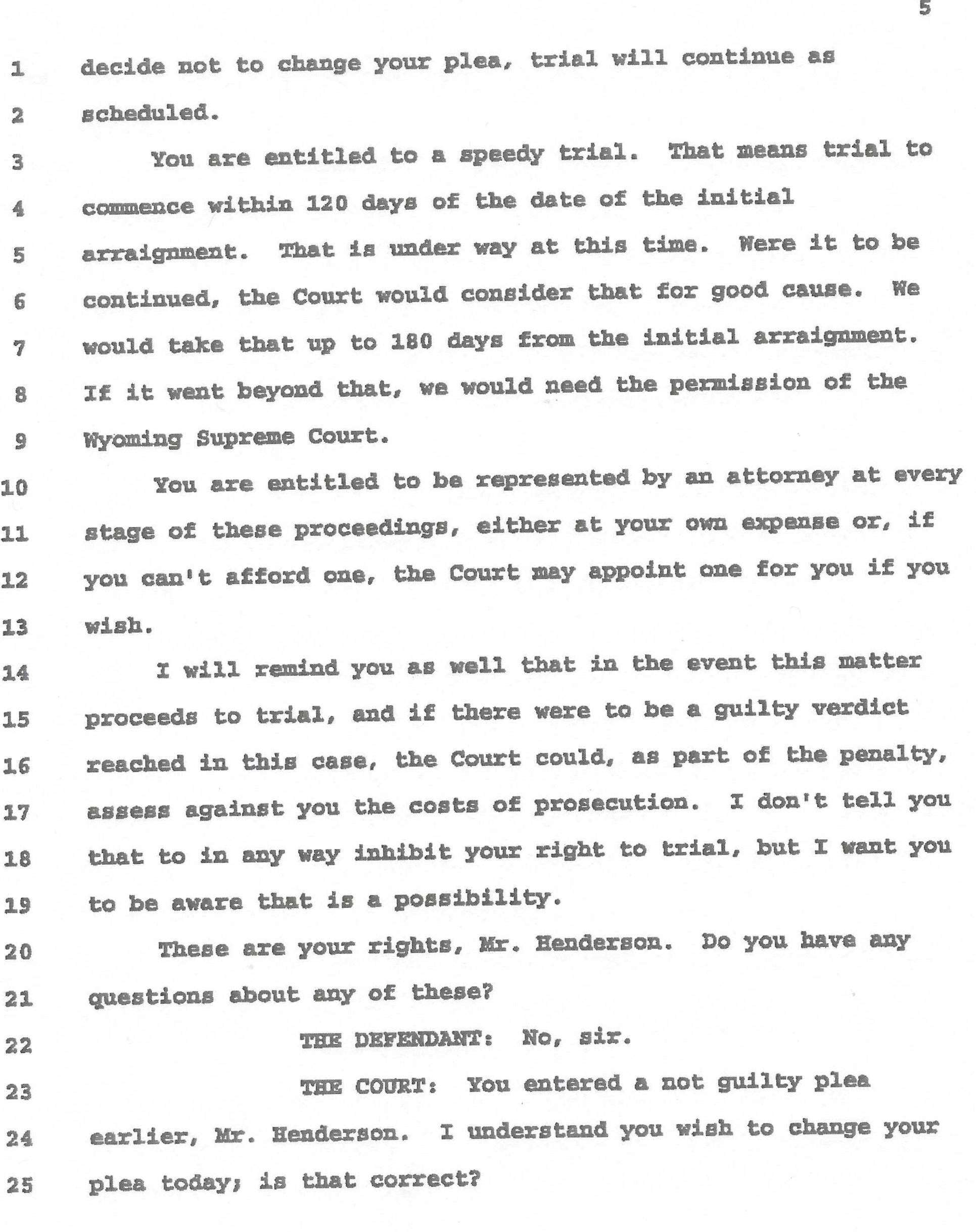
On April 5, 1999, Russell Henderson entered a guilty plea to one count of first-degree murder and one count of kidnapping. This plea was a calculated legal move designed to remove the possibility of execution, which was a viable sentencing option in Wyoming at the time. Under the terms of the agreement, Henderson accepted two consecutive life sentences.
In the American legal system, a "consecutive" sentence means the second life term begins only after the first has been completed—effectively ensuring that the defendant can never be released, as a human lifespan cannot accommodate two full life terms. The prosecution, led by Albany County Attorney Cal Rerucha, accepted the plea after consulting with the Shepard family, who expressed a desire to avoid the trauma of a protracted trial and the subsequent decades of appeals associated with death row.
Comparative Analysis: Russell Henderson vs. Aaron McKinney
The legal outcomes for the two defendants followed different trajectories based on their cooperation and the specific evidence of their roles.
| Feature | Russell Henderson | Aaron McKinney |
|---|---|---|
| Primary Charges | First-degree murder, Kidnapping | First-degree murder, Kidnapping, Robbery |
| Legal Strategy | Guilty plea (Plea Bargain) | Jury Trial |
| Defense Argument | Cooperation and secondary role | "Gay Panic" defense (rejected by court) |
| Sentencing | Two consecutive life terms | Two consecutive life terms |
| Parole Eligibility | None (Life without parole) | None (Life without parole) |
| Death Penalty | Waived by plea agreement | Jury deadlocked on death penalty |
Unlike Henderson, McKinney went to trial. His defense team attempted to utilize what is colloquially known as the "gay panic" defense—a legal strategy that suggests a defendant’s violent actions were a temporary psychotic break triggered by a victim's unwanted sexual advances. Judge Jeffrey Donnell prohibited the defense from using this as a formal justification, ruling that it did not meet the legal standard for diminished capacity or self-defense. Although McKinney was convicted, the jury could not reach a unanimous decision on the death penalty, resulting in life sentences similar to Henderson’s.
Incarceration Status and the Wyoming Penal System in 2026
In 2026, Russell Henderson continues to reside within the Wyoming Department of Corrections (WDOC) system. For the majority of his sentence, he has been held at the Wyoming State Penitentiary (WSP) in Rawlins.
Life at the Wyoming State Penitentiary
The Wyoming State Penitentiary is a maximum-security facility. For high-profile inmates like Henderson, incarceration involves significant security protocols to ensure both the safety of the inmate and the order of the facility. Henderson has spent over 25 years in the system. Reports from earlier periods of his incarceration suggested he sought a low profile, working various institutional jobs permitted to long-term inmates.
In the current 2026 correctional environment, the WDOC focuses on "cognitive-behavioral" programming even for life-term inmates, though Henderson's status as a "lifer" without parole limits his access to certain re-entry resources. His daily routine is governed by strict custodial counts, scheduled meals, and limited recreation time, consistent with the management of inmates convicted of violent felonies.
Appeals and Post-Conviction Petitions
Despite his plea agreement, Henderson has made attempts to challenge his sentence in the years following his conviction. In 2004, he filed a motion to vacate his sentence, claiming that he had received ineffective assistance of counsel and that he had not been fully informed of his constitutional rights at the time of the plea.
The Wyoming Supreme Court eventually denied these petitions. The court noted that by entering a voluntary guilty plea, Henderson had waived his right to appeal most aspects of the case. As of 2026, there are no active legal avenues that suggest a change in his status. His sentence remains fixed: he will remain in state custody for the duration of his life.
The Federal Legislative Legacy
The case of Russell Henderson and the death of Matthew Shepard became the primary catalyst for one of the most significant expansions of American civil rights law in the 21st century.
The Matthew Shepard and James Byrd Jr. Hate Crimes Prevention Act
Signed into law in 2009 by President Barack Obama, the Matthew Shepard and James Byrd Jr. Hate Crimes Prevention Act (18 U.S.C. § 249) fundamentally altered how the federal government prosecutes bias-motivated violence. Prior to this act, federal hate crime prosecutions were largely limited to crimes committed on the basis of race, color, religion, or national origin, and only if the victim was engaged in a "federally protected activity" (such as voting or attending school).
The Act expanded the federal definition of hate crimes to include:
- Sexual Orientation: Crimes motivated by the actual or perceived sexual orientation of the victim.
- Gender Identity: Crimes targeting individuals based on their gender identity or transgender status.
- Disability: Bias-motivated crimes against individuals with physical or mental disabilities.
Technical Enhancements to Federal Jurisdiction
The legislation provided the Department of Justice (DOJ) with the authority to intervene in cases where local authorities were unable or unwilling to prosecute. It also provided federal funding and technical assistance to state and local law enforcement agencies for the investigation and prosecution of hate crimes. For legal practitioners, the Act removed the "federally protected activity" requirement, meaning a bias-motivated assault in a private setting (like the one involving Henderson) could now theoretically trigger federal jurisdiction if local laws were insufficient.
Interestingly, as of 2026, the State of Wyoming remains one of the few U.S. states that does not have its own comprehensive hate crime statute. This makes the federal law particularly relevant in the jurisdiction where Henderson was originally prosecuted.
Cultural and Societal Significance
The name Russell Henderson is inextricably linked to the "The Laramie Project," a play by Moisés Kaufman and the Tectonic Theater Project. The play, which was later adapted into an HBO film, utilized hundreds of interviews with Laramie residents to construct a portrait of a town grappling with the crime.
In the play, Henderson is depicted not as a caricature of evil, but as a young man whose lack of direction and susceptibility to influence led him to participate in an atrocity. This portrayal has been used in educational settings for decades to discuss the "banality of evil" and the impact of systemic homophobia in rural communities.
Public Memory and the 2026 Perspective
Approaching three decades since the 1998 murder, the case serves as a benchmark for measuring progress in LGBTQ+ rights and legal protections. While Henderson himself has faded from the public eye into the anonymity of the prison system, the legal frameworks established because of his and McKinney’s actions—including the "gay panic" defense bans passed in over 15 states by 2026—continue to shape the American judicial landscape.
Frequently Asked Questions
Is Russell Henderson eligible for parole in 2026?
No. Russell Henderson is serving two consecutive life sentences. Under Wyoming law and the specific terms of his 1999 plea agreement, "life" in this context means life without the possibility of parole. There are no provisions in his sentencing documents that allow for early release or a parole board hearing.
Where is Russell Henderson currently located?
As of 2026, Henderson is incarcerated at the Wyoming State Penitentiary in Rawlins, Wyoming. This facility is the primary high-security prison for the state and houses inmates convicted of the most serious violent offenses.
Did Russell Henderson testify against Aaron McKinney?
As part of his plea bargain in 1999, Henderson agreed to provide testimony if required. While his guilty plea helped the prosecution build its case, his cooperation was a key factor in the Shepard family's decision to support a life sentence over the death penalty for him.
What was Henderson's specific role in the crime?
While Aaron McKinney was the individual who beat Matthew Shepard with the pistol, Henderson was an active participant in the kidnapping. He helped lure Shepard into the truck, drove the vehicle during parts of the night, and was present at the fence where the assault occurred. He did not attempt to stop the beating or report the crime to authorities afterward.
Has Henderson expressed remorse for the murder?
Over the years, various reports and interviews with individuals who have visited Henderson suggest he has expressed regret for his actions. However, these statements have generally not impacted his legal status or the public’s perception of the crime, which remains a cornerstone of hate crime discussion in the United States.
Practical Recommendation for Researchers
For those researching the legal technicalities of the Russell Henderson case in 2026, it is recommended to consult the Wyoming Supreme Court archives for the 2004-2005 period to review the specific rulings on his post-conviction petitions. Additionally, the U.S. Department of Justice Civil Rights Division maintains comprehensive records on the implementation of the 2009 Hate Crimes Prevention Act, which provides the legislative context for the national shift in how such cases are handled.
Image Gallery