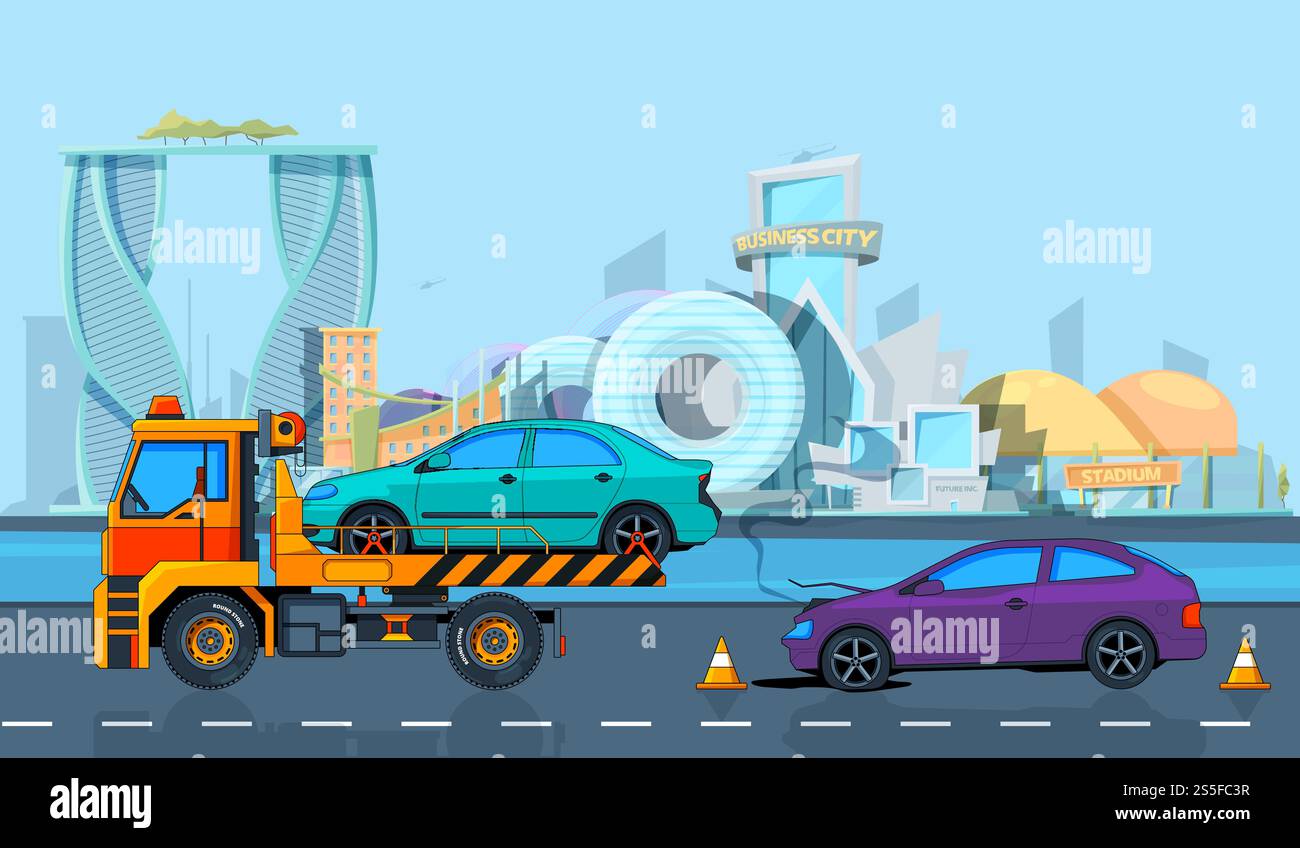
The Impact of Car Accident Cartoons on Public Perception and Safety Awareness
The cartoon of a car accident serves as a potent tool for editorial critique, safety education, and psychological processing. By abstracting the visceral trauma of a real-world collision into symbolic imagery, these illustrations allow...
The cartoon of a car accident serves as a potent tool for editorial critique, safety education, and psychological processing. By abstracting the visceral trauma of a real-world collision into symbolic imagery, these illustrations allow the public to engage with difficult themes—such as negligence, systemic failure, or the fragility of life—without the immediate defensive recoil often triggered by graphic photography.
Contents
The Dual Role of Cartoons in Road Safety Discourse
In 2026, the visual landscape of public safety has shifted significantly toward high-impact, simplified graphics. The cartoon depiction of a car accident is no longer viewed merely as a "comic strip" but as a sophisticated vehicle for social communication. Historically, these images have served two primary, yet opposing, functions: the didactic (educational) and the satirical (critical).
Educational cartoons are frequently employed by transportation departments and insurance providers to illustrate "what went wrong" in a controlled, non-threatening environment. Because the human brain processes simplified icons faster than complex photographic data, a cartoon can highlight the specific point of impact or the preceding error—such as a distracted driver reaching for a device—with surgical precision. This simplification helps the viewer internalize the lesson rather than being distracted by the gore or the identity of the victims.
Conversely, editorial cartoons use the car accident as a metaphor for societal or political "wrecks." In this context, the impact on public perception is profound; the car accident becomes a shorthand for avoidable disaster caused by human hubris or institutional failure. When the public views these images, the "collision" represents a clash of ideologies or the catastrophic failure of a policy, grounding abstract concepts in a universally understood tragedy.
Psychological Processing: Why We React to Animated Trauma
The psychological impact of car accident cartoons is rooted in the Pictorial Superiority Effect and the concept of Emotional Distancing. While a photograph of a mangled vehicle often triggers a "fight or flight" response or a desire to look away, an illustration provides enough abstraction to keep the viewer engaged.
The Role of Abstraction
Abstraction allows the viewer to project themselves into the scenario. According to media theory principles established by Scott McCloud and others, the more "cartoonish" a face or figure is, the more people can identify with it. In a road safety context, a simplified cartoon character in a crash becomes "everyman." The public does not see a stranger; they see a representation of themselves, which can lead to higher levels of behavioral introspection.
Avoiding the Uncanny Valley
In 2026, as AI-generated imagery and hyper-realistic 3D animations become common, safety educators have noted that "cartoon-style" visuals often outperform hyper-realistic simulations. If a simulation is too realistic but slightly "off," it falls into the Uncanny Valley, causing Revulsion in the viewer. Traditional 2D cartoons bypass this, allowing the message of the accident—speed, distraction, or failure to yield—to remain the focal point.
Editorial Cartoons as Social Critique
The editorial "cartoon of car accident" remains a staple in journalism for its ability to summarize complex failures in a single frame. These illustrations influence public perception by assigning "blame" in a way that news reports often cannot due to legal constraints.
- Systemic Criticism: An editorial cartoon might depict a car accident caused by a crumbling bridge or a confusing road sign, shifting the public’s perception of "accidents" from individual failure to systemic negligence.
- Symbolic Representation: By labeling the cars (e.g., "The Economy" vs. "Inflation"), the cartoonist uses the kinetic energy of a crash to represent the inevitability of certain outcomes. This shapes public perception by framing complex events as avoidable or predictable collisions.
- Humanizing the Statistics: While a headline might read "Traffic Fatalities Up 5%," a cartoon showing a single, empty child’s car seat in the wreckage of an illustrated crash can evoke a more visceral public outcry, leading to policy changes or increased funding for road safety.
Educational Evolution: From 2D to 2026 Interactive Safety Modules
The way cartoons are used in driver education has evolved from static images in handbooks to sophisticated, interactive animations. In 2026, these cartoons are often the first point of contact for new drivers learning about "Target Risk" and "Defensive Driving."
The impact here is measurable. Data from safety institutes indicates that learners who interact with "cause-and-effect" animations—where they can see a cartoon car crash as a direct result of a specific choice—retain the safety rule at a 30% higher rate than those who read text-based descriptions. The "cartoon" provides a safe space to fail, allowing the public to witness the consequences of poor driving without real-world stakes.
Comparison of Visual Mediums in Public Safety
The following table compares how different visual mediums influence public perception and educational outcomes regarding car accidents.
| Medium | Emotional Response | Retention of Facts | Public Perception Impact | Primary Use Case |
|---|---|---|---|---|
| Graphic Photography | High (Shock/Fear) | Low (Distraction by trauma) | Negative/Avoidant | News reporting, shock campaigns |
| Traditional Cartoon | Moderate (Empathy/Logic) | High (Simplified clarity) | Analytical/Reflective | Driver's education, editorial |
| 3D Animation | High (Immersion) | Moderate (Visual complexity) | Realistic/Immediate | Technical crash reconstruction |
| Infographic/Iconography | Low (Clinical) | Very High (Data-driven) | Objective/Informational | Insurance reports, policy briefs |
Potential Risks: Desensitization and Misinterpretation
While car accident cartoons are effective, they are not without risks regarding public perception. One of the primary concerns is desensitization. If car accidents are consistently portrayed in a "Looney Tunes" or slapstick style, the public may begin to view road risks as trivial or "reboundable."
The "Slapstick" Effect
When car crashes are used for humor in entertainment cartoons, it can subconsciously lower the perceived risk of dangerous driving behaviors. This is particularly concerning for younger audiences who may struggle to differentiate between the "consequence-free" crashes in media and the lethal reality of physics.
Simplification Bias
Cartoons, by their nature, simplify. This can lead to a public perception that car accidents are always the result of one single, obvious factor (like a "bad guy" driver). In reality, accidents are often the result of a "Swiss Cheese" model of failure—where multiple small errors align. Cartoons that oversimplify these events may lead the public to ignore more nuanced safety issues, such as tire maintenance or road surface conditions.
Legal and Policy Implications
The public perception shaped by these cartoons often spills over into the legal arena. "Demonstrative evidence" in 2026 often includes animated reconstructions of accidents. While these are technically "cartoons" (sequential art and animation), they are used to influence juries.
If a jury sees a simplified cartoon of a car accident, they are more likely to agree on a narrative of fault because the visual removes the "noise" of the real world. This makes the impact of the cartoon a matter of legal strategy. Attorneys use these visuals to bridge the gap between complex engineering reports and the layman's understanding, effectively shaping the perception of "justice" in the courtroom.
FAQs
How do car accident cartoons help in children's safety education?
Children process information through symbols and narratives. A cartoon allows safety educators to teach "Look both ways" or "Wear your seatbelt" by showing a character they like avoiding a "scary" but non-graphic collision. This builds a foundational perception of safety without causing childhood trauma.
Can editorial cartoons about crashes be considered insensitive?
Yes, depending on the timing and context. If a cartoon is published too close to a major real-life tragedy, it can be perceived as exploitative. However, the goal of the editorial cartoonist is often to provoke discomfort to highlight a larger truth or failure that needs correction.
Are 3D safety animations more effective than 2D cartoons?
Not necessarily. While 3D animations offer more "realism," 2D cartoons are often more effective at highlighting specific, abstract concepts (like the "blind spot" or "reaction time") because they can ignore irrelevant details like car color or weather, which might distract the viewer in a 3D environment.
Do these cartoons impact insurance claim perceptions?
Significantly. Many insurance companies now use animated "crash wizards" to help claimants describe their accidents. By selecting a "cartoon" version of their accident, the claimant can communicate the mechanics of the event more clearly than through a written statement, leading to faster and more accurate claims processing.
What is the "Distracted Driver" trope in modern cartoons?
This is a recurring visual theme in 2026 where a character is depicted with a glowing screen or VR headset just before an impact. It has become the modern equivalent of the "drunk driver" trope from previous decades, successfully shifting public perception to view digital distraction as equally hazardous to intoxication.
Recommendations for Educators and Media Creators
When using the cartoon of a car accident to influence public perception, creators should balance clarity with consequence.
- Maintain Gravity: Even when using a simplified style, the "impact" should be portrayed with appropriate weight to avoid desensitizing the audience to the dangers of the road.
- Focus on Causality: The most effective safety cartoons are those that clearly link a specific choice (the "Why") to the resulting accident (the "What").
- Utilize Metadata: In 2026, interactive cartoons should include "hoverable" data points that explain the physics of the crash—such as G-force or stopping distance—to ground the illustration in scientific reality.
By following these guidelines, the cartoon of a car accident remains one of the most effective tools in the 2026 arsenal for improving road safety and fostering a more informed, cautious public.
Image Gallery