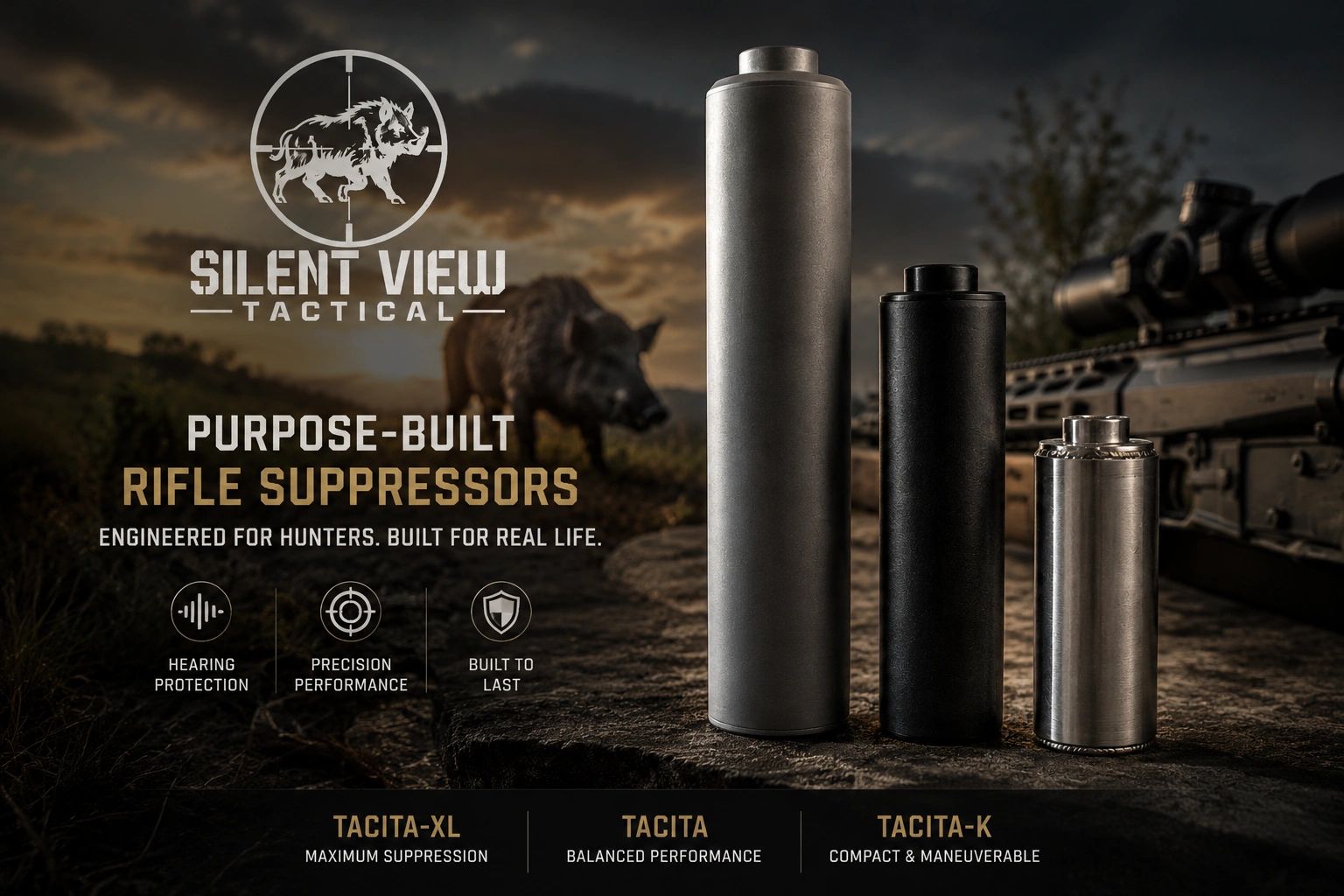
The Definitive Guide to Texas-Made Suppressors in 2026
The market for Texas-made suppressors has evolved significantly as of 2026, driven by a surge in regional manufacturing innovation, specialized metallurgy, and a clearer understanding of federal and state regulatory intersections. As f...
The market for Texas-made suppressors has evolved significantly as of 2026, driven by a surge in regional manufacturing innovation, specialized metallurgy, and a clearer understanding of federal and state regulatory intersections. As firearm enthusiasts and professionals seek high-performance sound mitigation, Texas has solidified its reputation as a global hub for suppressor design, leveraging local aerospace-grade engineering talent and robust manufacturing infrastructure.
Contents
Evolution of Texas Firearm Sound Suppression Engineering
Texas-based manufacturers have moved beyond basic baffle designs to prioritize advanced computational fluid dynamics (CFD) and material science. By 2026, the state’s industry standard focuses on weight reduction without sacrificing structural integrity, primarily through the integration of Grade 5 titanium, Inconel 718, and additive manufacturing (3D printing).
Manufacturers operating within the state are currently refining modularity. Unlike older legacy designs that were fixed in configuration, modern Texas-made suppressors allow users to adjust length, weight, and mounting interfaces to suit specific platforms, ranging from precision long-range rifles to short-barreled tactical carbines. This shift is critical for end-users who require multi-caliber utility from a single serialized tax stamp investment.
Technical Specifications and Material Science Standards
When evaluating a suppressor produced in 2026, technical depth is measured by thermal dissipation rates, flash signature reduction, and gas back-pressure management. Texas manufacturers are leading in the development of flow-through technology, which mitigates the adverse effects of blowback on semi-automatic actions.
| Feature | Titanium (Grade 5) | Inconel 718 | 17-4 PH Stainless Steel |
|---|---|---|---|
| Primary Benefit | Weight Efficiency | Extreme Heat Tolerance | High Durability/Value |
| Thermal Threshold | Moderate | Exceptional | High |
| Best Use Case | Hunting / Precision | Full-Auto / SBR | General Purpose / Budget |
| Weight Impact | Ultra-Lightweight | Heavy | Moderate |
The selection of these materials directly impacts the lifespan of the host firearm's internal components. In 2026, Texas shops are increasingly adopting internal geometries that accelerate gas velocity to minimize pressure spikes, a technical leap that preserves carrier group and buffer system longevity.
Understanding the Legal Landscape for Texas Suppressors
The legal status of suppressors in Texas remains governed by the National Firearms Act (NFA) of 1934, despite ongoing legislative discourse regarding state-level oversight. As of 2026, the process for acquiring a suppressor remains consistent with federal Bureau of Alcohol, Tobacco, Firearms and Explosives (ATF) requirements.
Operational Compliance Reminder
All Texas-made suppressors must be serialized and registered through the ATF Form 4 process. Even when a product is manufactured within state borders, federal law mandates the payment of a 200 dollar tax stamp and adherence to the background check protocol. Prospective buyers must ensure their chosen manufacturer or dealer is an FFL/SOT holder capable of initiating the electronic Form 4 submission, which has significantly reduced processing wait times compared to the paper-based systems of the early 2020s.
Practical Considerations for Maintenance and Performance
Proper maintenance is the primary determinant of a suppressor's service life. Texas-made units designed in 2026 often feature user-serviceable ends or are optimized for ultrasonic cleaning.
- Carbon Accumulation: Even with high-flow designs, carbon buildup is inevitable. Use a non-toxic solvent and an ultrasonic cleaner periodically to prevent baffle strike risks caused by excessive mass.
- Mounting Integrity: Always verify the torque specification of your mounting system before fire. In 2026, the industry standard has shifted toward keyed mounting interfaces to prevent the suppressor from loosening during prolonged fire strings.
- Heat Management: Allow adequate cool-down periods between strings to protect the coating and internal seals. Synthetic rail covers are highly recommended to prevent accidental contact burns in field environments.
Choosing the Right Suppressor for Your Platform
Choosing a suppressor requires matching the internal volume to the caliber and barrel length of the host firearm. For Texas hunters, who often utilize various platforms for pest control or big game, a multi-caliber suppressor provides the most ROI.
- Precision Rifles: Seek suppressors with dedicated precision mounting systems that ensure point-of-impact (POI) shift repeatability.
- Tactical Carbines: Prioritize low back-pressure systems to avoid the excessive gas-to-face phenomenon and to keep the optic lens clear of carbon particulate.
- Pistol Caliber Carbines (PCC): Look for direct-thread or trilug systems that maintain the balance of the platform without adding unnecessary length to the barrel.
Comparison of Common Texas Manufacturing Approaches
Texas manufacturers differentiate themselves through specific design philosophies. While some focus on extreme durability for law enforcement contracts, others emphasize modularity for the consumer market.
Strategic Selection Criteria
Durability Priority: If your intent involves heavy fire rates and high-heat environments, prioritize manufacturers utilizing laser-welded Inconel structures. These are built to withstand the rigors of sustained high-pressure environments.
Weight Priority: For hunters and hikers, titanium-constructed suppressors offer the best reduction in noise signature with minimal impact on the rifle's center of gravity. Ensure the end caps are reinforced if you intend to shoot frequent volume strings.
Frequently Asked Questions (FAQ)
Do I need a special license to own a suppressor in Texas? No, Texas residents do not need a state-specific license, but they must comply with federal NFA regulations, including a background check and a 200 dollar tax payment. The process is handled through a federally licensed dealer who submits your fingerprints and photo to the ATF.
Are Texas-made suppressors exempt from federal law? No, Texas-made suppressors are still subject to the National Firearms Act. While there has been significant state-level legislative effort to challenge federal jurisdiction, federal law remains the governing authority for the ownership and transfer of these items as of 2026.
How long does the approval process take in 2026? As of 2026, electronic Form 4 submissions typically see approval times ranging from a few days to several months, significantly faster than the legacy paper filing methods used in the past. Your specific wait time depends on current ATF processing backlogs and the accuracy of your submitted documentation.
Can I use a suppressor across multiple firearms? Yes, if the suppressor is rated for the calibers of your various firearms and you utilize a compatible modular mounting system. Most modern Texas-made suppressors are designed for cross-platform versatility, allowing you to move the unit between hosts.
What is the "First Round Pop" and does it affect Texas-made units? First Round Pop is the acoustic difference between the first shot in a cold suppressor and subsequent shots. Modern engineering, including advanced internal mesh and specific expansion chamber volumes, has largely mitigated this phenomenon in 2026 designs.
Investing in Sound Mitigation Authority
For those seeking to enhance their shooting experience, selecting a suppressor from a reputable Texas manufacturer offers the benefit of local craftsmanship, accessible customer support, and cutting-edge design. Ensure you verify that your local dealer is proficient in current electronic filing standards to guarantee the smoothest possible transition from purchase to possession. Evaluate your specific platform requirements—whether you prioritize weight, durability, or gas-management efficiency—and consult with a certified professional to finalize your choice. Investing in quality suppression is an investment in both safety and the longevity of your firearm collection.
Image Gallery