Dudus Coke Explained: Origins, Cultural Impact, and Context
"Dudus coke" refers to historical allegations, media reports, and high-profile legal proceedings surrounding Christopher "Dudus" Coke, a powerful Jamaican underworld figure whose 2010 extradition and subsequent conviction laid bare com...
"Dudus coke" refers to historical allegations, media reports, and high-profile legal proceedings surrounding Christopher "Dudus" Coke, a powerful Jamaican underworld figure whose 2010 extradition and subsequent conviction laid bare complex intersections of organized crime, local politics, and international drug trafficking.
Contents
Understanding the Background of Christopher "Dudus" Coke
To understand the context surrounding Christopher "Dudus" Coke and illicit narcotics trafficking, it is necessary to examine the socio-political landscape of Kingston, Jamaica, particularly during the late 20th and early 21st centuries. Coke rose to prominence as the leader of the Shower Posse, an international criminal organization with deep roots in the Tivoli Gardens neighborhood of West Kingston. Tivoli Gardens was historically a stronghold of the Jamaica Labour Party (JLP), creating a symbiotic relationship between political figures and community leaders who exercised near-total control over local governance, security, and economics. These community leaders, frequently referred to as "dons," operated parallel systems of justice and social welfare funded largely through transnational criminal enterprises.
Transnational drug trafficking, specifically the movement of cocaine and marijuana from South America and the Caribbean into North American markets, served as the primary financial engine for these networks. The term "dudus coke" frequently surfaces in historical analyses, investigative journalism, and legal archives not merely as a reference to a specific commodity, but as a shorthand for the systemic drug trafficking operations overseen by Coke and his associates. Law enforcement agencies in the United States and Jamaica tracked these operations for decades, noting how local neighborhood control facilitated the secure storage, transit, and distribution of multi-ton cocaine shipments.
The 2010 Kingston Unrest and Extradition Request
The pivotal turning point in the modern history of West Kingston occurred in 2009 and 2010, when United States federal authorities formally requested the extradition of Christopher Coke on charges of conspiracy to distribute cocaine and marijuana, as well as trafficking firearms. The formal extradition request created a profound political crisis for then-Prime Minister Bruce Golding, whose parliamentary constituency included Tivoli Gardens. For nearly nine months, the Jamaican government resisted the execution of the extradition warrant, citing concerns over constitutional rights and the methods used by U.S. federal prosecutors to gather evidence.
This prolonged resistance triggered intense domestic and international pressure. Critics argued that the delay demonstrated the deep-seated influence of organized crime over the highest levels of the Jamaican state. By May 2010, Prime Minister Golding shifted his position, apologized for the handling of the extradition request, and authorized the warrant.
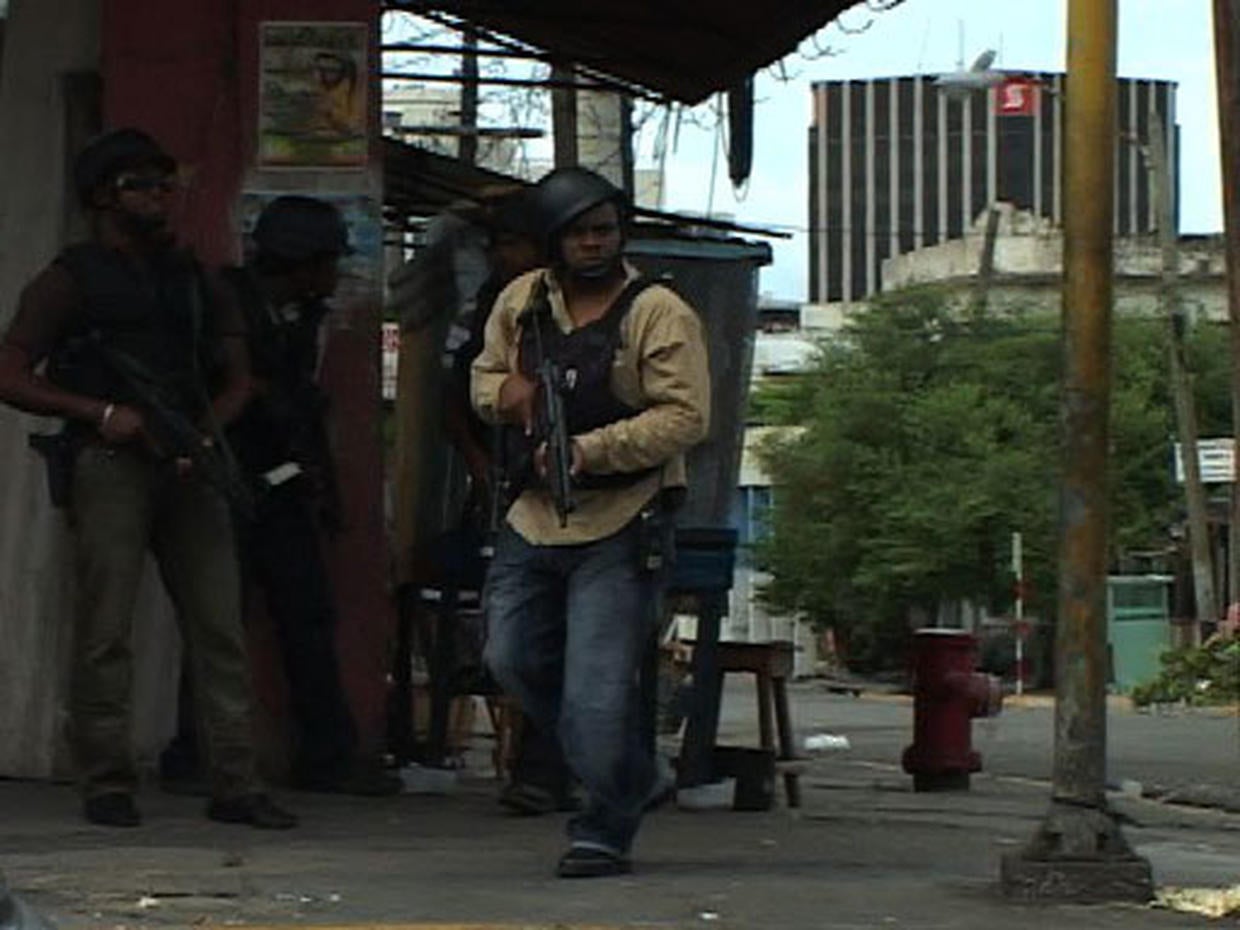
The execution of the arrest warrant culminated in the 2010 West Kingston unrest. Security forces—comprising the Jamaica Constabulary Force and the Jamaica Defence Force—entered Tivoli Gardens to apprehend Coke. Residents and armed loyalists erected barricades, resulting in intense urban combat. The operation led to significant loss of life, with official reports and human rights organizations documenting dozens of civilian and security personnel casualties. Coke managed to evade capture during the initial military assault but was apprehended weeks later on June 22, 2010, while traveling in a vehicle disguised in a wig and accompanied by a local clergyman who was attempting to facilitate his surrender to U.S. authorities.
Legal Proceedings and Guilty Plea in United States Federal Court
Following his capture, Christopher Coke was rapidly extradited to the United States, where he faced federal racketeering and drug trafficking charges in the United States District Court for the Southern District of New York. The legal proceedings dismantled years of speculation regarding the inner workings of the Shower Posse and its logistical pipelines.
In August 2011, Coke entered a guilty plea to two racketeering conspiracy charges, specifically admitting to conspiring to distribute marijuana and cocaine, as well as conspiracy to commit assault with a dangerous weapon in aid of racketeering. By pleading guilty, Coke avoided a potentially lengthy trial, though the prosecution presented extensive wiretaps, financial records, and witness testimonies detailing how the organization coordinated shipments between Jamaica, Central America, and various hubs across the United States, including New York and Florida.
| Legal Phase | Key Details & Milestones |
|---|---|
| Extradition Request | Filed by U.S. authorities in 2009; executed in May 2010. |
| Civil Unrest | May 2010 military-police operation in Tivoli Gardens. |
| Capture & Transfer | Arrested on June 22, 2010; extradited to New York. |
| Guilty Plea | Entered in August 2011 for racketeering and drug charges. |
| Sentencing | Sentenced to 23 years in federal prison in June 2012. |
In June 2012, federal judge Robert P. Patterson Jr. sentenced Coke to 23 years in federal prison. During sentencing, prosecutors emphasized the extensive violence, corruption, and transnational scope of his criminal enterprise, while defense counsel highlighted his community welfare efforts and requests for leniency. The sentence marked the formal conclusion of the primary judicial chapter concerning Coke's direct leadership of the Shower Posse's international operations.
Broader Economic and Geopolitical Impacts
The dismantling of Coke's network and the subsequent legal actions reshaped the dynamics of organized crime and political accountability in Jamaica. The events of 2010 forced a critical re-examination of "garrison politics"—a phenomenon where political parties maintain geographical strongholds through armed enforcers.
Governance and Security Reforms
- Law Enforcement Cooperation: Enhanced intelligence-sharing agreements between Jamaican security agencies and U.S. federal bodies, such as the Drug Enforcement Administration (DEA).
- Political Accountability: Heightened scrutiny regarding campaign financing and the historical ties between elected officials and community dons.
- Community Policing Initiatives: Subsequent efforts by the Jamaican government to introduce social intervention programs and permanent security outposts in historically volatile neighborhoods like Tivoli Gardens.
Despite these institutional shifts, law enforcement agencies note that transnational drug trafficking networks have adapted by decentralizing operations, utilizing smaller, more agile cells rather than monolithic gangs controlled by a single charismatic leader.
Frequently Asked Questions
Who is Christopher "Dudus" Coke?
Christopher Coke is a Jamaican national and former leader of the Shower Posse criminal organization. He gained international notoriety due to his extradition from Jamaica to the United States in 2010, where he was subsequently convicted of racketeering and drug trafficking conspiracy charges.
What does "dudus coke" refer to in search queries?
The phrase typically combines Christopher Coke's nickname with the primary illicit substance—cocaine—associated with the federal drug trafficking charges brought against him and his syndicate by United States prosecutors.
What caused the 2010 Kingston unrest?
The unrest was triggered by the Jamaican government's delayed execution of a U.S. extradition warrant for Christopher Coke. When security forces entered the Tivoli Gardens neighborhood to effect the arrest, they met armed resistance from local residents and loyalists, leading to multi-day clashes.
What was the outcome of the U.S. court case against Coke?
In August 2011, Coke pleaded guilty to racketeering conspiracy charges involving drug trafficking and assault. In June 2012, a federal judge in New York sentenced him to 23 years in federal prison.
How did the case impact Jamaican politics?
The extradition crisis severely damaged the administration of Prime Minister Bruce Golding, leading to intense political fallout, public apologies, and increased domestic and international demands for structural reforms to eliminate political patronage of criminal gangs.
Conclusion and Final Perspective
The legacy of the Christopher Coke case remains a watershed moment in Caribbean law enforcement and international anti-drug operations. It highlighted the profound challenges of dismantling transnational cartels that embed themselves within local social structures and political systems. For researchers, historians, and legal analysts, examining this era provides critical insights into the mechanics of modern drug trafficking, the evolution of gang governance, and the ongoing struggle for institutional integrity and public safety in the region.
Image Gallery