Understanding Verizon Coverage Map in Puerto Rico: A Complete Guide for 2026
Verizon does not own or operate its own physical network towers in Puerto Rico. Instead, the Verizon coverage map identifies the island as a "Domestic Roaming" or "Extended Network" area. For most subscribers in 2026, this provides sea...
Verizon does not own or operate its own physical network towers in Puerto Rico. Instead, the Verizon coverage map identifies the island as a "Domestic Roaming" or "Extended Network" area. For most subscribers in 2026, this provides seamless 4G LTE and 5G service through local partners like Claro and Liberty at no additional cost.
Contents
The Reality of Verizon’s Footprint in Puerto Rico
To accurately interpret a Verizon coverage map, one must first understand that Verizon’s relationship with Puerto Rico is strictly based on roaming agreements. Verizon once held a significant ownership stake in the Puerto Rico Telephone Company (PRTC), but it sold those interests to América Móvil (which operates as Claro) in 2007. Since that divestment, Verizon has not maintained a native infrastructure on the island.
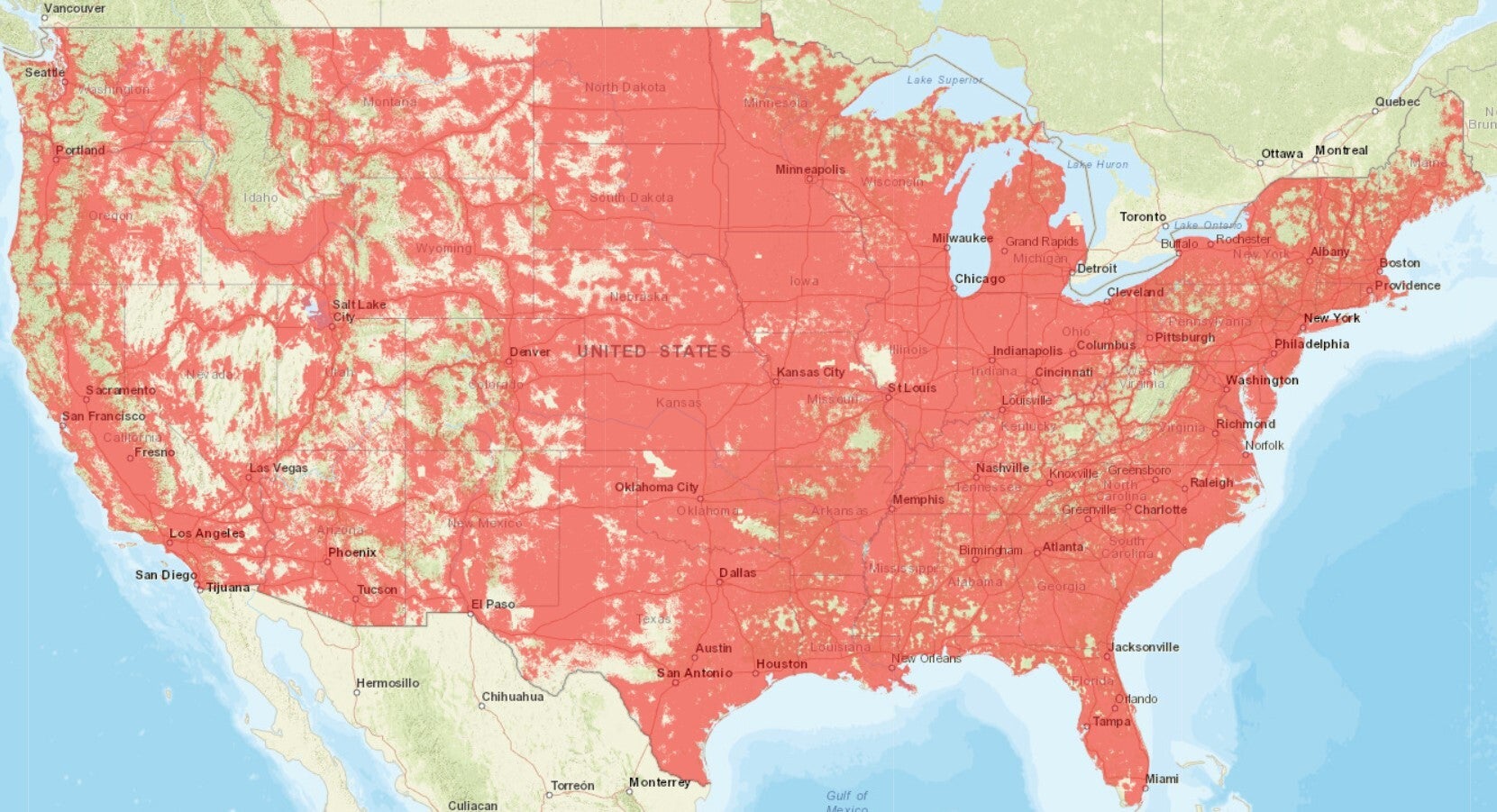
In 2026, when you view the official Verizon interactive coverage map and zoom into the Caribbean, you will notice that Puerto Rico is shaded differently than the continental United States. While the mainland features deep reds for 5G Ultra Wideband and vibrant reds for 5G Nationwide, Puerto Rico is typically covered in a solid, lighter shade. This indicates that while coverage is available, it is provided by a third-party carrier.
This distinction is crucial for technical and performance reasons. Because you are roaming, your device must communicate between the local partner’s towers and Verizon’s core network on the mainland. This "handshake" can occasionally lead to slight increases in latency, though modern 5G roaming protocols have significantly minimized this gap compared to previous decades.
How to Read the Verizon Coverage Map for 2026
Navigating the Verizon coverage tool requires an eye for the legend’s specific terminology. As of 2026, the map utilizes specific indicators to differentiate between where Verizon owns the airwaves and where it rents them.
Identifying "Off-Network" and "Extended" Labels
When you click on a specific location in San Juan, Ponce, or Mayagüez on the Verizon map, a pop-up usually clarifies the service type. In Puerto Rico, this is almost always labeled as "Extended Network" or "Roaming."
- Extended Network: This means Verizon has a robust, long-standing agreement with the local provider. Usually, your data usage in these areas counts toward your standard monthly allowance just as it would in New York or Los Angeles.
- Domestic Roaming: This is the broader category for Puerto Rico, the U.S. Virgin Islands, and parts of Alaska. It signifies that your phone is utilizing a non-Verizon signal, but because Puerto Rico is a U.S. territory, it is treated as domestic rather than international.
5G vs. 4G LTE on the Map
In 2026, the coverage map for Puerto Rico shows widespread 5G availability. However, it is important to note that "5G Ultra Wideband" (UWB) icons are rarely present in Puerto Rico on the Verizon map. While local partners like Liberty and Claro have deployed high-speed 5G, Verizon roamers are often limited to "5G Nationwide" or 4G LTE speeds, depending on the specific roaming agreement and the local tower’s capacity.
Partner Networks: Who is Actually Providing the Signal?
When your Verizon phone displays "Extended" or simply "LTE/5G" in Puerto Rico, you are likely connected to one of two major local infrastructures.
Claro Puerto Rico
As the successor to the original Verizon-affiliated PRTC, Claro maintains the most extensive fiber backhaul and tower footprint on the island. Verizon maintains a primary roaming relationship with Claro, which ensures that even in remote mountainous regions like Utuado or Jayuya, Verizon customers can usually find a signal.
Liberty Puerto Rico
Following Liberty’s acquisition of AT&T’s wireless assets in Puerto Rico several years ago, they became a dominant force in the local market. Verizon also utilizes Liberty’s towers to fill in gaps, particularly in high-density urban areas and coastal resorts. The 2026 map reflects a "best-available" approach, where your device automatically switches to whichever partner offers the strongest signal in your current vicinity.
Performance Expectations: Speed, Latency, and Reliability
Understanding the map is one thing; understanding the actual user experience in 2026 is another. While the map might show "full coverage" across the San Juan metro area, several factors influence your actual performance.
- Deprioritization: Because you are a roaming guest on a local network, the host carrier (Claro or Liberty) will prioritize its own direct subscribers during times of heavy network congestion. In crowded areas like Old San Juan during a festival or the Luis Muñoz Marín International Airport, Verizon users may experience slower data speeds than local residents.
- Latency (Ping): Since your data often has to travel back to Verizon’s servers on the mainland to verify your subscription and routing, you might notice a slightly higher ping. This is rarely noticeable for web browsing or streaming video, but it can impact real-time competitive mobile gaming.
- Handoffs: As you move between a Claro-heavy area and a Liberty-heavy area, your phone may momentarily lose data connectivity as it switches roaming partners. This is a standard technical occurrence for off-network coverage.
Verizon Plan Compatibility and Roaming Charges
A common concern when viewing the Puerto Rico coverage map is whether using the "Extended Network" will result in a "bill shock." In 2026, Verizon’s policy remains consistent: Puerto Rico is included in domestic plans.
Postpaid Unlimited Plans
If you are on a modern "myPlan" tier (such as Unlimited Welcome, Plus, or Ultimate), Puerto Rico is treated exactly like the 50 states. You get unlimited talk, text, and data. The "Unlimited" nature of your data still applies, though the "High Speed" threshold depends on your specific plan. For example, if your plan includes 30GB of mobile hotspot, that 30GB is available in Puerto Rico.
Prepaid and Legacy Plans
Most Verizon Prepaid plans also include Puerto Rico at no extra cost. However, some very old legacy plans (those from the early 2010s) might have restrictions or per-minute roaming charges. It is essential to verify your plan details in the My Verizon app before traveling, though these restrictive plans are increasingly rare in 2026.
Data Usage Limits
While there are no roaming fees, Verizon does have a "Fair Use" policy. If a subscriber spends more than 50% of their time over a 60-day period roaming on an extended network, Verizon reserves the right to limit data speeds or, in extreme cases, terminate the line. This means the Verizon map is intended for travelers and part-time residents, not for permanent residents of Puerto Rico who should instead seek a local carrier.
Practical Comparison of Carriers in Puerto Rico
To better understand where Verizon stands, it is helpful to compare its roaming-based coverage against the native providers on the island.
| Feature | Verizon (Roaming) | T-Mobile (Native) | Claro (Native) | Liberty (Native) |
|---|---|---|---|---|
| Network Type | Extended/Domestic Roaming | Native 5G/4G LTE | Native 5G/4G LTE | Native 5G/4G LTE |
| Primary Map Color | Lighter Red (Extended) | Magenta (Native) | Yellow/Blue (Local Map) | Cyan (Local Map) |
| 5G UWB Access | Limited/Rare | Widespread | Widespread | Widespread |
| Typical Latency | Moderate (30-60ms) | Low (15-30ms) | Low (10-25ms) | Low (10-25ms) |
| Extra Roaming Fees | None (on most plans) | None | N/A (Local) | N/A (Local) |
| Best For | Mainland Travelers | Residents & Travelers | Rural Coverage | Urban/Suburban Speed |
Troubleshooting and Optimizing Your Verizon Connection
If the coverage map indicates you should have service but your device is struggling, there are several technical steps to take.
- Enable Data Roaming: This is the most common issue. On iPhones and Android devices, you must ensure that "Data Roaming" is toggled ON in your cellular settings. Because Puerto Rico is domestic, this will not trigger international charges, but it is required for the phone to "talk" to Claro or Liberty towers.
- Manual Network Selection: If your signal is weak, you can sometimes go into your phone's "Network Selection" settings and manually choose between Claro and Liberty. This is useful if one carrier has a tower right next to your hotel while the other is miles away.
- Restart and Update: Ensure your "Carrier Settings" are up to date. In 2026, network configurations change frequently. A quick restart upon landing in San Juan forces the device to pull the latest roaming PRL (Preferred Roaming List).
- Check for "No Service" Zones: Even with robust roaming, the interior rainforest regions (El Yunque) and deep central mountain passes may have zero coverage from any provider. The Verizon map often generalizes these areas; real-world topography can create significant dead zones.
Frequently Asked Questions
Does Verizon charge for roaming in Puerto Rico?
No, for the vast majority of plans, Verizon does not charge extra for roaming in Puerto Rico. It is considered domestic roaming, similar to using your phone in a rural part of the U.S. where Verizon uses a local partner's towers.
Can I get 5G speeds on Verizon in Puerto Rico?
Yes, as of 2026, Verizon roamers can access 5G Nationwide through local partners. However, you may not see the "5G Ultra Wideband" (5G UW) indicator as frequently as you would in major mainland cities, as high-frequency millimeter-wave roaming is technically complex and less common.
Will my Verizon phone work in Culebra and Vieques?
Yes, the Verizon coverage map shows service on both offshore islands. Coverage is typically strongest near the ferry terminals and main towns (Dewey in Culebra and Isabel Segunda in Vieques). Remote beaches like Flamenco or Blue Beach may have spotty reception.
Is Verizon coverage better than T-Mobile in Puerto Rico?
T-Mobile has a native network in Puerto Rico, meaning they own their towers and spectrum. This often leads to lower latency and more consistent 5G speeds for T-Mobile users. Verizon’s coverage is highly dependent on its partners, which is excellent for reach but occasionally secondary in speed.
How long can I use my Verizon phone in Puerto Rico?
Verizon’s domestic roaming policy typically allows for extended use, but if you become a permanent resident (using the phone in PR for more than 50% of the time over several months), Verizon may notify you to switch to a local provider.
Final Recommendation for Travelers and Residents
For travelers visiting Puerto Rico in 2026, the Verizon coverage map provides a reliable assurance of connectivity. You should feel confident that your device will work across the San Juan metro area, the coastal resorts, and major highways like PR-22 and PR-52 without incurring extra fees. Ensure your data roaming is enabled before you depart, and keep in mind that your performance is tied to local giants Claro and Liberty.
If you are planning a permanent move to the island, while the map shows coverage, the technical limitations of long-term roaming suggest that switching to a native carrier like T-Mobile, Liberty, or Claro will provide a superior and more stable experience for daily use.
Image Gallery