How to Select a Top Milwaukee Worker's Injury Compensation Lawyer
A top Milwaukee worker's injury compensation lawyer helps injured employees secure wage loss benefits, medical coverage, and permanent disability awards under Wisconsin Chapter 102 law. By handling insurance denials, navigating Departm...
A top Milwaukee worker's injury compensation lawyer helps injured employees secure wage loss benefits, medical coverage, and permanent disability awards under Wisconsin Chapter 102 law. By handling insurance denials, navigating Department of Workforce Development (DWD) hearings, and ensuring fee compliance—capped statutorily at 20% of disputed recoveries—an experienced attorney protects your rights after a workplace injury.
Contents
Disclaimer: This article provides general information regarding Wisconsin worker's compensation laws as of 2026. It does not constitute formal legal advice. For personalized counsel, consult a licensed Wisconsin attorney.
Understanding Wisconsin Worker’s Compensation Law (Chapter 102)
Wisconsin was a pioneer in industrial safety, enacting one of the nation’s first constitutionally valid worker’s compensation acts in 1911. Today, worker’s compensation in Wisconsin is governed by Chapter 102 of the Wisconsin Statutes and administered by the State of Wisconsin Department of Workforce Development (DWD) Worker's Compensation Division.
The system operates on a mandatory, no-fault legal structure. Under this system, an injured worker does not need to prove negligence on the part of their employer or co-workers to receive benefits. In exchange for this guaranteed statutory remedy, employees forfeit the right to file personal injury lawsuits against their employers for workplace harm, except under very limited statutory exceptions (such as intentional assault or illegal employment of minors).
- Workplace Injury Occurs
- Report to Employer (Within 30 Days)
- Employer Files WKC-12 Report
- Claim Outcome:
- Claim Accepted
- Receives Benefits (Medical + TTD/PPD)
- Claim Denied / Disputed
- Files Application for Hearing (GL-110)
- DWD Administrative Hearing (ALJ)
- Award Approved
- LIRC Appeal / Court
- Claim Accepted
Key Eligibility Requirements and Employer Obligations
Most private and public employers in Wisconsin are required to carry worker’s compensation insurance. Under Wisconsin Statute § 102.04, an employer usually becomes subject to the law if they:
- Employ three or more full-time or part-time workers at any time.
- Employ one or more workers and pay combined gross wages of $500 or more in any calendar quarter.
- Are a farming operation that employs 6 or more workers on the same day for any 20 days during a calendar year.
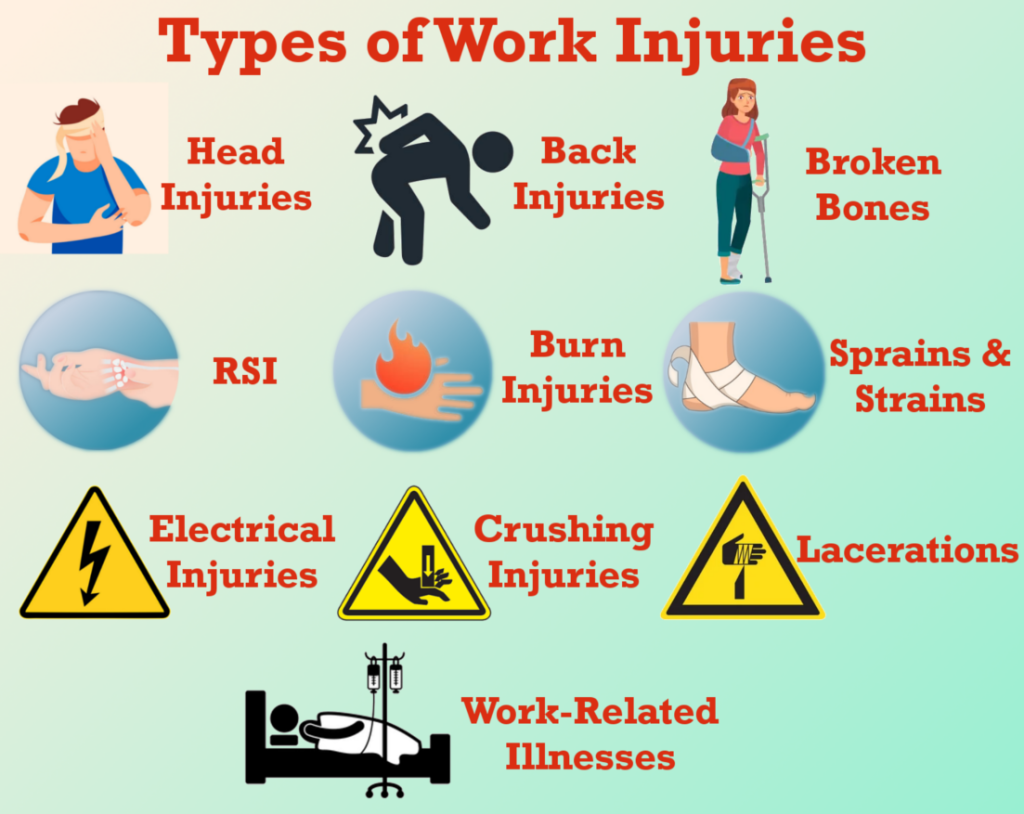
To qualify for statutory benefits, the employee must establish that their injury arose out of employment and occurred while performing services growing out of and incidental to their employment. Covered injuries include sudden traumatic events (such as falls or machinery accidents), repetitive strain injuries (such as carpal tunnel syndrome), and occupational diseases caused by long-term environmental exposure (such as silica dust, chemicals, or job-related hearing loss).
Statutory Deadlines and Reporting Requirements
Timeliness is critical when filing a worker's compensation claim in Milwaukee:
- Immediate Notice: You should notify your supervisor or employer immediately following an injury. Under Wis. Stat. § 102.12, formal notice must be given within 30 days of the injury or within 30 days of when you knew (or should have known) the injury was work-related.
- Statute of Limitations: For traumatic injuries, the statute of limitations to file an official claim before the DWD is generally 2 years from the date of injury or the date the last indemnity payment was made. However, for occupational diseases or injuries resulting in certain severe conditions, Wisconsin extended the statute of limitations up to 12 years under specified circumstances.
Failing to meet these statutory deadlines can permanently forfeit your right to financial compensation and medical payment coverage.
When Do You Need a Milwaukee Worker’s Compensation Attorney?
While straightforward workplace injuries resulting in a few days of missed work and minor medical care often resolve smoothly through the insurance carrier, complex or severe cases frequently run into administrative friction. Insurance carriers are profit-driven entities that closely scrutinize high-value claims to minimize payouts.
- Injured Worker Claims Benefits
- Accepted Claim
- Direct Payment
- Employer Approval
- Standard Treatment
- Contested Claim
- Denial Letter Issued
- IME Requested by Insurer
- Disputed Loss of Wages
- Hire Milwaukee Attorney
- File DWD Form GL-110
- Challenge IME Opinions
- Negotiate Settlement
- Accepted Claim
Common Red Flags and Claim Denials
You should consult an experienced Milwaukee worker's injury lawyer immediately if you encounter any of the following scenarios:
- Outright Denial: The insurance company issues a formal denial claiming your injury occurred outside work, was caused by a pre-existing condition, or was self-inflicted.
- Delayed Payments: Temporary Total Disability (TTD) checks are repeatedly late, undercalculated, or stopped altogether without authorization from your treating physician.
- Treatment Denials: The insurer refuses to authorize medically necessary surgeries, diagnostic scans (such as MRIs), physical therapy, or specialist consultations.
- Employer Retaliation: You face demotion, hostile treatment, reduced hours, or termination shortly after reporting a work injury or filing a claim.
Disagreements Over Disability Ratings and IMEs
One of the most frequent reasons to retain counsel occurs when the worker reaches Maximum Medical Improvement (MMI)—the point at which a doctor determines the injury has stabilized and further treatment will not yield major functional gains.
When MMI is reached, your treating doctor assesses whether you have a Permanent Partial Disability (PPD) and assigns an impairment rating percentage. Insurance companies frequently dispute these ratings.
They will require you to undergo an Independent Medical Examination (IME) performed by an insurance-retained doctor. IMEs are rarely independent; these doctors often downgrade permanent disability ratings, declare that you can return to work full-duty, or attribute your condition to age-related degeneration. A Milwaukee worker's comp attorney cross-examines IME doctors, gathers counter-medical evidence, and advocates for a fair disability assessment before an Administrative Law Judge (ALJ).
What Benefits Are Covered Under Wisconsin Law?
Wisconsin worker’s compensation law provides five primary categories of statutory benefits designed to make injured workers whole and assist in their financial recovery.
| Benefit Category | Details |
|---|---|
| Medical Expenses | - 100% Covered Costs- Choice of 2 Practitioners |
| Temporary Disability | - TTD: 2/3 Gross Wage (Full)- TPD: Partial Wage Loss |
| Permanent Disability | - PPD: Scheduled/Unscheduled- PTD: Lifetime Benefits |
| Vocational Retraining | - Tuition & Books- Living Stipend |
Medical Care and Treatment Coverage
Under Wis. Stat. § 102.42, the employer and their insurer must pay for all reasonable and necessary medical expenses required to cure and relieve the effects of the injury. This includes:
- Emergency room treatment and ambulance transport.
- Hospital stays, surgical procedures, and anesthesia.
- Prescriptions, medical supplies, prosthetics, and durable medical equipment.
- Physical therapy, occupational therapy, and chiropractic care.
Doctor Choice Rules in Wisconsin: Injured workers in Wisconsin have the statutory right to choose their own treating physician. You may choose any licensed doctor, physician assistant, or chiropractor. If you want a second opinion, you may select a second choice practitioner. However, if you switch to a third doctor without insurer or DWD approval, the insurance company may not be required to pay for those medical bills.
Wage Loss: Temporary Total (TTD) vs. Temporary Partial Disability (TPD)
When an injury prevents you from working, wage replacement benefits step in:
- Temporary Total Disability (TTD): Paid if your doctor places you on complete off-work status while recovering. TTD is calculated at two-thirds (66.67%) of your Average Weekly Wage (AWW) prior to the injury, subject to statutory maximum caps set annually by the state.
- Temporary Partial Disability (TPD): Paid if you return to work under light-duty restrictions but earn less than your pre-injury wage (for instance, working fewer hours or taking a lower-paying light-duty role). TPD pays two-thirds of the difference between your pre-injury AWW and your current modified earnings.
Long-Term Compensation: Permanent Partial (PPD) and Permanent Total Disability (PTD)
If an injury causes lasting functional loss, you are entitled to permanent disability payments:
- Permanent Partial Disability (PPD): Divided into "scheduled" and "unscheduled" injuries.
- Scheduled Injuries: Cover specific body parts like fingers, hands, arms, legs, eyes, or ears. The statute assigns a maximum number of weeks of compensation for the total loss of each listed body part (e.g., 500 weeks for an arm loss).
- Unscheduled Injuries: Cover head, torso, spine, mental health conditions, and internal organs. These claims are evaluated based on total body impairment percentages or, in complex cases, loss of earning capacity.
- Permanent Total Disability (PTD): Awarded when an injury permanently and totally incapacitates a worker from performing any gainful employment in the labor market. PTD provides lifetime weekly indemnity benefits.
Vocational Rehabilitation and Retraining Benefits
If an unscheduled workplace injury leaves you unable to return to your former occupation or an equivalent job paying at least 85% of your pre-injury wages, you may qualify for vocational rehabilitation. Administered through the DWD Division of Vocational Rehabilitation (DVR), benefits include:
- Paid tuition, fees, and books for technical college or retraining programs.
- Travel and mileage expenses to and from school.
- Continued TTD wage maintenance checks while attending classes full-time.
Key Criteria for Evaluating Top Milwaukee Workers' Comp Lawyers
Not all legal practitioners possess equal experience in worker's compensation litigation. Personal injury attorneys who focus primarily on auto accidents may not understand the specific statutory framework of Chapter 102. When searching for top legal representation in the Greater Milwaukee area, evaluate attorneys against clear professional benchmarks.
- Evaluating Top Attorneys
- DWD & LIRC Mastery
- Appeals Experience
- ALJ Hearing History
- Statutory Fee Clarity
- Strict 20% Cap
- No Out-of-Pocket Fees
- Trial & IME Strategy
- Cross-examines IME
- Builds Medical Proof
- DWD & LIRC Mastery
Experience with DWD Hearings and LIRC Appeals
Ask prospective attorneys about their direct experience before administrative law judges at the Milwaukee DWD hearing office (located in downtown Milwaukee). If a claim is denied by an ALJ, your attorney must know how to appeal the decision to the Labor and Industry Review Commission (LIRC) in Madison, and further into the Wisconsin Circuit Courts and State Court of Appeals if necessary.
Transparent Fee Structures (Wisconsin's 20% Statutory Cap)
Wisconsin worker's compensation attorneys operate under strict statutory fee regulations to protect injured workers from excessive legal costs.
- Statutory Limit: Under Wis. Stat. § 102.26, attorney contingency fees are limited to 20% of the total amount in dispute that the attorney recovers on your behalf.
- No Upfront Costs: Top attorneys work on a contingency basis, meaning you pay zero legal fees upfront. If the attorney recovers no additional money or benefits for you beyond what the insurer voluntarily paid, they receive no fee.
- DWD Approval Required: All attorney fees and litigation costs must be reviewed and officially approved by an Administrative Law Judge before payout.
Client Communication and Trial Readiness
Top firms maintain dedicated paralegals and legal assistants focused on worker's comp administration. Ensure your legal team:
- Obtains complete copies of your medical records and diagnostic images.
- Communicates proactively about settlement offers versus taking your case to a formal DWD hearing.
- Retains qualified medical experts or vocational experts to build an evidentiary foundation for your claim.
Step-by-Step Guide: What to Expect During a Disputed Claim
When an insurance carrier denies a claim or refuses to pay recommended disability benefits, your attorney initiates formal dispute proceedings.
Step 1: Application for Hearing (Form GL-110)
Step 2: Pre-Hearing Conference & Discovery
Step 3: Medical & Vocational Expert Evidence Gathering
Step 4: Formal Hearing Before DWD Administrative Law Judge
Step 5: Written Decision & Administrative Appeals (LIRC)
Filing the Application for Hearing: Your attorney files an official Application for Hearing (Form GL-110) with the DWD Worker's Compensation Division. This document specifies the nature of the work injury, disputed benefits, medical expenses owed, and claimed disability ratings.
Pre-Hearing Conference: The DWD schedules a pre-hearing conference—often conducted via telephone or at the Milwaukee regional office—where an ALJ reviews disputed issues, sets deadlines for medical reports, and explores settlement possibilities.
Discovery and Medical Evidence Gathering: Your attorney collects formal certified medical reports (Form WKC-16-B) from your treating physicians. The defense insurance team will schedule an IME and submit their doctor’s report to counter your claims.
Formal Administrative Hearing: If a settlement is not reached, a formal hearing is conducted before an ALJ. The hearing resembles a trial: witnesses testify under oath, medical evidence is introduced, and attorneys present legal arguments. However, there is no jury.
Issuance of Order and Potential Appeals: The ALJ issues a written decision and order. If either party disagrees with the ruling, an appeal can be filed with LIRC within 21 days of the decision date.
Overview of Wisconsin Worker's Compensation Benefit Types & Legal Standards
The following table summarizes key benefit categories under Wisconsin Chapter 102, how they are calculated, and critical legal standards involved:
| Benefit Type | Description | Calculation Basis (WI Law) | Key Legal Considerations |
|---|---|---|---|
| Medical Expenses | Complete coverage of reasonable and necessary healthcare costs for work injuries. | 100% of allowed charges paid directly to medical providers. | Employee has right to choose primary physician + 1 second opinion. |
| Temporary Total Disability (TTD) | Wage replacement while entirely off work per doctor orders. | 66.67% of Average Weekly Wage (AWW), subject to annual state maximums. | Begins after a 3-day waiting period (reimbursed if off work >14 days). |
| Temporary Partial Disability (TPD) | Wage supplementation while working light-duty at lower earnings. | 66.67% of the difference between pre-injury AWW and actual light-duty earnings. | Requires valid medical work restrictions from a treating doctor. |
| Permanent Partial Disability (PPD) | Payment for permanent loss of bodily function after reaching MMI. | Fixed statutory weekly rate multiplied by percentage of loss / statutory weeks. | Separated into "Scheduled" (limbs/digits) and "Unscheduled" (spine/brain/mental health). |
| Permanent Total Disability (PTD) | Lifetime compensation for injuries preventing any gainful employment. | 66.67% of AWW paid weekly for the remainder of the injured worker's life. | High evidentiary threshold; requires vocational expert testimony. |
| Vocational Retraining | Tuition and living allowance during formal educational retraining programs. | TTD wage maintenance + tuition, books, supplies, and travel expenses. | Applicable when unscheduled injury prevents returning to work at 85%+ pre-injury wage. |
Frequently Asked Questions
How much does a Milwaukee worker's compensation lawyer cost?
In Wisconsin, worker's compensation lawyers work on a contingency fee basis capped by state statute at 20% of the disputed benefits recovered. You pay no upfront retainers or out-of-pocket costs. Attorney fees are subject to review and approval by the DWD. If your attorney does not secure additional financial recovery or benefits for you, you owe no legal fees.
Can I be fired for filing a worker's comp claim in Wisconsin?
No. Under Wis. Stat. § 102.35(3), it is illegal for an employer to refuse to rehire or to discharge an employee because they suffered a work injury or claimed benefits. If an employer has suitable work available and unreasonably refuses to rehire the injured worker, the employer (not the insurance company) can be ordered to pay up to one year's lost wages to the employee.
What happens if my employer's insurance company sends me to an Independent Medical Exam (IME)?
If required by the insurer, you must attend the IME examination; refusing to attend can result in the immediate suspension of your benefits. However, keep in mind that the IME physician is hired by the insurance carrier to evaluate your claim from their perspective. You should consult a lawyer prior to the exam to understand your rights and ensure your treating physician's reports accurately document your injury.
What is the statute of limitations for worker's compensation in Wisconsin?
For traumatic workplace injuries, an Application for Hearing generally must be filed within 2 years of the injury date or the date the last indemnity payment was made. For occupational diseases or specific severe conditions, Wisconsin allows up to 12 years from the date of injury or diagnosis to pursue benefits. Contact an attorney promptly to avoid missing these deadlines.
Can I choose my own doctor for a work injury in Milwaukee?
Yes. Under Wisconsin law, you have the right to select your primary treating doctor, surgeon, or specialist. You are also entitled to a second opinion from a physician of your choice. However, selecting a third doctor without authorization from the insurer or the DWD may cause those medical bills to fall outside insurance coverage.
Strategic Next Steps for Injured Workers in Milwaukee
If you have suffered a workplace injury in Milwaukee or surrounding Southeastern Wisconsin counties (such as Waukesha, Ozaukee, or Washington), taking organized action immediately helps protect your legal rights:
- Report Your Injury in Writing: File a formal written incident report with your employer immediately. State clearly when, where, and how the injury occurred, and keep a copy for your records.
- Seek Immediate Medical Attention: Visit an emergency room, urgent care facility, or your primary physician. Inform the medical staff clearly that your injury happened at work so they record the occupational cause accurately in your chart.
- Follow Medical Restrictions Strictly: If your doctor places you on light-duty restrictions or off-work status, obtain written doctor's notes (work slips) and provide copies to your employer and insurer. Never exceed your doctor's prescribed physical limits.
- Gather Documentation: Maintain a folder containing all accident reports, wage stubs, medical receipts, insurance correspondence, and written denial notices.
- Schedule a Free Legal Consultation: Contact a qualified Milwaukee worker's compensation lawyer to review your claim. A lawyer will evaluate your wage calculations, challenge wrongful denials, and ensure you receive the full statutory benefits guaranteed under Wisconsin law.
Image Gallery