The Evolution of Portland’s Belmont District: A Journey Through Community and Culture
The Belmont District in Southeast Portland has evolved from a late 19th-century streetcar suburb into one of the city's most iconic cultural and residential corridors. By 2026, it successfully balances its gritty, bohemian roots with m...
The Belmont District in Southeast Portland has evolved from a late 19th-century streetcar suburb into one of the city's most iconic cultural and residential corridors. By 2026, it successfully balances its gritty, bohemian roots with modern sustainable density, featuring a vibrant mix of historic architecture, independent businesses, and inclusive community spaces that define the inner-eastside experience.
Contents
The Belmont District, primarily centered along Southeast Belmont Street within the Sunnyside neighborhood, represents the quintessential Portland transformation. Once a peripheral edge of the city, it has become a central hub for those seeking a "15-minute city" lifestyle—where work, play, and residence intersect within a walkable radius. Understanding the belmont district portland community evolution requires looking at the layers of history, from the early trolley lines to the 2026 landscape of mixed-use developments and resilient local commerce.
Historical Foundations: The Streetcar Suburb (1880s–1940s)
The story of Belmont begins with the expansion of Portland’s transit system. In the late 1800s, the Sunnyside neighborhood was marketed as the "clover of the city," offering a suburban escape from the industrial core of downtown. The introduction of the streetcar line along Belmont Street in the 1890s was the catalyst for growth, allowing working-class families and professionals to commute easily across the Willamette River.
During this era, the architectural DNA of the district was established. The streets were lined with classic Portland foursquares, Victorian-style homes, and quintessential bungalows. On the main thoroughfare, commercial "streetcar era" buildings rose—typically two-story brick structures with retail on the ground floor and housing above. This period established the pedestrian-oriented scale that the neighborhood fights to protect today. The community was tight-knit, defined by local grocers, pharmacies, and hardware stores that served the immediate residents.
The Mid-Century Transition and the "Keep Portland Weird" Era
As the mid-20th century saw a national shift toward automobile dependency, the streetcar lines were decommissioned in the 1950s. Like many inner-city neighborhoods, Belmont faced a period of relative stagnation as newer suburbs on the city's fringes drew investment away. However, this lack of aggressive redevelopment preserved the historic housing stock that would later become a primary draw for the neighborhood.
By the 1980s and 1990s, Belmont became a sanctuary for Portland’s burgeoning counterculture. Low commercial rents allowed for the birth of legendary institutions like the Horse Brass Pub, which helped pioneer the American craft beer movement, and Movie Madness, a world-renowned video archive and film museum. This was the era of "Keep Portland Weird" in its purest form—a community of artists, activists, and small-scale entrepreneurs who valued quirkiness and independence over corporate homogeneity. The 1996 redevelopment of the Belmont Dairy into a mixed-use complex served as a landmark project, proving that historic preservation could coexist with modern retail and affordable housing.
Urban Density and the Modern Landscape (2015–2026)
In the last decade, the Belmont District has faced the challenges common to desirable urban centers: rising property values, gentrification, and the need for increased housing density. The City of Portland’s Residential Infill Project (RIP) significantly impacted the Sunnyside area, allowing for more duplexes and triplexes in traditionally single-family zones.
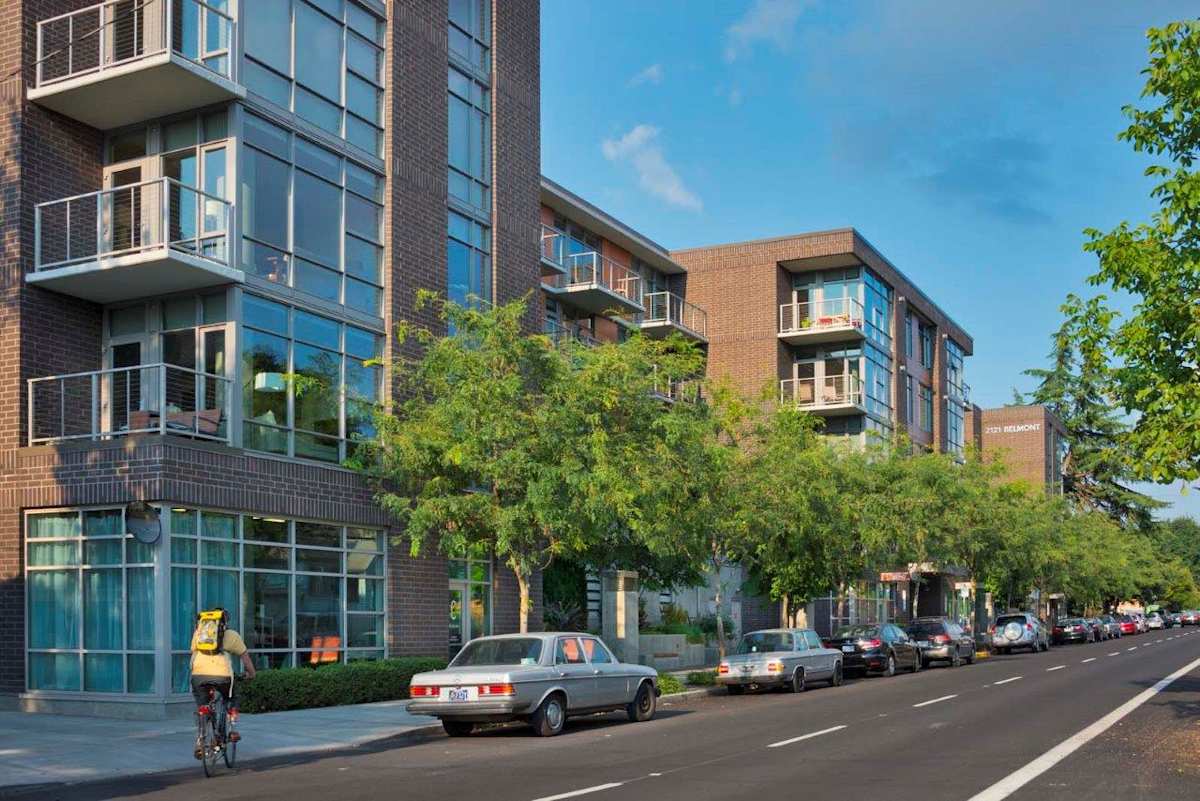
By 2026, the evolution has reached a point of "managed maturity." While some of the older, single-story storefronts have been replaced by four-to-five-story mixed-use buildings, the community has been vocal about maintaining the "human scale" of the street. New developments often include "maker spaces" or micro-retail units to lower the barrier of entry for new local businesses, a direct response to the community's desire to avoid the "mall-ification" of the district.
Key Milestones in the Belmont District Evolution
| Era | Primary Identity | Landmark Developments/Changes | Community Focus |
|---|---|---|---|
| 1890s–1930s | Streetcar Suburb | Sunnyside School, Trolley Lines | Growth and Accessibility |
| 1940s–1980s | Working Class/Transitional | Decommissioning of streetcars | Affordability and Preservation |
| 1990s–2010s | Bohemian/Counterculture | Belmont Dairy, Movie Madness | Localism and "Portland Weird" |
| 2011–2026 | Sustainable Urban Core | Mixed-use infill, Transit improvements | Density and Economic Resilience |
The Socio-Economic Impact of Gentrification
One cannot discuss the evolution of the Belmont District without addressing the economic shifts that have altered the community's demographic makeup. As Belmont became one of the most sought-after locations in Southeast Portland, the barrier to entry for both residents and business owners rose significantly.
The "creative class" that fueled the neighborhood’s revival in the 90s has, in many cases, been replaced by high-income professionals. This has led to a change in the retail mix; where there were once thrift stores and hobby shops, there are now high-end boutiques and artisanal bakeries. However, the Sunnyside Neighborhood Association (SNA) and the Belmont District Business Association have remained active in advocating for rent stabilization efforts and supporting the few remaining legacy businesses. The community’s evolution is now marked by a conscious effort to ensure that "progress" does not mean the total displacement of the diverse voices that made the district famous.
Infrastructure and Environmental Sustainability in 2026
By 2026, the Belmont District has become a flagship for Portland’s green initiatives. The neighborhood's evolution is visible in its physical infrastructure:
- Enhanced Bikeability: As part of the city's 2030 transit plan, Belmont has seen the implementation of protected bike lanes and "neighborhood greenways" that prioritize cyclists and pedestrians over cut-through vehicle traffic.
- Green Spaces: Sunnyside-Belmont Park continues to serve as the community's lungs, hosting farmers' markets and the annual Belmont Street Fair, which remains one of the largest and most successful street festivals in the Pacific Northwest.
- Sustainable Building: New construction in the corridor now adheres to strict "Green Building" standards, featuring rooftop gardens, solar arrays, and high-efficiency climate systems that align with the community's environmental values.
The evolution here is not just about what is being built, but how it is being built. The focus on transit-oriented development (TOD) ensures that as the population increases, the carbon footprint of the district remains relatively low.
The Role of Independent Business in Community Identity
The heartbeat of the Belmont District remains its independent business community. Unlike other parts of the city that have seen a heavy influx of national chains, Belmont has successfully maintained a "locals-first" ethos. This is partly due to the specific zoning and the active "Belmont District" branding that encourages residents to shop small.
Iconic locations like The Tao of Tea and Stumptown Coffee Roasters (located on nearby SE Division but influential to the area) continue to anchor the district’s reputation as a destination for craft and quality. The 2026 business landscape is characterized by "hybrid" spaces—bookstores that serve wine, or bike shops that double as community meeting hubs—reflecting a post-pandemic shift toward multi-functional, community-centric commerce.
FAQs About the Belmont District’s Evolution
What is the difference between Sunnyside and the Belmont District?
Sunnyside is the official residential neighborhood recognized by the City of Portland, bounded roughly by SE Stark and SE Hawthorne. The Belmont District refers specifically to the commercial corridor along SE Belmont Street that runs through the heart of Sunnyside. While they overlap, "Belmont" usually implies the business and entertainment identity, while "Sunnyside" refers to the broader residential and civic community.
How has housing affordability changed in Belmont by 2026?
Housing in Belmont has seen a significant increase in price over the last two decades. While the district remains more accessible than some West Side neighborhoods, it is now considered a high-demand market. To combat this, several recent developments have utilized the city’s "Inclusionary Housing" program, which requires a percentage of units to be set aside for those earning 60% to 80% of the Area Median Income (AMI).
Is the Belmont Street Fair still held?
Yes, the Belmont Street Fair remains a cornerstone of the community's identity. As of 2026, it continues to be held annually in September, attracting tens of thousands of visitors. It serves as a showcase for local artisans, musicians, and food vendors, acting as a vital fundraising and visibility event for the district's evolution.
What are the main transit options for the Belmont District?
The district is primarily served by TriMet Bus Line 15, which runs directly along Belmont Street and provides frequent service to Downtown Portland. Additionally, the neighborhood is highly walkable and is a key node in Portland’s extensive bicycle network, with easy access to the Tilikum Crossing bridge for light rail connections.
Are there historic preservation rules in place for Belmont?
While not all of Belmont is a designated historic district, many individual buildings are on the National Register of Historic Places. The community works closely with the Portland Bureau of Planning and Sustainability to ensure that new developments respect the "Main Street" design guidelines, which emphasize storefront transparency, pedestrian-friendly entrances, and materials that complement the existing brick and timber architecture.
Final Recommendations for Residents and Visitors
To truly experience the belmont district portland community evolution, one must engage with both its past and its future. For visitors, a walking tour starting at the historic Belmont Dairy and ending at the Movie Madness museum offers a physical timeline of the neighborhood's growth. For prospective residents, the key is to look for "middle housing" options that provide the density the city needs while maintaining the neighborhood's unique character.
Supporting the district in 2026 means more than just shopping; it means participating in the civic life of the Sunnyside Neighborhood Association and advocating for a balance between necessary urban growth and the preservation of the "weird," independent spirit that put Belmont on the map. As the district continues to change, its ability to remain a welcoming, diverse, and sustainable community will depend on the active involvement of those who call it home.
Image Gallery